Parents often hear about the importance of sensory play for their babies and kids, but what exactly is it, and why does it matter? Sensory play involves using our body movements and our five senses—sight, smell, sound, feel, and taste—in everyday activities. It helps babies and children explore their surroundings and learn new things.
Sensory Play Involves all 5 Senses!
Sight
Smell
Sound
Feel
Taste
Sensory play helps babies build pathways in the brain that are needed for skills like moving, talking, and thinking. But don’t worry, sensory activities don’t have to be complicated. You can use simple items found around your home or outdoors.
With infants, start by gently touching and talking to them. Show them bright colors and offer toys they can explore with their mouths. Babies often enjoy touching their feet, hands, and mouths, so start there. Letting them chew on safe toys helps them get used to different textures, which can be helpful for eating and brushing teeth later on.
Sensory activities don’t have to be complicated. You can use simple items found around your home or outdoors.
As your child grows, you can try different activities to engage their senses. Inside, let them touch things with different textures or play with food during meals. You can also make your own sensory boards with items like soft fabrics or sandpaper.
Water play is another great sensory activity. You can do it inside in the bathtub or outside with a water table or sprinkler. Spending time outdoors offers even more sensory experiences, like feeling the sun and touching grass and leaves.
If you notice that your child seems overly sensitive or avoids certain activities, talk to their doctor. They may need help from a specialist who can assess their sensory needs.
Overall, it’s important to give your child a variety of sensory experiences every day, both indoors and outdoors. It’s not only fun but also helps them learn and grow!
Install this web app on your iPhone: tap and then Add to Home Screen.
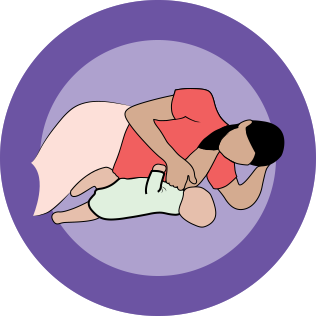
Side-Lying Hold
For the right breast, lie on your right side with your baby facing you.
Pull your baby close. Your baby’s mouth should be level with your nipple.
In this position, you can cradle your baby’s back with your left arm and support yourself with your right arm and/or pillows.
Keep loose clothing and bedding away from your baby.
Reverse for the left breast.
This hold is useful when:
You had a C-section
You want to rest while baby feeds
You are breastfeeding in the middle of the night
You and your baby are comfortable in this position
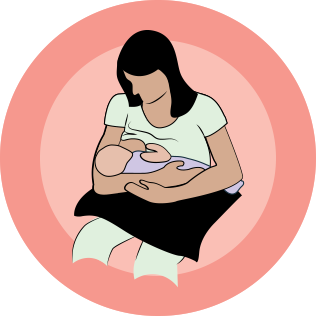
Cross-Cradle Hold
For the right breast, use your left arm to hold your baby’s head at your right breast and baby’s body toward your left side. A pillow across your lap can help support your left arm.
Gently place your left hand behind your baby’s ears and neck, with your thumb and index finger behind each ear and your palm between baby’s shoulder blades. Turn your baby’s body toward yours so your tummies are touching.
Hold your breast as if you are squeezing a sandwich. To protect your back, avoid leaning down to your baby. Instead, bring your baby to you.
As your baby’s mouth opens, push gently with your left palm on baby’s head to help them latch on. Make sure you keep your fingers out of the way.
Reverse for the left breast.
This hold is useful when:
Your baby is premature
Your baby has a weak suck
Your baby needs help to stay latched
Your baby needs extra head support
You and your baby are comfortable in this position
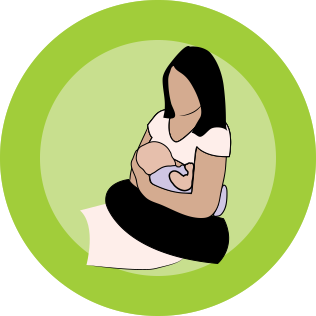
Clutch or “Football” Hold
For the right breast, hold your baby level, facing up, at your right side.
Put your baby’s head near your right nipple and support their back and legs under your right arm.
Hold the base of your baby’s head with your right palm. A pillow underneath your right arm can help support your baby’s weight.
To protect your back, avoid leaning down to your baby. Bring baby to you instead.
Reverse for the left breast.
This hold is useful when:
You had a C-section
You have large breasts
You have flat or inverted nipples
You have a strong milk let-down
You are breastfeeding twins
Your baby likes to feed in an upright position
Your baby has reflux
You and your baby are comfortable in this position
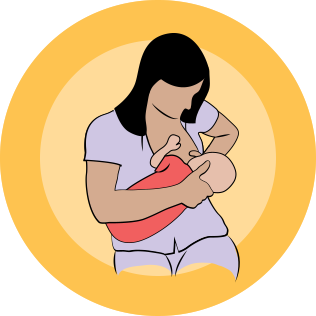
Cradle Hold
For the right breast, cradle your baby with your right arm. Your baby will be on their left side across your lap, facing you at nipple level.
Your baby’s head will rest on your right forearm with your baby’s back along your inner arm and palm.
Turn your baby’s tummy toward your tummy. Your left hand is free to support your breast, if needed. Pillows can help support your arm and elbow.
To protect your back, avoid leaning down to your baby. Instead, bring your baby to you.
Reverse for the left breast.
This hold is useful when:
Your baby needs help latching on
You and your baby are comfortable in this position
Laid-Back Hold
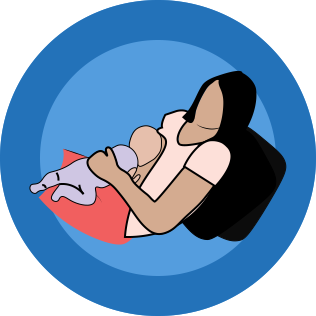
Lean back on a pillow with your baby’s tummy touching yours and their head at breast level. Some moms find that sitting up nearly straight works well. Others prefer to lean back and lie almost flat.
You can place your baby’s cheek near your breast, or you may want to use one hand to hold your breast near your baby. It’s up to you and what you think feels best.
Your baby will naturally find your nipple, latch, and begin to suckle.
This hold is useful when:
Your baby is placed on your chest right after birth
You have a strong milk let-down
You have large breasts
You and your baby are comfortable in this position