Skip to Content Skip to Footer
Wyoming WIC
Wyoming WIC
  • Home
  • Women
    • Women
      Breastfeeding
    • Women
      Healthy Tips for Moms
    • Women
      Postpartum
    • Women
      Pregnant
  • Infants
    • Infants
      Feeding & Nutrition
    • Infants
      Growth & Development
  • Children
    • Children
      Toddlers
    • Children
      2-5 Year Olds
  • Families
    • Families
      Activity and Play
    • Families
      Dads
    • Families
      Food & Family Meals
    • Families
      Immunizations
    • Families
      Safety
  • Live Well Blog
  • Food Shopping Guide
  • Español
Common Breastfeeding Challenges and Simple Solutions for Parents

Common Breastfeeding Challenges and Simple Solutions for Parents

  • Home
  • Live Well Blog
  • Common Breastfeeding Challenges and Simple Solutions for Parents
Common Breastfeeding Challenges and Simple Solutions for Parents
June 24, 2026 Women

breastfeeding When Breastfeeding Feels Hard

Breastfeeding is a learning process for both you and your baby. While it’s natural, it doesn’t always come easily at first. Many parents experience challenges like nipple pain, engorgement, inflammation, or mastitis.

These issues are common – and there are simple ways to manage them. Let’s walk through what to look for and what you can do.

The good news?

common Common Breastfeeding Challenges and Quick Fixes

NIPPLE PAIN

Breastfeeding should feel comfortable. Some tenderness in the first few days can be normal, but ongoing pain is a sign something needs to change.

Common signs of a problem may include:

  • Sharp or pinching pain during feeds
  • Cracked, red, or sore nipples
  • Pain that continues after feeding

What helps:

  • Make sure your baby has a deep latch (taking in more than just the nipple)
  • Try adjusting your baby’s position
  • Gently break the latch and try again if it hurts
  • After feeding, place a few drops of breast milk on your nipples to help with healing
Mother receiving breastfeeding support from a lactation consultant while nursing her baby

If pain continues, reaching out for support can make a big difference.

Engorgement

Woman performing a breast self-exam to check for changes or discomfort.

Engorgement happens when your breasts become overly full, swollen, and uncomfortable. This is common in the early days as your milk supply increases.

Signs of engorgement:

  • Swollen, firm, or tight breasts
  • Tenderness or warmth
  • Difficulty for baby to latch due to fullness

What helps:

  • Feed your baby often (8–12 times in 24 hours)
  • Let your baby fully drain one breast before switching
  • Use cold packs or ice between feedings to reduce swelling
  • Frequent feeding is one of the best ways to relieve engorgement

Inflammation (“Clogged Ducts”)

You may notice a tender lump in your breast. This is often called a “clogged duct,” but it’s usually swelling that slows milk flow.

What it may feel like:

  • A small, sore lump in the breast
  • Localized tenderness

What helps:

  • Keep feeding your baby as usual
  • Use cold packs to reduce swelling
  • Be gentle – avoid deep or firm massage
Lactation consultant assisting a mother with proper breastfeeding positioning and latch.
If it doesn’t improve or gets worse, it’s important to seek support.

Mastitis

Mother experiencing breastfeeding discomfort while nursing her baby on a couch.

Mastitis is inflammation that can turn into an infection.
It can develop if earlier issues aren’t resolved.

Signs of mastitis include:

  • Redness or warmth in the breast
  • Fever or chills
  • Body aches or feeling flu-like

What to do:

  • Contact your healthcare provider right away
  • Continue breastfeeding or pumping to keep milk moving
  • Antibiotics may be needed
  • Getting treatment early can help prevent more serious complications

healthy people You Don’t Have to Do This Alone

Breastfeeding challenges are common, but you don’t have to push through pain or figure it out by yourself.

WIC offers free support from trained staff and peer counselors who can help you:

  • Improve your baby’s latch
  • Find comfortable feeding positions
  • Manage common breastfeeding concerns

REFERENCES:

Academy of Breastfeeding Medicine. (2022). Academy of Breastfeeding Medicine Clinical Protocol #36: The Mastitis Spectrum, Revised 2022.
https://www.bfmed.org/assets/ABM%20Protocol%20%2336.pdf

Centers for Disease Control and Prevention. (2025, December 8). Breastfeeding: Common Questions.
https://www.cdc.gov/breastfeeding/php/faq/faq.html

Office on Women’s Health. (2025, October 23). Breastfeeding Challenges.
https://womenshealth.gov/breastfeeding/breastfeeding-challenges/common-breastfeeding-challenges

  • Infant
    • Infant Pacifiers:
      Benefits, Safety Tips, and When to Wean
    • The Basics of Paced Bottle-Feeding
    • How Do I Know If My Baby Could Be Tongue-Tied?
    • Protect Your Baby from Cronobacter
    • Exploring the World with Baby – Sensory Play
  • Children
    • Shopping With Kids: A Simple Way to Help Them Like More Foods
    • Pumpkin Fun: Free and Healthy Activities for Kids Under 5
    • Letting Your Child Play with Food Can Be a Good Thing
    • Is Snack Time Treat Time?
    • Fun Ways to Learn About Healthy Food and Get Moving!
  • General /Family
    • Meet the Milks: Dairy and Plant-Based Choices
    • Avoiding Food Waste
    • The 2025-2030 Dietary Guidelines for Americans – What Families Need to Know
    • Finding Calm When Life Gets Busy: Stress-Management for Parents
    • February Is National Heart Month: Simple Ways to Show Your Heart Some Love
  • Women
    • Paced Bottle-Feeding: How to Feed Your Baby the Right Way
    • Breastfeeding and Returning to Work: Tips for Pumping & Planning
    • Increasing Milk Supply: Myths vs. Facts About Breastfeeding
    • Pumping Basics & Safe Breast Milk Storage Guide
    • Getting a Good Latch: Breastfeeding Positions & Holds That Help
  • Recipes
    • Simple Meals with Canned Fish: Easy, Healthy & Budget-Friendly Ideas
    • Fresh & Easy Spring Snacks for Toddlers
    • Fresh & Easy Spring Veggie Pasta
    • Heart-Healthy Recipe: Banana Berry Oatmeal Cups
    • Is the Chia Seed Challenge Worth It?
Wyoming WIC WDH Public Health

CONTACT US

1-888-996-9378
health.wyo.gov/wic
  • How to apply for WIC

Resources

  • WIC Shopper
  • WIC Smart
  • WIC Breastfeeding Support
  • Wyoming Medicaid
  • Wyoming 211
  • Tell a friend about WIC!
  • Guide to Using Your WIC Benefits
  • Wyoming WIC Facebook
  • Wyoming WIC Instagram
  • Wyoming WIC

USDA is an equal opportunity provider, employer, and lender.

Cookie PolicyPrivacy Policy

© Brush Art Corporation
This website is operated by Brush Art Corporation on behalf of the Wyoming Department of Health.

Install this web app on your iPhone: tap and then Add to Home Screen.
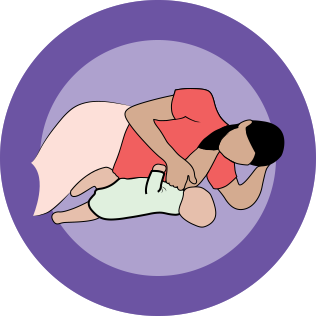
SIDE-LYING HOLD

Side-Lying Hold

  1. For the right breast, lie on your right side with your baby facing you.
  2. Pull your baby close. Your baby’s mouth should be level with your nipple.
  3. In this position, you can cradle your baby’s back with your left arm and support yourself with your right arm and/or pillows.
  4. Keep loose clothing and bedding away from your baby.
  5. Reverse for the left breast.

This hold is useful when:

  • You had a C-section
  • You want to rest while baby feeds
  • You are breastfeeding in the middle of the night
  • You and your baby are comfortable in this position
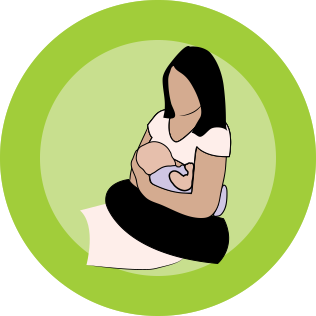
CROSS-CRADLE HOLD

Cross-Cradle Hold

  1. For the right breast, use your left arm to hold your baby’s head at your right breast and baby’s body toward your left side. A pillow across your lap can help support your left arm.
  2. Gently place your left hand behind your baby’s ears and neck, with your thumb and index finger behind each ear and your palm between baby’s shoulder blades. Turn your baby’s body toward yours so your tummies are touching.
  3. Hold your breast as if you are squeezing a sandwich. To protect your back, avoid leaning down to your baby. Instead, bring your baby to you.
  4. As your baby’s mouth opens, push gently with your left palm on baby’s head to help them latch on. Make sure you keep your fingers out of the way.
  5. Reverse for the left breast.

This hold is useful when:

  • Your baby is premature
  • Your baby has a weak suck
  • Your baby needs help to stay latched
  • Your baby needs extra head support
  • You and your baby are comfortable in this position
CLUTCH OR “FOOTBALL” HOLD

Clutch or “Football” Hold

  1. For the right breast, hold your baby level, facing up, at your right side.
  2. Put your baby’s head near your right nipple and support their back and legs under your right arm.
  3. Hold the base of your baby’s head with your right palm. A pillow underneath your right arm can help support your baby’s weight.
  4. To protect your back, avoid leaning down to your baby. Bring baby to you instead.
  5. Reverse for the left breast.

This hold is useful when:

  • You had a C-section
  • You have large breasts
  • You have flat or inverted nipples
  • You have a strong milk let-down
  • You are breastfeeding twins
  • Your baby likes to feed in an upright position
  • Your baby has reflux
  • You and your baby are comfortable in this position
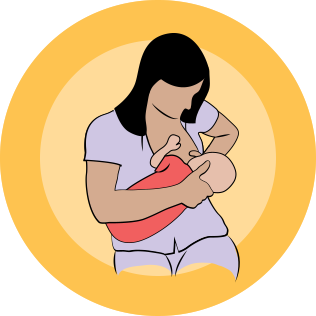
CRADLE HOLD

Cradle Hold

  1. For the right breast, cradle your baby with your right arm. Your baby will be on their left side across your lap, facing you at nipple level.
  2. Your baby’s head will rest on your right forearm with your baby’s back along your inner arm and palm.
  3. Turn your baby’s tummy toward your tummy. Your left hand is free to support your breast, if needed. Pillows can help support your arm and elbow.
  4. To protect your back, avoid leaning down to your baby. Instead, bring your baby to you.
  5. Reverse for the left breast.

This hold is useful when:

  • Your baby needs help latching on
  • You and your baby are comfortable in this position
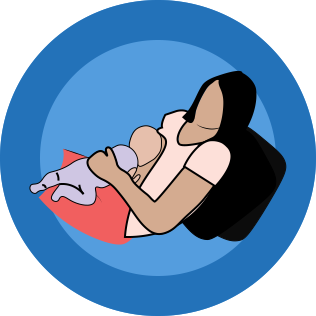
Laid-Back Hold

Laid-Back Hold

  1. Lean back on a pillow with your baby’s tummy touching yours and their head at breast level. Some moms find that sitting up nearly straight works well. Others prefer to lean back and lie almost flat.
  2. You can place your baby’s cheek near your breast, or you may want to use one hand to hold your breast near your baby. It’s up to you and what you think feels best.
  3. Your baby will naturally find your nipple, latch, and begin to suckle.

This hold is useful when:

  • Your baby is placed on your chest right after birth
  • You have a strong milk let-down
  • You have large breasts
  • You and your baby are comfortable in this position