Skip to Content Skip to Footer
Wyoming WIC
Wyoming WIC
  • Home
  • Women
    • Women
      Breastfeeding
    • Women
      Healthy Tips for Moms
    • Women
      Postpartum
    • Women
      Pregnant
  • Infants
    • Infants
      Feeding & Nutrition
    • Infants
      Growth & Development
  • Children
    • Children
      Toddlers
    • Children
      2-5 Year Olds
  • Families
    • Families
      Activity and Play
    • Families
      Dads
    • Families
      Food & Family Meals
    • Families
      Immunizations
    • Families
      Safety
  • Live Well Blog
  • Food Shopping Guide
  • Español
Finding Calm When Life Gets Busy

Finding Calm When Life Gets Busy: Stress-Management for Parents

  • Home
  • Live Well Blog
  • Finding Calm When Life Gets Busy: Stress-Management for Parents
Finding Calm When Life Gets Busy QR
February 11, 2026 General /Family

 Calm Finding Calm When Life Gets Busy

Parenting is full of love, joy, and often times, stress. Between caring for little ones, managing meals, grocery shopping, budgets, jobs, and everything else, it’s normal to feel overwhelmed.

The good news: small, simple steps can help you manage stress and care for yourself – which helps you better care for your children too.

Hands-heart
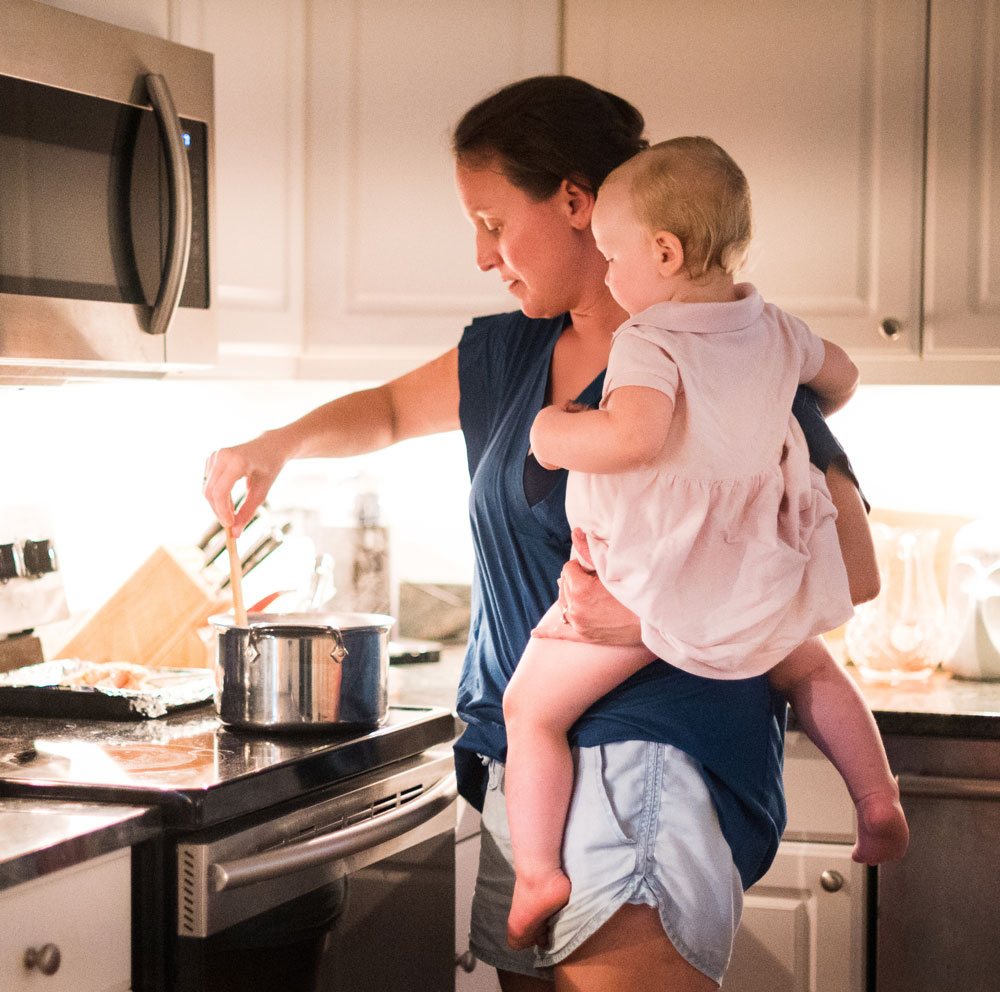
Stress Matter lady baby
Stress Matters Why Stress Matters

Stress is how your body responds when you feel pressured or stretched too thin. Too much stress, especially day after day, can affect your energy, focus, sleep, and even physical health. When you notice feelings like being tired, cranky, worried, or having trouble sleeping, those can be signs of too much stress in your life.

Luckily, there are easy ways to manage stress, and many don’t cost anything or take much time.
mind Simple Ways to Calm Your Mind and Body

A blue abstract shape overlaid with pink and yellow highlights.

DEEP BREATHING & SHORT PAUSE

Taking a few slow, deep breaths – especially when you first notice stress – can help calm your body. Try this:

Inhale through your nose for 4 seconds, hold that breath in your lungs for 5 seconds, then exhale out through your mouth for 6 seconds. Repeat.

Doing this even for a minute or two while cooking, waiting in line, or during a break can help. Experts call this mindfulness or breath awareness. It’s also referred to as “belly breathing”.

Here’s a simple guided video to watch and try when you just need a quick “reset.”

Click Here
Hold-baby-feeding

STRETCHING, YOGA, OR GENTLE MOVEMENT

Moving your body can help release muscle tension and calm your mind. And we’re not talking about running marathons here. Even gentle stretches or beginner-level yoga can do wonders for your body and mind.

Yoga doesn’t have to be hard: simple poses, slow breathing, and short sessions (10–15 minutes) can help you relax.

Consider having your child join you! Little ones often enjoy stretching or “pretend yoga”. Including your child is a simple way to model self-care and calm for them too.

Here’s a helpful yoga video you can watch along with your kids:
Click Here
baby-sitting-flower

PAUSE, PLAN, AND DO WHAT YOU CAN

Parenting brings lots of tasks, which can feel overwhelming when everything piles up. To help lessen the load on your mental wellbeing:

Plan or think ahead for busy times (like messy mornings or bedtime). Even small changes like picking out outfits the night before or prepping meals ahead of time can help reduce stress.

At the end of the day, try making a “done list” – a list of things you were able to accomplish that day. Even small things count: made lunch, bathed the baby, took a shower, took 5 deep breaths, read a book with your child. This can help you notice how much you actually do get done and feel good about it. Spoiler alert: you do a lot!

Green abstract shape resembling a leaf in vector format.

TAKE BREAKS AND DO SOMETHING YOU ENJOY

Self-care isn’t selfish, it’s necessary. Doing simple things just for you, even if it’s a few minutes, can reset your mood and energy, like:
  • Taking a short walk
  • Sitting quietly for a few minutes and breathing or stretching
  • Listening to music, reading, drawing, or doing a simple hobby
  • Connecting with a friend, family member, or another parent
  • Doing a quick guided relaxation or meditation online
  • Stepping outside for a few minutes for some fresh air

You don’t need to “do it all” to feel better. Just choose 1–2 things that feel good, and build from there. Small steps can lead to big results, especially when you care for yourself as much as you care for your family.

building Building a Stress-Smart Routine
Here’s a simple example of how you could build stress-management into a busy parenting day:

Time / Situation

What You Can Do

  • Early morning / before daycare or breakfast

Take 2 deep breaths before starting the day; remind yourself “I’m doing my best.”

  • While cooking / doing chores / grocery shopping (or waiting in line)
Pause and take a few belly breaths, loosen shoulders or stretch arms/neck.
  • After kids go to bed or nap
Take 10 minutes for gentle stretching or brief yoga, or just closing your eyes and breathing.
  • Before bed
Write 3 small “done” things from the day (even if it’s “I made breakfast,” “I snuggled with my child,” “I took a few deep breaths”).
  • Weekly / when possible
Schedule at least one activity you enjoy – walk, talk to a friend, listen to music, or do a quick relaxation video.
Things work Why These Things Work and Why it Matters

Relaxation techniques like deep breathing, stretching, yoga, and mindfulness help your body calm down. That can lower heart rate, ease muscle tension, improve sleep, and support mood and focus.

Small, regular practices, even a few minutes a day, add up. Over time, they help your body and mind respond better to stress, instead of feeling overwhelmed.

When parents take care of themselves, it models positive self-care for their children and helps parents stay more present, patient, and calm during parenting challenges.

Stress Feels If Stress Feels Too Big, You’re Not Alone.

Sometimes stress can feel too much to handle on your own, especially when you’re juggling many responsibilities.

It’s okay to reach out for help or support. You might:
  • ✓ Talk with a trusted friend, partner, or family member about how you feel
  • ✓ Look for community support (local WIC groups, parenting groups, faith or community organizations)
  • ✓ Talk to a doctor, counselor, or other health professional if stress or worries become bigger or last a long time

Seeking help doesn’t mean you’ve failed. It means you care enough about yourself and your family to get support – and that’s a sign of strength.

Stress Feels Too Big
trusted resources
clinic More Trusted Resources & Where to Learn More
Here’s a simple example of how you could build stress-management into a busy parenting day:
Managing Stress: offers information on healthy ways to cope with stress.
Centers for Disease Control and Prevention (CDC)
How to Reduce Stress: shares helpful tips on self-care, breathing, time for yourself, and managing parenting stress.
UNICEF
Relaxation Techniques: provides an overview of many stress-relief methods like deep breathing, progressive muscle relaxation, mindfulness, yoga, and more.
Mayo Clinic
Self-Care Strategies for Parents & Caregivers: tips for parents on using mindfulness, planning, and small steps to care for themselves.
Yale Child Study Center / SANA Lab

Parenting is a big job. Taking care of yourself isn’t extra, it’s essential. Even small moments of calm, deep breaths, and movement can make a big difference for your and your family’s well-being.

REFERENCES:

Bright Horizons. (2020, November 15). How to cope with stress: stress relief strategies for the whole family.
https://www.brighthorizons.com/article/health/coping-with-stress-and-stress-relief-strategies-for-the-family

Centers for Disease Control and Prevention. (2025, June 9). Managing stress.
https://www.cdc.gov/mental-health/living-with/index.html

Centers for Disease Control and Prevention. (2017, September 14). Yoga activity card.
https://archive.cdc.gov/www_cdc_gov/healthyschools/bam/cards/yoga.html

Mayo Clinic. (2024, June 24). Stress management.
https://www.mayoclinic.org/healthy-lifestyle/stress-management/in-depth/relaxation-technique/art-20045368

Oklahoma Partnership for School Readiness. (2024, March 10). How to manage stress as a parent or caregiver.
https://www.okschoolreadiness.org/post/how-to-manage-stress-as-a-parent-or-caregiver

Parenting Now. (2025). Managing stress as a parent.
https://parentingnow.org/managing-stress-as-a-parent/

Unicef. (2025). How to reduce stress.
https://www.unicef.org/parenting/mental-health/how-reduce-stress-parents

Yale School of Medicine. Self-Care strategies for parents & caregivers. (2024, January 20).
https://medicine.yale.edu/news-article/self-care-strategies-parents/

Author: Amanda Hojnacki
  • Infant
    • The Basics of Paced Bottle-Feeding
    • How Do I Know If My Baby Could Be Tongue-Tied?
    • Protect Your Baby from Cronobacter
    • Exploring the World with Baby – Sensory Play
    • Get Your Baby “Back” to Sleep in a Safe Environment
  • Children
    • Shopping With Kids: A Simple Way to Help Them Like More Foods
    • Pumpkin Fun: Free and Healthy Activities for Kids Under 5
    • Letting Your Child Play with Food Can Be a Good Thing
    • Is Snack Time Treat Time?
    • Fun Ways to Learn About Healthy Food and Get Moving!
  • General /Family
    • Avoiding Food Waste
    • The 2025-2030 Dietary Guidelines for Americans – What Families Need to Know
    • February Is National Heart Month: Simple Ways to Show Your Heart Some Love
    • 10 Ways to Enjoy Avocados – And Helpful Tips to Feed with Confidence
    • Food, Feelings, and Finding Balance: Understanding Disordered Eating
  • Women
    • Getting a Good Latch: Breastfeeding Positions & Holds That Help
    • Newborn Hunger Cues: How to Know When Your Baby Is Hungry or Full
    • How to Know Your Baby Is Getting Enough Breastmilk
    • Breastfeeding Through Growth Spurts and Sleep Changes
    • Baby Blues… or Is It Something More?
  • Recipes
    • Heart-Healthy Recipe: Banana Berry Oatmeal Cups
    • Is the Chia Seed Challenge Worth It?
    • Extra Vegetables Quiche
    • Easy Pumpkin Muffins
    • Confetti Bean Salad
Wyoming WIC WDH Public Health

CONTACT US

1-888-996-9378
health.wyo.gov/wic
  • How to apply for WIC

Resources

  • WIC Shopper
  • WIC Smart
  • WIC Breastfeeding Support
  • Wyoming Medicaid
  • Wyoming 211
  • Tell a friend about WIC!
  • Guide to Using Your WIC Benefits
  • Wyoming WIC Facebook
  • Wyoming WIC Instagram
  • Wyoming WIC

USDA is an equal opportunity provider, employer, and lender.

Cookie PolicyPrivacy Policy

© Brush Art Corporation
This website is operated by Brush Art Corporation on behalf of the Wyoming Department of Health.

Install this web app on your iPhone: tap and then Add to Home Screen.
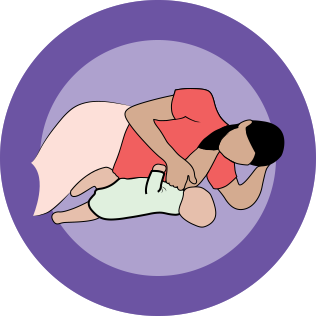
SIDE-LYING HOLD

Side-Lying Hold

  1. For the right breast, lie on your right side with your baby facing you.
  2. Pull your baby close. Your baby’s mouth should be level with your nipple.
  3. In this position, you can cradle your baby’s back with your left arm and support yourself with your right arm and/or pillows.
  4. Keep loose clothing and bedding away from your baby.
  5. Reverse for the left breast.

This hold is useful when:

  • You had a C-section
  • You want to rest while baby feeds
  • You are breastfeeding in the middle of the night
  • You and your baby are comfortable in this position
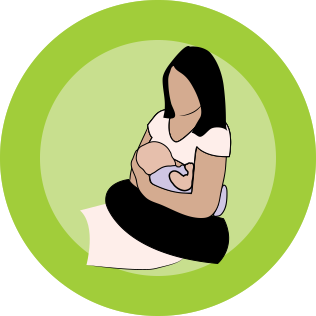
CROSS-CRADLE HOLD

Cross-Cradle Hold

  1. For the right breast, use your left arm to hold your baby’s head at your right breast and baby’s body toward your left side. A pillow across your lap can help support your left arm.
  2. Gently place your left hand behind your baby’s ears and neck, with your thumb and index finger behind each ear and your palm between baby’s shoulder blades. Turn your baby’s body toward yours so your tummies are touching.
  3. Hold your breast as if you are squeezing a sandwich. To protect your back, avoid leaning down to your baby. Instead, bring your baby to you.
  4. As your baby’s mouth opens, push gently with your left palm on baby’s head to help them latch on. Make sure you keep your fingers out of the way.
  5. Reverse for the left breast.

This hold is useful when:

  • Your baby is premature
  • Your baby has a weak suck
  • Your baby needs help to stay latched
  • Your baby needs extra head support
  • You and your baby are comfortable in this position
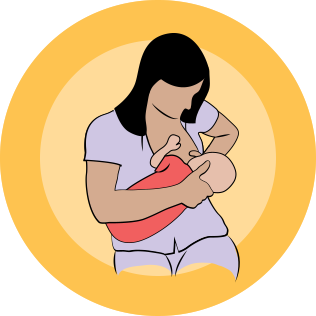
CLUTCH OR “FOOTBALL” HOLD

Clutch or “Football” Hold

  1. For the right breast, hold your baby level, facing up, at your right side.
  2. Put your baby’s head near your right nipple and support their back and legs under your right arm.
  3. Hold the base of your baby’s head with your right palm. A pillow underneath your right arm can help support your baby’s weight.
  4. To protect your back, avoid leaning down to your baby. Bring baby to you instead.
  5. Reverse for the left breast.

This hold is useful when:

  • You had a C-section
  • You have large breasts
  • You have flat or inverted nipples
  • You have a strong milk let-down
  • You are breastfeeding twins
  • Your baby likes to feed in an upright position
  • Your baby has reflux
  • You and your baby are comfortable in this position
CRADLE HOLD

Cradle Hold

  1. For the right breast, cradle your baby with your right arm. Your baby will be on their left side across your lap, facing you at nipple level.
  2. Your baby’s head will rest on your right forearm with your baby’s back along your inner arm and palm.
  3. Turn your baby’s tummy toward your tummy. Your left hand is free to support your breast, if needed. Pillows can help support your arm and elbow.
  4. To protect your back, avoid leaning down to your baby. Instead, bring your baby to you.
  5. Reverse for the left breast.

This hold is useful when:

  • Your baby needs help latching on
  • You and your baby are comfortable in this position
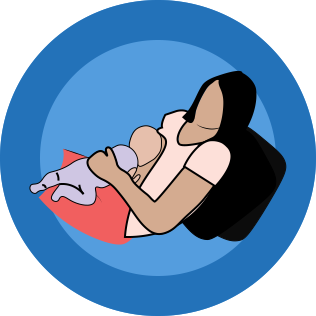
Laid-Back Hold

Laid-Back Hold

  1. Lean back on a pillow with your baby’s tummy touching yours and their head at breast level. Some moms find that sitting up nearly straight works well. Others prefer to lean back and lie almost flat.
  2. You can place your baby’s cheek near your breast, or you may want to use one hand to hold your breast near your baby. It’s up to you and what you think feels best.
  3. Your baby will naturally find your nipple, latch, and begin to suckle.

This hold is useful when:

  • Your baby is placed on your chest right after birth
  • You have a strong milk let-down
  • You have large breasts
  • You and your baby are comfortable in this position