

Skip to Content Skip to Footer
Wyoming WIC
Wyoming WIC
  • Home
  • Women
    • Women
      Breastfeeding
    • Women
      Healthy Tips for Moms
    • Women
      Postpartum
    • Women
      Pregnant
  • Infants
    • Infants
      Feeding & Nutrition
    • Infants
      Growth & Development
  • Children
    • Children
      Toddlers
    • Children
      2-5 Year Olds
  • Families
    • Families
      Activity and Play
    • Families
      Dads
    • Families
      Food & Family Meals
    • Families
      Immunizations
    • Families
      Safety
  • Live Well Blog
  • Food Shopping Guide
  • Español
Pumpkin-Fun-banner

Pumpkin Fun: Free and Healthy Activities for Kids Under 5

  • Home
  • Live Well Blog
  • Pumpkin Fun: Free and Healthy Activities for Kids Under 5
Pumpkin_Rolloing_QR
October 15, 2025 Children

Play, Learn, and Grow with Pumpkins

Pumpkins aren’t just for carving! They’re healthy, fun, and great for learning, too.

Pumpkins are full of good stuff like vitamins A and C. These help keep your child’s eyes healthy and support their immune system, which helps them fight off sickness. Pumpkins also have fiber, which helps with digestion and keeps your child feeling full longer.
play-learn-with-child

You don’t need to spend money to enjoy pumpkins with your child.

Whole, fresh pie pumpkins are generally approved for purchase with WIC benefits. However, ornamental or decorative pumpkins, like those used for carving or painting, are not typically eligible.

instructions-tip

Look for “whole, fresh pie pumpkins” when shopping with WIC benefits, then try these easy, low-to-no-cost activities to help your little one grow strong and learn new skills.

sofia's story Low-to-No-Cost Pumpkin Activities
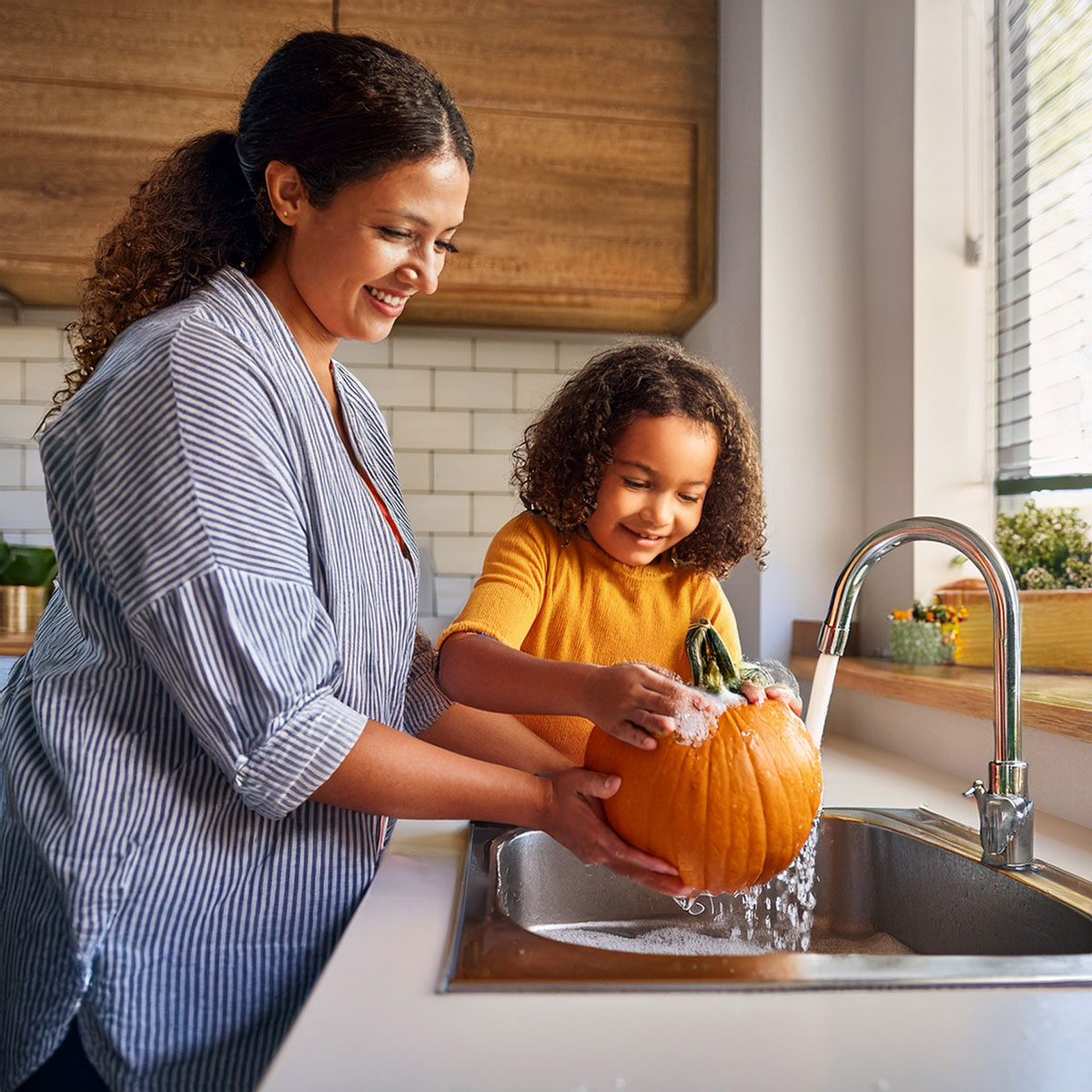
1 Pumpkin Washing Party

PumpkinWashing

Let your child give a pumpkin a bath with soap, water, and a sponge or rag. Talk about the color, shape, and texture.

This helps with:

  • Hand strength
  • Talking and listening skills
  • Learning new words like “smooth” and “round”

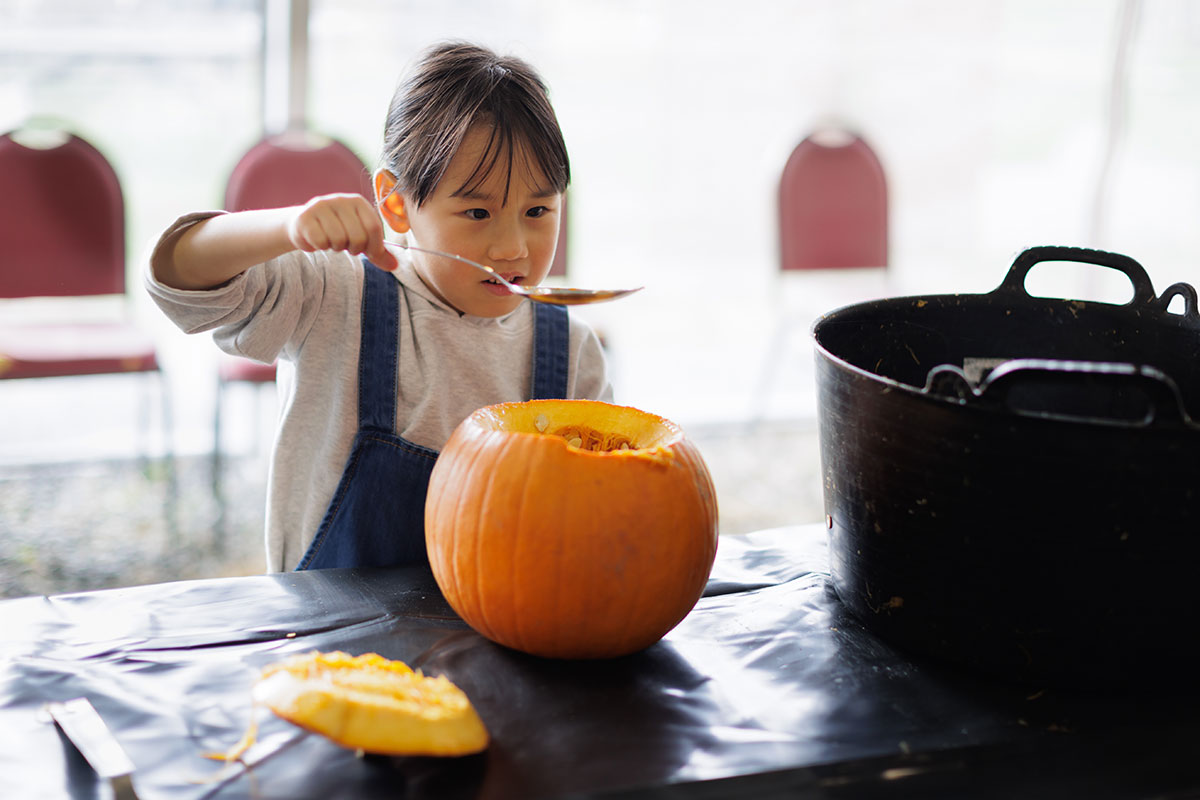
3 Scooping Seeds

Scooping-Seeds

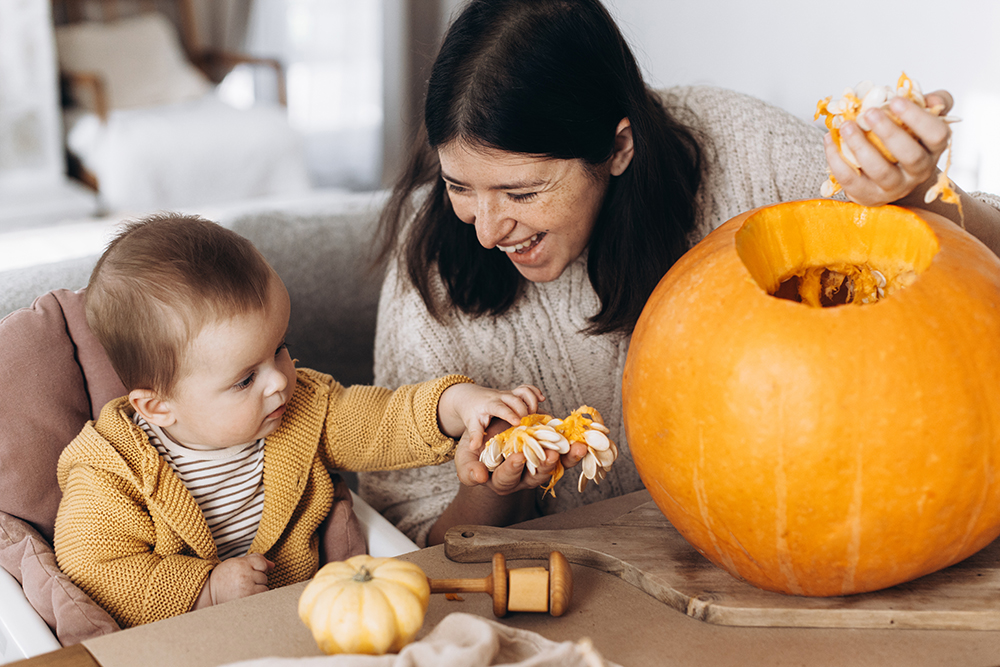
Cut open a pumpkin and let your child scoop out the seeds with a spoon or their hands. Sure, it’s messy – but it’s also really fun! Help manage the mess by putting down newspaper or an old towel to protect surfaces and make clean up easier.

Scooping out pumpkin seeds helps with:

  • Hand strength and fine motor skills
  • Sensory play (touch and feel)
  • Learning about healthy foods

5 Pumpkin Taste Test

Child Tasting Pumpkin Food

Cook a small piece of pumpkin or use canned pumpkin (just pumpkin—no sugar added). Let your child try it plain or mixed into oatmeal, yogurt, or soup.

Talk about:

  • How it looks, tastes, and feels
  • Why pumpkins are healthy (they have vitamins that help eyes and skin!)

7 Pumpkin Story Time

Pumpkin_Story_Time

Pumpkin Story Time

Sit with your child and tell a short story about a pumpkin—real or pretend. Or read a pumpkin-themed book from your library. Here are a couple quick stories about The Little Pumpkin and The Jolly Old Pumpkin you can read for free online.

Reading with your child helps with:

  • Language and thinking skills
  • Bonding time
  • Early reading habits

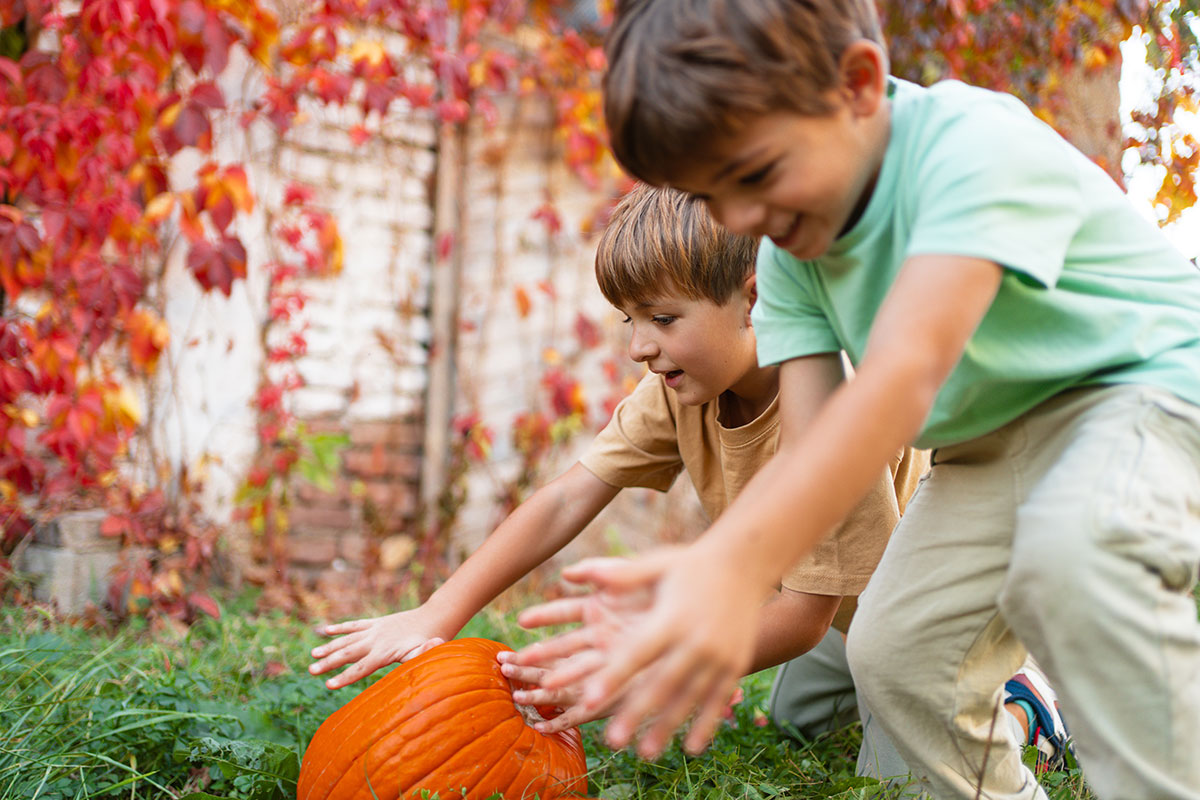
2 Pumpkin Rolling Races

Pumpkin_Rolling_Race

Pick a safe space indoors or outdoors. Choose a starting line and a finish line, then let your child roll a small pumpkin across the floor. How long does it take to roll the pumpkin from one end to the other? Take turns and cheer each other on!

This builds:

  • Big body movement (gross motor skills)
  • Balance and coordination
  • Taking turns

4 Pumpkin Seed Counting

PumpkinSeed

After scooping out the pumpkin seeds, rinse and dry them. Then count them together! Make little piles of 5 or 10.

This helps your child:

  • Practice counting and sorting
  • Work on focus and patience

6 Make a Pumpkin Face (no carving required!)

MakeAPumpkinFace

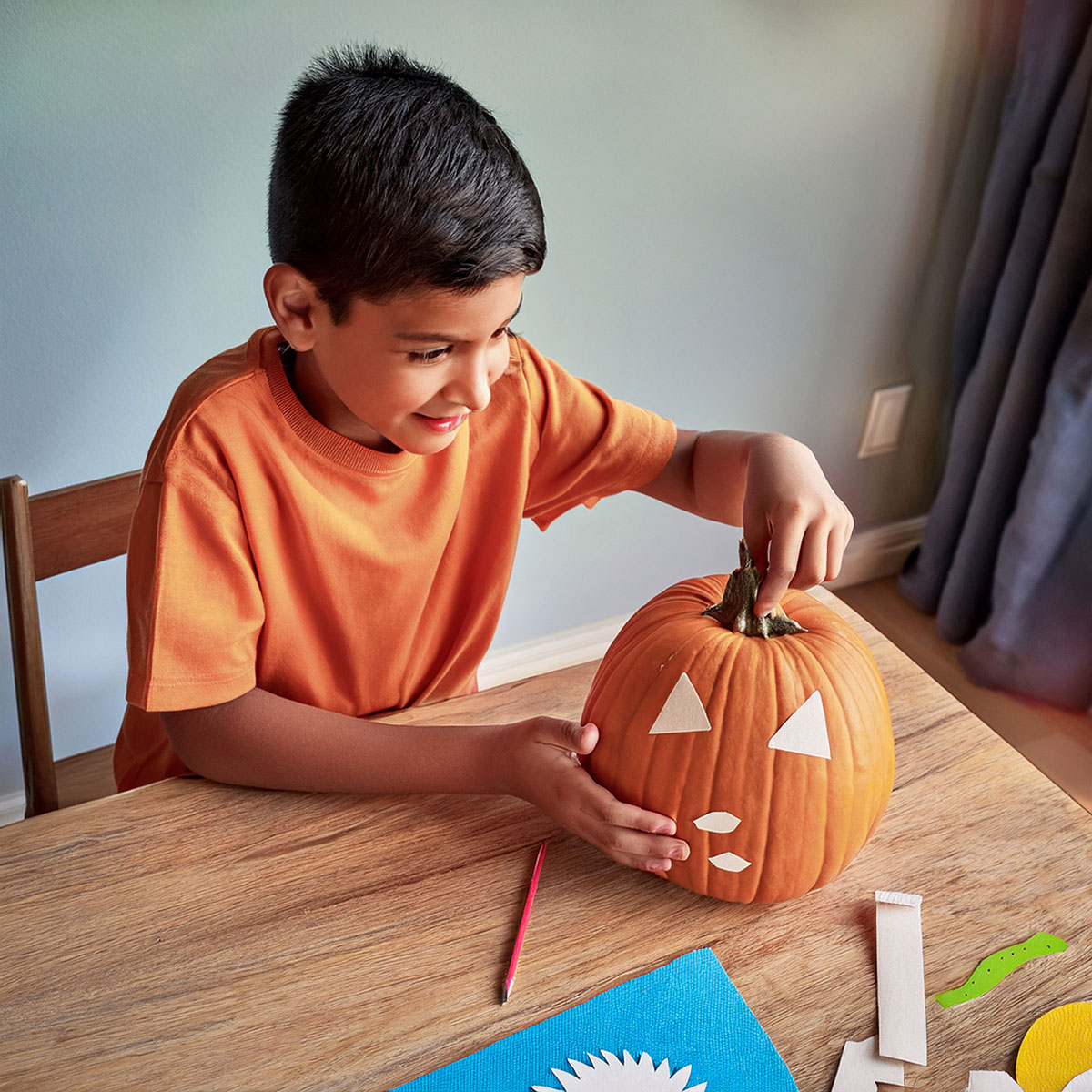
Grab some paper, scissors, markers, and glue. Help your child draw or cut out eyes, noses, and mouths, then let them glue silly faces on the pumpkin!

This supports:

  • Imagination
  • Learning about emotions
  • Art and creativity

8 Why Pumpkin Play Matters

Child Learning Through Play

Why Pumpkin Play Matters

These activities help your child:

  • Build muscles.
  • Learn new words.
  • Try healthy foods.
  • Use their senses.
  • Feel proud of what they can do.
  • Have some fun!
Pumpkin Fun Fact Icon

Did you know?

Pumpkins are more than just a fall decoration. They’re healthy, fun, and full of ways to help your child learn and grow. From washing and rolling to counting seeds and reading stories, pumpkin play builds strong bodies and curious minds. Best of all, these activities are low-cost or free—and full of smiles!

REFERENCES:

Ririro. (2024, August). The little pumpkin [PDF].
https://ririro.com/wp-content/uploads/2024/08/The-Little-Pumpkin_compressed-1.pdf

Ririro. (2023, June). The jolly old pumpkin [PDF].
https://ririro.com/wp-content/uploads/2023/06/The-Jolly-Old-Pumpkin_compressed.pdf

  • Infant
    • The Basics of Paced Bottle-Feeding
    • How Do I Know If My Baby Could Be Tongue-Tied?
    • Protect Your Baby from Cronobacter
    • Exploring the World with Baby – Sensory Play
    • Get Your Baby “Back” to Sleep in a Safe Environment
  • Children
    • Shopping With Kids: A Simple Way to Help Them Like More Foods
    • Letting Your Child Play with Food Can Be a Good Thing
    • Is Snack Time Treat Time?
    • Fun Ways to Learn About Healthy Food and Get Moving!
    • Your Questions Answered: Taking Care of Your Child’s Teeth Age 1-5
  • General /Family
    • Avoiding Food Waste
    • The 2025-2030 Dietary Guidelines for Americans – What Families Need to Know
    • Finding Calm When Life Gets Busy: Stress-Management for Parents
    • February Is National Heart Month: Simple Ways to Show Your Heart Some Love
    • 10 Ways to Enjoy Avocados – And Helpful Tips to Feed with Confidence
  • Women
    • Pumping Basics & Safe Breast Milk Storage Guide
    • Getting a Good Latch: Breastfeeding Positions & Holds That Help
    • Newborn Hunger Cues: How to Know When Your Baby Is Hungry or Full
    • How to Know Your Baby Is Getting Enough Breastmilk
    • Breastfeeding Through Growth Spurts and Sleep Changes
  • Recipes
    • Fresh & Easy Spring Snacks for Toddlers
    • Fresh & Easy Spring Veggie Pasta
    • Heart-Healthy Recipe: Banana Berry Oatmeal Cups
    • Is the Chia Seed Challenge Worth It?
    • Extra Vegetables Quiche
Wyoming WIC WDH Public Health

CONTACT US

1-888-996-9378
health.wyo.gov/wic
  • How to apply for WIC

Resources

  • WIC Shopper
  • WIC Smart
  • WIC Breastfeeding Support
  • Wyoming Medicaid
  • Wyoming 211
  • Tell a friend about WIC!
  • Guide to Using Your WIC Benefits
  • Wyoming WIC Facebook
  • Wyoming WIC Instagram
  • Wyoming WIC

USDA is an equal opportunity provider, employer, and lender.

Cookie PolicyPrivacy Policy

© Brush Art Corporation
This website is operated by Brush Art Corporation on behalf of the Wyoming Department of Health.

Install this web app on your iPhone: tap and then Add to Home Screen.

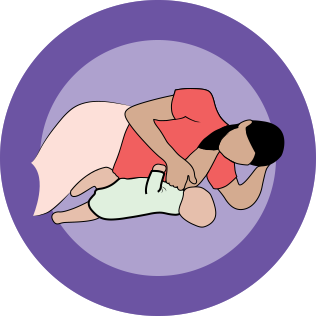
SIDE-LYING HOLD

Side-Lying Hold

  1. For the right breast, lie on your right side with your baby facing you.
  2. Pull your baby close. Your baby’s mouth should be level with your nipple.
  3. In this position, you can cradle your baby’s back with your left arm and support yourself with your right arm and/or pillows.
  4. Keep loose clothing and bedding away from your baby.
  5. Reverse for the left breast.

This hold is useful when:

  • You had a C-section
  • You want to rest while baby feeds
  • You are breastfeeding in the middle of the night
  • You and your baby are comfortable in this position
CROSS-CRADLE HOLD

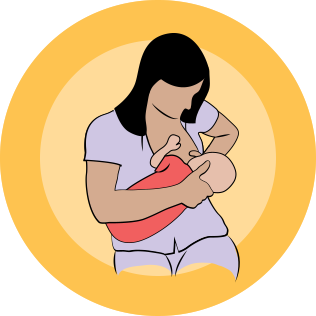
Cross-Cradle Hold

  1. For the right breast, use your left arm to hold your baby’s head at your right breast and baby’s body toward your left side. A pillow across your lap can help support your left arm.
  2. Gently place your left hand behind your baby’s ears and neck, with your thumb and index finger behind each ear and your palm between baby’s shoulder blades. Turn your baby’s body toward yours so your tummies are touching.
  3. Hold your breast as if you are squeezing a sandwich. To protect your back, avoid leaning down to your baby. Instead, bring your baby to you.
  4. As your baby’s mouth opens, push gently with your left palm on baby’s head to help them latch on. Make sure you keep your fingers out of the way.
  5. Reverse for the left breast.

This hold is useful when:

  • Your baby is premature
  • Your baby has a weak suck
  • Your baby needs help to stay latched
  • Your baby needs extra head support
  • You and your baby are comfortable in this position
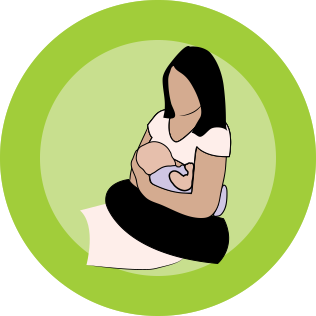
CLUTCH OR “FOOTBALL” HOLD

Clutch or “Football” Hold

  1. For the right breast, hold your baby level, facing up, at your right side.
  2. Put your baby’s head near your right nipple and support their back and legs under your right arm.
  3. Hold the base of your baby’s head with your right palm. A pillow underneath your right arm can help support your baby’s weight.
  4. To protect your back, avoid leaning down to your baby. Bring baby to you instead.
  5. Reverse for the left breast.

This hold is useful when:

  • You had a C-section
  • You have large breasts
  • You have flat or inverted nipples
  • You have a strong milk let-down
  • You are breastfeeding twins
  • Your baby likes to feed in an upright position
  • Your baby has reflux
  • You and your baby are comfortable in this position
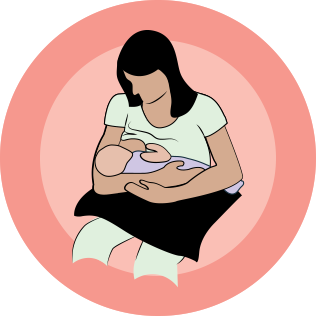
CRADLE HOLD

Cradle Hold

  1. For the right breast, cradle your baby with your right arm. Your baby will be on their left side across your lap, facing you at nipple level.
  2. Your baby’s head will rest on your right forearm with your baby’s back along your inner arm and palm.
  3. Turn your baby’s tummy toward your tummy. Your left hand is free to support your breast, if needed. Pillows can help support your arm and elbow.
  4. To protect your back, avoid leaning down to your baby. Instead, bring your baby to you.
  5. Reverse for the left breast.

This hold is useful when:

  • Your baby needs help latching on
  • You and your baby are comfortable in this position
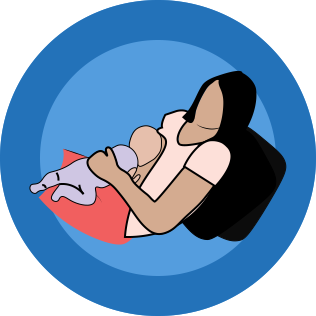
Laid-Back Hold

Laid-Back Hold

  1. Lean back on a pillow with your baby’s tummy touching yours and their head at breast level. Some moms find that sitting up nearly straight works well. Others prefer to lean back and lie almost flat.
  2. You can place your baby’s cheek near your breast, or you may want to use one hand to hold your breast near your baby. It’s up to you and what you think feels best.
  3. Your baby will naturally find your nipple, latch, and begin to suckle.

This hold is useful when:

  • Your baby is placed on your chest right after birth
  • You have a strong milk let-down
  • You have large breasts
  • You and your baby are comfortable in this position