Skip to Content Skip to Footer
Wyoming WIC
Wyoming WIC
  • Home
  • Women
    • Women
      Breastfeeding
    • Women
      Healthy Tips for Moms
    • Women
      Postpartum
    • Women
      Pregnant
  • Infants
    • Infants
      Feeding & Nutrition
    • Infants
      Growth & Development
  • Children
    • Children
      Toddlers
    • Children
      2-5 Year Olds
  • Families
    • Families
      Activity and Play
    • Families
      Dads
    • Families
      Food & Family Meals
    • Families
      Immunizations
    • Families
      Safety
  • Content Suite
  • Food Shopping Guide
  • Español
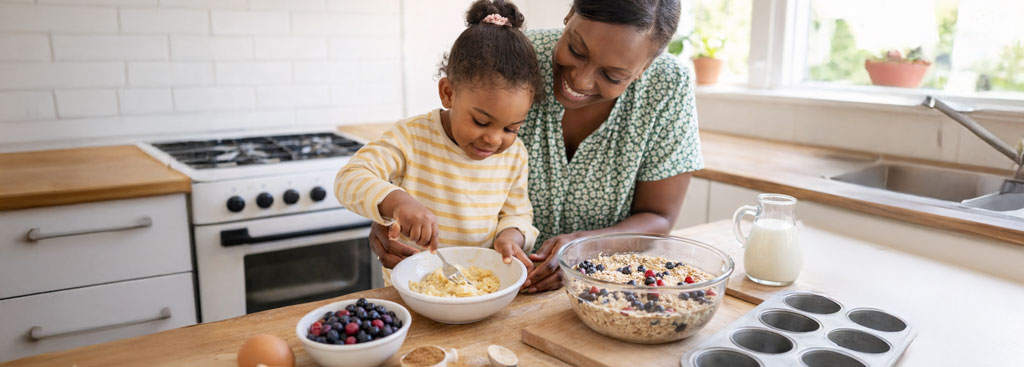
Mother and daughter baking together in kitchen

Heart-Healthy Recipe: Banana Berry Oatmeal Cups

  • Home
  • The Content Suite
  • Heart-Healthy Recipe: Banana Berry Oatmeal Cups
QR code centered on plain white background
February 18, 2026 Recipes

 Cups Banana Berry Oatmeal Cups

February is all about showing your heart some love! One tasty way to do that is by eating foods that help your heart stay strong, like these Banana Berry Oatmeal Cups.

These soft, lightly sweet oatmeal cups are perfect for busy mornings or as a wholesome snack. They’re also easy for little hands to hold (and help make!).

You can make these oatmeal cups ahead of time, freeze them in a sealed and dated storage bag, then reheat them whenever you’d like.

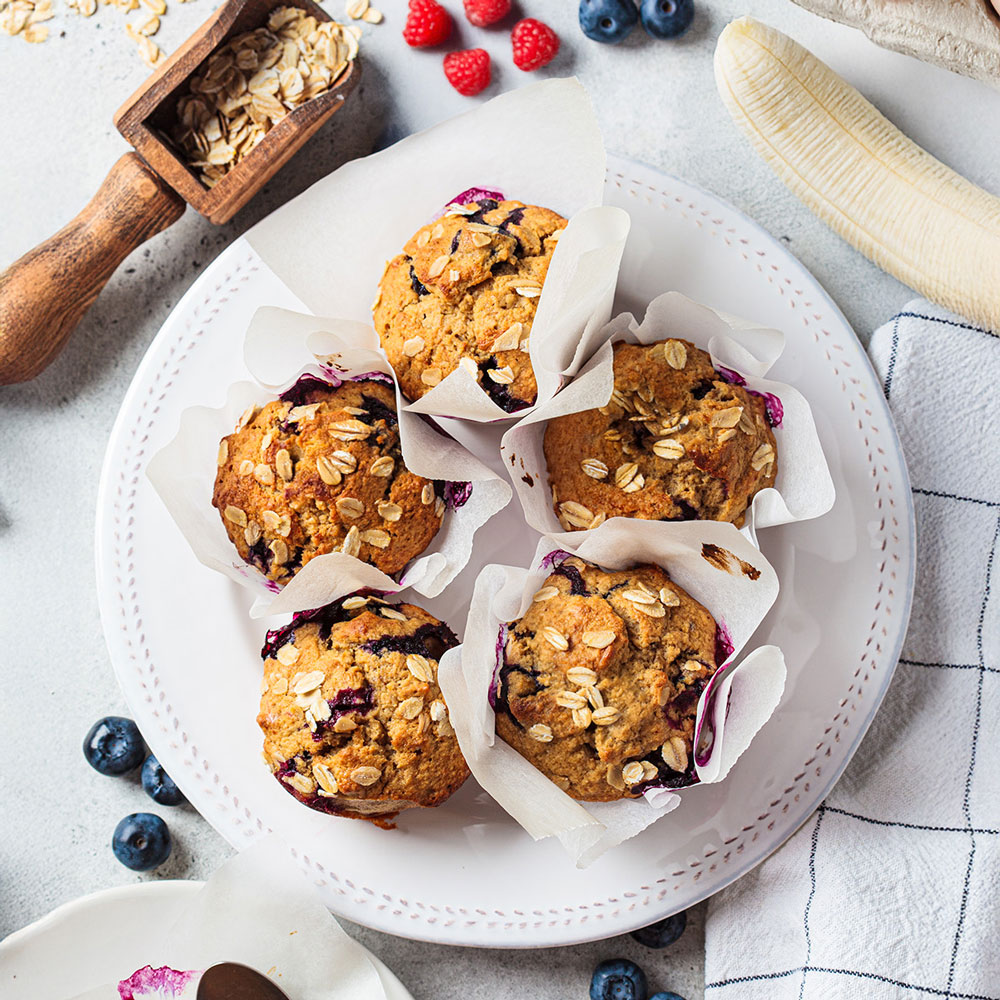
Five blueberry muffins with oats on a white plate
Heart Healthy What Makes This Recipe Heart-Healthy

Heart-healthy eating doesn’t have to be hard or expensive. Simple foods like oats, fruit, and milk can help support heart health, one meal at a time.

THIS RECIPE USES SIMPLE FOODS THAT HELP YOUR
HEART STAY STRONG AND SUPPORT GROWING KIDS:

Bowl filled with uncooked rolled oats

Oats are a good source of dietary fiber, which helps support heart health and keeps you feeling full longer
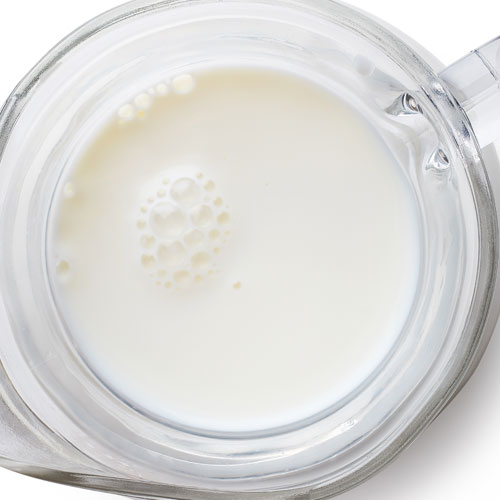
Pitcher filled with fresh milk, viewed from above

Milk adds calcium and protein for strong bones and muscles
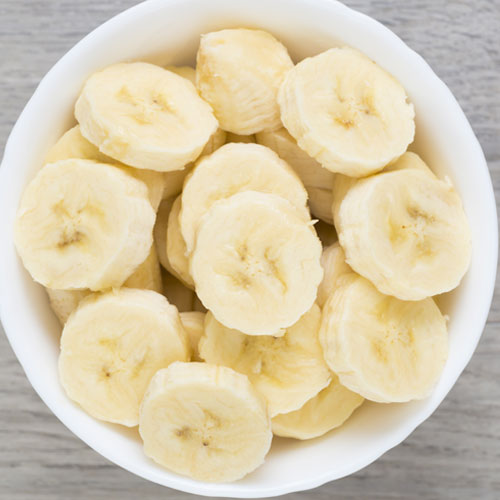
Sliced bananas in a white bowl on table

Bananas give natural sweetness and potassium, which helps the heart

Bowl filled with fresh mixed berries

Berries (fresh or frozen) are full of fiber and antioxidants that help protect the heart

Egg yolk and white in a white bowl

Eggs provide protein to help kids grow and stay satisfied
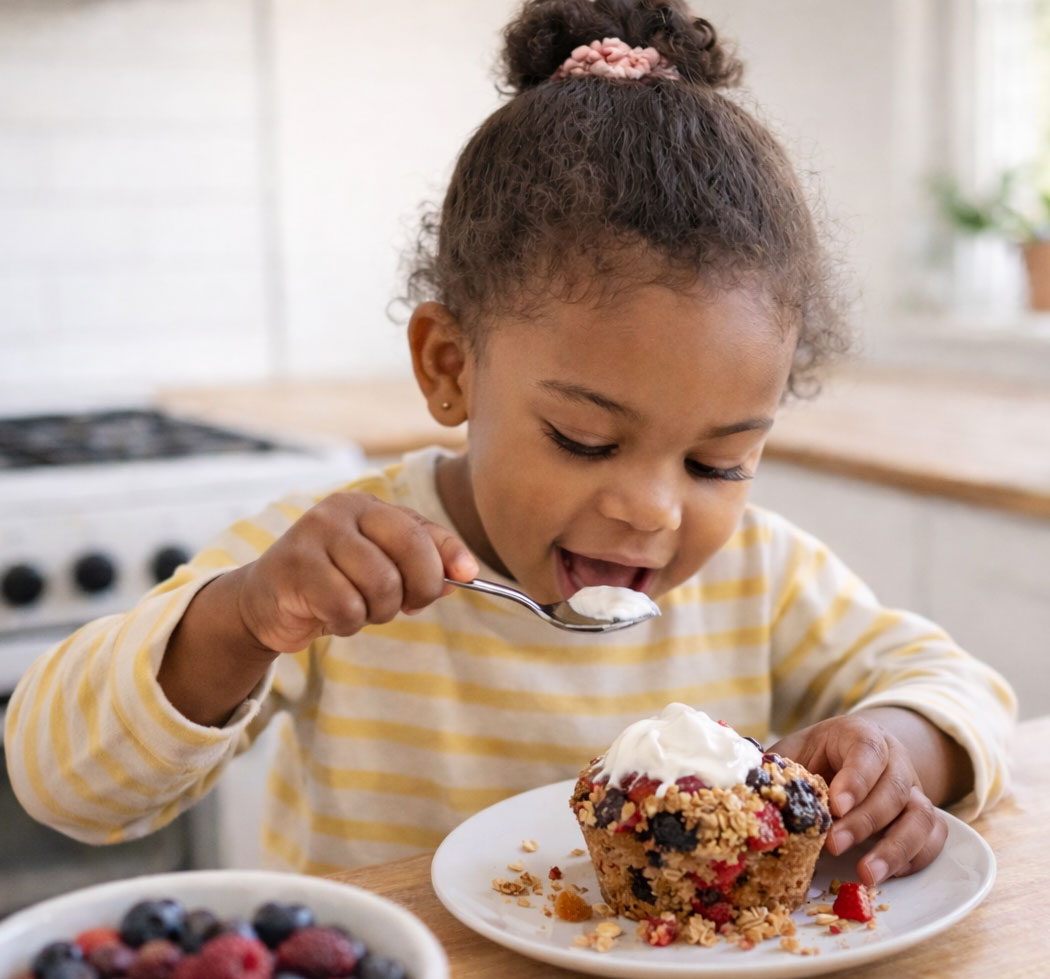
Child eating berry muffin with yogurt topping
Heart Healthy Kid-Friendly Tips
  • If offering to younger children (under 24 months), mash berries before mixing and baking to help prevent choking.
  • Serve with a spoonful of yogurt or a splash of milk on top.
  • Let kids help mash the banana or stir the bowl – they love helping!

Ingredients icon Ingredients

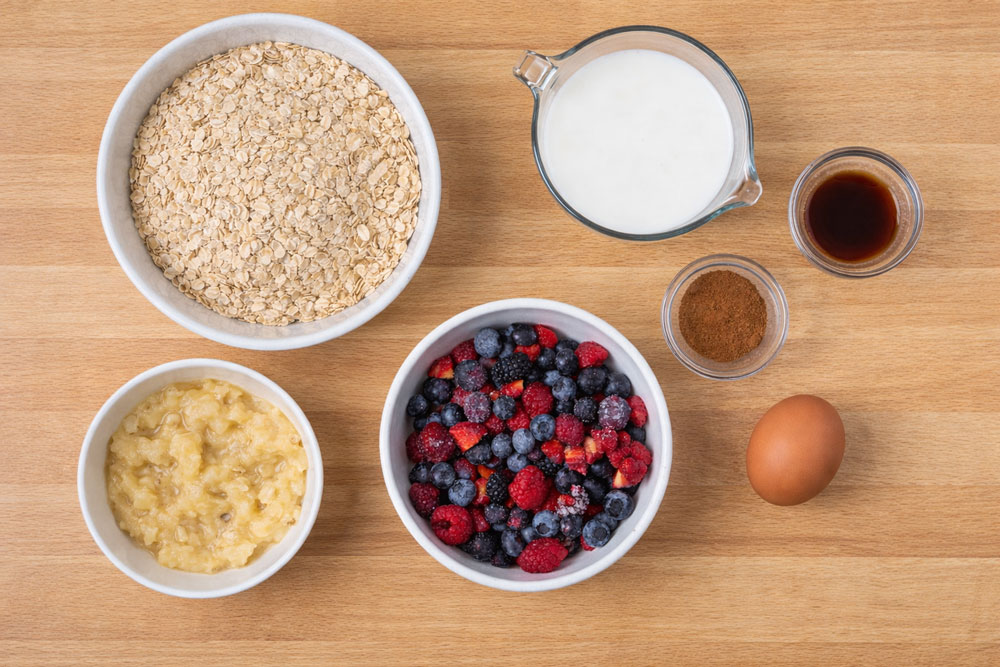
2 cups rolled oats
1½ cups milk
1 ripe banana, mashed
1 cup berries (fresh or frozen, chop or mash if large)
1 egg
1 teaspoon cinnamon
1 teaspoon vanilla (optional)

Oatmeal, milk, berries, banana, egg, cinnamon on table

Instructions icon Instructions

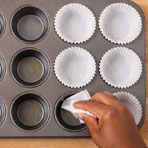
Hand greasing a muffin tray with cupcake liners
1.

Heat oven to 375°F. Lightly grease a muffin tin, or line one with paper baking cups.
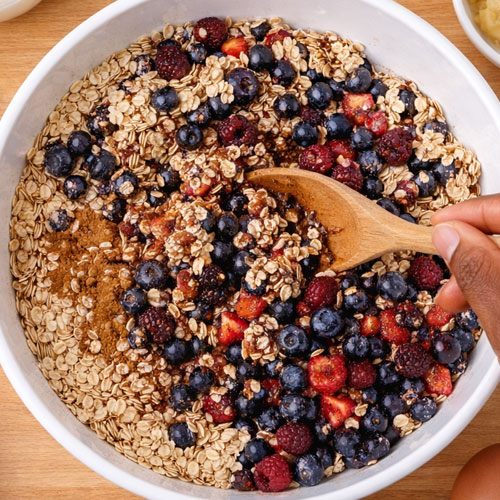
Mixing oats and berries with a wooden spoon
2.

In a large bowl, mix the oats, cinnamon, and berries (mash berries if offering to young children).
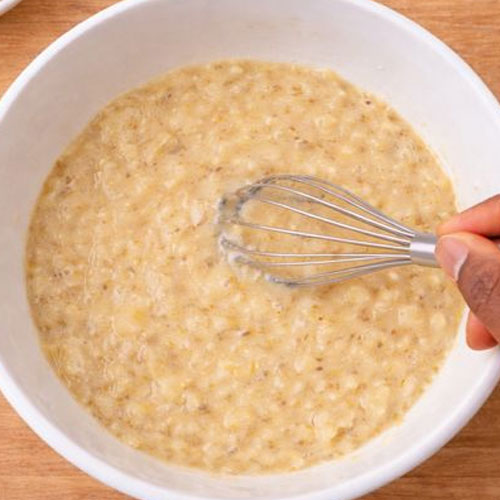
Whisk stirring oatmeal in a white bowl
3.

In another bowl, mash the banana. Stir in milk, egg, and vanilla.
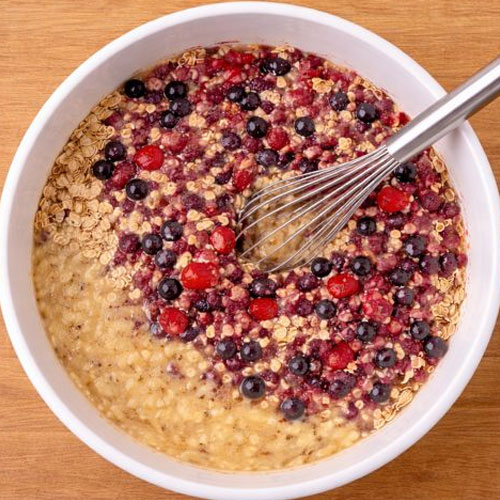
Whisk mixing oats with berries in white bowl
4.

Pour the wet mixture into the dry mixture. Stir well.
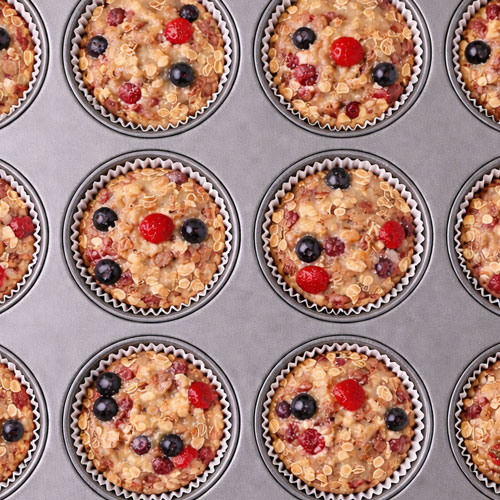
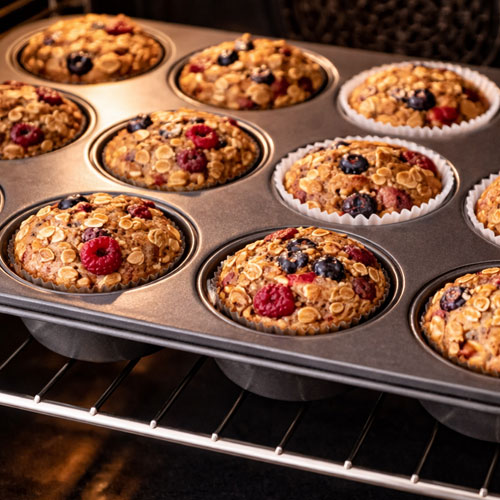
Berry oatmeal muffins in baking tray
5.

Spoon evenly into muffin cups.

Baked oat muffins with berries in oven tray
6.

Bake for 20–25 minutes, until set and lightly golden.

Berry oatmeal muffins in baking tray, ready to serve
7.

Cool slightly before serving.

Storage Tips

They’ll stay good:

  • 3-4 months in the freezer
  • 4-5 days in the refrigerator
Reheating Tips

You can warm them back up:

  • In the microwave for 20-30 seconds
  • In an oven or toaster oven at 350O F for about 10 minutes

REFERENCES:

American Heart Association. (2024, June 25). Get to Know Grains: Why You Need Them, and What to Look For.
https://www.heart.org/en/healthy-living/healthy-eating/eat-smart/nutrition-basics/whole-grains-refined-grains-and-dietary-fiber

Centers for Disease Control and Prevention. (2024, May 15). Preventing Heart Disease.
https://www.cdc.gov/heart-disease/prevention/

Author: Amanda Hojnacki, BS

You May Also Like...

August 5, 2026

Rainbow Fruit Salsa with Cinnamon Chips | Healthy Family Snack Recipe

Rainbow Fruit Salsa with Cinnamon Chips Not a fan of traditional tomato salsa? Give this sweet and colorful fruit version a try! Rainbow Fruit Salsa is packed with vitamin C,…

Read More
1
July 1, 2026

Healthy Red, White, and Blue Snacks for Kids

Red, White, and Blue Snacks Kids Will Love This July 4th July 4th is a fun time to celebrate with family, friends, and yummy food. But holiday snacks don’t have…

Read More
1
June 17, 2026

Simple Meals with Canned Fish: Easy, Healthy & Budget-Friendly Ideas

Simple Meals with Canned Fish Canned fish is a quick, easy, and affordable way to add healthy protein to your meals. Options like tuna, salmon, and sardines are packed with…

Read More
1
WATCH VIDEOS
  • Infant
    • Infant Pacifiers: Benefits, Safety Tips, and When to Wean
    • When to Start Peanut and Egg to Help Prevent Allergies
    • The Basics of Paced Bottle-Feeding
    • How Do I Know If My Baby Could Be Tongue-Tied?
    • Protect Your Baby from Cronobacter
  • Children
    • Food, Feelings, and Your Child’s Health | How Nutrition Affects Mood
    • Simple Child Safety Tips Every Parent Should Know
    • Shopping With Kids: A Simple Way to Help Them Like More Foods
    • Pumpkin Fun: Free and Healthy Activities for Kids Under 5
    • Letting Your Child Play with Food Can Be a Good Thing
  • General /Family
    • Protecting Your Family from Cyclospora: Summer Food & Water Safety
    • The Benefits of Family Meals for Kids and Parents
    • Meet the Milks: Dairy and Plant-Based Choices
    • Avoiding Food Waste
    • The 2025-2030 Dietary Guidelines for Americans – What Families Need to Know
  • Women
    • Breastfeeding Nipple Pain: What’s Normal and When to Get Help
    • Cluster Feeding Explained | WIC Breastfeeding Support
    • Breastfeeding Support Available Through WIC | Pumps, Peer Counselors & More
    • How Partners Can Support Breastfeeding
    • Common Breastfeeding Challenges and Simple Solutions for Parents
  • Recipes
    • Rainbow Fruit Salsa with Cinnamon Chips | Healthy Family Snack Recipe
    • Healthy Red, White, and Blue Snacks for Kids
    • Simple Meals with Canned Fish: Easy, Healthy & Budget-Friendly Ideas
    • Fresh & Easy Spring Snacks for Toddlers
    • Fresh & Easy Spring Veggie Pasta
Wyoming WIC WDH Public Health

CONTACT US

1-888-996-9378
health.wyo.gov/wic
  • How to apply for WIC

Resources

  • WIC Shopper
  • WIC Smart
  • WIC Breastfeeding Support
  • Wyoming Medicaid
  • Wyoming 211
  • Tell a friend about WIC!
  • Guide to Using Your WIC Benefits
  • Wyoming WIC Facebook
  • Wyoming WIC Instagram
  • Wyoming WIC

USDA is an equal opportunity provider, employer, and lender.

Cookie PolicyPrivacy Policy

© Brush Art Corporation
This website is operated by Brush Art Corporation on behalf of the Wyoming Department of Health.

Install this web app on your iPhone: tap and then Add to Home Screen.
Share to Social

Share this link via

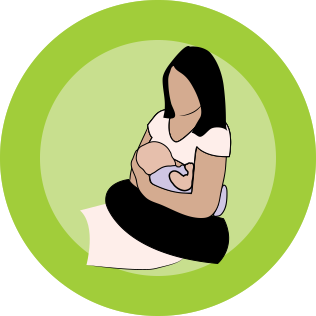
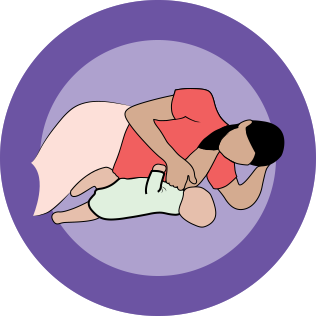
SIDE-LYING HOLD

Side-Lying Hold

  1. For the right breast, lie on your right side with your baby facing you.
  2. Pull your baby close. Your baby’s mouth should be level with your nipple.
  3. In this position, you can cradle your baby’s back with your left arm and support yourself with your right arm and/or pillows.
  4. Keep loose clothing and bedding away from your baby.
  5. Reverse for the left breast.

This hold is useful when:

  • You had a C-section
  • You want to rest while baby feeds
  • You are breastfeeding in the middle of the night
  • You and your baby are comfortable in this position
CROSS-CRADLE HOLD

Cross-Cradle Hold

  1. For the right breast, use your left arm to hold your baby’s head at your right breast and baby’s body toward your left side. A pillow across your lap can help support your left arm.
  2. Gently place your left hand behind your baby’s ears and neck, with your thumb and index finger behind each ear and your palm between baby’s shoulder blades. Turn your baby’s body toward yours so your tummies are touching.
  3. Hold your breast as if you are squeezing a sandwich. To protect your back, avoid leaning down to your baby. Instead, bring your baby to you.
  4. As your baby’s mouth opens, push gently with your left palm on baby’s head to help them latch on. Make sure you keep your fingers out of the way.
  5. Reverse for the left breast.

This hold is useful when:

  • Your baby is premature
  • Your baby has a weak suck
  • Your baby needs help to stay latched
  • Your baby needs extra head support
  • You and your baby are comfortable in this position
CLUTCH OR “FOOTBALL” HOLD

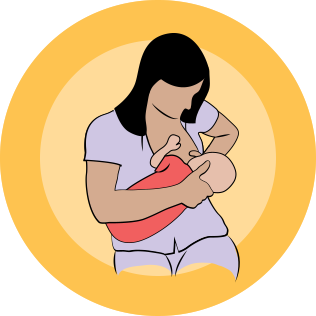
Clutch or “Football” Hold

  1. For the right breast, hold your baby level, facing up, at your right side.
  2. Put your baby’s head near your right nipple and support their back and legs under your right arm.
  3. Hold the base of your baby’s head with your right palm. A pillow underneath your right arm can help support your baby’s weight.
  4. To protect your back, avoid leaning down to your baby. Bring baby to you instead.
  5. Reverse for the left breast.

This hold is useful when:

  • You had a C-section
  • You have large breasts
  • You have flat or inverted nipples
  • You have a strong milk let-down
  • You are breastfeeding twins
  • Your baby likes to feed in an upright position
  • Your baby has reflux
  • You and your baby are comfortable in this position
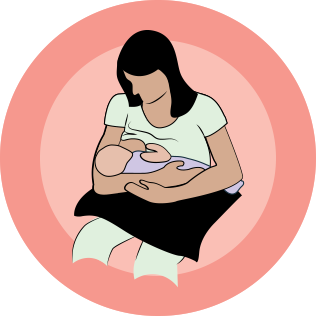
CRADLE HOLD

Cradle Hold

  1. For the right breast, cradle your baby with your right arm. Your baby will be on their left side across your lap, facing you at nipple level.
  2. Your baby’s head will rest on your right forearm with your baby’s back along your inner arm and palm.
  3. Turn your baby’s tummy toward your tummy. Your left hand is free to support your breast, if needed. Pillows can help support your arm and elbow.
  4. To protect your back, avoid leaning down to your baby. Instead, bring your baby to you.
  5. Reverse for the left breast.

This hold is useful when:

  • Your baby needs help latching on
  • You and your baby are comfortable in this position
Laid-Back Hold

Laid-Back Hold

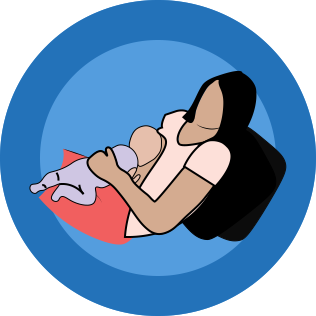
  1. Lean back on a pillow with your baby’s tummy touching yours and their head at breast level. Some moms find that sitting up nearly straight works well. Others prefer to lean back and lie almost flat.
  2. You can place your baby’s cheek near your breast, or you may want to use one hand to hold your breast near your baby. It’s up to you and what you think feels best.
  3. Your baby will naturally find your nipple, latch, and begin to suckle.

This hold is useful when:

  • Your baby is placed on your chest right after birth
  • You have a strong milk let-down
  • You have large breasts
  • You and your baby are comfortable in this position