

Skip to Content Skip to Footer
Wyoming WIC
Wyoming WIC
  • Home
  • Women
    • Women
      Breastfeeding
    • Women
      Healthy Tips for Moms
    • Women
      Postpartum
    • Women
      Pregnant
  • Infants
    • Infants
      Feeding & Nutrition
    • Infants
      Growth & Development
  • Children
    • Children
      Toddlers
    • Children
      2-5 Year Olds
  • Families
    • Families
      Activity and Play
    • Families
      Dads
    • Families
      Food & Family Meals
    • Families
      Immunizations
    • Families
      Safety
  • Live Well Blog
  • Food Shopping Guide
  • Español
Mother gently touching forehead with baby indoors

Infant Pacifiers:
Benefits, Safety Tips, and When to Wean

  • Home
  • Live Well Blog
  • Infant Pacifiers:
    Benefits, Safety Tips, and When to Wean
Infant Pacifiers: Benefits, Safety Tips, and When to Wean
June 3, 2026 Infant

Pacifier What Parents Should Know About Infant Pacifiers

Paci, binky, nookie – whatever you choose to call it, pacifiers can be a helpful tool for soothing babies. Many parents have questions about when to use them, how to use them safely, and what to do when it’s time to stop.

Pacifiers Baby Why Do Babies Like Pacifiers?

Babies are born with a natural urge to suck. This is called non-nutritive sucking, and it helps them feel calm and secure.

A pacifier can:

  • ✓ Help soothe a fussy or upset baby
  • ✓ Support self-calming between feedings
  • ✓ Help babies fall asleep
  • ✓ Provide comfort during stressful times (like getting shots at the doctor’s office or traveling away from home)
  • ✓ Help reduce the risk of Sudden Infant Death Syndrome (SIDS)

calendar true When Should You Introduce a Pacifier?

If you are breastfeeding, it’s best to wait until breastfeeding is well established before offering a pacifier. This is usually around 3 to 4 weeks after birth.

If you are formula feeding, you can offer a pacifier earlier, as long as your baby is feeding well and gaining weight.

Introducing a pacifier too early may make it harder to recognize hunger cues. It may also interfere with building milk supply if you’re breastfeeding.

Sleeping baby with pacifier resting in parent's arms on bed.

safe sleep Pacifiers and Safe Sleep

Using a pacifier at sleep time (naps and bedtime) has been linked to a lower risk of SIDS. In fact, studies suggest it may reduce the risk by 50% to 90%. While the exact reason is not fully understood, it’s believed they may help because when a baby sucks on a pacifier, it brings their tongue forward, which opens their airway a bit.

Tips for safe use during sleep:

  • ✓ Offer the pacifier when placing your baby down to sleep
  • ✓ If it falls out after your baby is asleep, you do not need to put it back in
  • ✓ Do not force your baby to take it
Pacifier Safely How to Use a Pacifier Safely
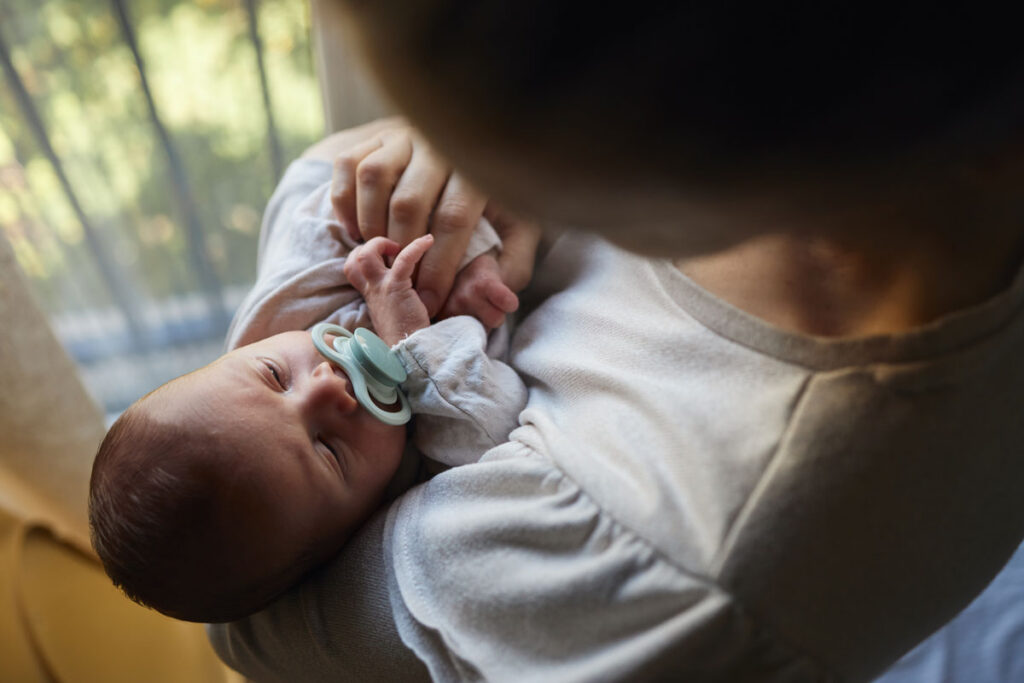
Baby with pacifier being held by parent near window
green thumb
To keep you baby safe you should:
  • ✓ Choose a one-piece pacifier (no small parts that can break off).
  • ✓ Keep pacifiers clean and wash them often. Clean pacifiers in boiling water for 5 minutes before first use and wash them daily with warm, soapy water or on the top rack of the dishwasher. Do not try to “clean” a pacifier with your own mouth – this just transfers bacteria from your mouth to your baby’s and can affect their developing teeth and immune system.
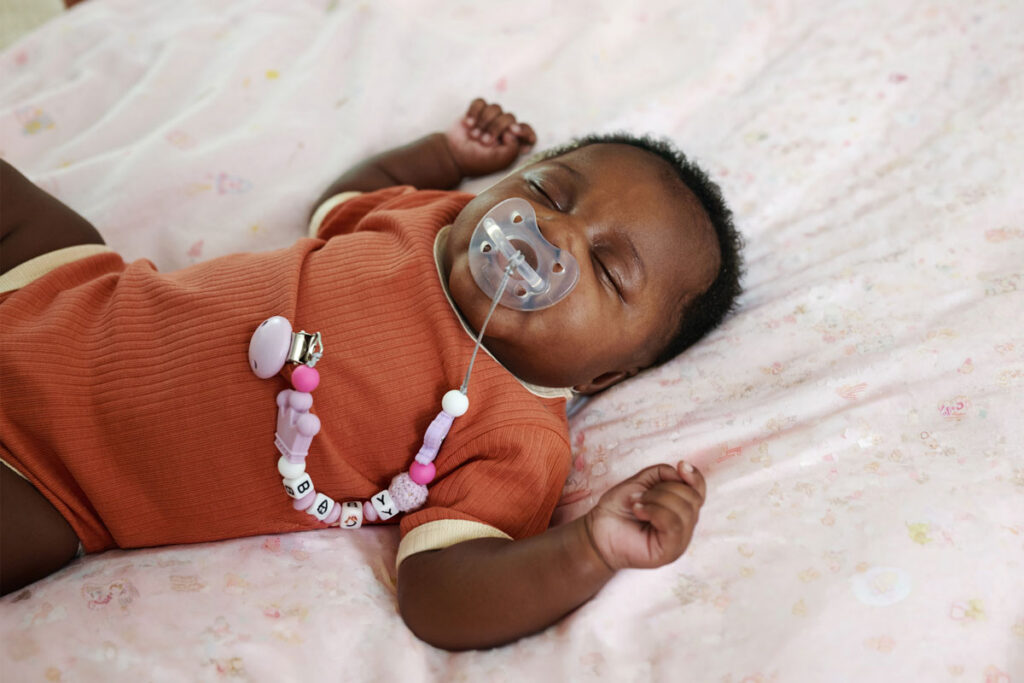
Sleeping baby with pacifier clip lying on pink blanket
Abstract red shapes form a dynamic, geometric pattern.
To keep your baby safe never:
  • Dip pacifiers in sugar, honey, or other sweet foods.
  • Attach a pacifier to your baby with a string, strap, or cord. They could wrap around your baby’s neck, causing strangulation, or break off and become a choking hazard. Replace pacifiers regularly if they show wear or damage.
Mother holding baby with pacifier during pediatric checkup at home

question Can Pacifiers Cause Problems?

Pacifiers are safe when used appropriately, but there are a few things to keep in mind.

Feeding Concerns

Using a pacifier too often or too early may mask hunger cues and lead to fewer feedings.

Ear Infections

Frequent pacifier use (especially after 6 months) has been linked to a higher risk of ear infections.

Dental Development

Long-term pacifier use can affect how teeth grow and align. This is more likely if use continues past toddler years.

calendar alert When Should You Wean from a Pacifier?

There is no single “perfect” time to wean from a pacifier, but many experts suggest:

6–12 MONTHS
  • Start limiting use around 6–12 months
BY 2 YEARS OLD
  • Wean completely by age 2 years
Tip!
Earlier weaning (between 6 to 12 months) may reduce the risk of ear infections and dental concerns.

notebookt How to Wean from a Pacifier

Giving up a pacifier can be difficult and emotionally challenging for both babies and parents. It may make sleep time more challenging for a few days or weeks, but weaning can be a gradual process.

Here are some gentle strategies to help:

Mother holding a sleeping baby with a pacifier while sitting on a couch
/.

LIMIT WHEN IT IS USED

Start by only allowing the pacifier:

  • ✓ At naps and bedtime
  • ✓ During stressful moments
2.

OFFER OTHER COMFORT

Help your child learn new ways to self-soothe:

  • ✓ Rocking or cuddling with a soft blanket
  • ✓ Singing or reading
  • ✓ Playing with a new or favorite toy
mother lifting laughing baby up
3.

GO GRADUAL

Slowly reduce use over time instead of stopping all at once.
Every time your child chooses not to use the pacifier, offer praise and remind them how proud you are that they’re becoming such a “big” boy or girl.

4.

MAKE A PLAN

Some families:

  • ✓ Set a “goodbye” date, then gradually phase out use before the official goodbye.
  • ✓ Offer an alternative to the pacifier, like a new toy or soft blanket.
  • ✓ Use a positive story (like “the pacifier fairy”) to help explain the process.

Here are some fun videos you can watch with your child to help:

  • Kids Book Read Aloud: An Untold Story of the Binky Fairy
  • Sesame Street: Put Down the Pacifier: The Pacifier Fairy
  • Sesame Street: Make a Trade
  • Sesame Street: Bye Bye Binky Song
Smiling mother holding baby while using laptop at home
Decorative abstract shape Follow Your Baby’s Lead

Every baby is different. Some love pacifiers, while others aren’t interested at all. Pacifiers can be a helpful tool, but they are not required and are not intended to be used long-term.

The most important thing is responding to your baby’s needs with care and consistency.

If you have questions about pacifier use, or are having trouble with weaning, WIC staff or your healthcare provider can help you decide what works best for your family.

Mother lifting baby in the air and smiling at home

REFERENCES:

American Academy of Pediatrics. HealthyChildren.org. (2026, January 20). Baby Pacifiers & Thumb Sucking: What Parents Need to Know.
https://www.healthychildren.org/English/ages-stages/baby/crying-colic/Pages/Pacifiers-and-Thumb-Sucking.aspx?gad_source=1&gad_campaignid=69654055&gbraid=0AAAAADyMpZGF9h9ErLZOObYPtilh8wjFs&gclid=CjwKCAjwnN3OBhA8EiwAfpTYepht0PiKFrI_FFSw3GB6fAPrkoM-_CAKw7HdfZqR5LJDJxNes1lAbRoCu_8QAvD_BwE

American Academy of Pediatrics. (2022). Sleep-related infant deaths: Updated recommendations for a safe infant sleeping environment. Pediatrics, 150(1).
https://doi.org/10.1542/peds.2022-057990

Centers for Disease Control and Prevention. (2024, September 17). About SUID and SIDS.
https://www.cdc.gov/sudden-infant-death/about/index.html

Community Care Physicians. (2022, February 12). Updated AAP Recommendations for Preventing SIDS and Other Sleep Related Infant Deaths.
https://communitycare.com/updated-aap-recommendations-preventing-sids/

Mayo Clinic. (2025, July 23). Pacifiers: Are they good for your baby?
https://www.mayoclinic.org/healthy-lifestyle/infant-and-toddler-health/in-depth/pacifiers/art-20048140

National Institute of Child Health and Human Development. (2026). Ways to Reduce Baby’s Risk.
https://safetosleep.nichd.nih.gov/reduce-risk/reduce

Safe Sleep Academy. (2026). Pacifiers & Safe Sleep.
https://safesleepacademy.org/pacifiers/

Author: Amanda Hojnacki

  • Infant
    • The Basics of Paced Bottle-Feeding
    • How Do I Know If My Baby Could Be Tongue-Tied?
    • Protect Your Baby from Cronobacter
    • Exploring the World with Baby – Sensory Play
    • Get Your Baby “Back” to Sleep in a Safe Environment
  • Children
    • Shopping With Kids: A Simple Way to Help Them Like More Foods
    • Pumpkin Fun: Free and Healthy Activities for Kids Under 5
    • Letting Your Child Play with Food Can Be a Good Thing
    • Is Snack Time Treat Time?
    • Fun Ways to Learn About Healthy Food and Get Moving!
  • General /Family
    • Meet the Milks: Dairy and Plant-Based Choices
    • Avoiding Food Waste
    • The 2025-2030 Dietary Guidelines for Americans – What Families Need to Know
    • Finding Calm When Life Gets Busy: Stress-Management for Parents
    • February Is National Heart Month: Simple Ways to Show Your Heart Some Love
  • Women
    • Breastfeeding and Returning to Work: Tips for Pumping & Planning
    • Increasing Milk Supply: Myths vs. Facts About Breastfeeding
    • Pumping Basics & Safe Breast Milk Storage Guide
    • Getting a Good Latch: Breastfeeding Positions & Holds That Help
    • Newborn Hunger Cues: How to Know When Your Baby Is Hungry or Full
  • Recipes
    • Fresh & Easy Spring Snacks for Toddlers
    • Fresh & Easy Spring Veggie Pasta
    • Heart-Healthy Recipe: Banana Berry Oatmeal Cups
    • Is the Chia Seed Challenge Worth It?
    • Extra Vegetables Quiche
Wyoming WIC WDH Public Health

CONTACT US

1-888-996-9378
health.wyo.gov/wic
  • How to apply for WIC

Resources

  • WIC Shopper
  • WIC Smart
  • WIC Breastfeeding Support
  • Wyoming Medicaid
  • Wyoming 211
  • Tell a friend about WIC!
  • Guide to Using Your WIC Benefits
  • Wyoming WIC Facebook
  • Wyoming WIC Instagram
  • Wyoming WIC

USDA is an equal opportunity provider, employer, and lender.

Cookie PolicyPrivacy Policy

© Brush Art Corporation
This website is operated by Brush Art Corporation on behalf of the Wyoming Department of Health.

Install this web app on your iPhone: tap and then Add to Home Screen.
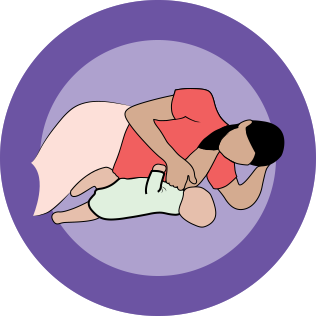
SIDE-LYING HOLD

Side-Lying Hold

  1. For the right breast, lie on your right side with your baby facing you.
  2. Pull your baby close. Your baby’s mouth should be level with your nipple.
  3. In this position, you can cradle your baby’s back with your left arm and support yourself with your right arm and/or pillows.
  4. Keep loose clothing and bedding away from your baby.
  5. Reverse for the left breast.

This hold is useful when:

  • You had a C-section
  • You want to rest while baby feeds
  • You are breastfeeding in the middle of the night
  • You and your baby are comfortable in this position
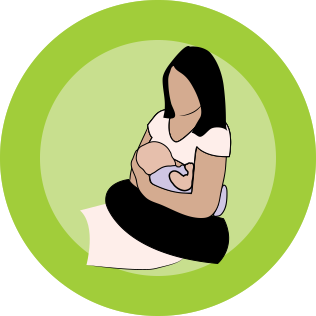
CROSS-CRADLE HOLD

Cross-Cradle Hold

  1. For the right breast, use your left arm to hold your baby’s head at your right breast and baby’s body toward your left side. A pillow across your lap can help support your left arm.
  2. Gently place your left hand behind your baby’s ears and neck, with your thumb and index finger behind each ear and your palm between baby’s shoulder blades. Turn your baby’s body toward yours so your tummies are touching.
  3. Hold your breast as if you are squeezing a sandwich. To protect your back, avoid leaning down to your baby. Instead, bring your baby to you.
  4. As your baby’s mouth opens, push gently with your left palm on baby’s head to help them latch on. Make sure you keep your fingers out of the way.
  5. Reverse for the left breast.

This hold is useful when:

  • Your baby is premature
  • Your baby has a weak suck
  • Your baby needs help to stay latched
  • Your baby needs extra head support
  • You and your baby are comfortable in this position
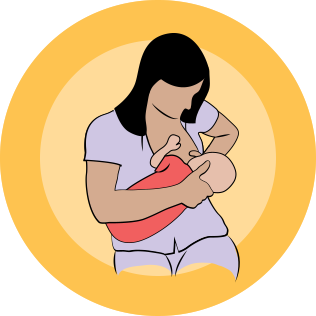
CLUTCH OR “FOOTBALL” HOLD

Clutch or “Football” Hold

  1. For the right breast, hold your baby level, facing up, at your right side.
  2. Put your baby’s head near your right nipple and support their back and legs under your right arm.
  3. Hold the base of your baby’s head with your right palm. A pillow underneath your right arm can help support your baby’s weight.
  4. To protect your back, avoid leaning down to your baby. Bring baby to you instead.
  5. Reverse for the left breast.

This hold is useful when:

  • You had a C-section
  • You have large breasts
  • You have flat or inverted nipples
  • You have a strong milk let-down
  • You are breastfeeding twins
  • Your baby likes to feed in an upright position
  • Your baby has reflux
  • You and your baby are comfortable in this position
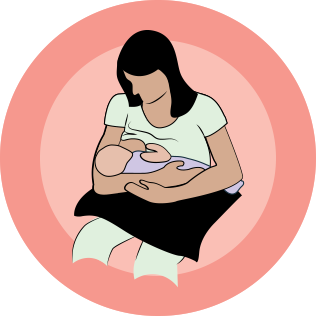
CRADLE HOLD

Cradle Hold

  1. For the right breast, cradle your baby with your right arm. Your baby will be on their left side across your lap, facing you at nipple level.
  2. Your baby’s head will rest on your right forearm with your baby’s back along your inner arm and palm.
  3. Turn your baby’s tummy toward your tummy. Your left hand is free to support your breast, if needed. Pillows can help support your arm and elbow.
  4. To protect your back, avoid leaning down to your baby. Instead, bring your baby to you.
  5. Reverse for the left breast.

This hold is useful when:

  • Your baby needs help latching on
  • You and your baby are comfortable in this position
Laid-Back Hold

Laid-Back Hold

  1. Lean back on a pillow with your baby’s tummy touching yours and their head at breast level. Some moms find that sitting up nearly straight works well. Others prefer to lean back and lie almost flat.
  2. You can place your baby’s cheek near your breast, or you may want to use one hand to hold your breast near your baby. It’s up to you and what you think feels best.
  3. Your baby will naturally find your nipple, latch, and begin to suckle.

This hold is useful when:

  • Your baby is placed on your chest right after birth
  • You have a strong milk let-down
  • You have large breasts
  • You and your baby are comfortable in this position