


Skip to Content Skip to Footer
Wyoming WIC
Wyoming WIC
  • Home
  • Women
    • Women
      Breastfeeding
    • Women
      Healthy Tips for Moms
    • Women
      Postpartum
    • Women
      Pregnant
  • Infants
    • Infants
      Feeding & Nutrition
    • Infants
      Growth & Development
  • Children
    • Children
      Toddlers
    • Children
      2-5 Year Olds
  • Families
    • Families
      Activity and Play
    • Families
      Dads
    • Families
      Food & Family Meals
    • Families
      Immunizations
    • Families
      Safety
  • Live Well Blog
  • Food Shopping Guide
  • Español
Woman cradling baby near a sunny window

Can I Breastfeed if I’m Sick?

  • Home
  • Live Well Blog
  • Can I Breastfeed if I’m Sick?
Scanning QR code square on white background
October 29, 2025 Women

Can I Breastfeed if I’m Sick?

Yes! In most cases, you should continue breastfeeding even when you are sick or have a fever. Your body makes antibodies (special protections) that pass through your milk to your baby. It’s like giving your baby a magical extra defense right when they need it most.

Mother breastfeeding infant on a comfortable sofa

Tips if You’re Sick

Green shopping bag standing upright
Rest and Drink Fluids.

In most cases, you should continue breastfeeding even when you are sick or have a fever. Your body makes antibodies (special protections) that pass through your milk to your baby. It’s like giving your baby a magical extra defense right when they need it most.

Green abstract shapes forming a complex, detailed design
Wash your hands often.

Wearing a mask around your baby can also help prevent spreading germs.

Green abstract shapes form a stylized plant design
If you feel too sick to nurse, pump your milk.

Have another caregiver feed your baby with your pumped milk so your supply stays strong.

Woman using inhaler while sitting on couch

If You Have a Chronic Illness

Health conditions like asthma or diabetes can make you feel worse when you’re sick. It’s important to keep up with your care. Take your daily medicines as prescribed. Stopping them suddenly can make you feel worse and affect your milk supply.

Talk with your WIC provider and health care team about medicines or treatments that are safe to use while breastfeeding.

Medicines_bottleMedicines and Breastfeeding

Antibiotics:

  • Most are safe, but some may cause side effects, like giving your baby looser stools.

Cold remedies:

  • Vitamin C: Up to 120 mg is safe.
  • Zinc: 25–50 mg is safe and may help shorten colds.
  • Avoid medicines with pseudoephedrine: They can lower your milk supply.
Woman holding child, examining prescription bottle
Click here to learn more about safe breastfeeding here:
Infant Risk Center
Click here to look up specific medications here:
LactMed Drugs and Lactation Database

Breast illustration for mastitisWatch for Mastitis

If you have a fever, chills, body aches, or just feel “off,” it could be the start of a breast infection called mastitis.

Your breast may not look red or swollen at first, so pay attention to how you feel. If your symptoms get worse or do not improve after 24 hours, get medical attention right away.

Warning triangle caution iconWhen to Be Extra Careful

Some illnesses need special care or treatment before you can safely breastfeed:

  • HIV: If your viral load is low and you are on treatment, your doctor may recommend breastfeeding.
  • Herpes or chickenpox (varicella) on the breast: Your baby can feed from the breast without sores.
  • Active tuberculosis: Wait until treatment makes you non-contagious (about 2 weeks).
  • Varicella right around birth: Baby may breastfeed if vaccinated.
  • Hepatitis C with bleeding nipples: Risk is higher when blood is present.
  • Ebola: Breastfeeding and close contact should be avoided. Ask others to help care for your baby until you are no longer contagious.
  • Zika virus: Some reports show it may spread through breast milk, but usually breastfeeding is still safe. The World Health Organization and CDC say the benefits of breastfeeding are greater than the small possible risk of passing the virus through milk. Talk with your health care provider to decide what’s best for you and your baby.
  • COVID-19: Moms with COVID-19 can keep breastfeeding. The virus does not pass through breast milk, and the antibodies in your milk actually help protect your baby. Wash your hands before touching your baby or pump parts, and wear a mask while feeding if you are coughing or sneezing.
Mother holding baby while looking thoughtful

Bottom line

In most cases, it is safe – and even good – for your baby if you keep breastfeeding while you are sick. If you’re unsure, talk with your health care provider or WIC staff. Remember to rest – your body needs time and care to recover and return to good health!

REFERENCES:

Centers for Disease Control and Prevention. About breastfeeding special circumstances.
(2025, September 23).
https://www.cdc.gov/breastfeeding-special-circumstances/about/index.html

Centers for Disease Control and Prevention. COVID-19 and breastfeeding. (2025, September 23).
https://www.cdc.gov/breastfeeding-special-circumstances/hcp/illnesses-conditions/covid-19.html

Centers for Disease Control and Prevention. How zika spreads. (2025, January 30).
https://www.cdc.gov/zika/causes/index.html

Infant Risk Center. (2025).
https://infantrisk.com/

National Library of Medicine. Drugs and Lactation Database (LactMed®). (2006).
https://www.ncbi.nlm.nih.gov/books/NBK501922/

  • Infant
    • Infant Pacifiers: Benefits, Safety Tips, and When to Wean
    • The Basics of Paced Bottle-Feeding
    • How Do I Know If My Baby Could Be Tongue-Tied?
    • Protect Your Baby from Cronobacter
    • Exploring the World with Baby – Sensory Play
  • Children
    • Shopping With Kids: A Simple Way to Help Them Like More Foods
    • Pumpkin Fun: Free and Healthy Activities for Kids Under 5
    • Letting Your Child Play with Food Can Be a Good Thing
    • Is Snack Time Treat Time?
    • Fun Ways to Learn About Healthy Food and Get Moving!
  • General /Family
    • Meet the Milks: Dairy and Plant-Based Choices
    • Avoiding Food Waste
    • The 2025-2030 Dietary Guidelines for Americans – What Families Need to Know
    • Finding Calm When Life Gets Busy: Stress-Management for Parents
    • February Is National Heart Month: Simple Ways to Show Your Heart Some Love
  • Women
    • Common Breastfeeding Challenges and Simple Solutions for Parents
    • Paced Bottle-Feeding: How to Feed Your Baby the Right Way
    • Breastfeeding and Returning to Work: Tips for Pumping & Planning
    • Increasing Milk Supply: Myths vs. Facts About Breastfeeding
    • Pumping Basics & Safe Breast Milk Storage Guide
  • Recipes
    • Simple Meals with Canned Fish: Easy, Healthy & Budget-Friendly Ideas
    • Fresh & Easy Spring Snacks for Toddlers
    • Fresh & Easy Spring Veggie Pasta
    • Heart-Healthy Recipe: Banana Berry Oatmeal Cups
    • Is the Chia Seed Challenge Worth It?
Wyoming WIC WDH Public Health

CONTACT US

1-888-996-9378
health.wyo.gov/wic
  • How to apply for WIC

Resources

  • WIC Shopper
  • WIC Smart
  • WIC Breastfeeding Support
  • Wyoming Medicaid
  • Wyoming 211
  • Tell a friend about WIC!
  • Guide to Using Your WIC Benefits
  • Wyoming WIC Facebook
  • Wyoming WIC Instagram
  • Wyoming WIC

USDA is an equal opportunity provider, employer, and lender.

Cookie PolicyPrivacy Policy

© Brush Art Corporation
This website is operated by Brush Art Corporation on behalf of the Wyoming Department of Health.

Install this web app on your iPhone: tap and then Add to Home Screen.
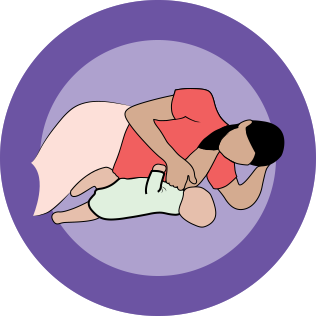
SIDE-LYING HOLD

Side-Lying Hold

  1. For the right breast, lie on your right side with your baby facing you.
  2. Pull your baby close. Your baby’s mouth should be level with your nipple.
  3. In this position, you can cradle your baby’s back with your left arm and support yourself with your right arm and/or pillows.
  4. Keep loose clothing and bedding away from your baby.
  5. Reverse for the left breast.

This hold is useful when:

  • You had a C-section
  • You want to rest while baby feeds
  • You are breastfeeding in the middle of the night
  • You and your baby are comfortable in this position
CROSS-CRADLE HOLD

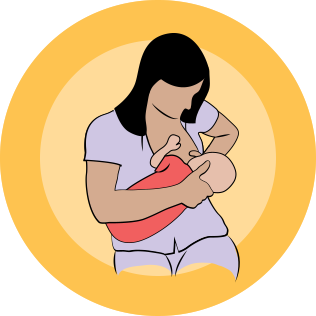
Cross-Cradle Hold

  1. For the right breast, use your left arm to hold your baby’s head at your right breast and baby’s body toward your left side. A pillow across your lap can help support your left arm.
  2. Gently place your left hand behind your baby’s ears and neck, with your thumb and index finger behind each ear and your palm between baby’s shoulder blades. Turn your baby’s body toward yours so your tummies are touching.
  3. Hold your breast as if you are squeezing a sandwich. To protect your back, avoid leaning down to your baby. Instead, bring your baby to you.
  4. As your baby’s mouth opens, push gently with your left palm on baby’s head to help them latch on. Make sure you keep your fingers out of the way.
  5. Reverse for the left breast.

This hold is useful when:

  • Your baby is premature
  • Your baby has a weak suck
  • Your baby needs help to stay latched
  • Your baby needs extra head support
  • You and your baby are comfortable in this position
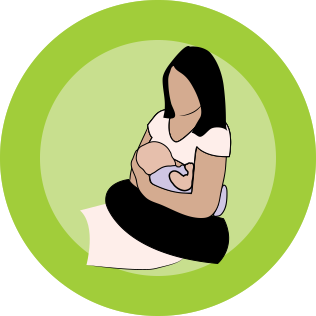
CLUTCH OR “FOOTBALL” HOLD

Clutch or “Football” Hold

  1. For the right breast, hold your baby level, facing up, at your right side.
  2. Put your baby’s head near your right nipple and support their back and legs under your right arm.
  3. Hold the base of your baby’s head with your right palm. A pillow underneath your right arm can help support your baby’s weight.
  4. To protect your back, avoid leaning down to your baby. Bring baby to you instead.
  5. Reverse for the left breast.

This hold is useful when:

  • You had a C-section
  • You have large breasts
  • You have flat or inverted nipples
  • You have a strong milk let-down
  • You are breastfeeding twins
  • Your baby likes to feed in an upright position
  • Your baby has reflux
  • You and your baby are comfortable in this position
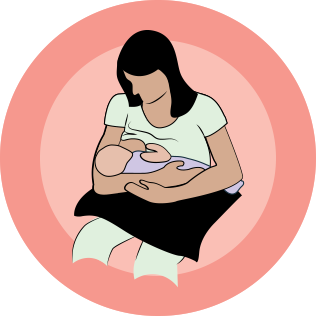
CRADLE HOLD

Cradle Hold

  1. For the right breast, cradle your baby with your right arm. Your baby will be on their left side across your lap, facing you at nipple level.
  2. Your baby’s head will rest on your right forearm with your baby’s back along your inner arm and palm.
  3. Turn your baby’s tummy toward your tummy. Your left hand is free to support your breast, if needed. Pillows can help support your arm and elbow.
  4. To protect your back, avoid leaning down to your baby. Instead, bring your baby to you.
  5. Reverse for the left breast.

This hold is useful when:

  • Your baby needs help latching on
  • You and your baby are comfortable in this position
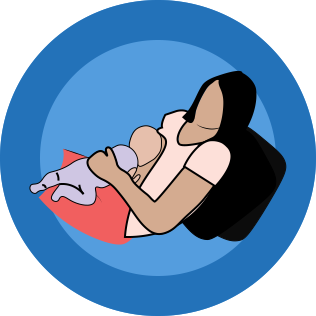
Laid-Back Hold

Laid-Back Hold

  1. Lean back on a pillow with your baby’s tummy touching yours and their head at breast level. Some moms find that sitting up nearly straight works well. Others prefer to lean back and lie almost flat.
  2. You can place your baby’s cheek near your breast, or you may want to use one hand to hold your breast near your baby. It’s up to you and what you think feels best.
  3. Your baby will naturally find your nipple, latch, and begin to suckle.

This hold is useful when:

  • Your baby is placed on your chest right after birth
  • You have a strong milk let-down
  • You have large breasts
  • You and your baby are comfortable in this position