
Skip to Content Skip to Footer
Wyoming WIC
Wyoming WIC
  • Home
  • Women
    • Women
      Breastfeeding
    • Women
      Healthy Tips for Moms
    • Women
      Postpartum
    • Women
      Pregnant
  • Infants
    • Infants
      Feeding & Nutrition
    • Infants
      Growth & Development
  • Children
    • Children
      Toddlers
    • Children
      2-5 Year Olds
  • Families
    • Families
      Activity and Play
    • Families
      Dads
    • Families
      Food & Family Meals
    • Families
      Immunizations
    • Families
      Safety
  • Live Well Blog
  • Food Shopping Guide
  • Español

Bye Bye Bottle!

  • Home
  • Live Well Blog
  • Bye Bye Bottle!
Bye-Bye-Bottle-QR-code
September 28, 2022 Infant

Sooner or later, the time will come to wean your baby. Whether your baby is chest-fed or bottle-fed, making the big change to your baby’s mealtime can be exciting and nerve-wracking, but it doesn’t have to be stressful. Read on to learn how you and your baby can have a smooth transition off the bottle!

When should I wean my baby from the bottle?

Around 6-8 months of age, your baby is ready to start drinking from a cup. Whether they are drinking human milk or formula out of a bottle, the goal is to have them weaned from the bottle and only drinking from a cup by 12-15 months of age. According to the American Academy of Pediatrics (AAP), babies who stay on bottles after 18 months have a higher risk of tooth decay. They may also drink more milk than they need and miss out on the nutrients found in other foods. Also, the older a baby gets, the harder it might be to give up the bottle. Try to wean your baby at a time when your family’s life is calm and your baby is on a normal schedule. Too much change at one time can be very hard on them!

How should I wean my baby from the bottle?

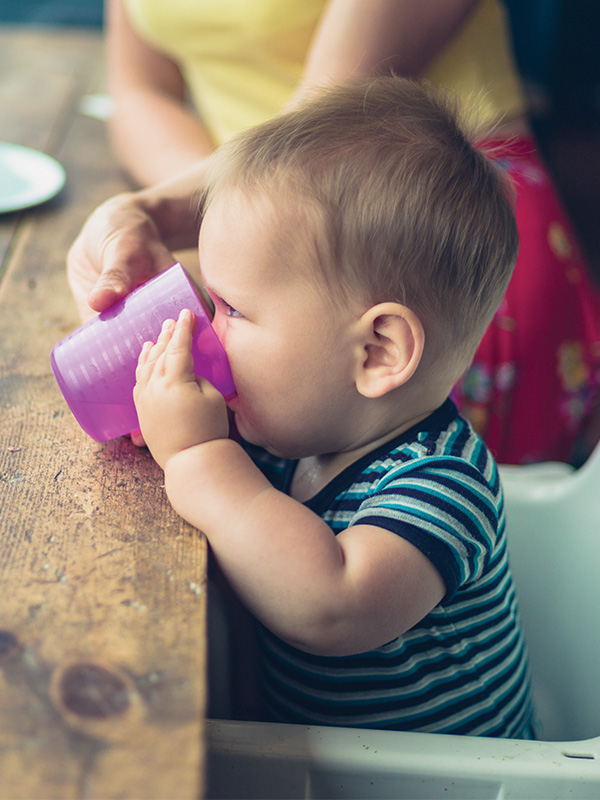
Taking away bottle feedings all at once isn’t a good idea for your baby, or you! Instead, slowly move them away from using the bottle. Start offering small amounts of liquid in a regular, open cup around 6 months. Mealtimes will be messy for a few weeks, but your baby needs practice drinking from other containers to feel comfortable. Start by offering a cup at lunchtime. Next, serve a cup at breakfast and for the afternoon feedings. Usually, the evening or bedtime bottle is the hardest to drop, so that should be the last bottle to go.

My baby gets so much of their nutrition from bottle or chest-feeding. How can I make sure they’re getting enough food?

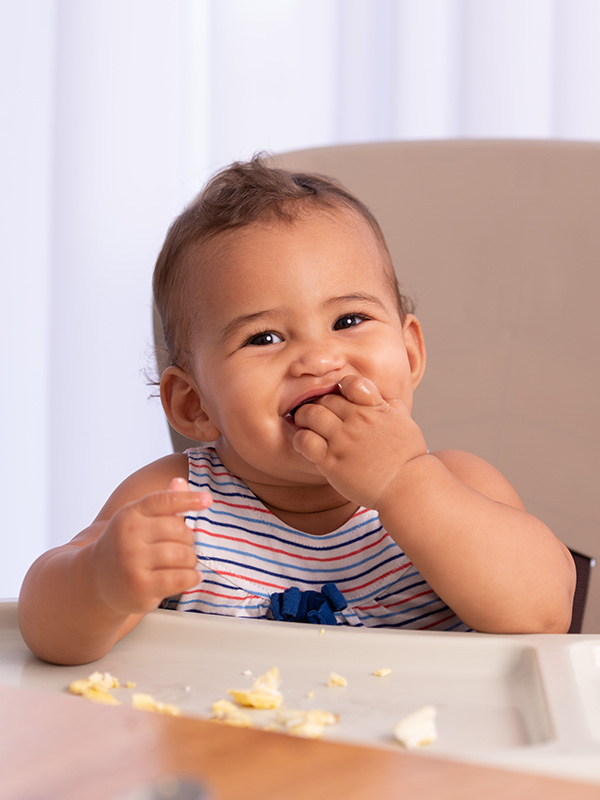
Being concerned that your baby is getting enough nutrition is a normal worry for parents, but don’t let those worries keep you from weaning. Your baby may drink less human milk or formula when they start drinking from a cup — but they should also start eating more solid food to make up for it. Avoid giving your child milk or juice outside of meal and snack time. They need just 2-3 cups of milk and no more than 4-6 oz. of juice each day otherwise they may stay full from liquids, and be less likely to eat food. Solid foods contain many nutrients that your child won’t get from drinks. Your baby’s growth and weight are the best signs that they’re eating enough, which your pediatrician and WIC are keeping track of.

What kind of cup should my baby drink out of after the bottle is gone?

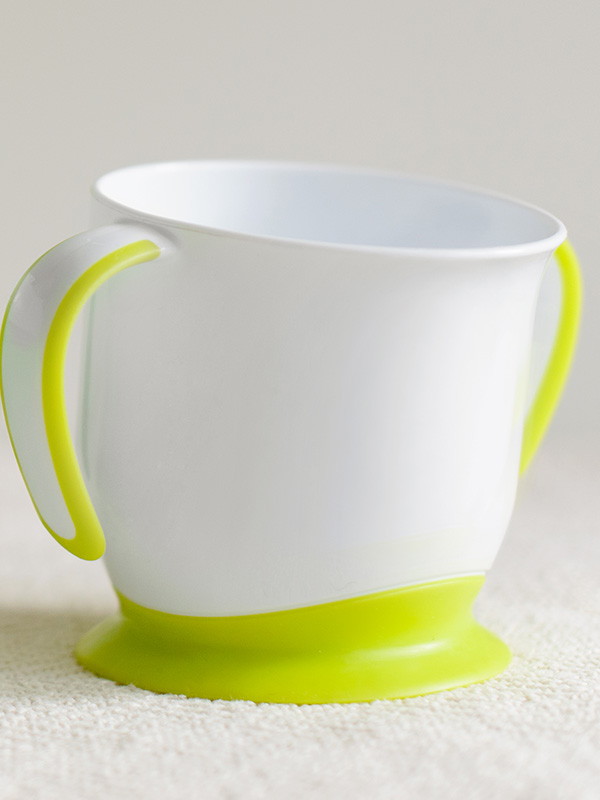
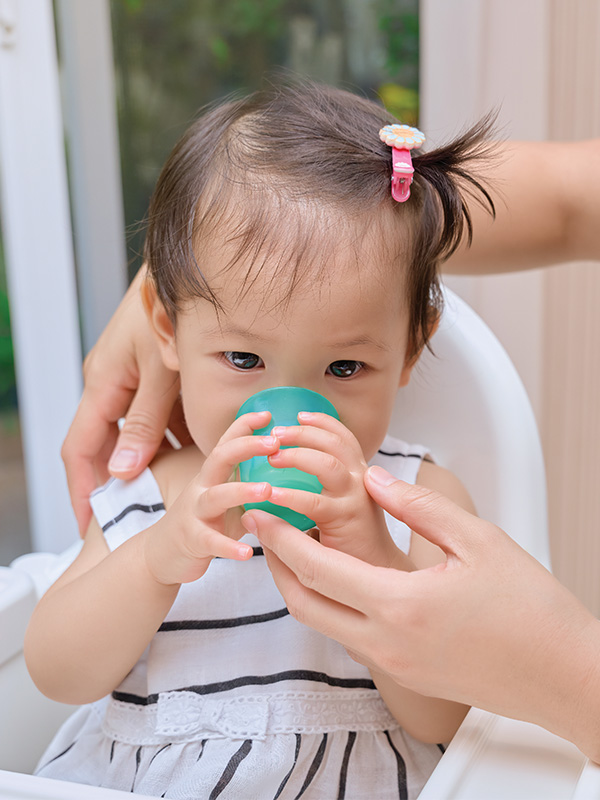
Choose a small 4-ounce cup that your baby can easily hold and raise to their mouth. Some babies like cups with handles. Cups without lids help your child learn and are less likely to be carried around all day. If you choose a small plastic cup with a lid, the lid should have a hard spout without a spill proof valve.

How can I wean my baby from chest-feeding?

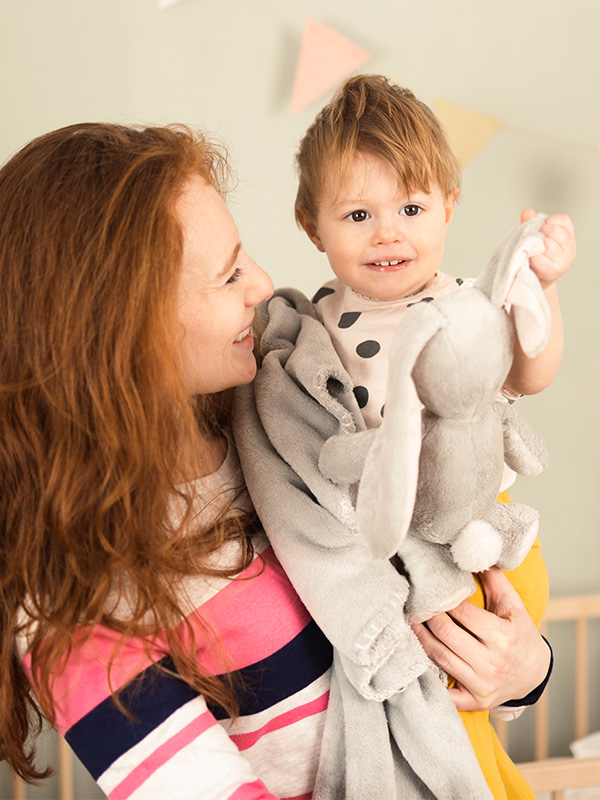
Chest-fed babies should also be weaned gradually. Use the same method as mentioned above for weaning from the bottle. Drop the midday feeding, then morning and afternoon feedings, giving a cup instead. You may choose to continue the evening feeding a little longer, as this feeding is comforting and helps your baby relax for bedtime. “I distracted my son with a blanket when it was time for his nighttime feeding,” says Sherry Coleman Collins, MS, RDN, LD, who has a 2-year-old son. “The blanket gave him the comfort he was getting from chest-feeding. Soon, he didn’t even ask to be chest-fed. The blanket helped us to have a relatively smooth transition.” Slowly weaning from chest-feeding will also help to ease the discomfort caused by engorged or leaky breasts.

Remember, it’s up to you! You can help your child grow
 well, be healthy, and say “bye-bye bottle” for good!
  • Infant
    • The Basics of Paced Bottle-Feeding
    • How Do I Know If My Baby Could Be Tongue-Tied?
    • Protect Your Baby from Cronobacter
    • Exploring the World with Baby – Sensory Play
    • Get Your Baby “Back” to Sleep in a Safe Environment
  • Children
    • Shopping With Kids: A Simple Way to Help Them Like More Foods
    • Pumpkin Fun: Free and Healthy Activities for Kids Under 5
    • Letting Your Child Play with Food Can Be a Good Thing
    • Is Snack Time Treat Time?
    • Fun Ways to Learn About Healthy Food and Get Moving!
  • General /Family
    • The 2025-2030 Dietary Guidelines for Americans – What Families Need to Know
    • Finding Calm When Life Gets Busy: Stress-Management for Parents
    • February Is National Heart Month: Simple Ways to Show Your Heart Some Love
    • 10 Ways to Enjoy Avocados – And Helpful Tips to Feed with Confidence
    • Food, Feelings, and Finding Balance: Understanding Disordered Eating
  • Women
    • Newborn Hunger Cues: How to Know When Your Baby Is Hungry or Full
    • How to Know Your Baby Is Getting Enough Breastmilk
    • Breastfeeding Through Growth Spurts and Sleep Changes
    • Baby Blues… or Is It Something More?
    • Gut Health and Gestational Diabetes
  • Recipes
    • Heart-Healthy Recipe: Banana Berry Oatmeal Cups
    • Is the Chia Seed Challenge Worth It?
    • Extra Vegetables Quiche
    • Easy Pumpkin Muffins
    • Confetti Bean Salad
Wyoming WIC WDH Public Health

CONTACT US

1-888-996-9378
health.wyo.gov/wic
  • How to apply for WIC

Resources

  • WIC Shopper
  • WIC Smart
  • WIC Breastfeeding Support
  • Wyoming Medicaid
  • Wyoming 211
  • Tell a friend about WIC!
  • Guide to Using Your WIC Benefits
  • Wyoming WIC Facebook
  • Wyoming WIC Instagram
  • Wyoming WIC

USDA is an equal opportunity provider, employer, and lender.

Cookie PolicyPrivacy Policy

© Brush Art Corporation
This website is operated by Brush Art Corporation on behalf of the Wyoming Department of Health.

Install this web app on your iPhone: tap and then Add to Home Screen.

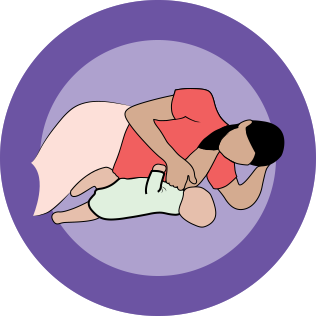
SIDE-LYING HOLD

Side-Lying Hold

  1. For the right breast, lie on your right side with your baby facing you.
  2. Pull your baby close. Your baby’s mouth should be level with your nipple.
  3. In this position, you can cradle your baby’s back with your left arm and support yourself with your right arm and/or pillows.
  4. Keep loose clothing and bedding away from your baby.
  5. Reverse for the left breast.

This hold is useful when:

  • You had a C-section
  • You want to rest while baby feeds
  • You are breastfeeding in the middle of the night
  • You and your baby are comfortable in this position
CROSS-CRADLE HOLD

Cross-Cradle Hold

  1. For the right breast, use your left arm to hold your baby’s head at your right breast and baby’s body toward your left side. A pillow across your lap can help support your left arm.
  2. Gently place your left hand behind your baby’s ears and neck, with your thumb and index finger behind each ear and your palm between baby’s shoulder blades. Turn your baby’s body toward yours so your tummies are touching.
  3. Hold your breast as if you are squeezing a sandwich. To protect your back, avoid leaning down to your baby. Instead, bring your baby to you.
  4. As your baby’s mouth opens, push gently with your left palm on baby’s head to help them latch on. Make sure you keep your fingers out of the way.
  5. Reverse for the left breast.

This hold is useful when:

  • Your baby is premature
  • Your baby has a weak suck
  • Your baby needs help to stay latched
  • Your baby needs extra head support
  • You and your baby are comfortable in this position
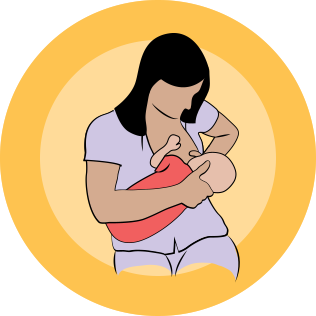
CLUTCH OR “FOOTBALL” HOLD

Clutch or “Football” Hold

  1. For the right breast, hold your baby level, facing up, at your right side.
  2. Put your baby’s head near your right nipple and support their back and legs under your right arm.
  3. Hold the base of your baby’s head with your right palm. A pillow underneath your right arm can help support your baby’s weight.
  4. To protect your back, avoid leaning down to your baby. Bring baby to you instead.
  5. Reverse for the left breast.

This hold is useful when:

  • You had a C-section
  • You have large breasts
  • You have flat or inverted nipples
  • You have a strong milk let-down
  • You are breastfeeding twins
  • Your baby likes to feed in an upright position
  • Your baby has reflux
  • You and your baby are comfortable in this position
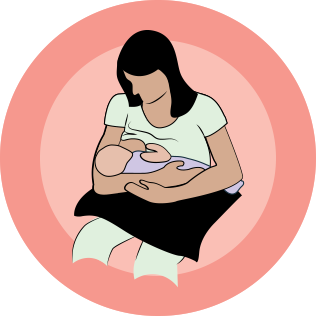
CRADLE HOLD

Cradle Hold

  1. For the right breast, cradle your baby with your right arm. Your baby will be on their left side across your lap, facing you at nipple level.
  2. Your baby’s head will rest on your right forearm with your baby’s back along your inner arm and palm.
  3. Turn your baby’s tummy toward your tummy. Your left hand is free to support your breast, if needed. Pillows can help support your arm and elbow.
  4. To protect your back, avoid leaning down to your baby. Instead, bring your baby to you.
  5. Reverse for the left breast.

This hold is useful when:

  • Your baby needs help latching on
  • You and your baby are comfortable in this position
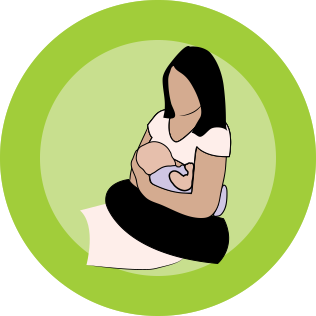
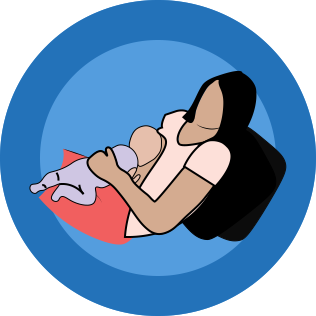
Laid-Back Hold

Laid-Back Hold

  1. Lean back on a pillow with your baby’s tummy touching yours and their head at breast level. Some moms find that sitting up nearly straight works well. Others prefer to lean back and lie almost flat.
  2. You can place your baby’s cheek near your breast, or you may want to use one hand to hold your breast near your baby. It’s up to you and what you think feels best.
  3. Your baby will naturally find your nipple, latch, and begin to suckle.

This hold is useful when:

  • Your baby is placed on your chest right after birth
  • You have a strong milk let-down
  • You have large breasts
  • You and your baby are comfortable in this position