
Skip to Content Skip to Footer
Wyoming WIC
Wyoming WIC
  • Home
  • Women
    • Women
      Breastfeeding
    • Women
      Healthy Tips for Moms
    • Women
      Postpartum
    • Women
      Pregnant
  • Infants
    • Infants
      Feeding & Nutrition
    • Infants
      Growth & Development
  • Children
    • Children
      Toddlers
    • Children
      2-5 Year Olds
  • Families
    • Families
      Activity and Play
    • Families
      Dads
    • Families
      Food & Family Meals
    • Families
      Immunizations
    • Families
      Safety
  • Live Well Blog
  • Food Shopping Guide
  • Español
Woman sitting sadly near crib in bedroom

What Is Postpartum Depression?

  • Home
  • Live Well Blog
  • What Is Postpartum Depression?
WIC logo featuring apple and child silhouette
November 26, 2025 General /Family

What Is Postpartum Depression?

Having a baby can bring big changes.
Moms and dads often feel joy, love, and excitement. But sometimes, they can feel sad, worried, or alone. If these feelings don’t go away, it may be something more serious – it may be postpartum depression, which is depression that happens after a baby is born.

Postpartum depression can happen for many reasons. If you’re struggling, it’s important to know you did not cause this, and it is not in any way your fault.

Lots of changes happen after a baby is born that may impact how you feel:

Green abstract interconnected dots and lines pattern
Hormone changes
Green swirling vortex with geometric patterns
Less time for yourself
Plus sign inside a green circular frame
Physical recovery from birth
Green abstract flower design with overlapping petals
Big responsibilities and more stress
Green eye with wavy, circular elements surrounding it
Less sleep and more fatigue
Two olive green gears interlocking, surrounded by circle
Sometimes a lack of support from partner, family, or community

Remember, you are not to blame.

Postpartum depression is a medical condition that requires medical care.

Both Moms and Dads Can Have Postpartum Depression.

It can look or feel different for moms than it does for dads.

Heart with wings and halo, symbolizing love and care

For Moms

Postpartum depression often begins during pregnancy or in the first few weeks after baby is born. Moms with a history of depression or anxiety, or a lack of support are at greater risk of
postpartum depression.

Abstract human face with interconnected geometric lines

For Dads

Postpartum depression may start later – often 3–6 months after baby is born, but it can happen anytime in the first year. Dads are at greater risk for postpartum depression if they have a partner with postpartum depression, have a personal history of past mental health struggles, or if they are under financial stress.

Person sitting in distress Signs of Postpartum Depression

Here are more signs of postpartum depression and what it might look like for moms compared to dads:

Changes You Might Notice Moms Dads
     
Mood
  • Sad
  • Crying a lot
  • Feeling hopeless or guilty
  • Angry
  • Stressed
  • Easily frustrated
     
Connection to Baby
  • Hard time bonding or feeling close to the baby
  • Feeling distant from baby or partner
  • Avoiding baby care
     
Energy & Sleep
  • Feeling very tired
  • Trouble sleeping even when baby sleeps
  • Tired from lack of sleep
  • May spend more time at work or away
     
Eating & Physical Body Feelings
  • Eating too little or too much
  • May have body aches and pains
  • Changes in eating
  • Stomach problems
  • Headaches
     
Ability to Focus
  • Trouble thinking clearly or making decisions
  • Hard to focus
  • Less interest in work or home life
     
Social Life
  • Pulls away from family and friends
  • Loses interest in hobbies
  • Pulls away socially
  • May drink or use substances more
  • Withdrawing from family
     
Anxiety
  • Feeling very anxious or like a "bad mom"
  • Worries about money or providing for family
  • More irritable
     
Serious Thoughts of Harm
  • May think about harming self or baby
  • May feel trapped and think about running away
  • May think about self-harm
Warning If you have serious thoughts of harming yourself, your baby, or others, get help right away.
Raised hand in a glove, palm facing forward

If you or someone you love shows any of these signs, it’s important to reach out for help. Getting help right away will benefit you, your baby, and the rest of your family.

food unsafe How to Feel Better

There are things you can try that may help, like:

Two people comforting each other on a couch

Talking with someone you trust — a partner, friend, or family member.

Let them know how you feel. Others care about you and want to help, even if it’s just to listen.

Making rest a priority.

Sleep when you can. Ask for help with caring for your baby so you can rest – even if just for an hour or so.

Woman peacefully sleeping on white pillow and bedding
Couple walking together, pushing baby stroller outside

Getting outside.

Go for a walk, breathe fresh air, and move your body a little. As little as 15 minutes outside can refresh your mood.

Eating well and staying hydrated.

Try to eat regular meals with a variety of foods you enjoy. Drink plenty of water every day to help fight fatigue and irritability – which are both signs of dehydration.

People drinking water in a modern kitchen
Woman relaxing in bathtub, reading a book

Finding time for things you enjoy.

Even simple things like listening to music, reading a book or favorite blog, or taking a relaxing bath. Schedule a bit of time each day to do something just for you.

Talking with a doctor, nurse, or mental health professional.

Sometimes feeling better requires therapy (“talking help”) or medicine. A mental health care provider can help you find ways to manage your feelings or may recommend medication to help you feel more like yourself again.

Two women conversing thoughtfully in a bright room
pumpkin Ingredients When to Get Help

If things don’t improve or start to feel worse instead of better, get help right away from a licensed medical provider. Especially if you feel:

  • Unsafe or very out of control
  • Like you might hurt yourself or the baby
  • Like you can’t take care of the baby or yourself
Person resting on couch, using a smartphone
Find Help icon Where to Find Help

The following are trusted resources that offer information and support to help.

Postpartum Support International (PSI)

PSI offers support to parents and families suffering from postpartum depression, anxiety, and distress.

Laptop with scroll bar on blue screen
Online Support: ​
Helpline
Teal telephone receiver with twisting cord
Call 1-800-944-4773

(4PPD) #1 En Español or #2 English

Outlined chat bubbles with three horizontal lines each
Text “Help” to 800-944-4773 (English)

Text en Español 971-203-7773

Click here for free and virtual support groups, where you can talk with other parents going through similar things online:
PSI Online Support Meetings
Click here to find a provider (therapist or counselor) in your area who knows about postpartum mental health:
Provider Directory

NIH Action Plan for Depression & Anxiety During Pregnancy and After Birth

The National Institutes of Health has an Action Plan to help moms and dads see signs of depression or anxiety before or after baby arrives. It includes what to watch for, how to take care of yourself, and when to reach out for help.
Laptop with scroll bar on blue screen
Click here to learn more:
nichd.nih.gov
Teal telephone receiver with twisting cord
To find a mental health provider in your area, call 1-800-662-HELP (4357)
Two people sitting together and having a conversation
You Are Not Alone

Postpartum depression can feel very scary. But you are not alone. Many moms and dads feel this way. It can get better with help. You deserve support, care, and kindness – for yourself and your family.

If you or your partner aren’t feeling like yourself after the baby arrives, reach out. Talk, call, or ask for help. The sooner you get help, the sooner you can begin to feel better.

REFERENCES:

Cleveland Clinic. Dehydration and mental health: what’s the connection? (2025, March 28).
https://health.clevelandclinic.org/dehydration-and-affect-on-mental-health

Cleveland Clinic. How the outdoors can improve your mood. (2024, April 9).
https://newsroom.clevelandclinic.org/2024/04/09/how-the-outdoors-can-improve-your-mood

Mayo Clinic. Postpartum depression. (2022, November 24).
https://www.mayoclinic.org/diseases-conditions/postpartum-depression/diagnosis-treatment/drc-20376623

Office on Women’s Health. Postpartum Depression. (2023, October 17).
https://womenshealth.gov/mental-health/mental-health-conditions/postpartum-depression

National Institute of Mental Health. Perinatal Depression. (2023).
https://www.nimh.nih.gov/health/publications/perinatal-depression

Postpartum Support International. Help For Dads. (2025).
https://postpartum.net/get-help/help-for-dads/

Postpartum Support International. Get Help. (2025).
https://postpartum.net/get-help/

Postpartum Support International. Contact the PSI HelpLine. (2025).
https://postpartum.net/get-help/psi-helpline/

Postpartum Support International. Online Provider Directory. (2025).
https://postpartum.net/get-help/provider-directory/

Postpartum Support International. Find an Online Support Group. (2025).
https://postpartum.net/get-help/psi-online-support-meetings/

National Institutes of Health. Action Plan for Depression and Anxiety During Pregnancy and After Birth. (2022, June 2).
https://www.nichd.nih.gov/ncmhep/initiatives/moms-mental-health-matters/moms/action-plan

Author: Amanda Hojnacki
  • Infant
    • Infant Pacifiers: Benefits, Safety Tips, and When to Wean
    • The Basics of Paced Bottle-Feeding
    • How Do I Know If My Baby Could Be Tongue-Tied?
    • Protect Your Baby from Cronobacter
    • Exploring the World with Baby – Sensory Play
  • Children
    • Food, Feelings, and Your Child’s Health | How Nutrition Affects Mood
    • Simple Child Safety Tips Every Parent Should Know
    • Shopping With Kids: A Simple Way to Help Them Like More Foods
    • Pumpkin Fun: Free and Healthy Activities for Kids Under 5
    • Letting Your Child Play with Food Can Be a Good Thing
  • General /Family
    • The Benefits of Family Meals for Kids and Parents
    • Meet the Milks: Dairy and Plant-Based Choices
    • Avoiding Food Waste
    • The 2025-2030 Dietary Guidelines for Americans – What Families Need to Know
    • Finding Calm When Life Gets Busy: Stress-Management for Parents
  • Women
    • Cluster Feeding Explained | WIC Breastfeeding Support
    • Breastfeeding Support Available Through WIC | Pumps, Peer Counselors & More
    • How Partners Can Support Breastfeeding
    • Common Breastfeeding Challenges and Simple Solutions for Parents
    • Paced Bottle-Feeding: How to Feed Your Baby the Right Way
  • Recipes
    • Rainbow Fruit Salsa with Cinnamon Chips | Healthy Family Snack Recipe
    • Healthy Red, White, and Blue Snacks for Kids
    • Simple Meals with Canned Fish: Easy, Healthy & Budget-Friendly Ideas
    • Fresh & Easy Spring Snacks for Toddlers
    • Fresh & Easy Spring Veggie Pasta
Wyoming WIC WDH Public Health

CONTACT US

1-888-996-9378
health.wyo.gov/wic
  • How to apply for WIC

Resources

  • WIC Shopper
  • WIC Smart
  • WIC Breastfeeding Support
  • Wyoming Medicaid
  • Wyoming 211
  • Tell a friend about WIC!
  • Guide to Using Your WIC Benefits
  • Wyoming WIC Facebook
  • Wyoming WIC Instagram
  • Wyoming WIC

USDA is an equal opportunity provider, employer, and lender.

Cookie PolicyPrivacy Policy

© Brush Art Corporation
This website is operated by Brush Art Corporation on behalf of the Wyoming Department of Health.

Install this web app on your iPhone: tap and then Add to Home Screen.

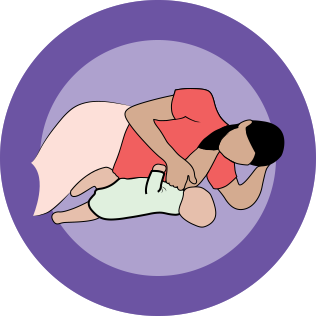
SIDE-LYING HOLD

Side-Lying Hold

  1. For the right breast, lie on your right side with your baby facing you.
  2. Pull your baby close. Your baby’s mouth should be level with your nipple.
  3. In this position, you can cradle your baby’s back with your left arm and support yourself with your right arm and/or pillows.
  4. Keep loose clothing and bedding away from your baby.
  5. Reverse for the left breast.

This hold is useful when:

  • You had a C-section
  • You want to rest while baby feeds
  • You are breastfeeding in the middle of the night
  • You and your baby are comfortable in this position
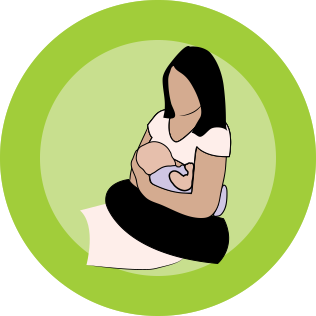
CROSS-CRADLE HOLD

Cross-Cradle Hold

  1. For the right breast, use your left arm to hold your baby’s head at your right breast and baby’s body toward your left side. A pillow across your lap can help support your left arm.
  2. Gently place your left hand behind your baby’s ears and neck, with your thumb and index finger behind each ear and your palm between baby’s shoulder blades. Turn your baby’s body toward yours so your tummies are touching.
  3. Hold your breast as if you are squeezing a sandwich. To protect your back, avoid leaning down to your baby. Instead, bring your baby to you.
  4. As your baby’s mouth opens, push gently with your left palm on baby’s head to help them latch on. Make sure you keep your fingers out of the way.
  5. Reverse for the left breast.

This hold is useful when:

  • Your baby is premature
  • Your baby has a weak suck
  • Your baby needs help to stay latched
  • Your baby needs extra head support
  • You and your baby are comfortable in this position
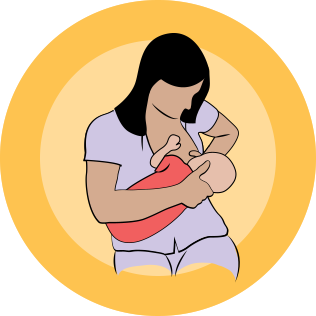
CLUTCH OR “FOOTBALL” HOLD

Clutch or “Football” Hold

  1. For the right breast, hold your baby level, facing up, at your right side.
  2. Put your baby’s head near your right nipple and support their back and legs under your right arm.
  3. Hold the base of your baby’s head with your right palm. A pillow underneath your right arm can help support your baby’s weight.
  4. To protect your back, avoid leaning down to your baby. Bring baby to you instead.
  5. Reverse for the left breast.

This hold is useful when:

  • You had a C-section
  • You have large breasts
  • You have flat or inverted nipples
  • You have a strong milk let-down
  • You are breastfeeding twins
  • Your baby likes to feed in an upright position
  • Your baby has reflux
  • You and your baby are comfortable in this position
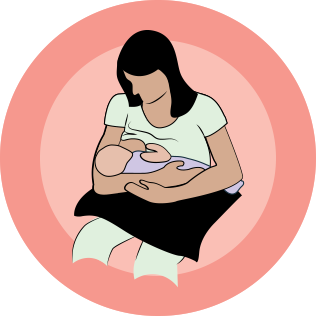
CRADLE HOLD

Cradle Hold

  1. For the right breast, cradle your baby with your right arm. Your baby will be on their left side across your lap, facing you at nipple level.
  2. Your baby’s head will rest on your right forearm with your baby’s back along your inner arm and palm.
  3. Turn your baby’s tummy toward your tummy. Your left hand is free to support your breast, if needed. Pillows can help support your arm and elbow.
  4. To protect your back, avoid leaning down to your baby. Instead, bring your baby to you.
  5. Reverse for the left breast.

This hold is useful when:

  • Your baby needs help latching on
  • You and your baby are comfortable in this position
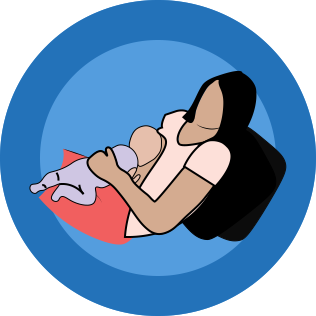
Laid-Back Hold

Laid-Back Hold

  1. Lean back on a pillow with your baby’s tummy touching yours and their head at breast level. Some moms find that sitting up nearly straight works well. Others prefer to lean back and lie almost flat.
  2. You can place your baby’s cheek near your breast, or you may want to use one hand to hold your breast near your baby. It’s up to you and what you think feels best.
  3. Your baby will naturally find your nipple, latch, and begin to suckle.

This hold is useful when:

  • Your baby is placed on your chest right after birth
  • You have a strong milk let-down
  • You have large breasts
  • You and your baby are comfortable in this position