Skip to Content Skip to Footer
Wyoming WIC
Wyoming WIC
  • Home
  • Women
    • Women
      Breastfeeding
    • Women
      Healthy Tips for Moms
    • Women
      Postpartum
    • Women
      Pregnant
  • Infants
    • Infants
      Feeding & Nutrition
    • Infants
      Growth & Development
  • Children
    • Children
      Toddlers
    • Children
      2-5 Year Olds
  • Families
    • Families
      Activity and Play
    • Families
      Dads
    • Families
      Food & Family Meals
    • Families
      Immunizations
    • Families
      Safety
  • Content Suite
  • Food Shopping Guide
  • Español
Breast pump in use beside resting baby on bed

Make a Plan to Pump

  • Home
  • The Content Suite
  • Make a Plan to Pump
WIC logo featuring stylized lettering and fruit
November 12, 2025 Women

Make  Plan to Pump Make a Plan to Pump

Even if you plan to breastfeed directly most of the time, and your baby latches and feeds well at the breast, it’s still a good idea to have a pumping plan. Pumping lets you collect milk so your baby can eat when you are away or when you want extra milk stored.

Her Big Win Get Ready to Pump
Woman using breast pump in a bright room
Calendar with leaves, displaying various icons and numbers

Start practicing at least 2 weeks before you will be away from your baby.

Green shield with abstract floral elements, safety symbol

Pumping takes practice. At first, you may only get a small amount. That’s normal. Most moms make about ½ to 1 ounce of milk per hour.

Green clock with simple abstract design elements

When you are away, pump as often as your baby would eat – about every 3–4 hours – to keep up your milk supply.

Green rectangles and squares forming symmetrical stacked shapes

Talk to your boss or school about a private space for pumping. By law, your employer must give you break time and a private space that is not a bathroom.

Tips for Pumping!
  • Use your own pump. Don’t share single-user pumps. Ask WIC if you need help getting one.
  • Ask WIC or a lactation consultant to show you how to use your pump.
  • Your nipple should move smoothly in the flange (the funnel part of the pump) without pain.
  • A little nipple cream or lanolin can make pumping more comfortable.
  • If pumping hurts, ask a WIC counselor to check your flange size.
  • Start with low suction. Turn it up slowly if you need more.

Try listening to music, looking at a picture of your baby, or watching something relaxing to help you feel calm as you pump.

Types of Pumps
Breast pump attached to bottle containing milk

Manual Hand Pumps

Key Features:

  • Small, low-cost, and easy to carry (they can even fit in a large purse).
  • Good as a backup option or if you just need to pump once-in-a-while.
  • Common styles include pumps with a piston, a squeeze handle, or a trigger-type handle.
Breast milk collection devices with milk inside

Manual or Passive Collection Tools

Image source: onewillow.com

Key Features:

  • Collects milk passively while you nurse on the other side.
  • Helpful if your baby only nurses from one breast or if you make too much milk.
Electric breast pump with attached milk collection bottle

Battery-operated Pumps

Key Features:

  • Small and portable, but pumping may take longer because the motor is weaker.
  • May be a good choice if you don’t need to pump often or for a long time.
Breast pump with milk collection bottle and control unit

Single Electric Pump

Key Features:

  • Portable and easy-to-clean option for quick milk expression.
  • Allows you to nurse your baby on the other side as you pump.
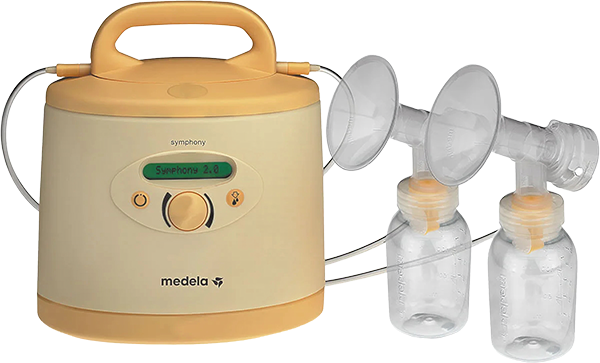
Breast pump with dual bottles and control panel

Hospital-grade Double Electric Pumps

Image source: medela.com

Key Features:

  • Strong and efficient.
  • Helpful for moms with premature babies or those building up a supply.
  • Helpful to establish milk supply in the first month after birth.
  • WIC may be able to lend you one.
Breast pump kit with bottles and tubing

Personal-use Double Electric Pumps

Image source: medela.com

Key Features:

  • Similar to hospital-grade pumps but usually smaller, often shaped like a briefcase.
  • Great for long-term pumping, especially if you are returning to work or school.
  • Often covered by insurance or Medicaid.
Breast pump set with storage containers and tubing

Hands-free, Wearable Pumps

Image source: medela.com

Key Features:

  • Convenient, but may not give strong suction.
  • Check often to make sure they are still placed correctly.
  • Limit use to 15–20 minutes at a time.
Pump-Parts-cleaningKeeping Pump Parts Clean

The American Academy of Pediatrics (AAP) and the Centers for Disease Control and Prevention (CDC) recommend washing your breast pump parts after every use. To clean your breast pump:

Breast pump equipment arranged on wooden surface

Take the pieces apart.

Baby bottles and parts arranged in dishwasher rack

Rinse off any milk and wash with hot, soapy water (or use the dishwasher if the parts allow).

Baby bottles drying on a kitchen towel

Let everything air-dry before using again.

Is the “Fridge Hack” Safe?

Red shopping bag with rectangular shape and handles

Some parents talk about a “fridge hack,” where pump parts are stored in the refrigerator between pumping sessions instead of washing them right away. The CDC says if you cannot clean right after pumping, you may rinse the parts, seal them in a clean container or bag, and place them in the fridge for a few hours. But this is only a short-term option. Germs can still grow in cold temperatures so pump parts should be fully washed and sanitized at the end of each day to prevent bacterial growth. If you choose to use the fridge hack, do not store pump parts for more than 8 to 12 hours between full washes.

Green leafy abstract shapes overlapping, creating a complex design

For the safest milk for your baby, wash pump parts after every use. This is especially important if your baby is under 2 months old, was born early, or has health problems. If possible, keep extra sets of parts on hand so you always have a clean set ready.

Green abstract shapes intertwine, forming organic, natural patterns
Mother breastfeeding baby using breast pump, smiling warmly

Having a pumping plan gives you peace of mind. Whether you use a hand pump, electric pump, or suction tool, the right pump and good cleaning habits will help you keep your baby fed and healthy. And remember – WIC is here to support you every step of the way!

Serene abstract art with flowing organic shapes in aqua

REFERENCES:

American Academy of Pediatrics. How to clean your breast pump: tips to keep it germ-free. (March 16. 2023).
https://www.healthychildren.org/English/ages-stages/baby/breastfeeding/Pages/How-to-Clean-Your-Breast-Pump.aspx

Centers for Disease Control and Prevention. How to clean and sanitize breast pumps. (September 12, 2024).
https://www.cdc.gov/hygiene/about/about-breast-pump-hygiene.html

Colorado WIC. Pumping. (2025).
https://drive.google.com/file/d/1acevOrXmQVYC-h5t8jCIscCXUN4DCccQ/view

Author: Dr. Maya Bunik, MD, MPH

You May Also Like...

August 26, 2026

Breastfeeding Nipple Pain: What’s Normal and When to Get Help

Knowing when your baby is hungry, and when they are full, can help feeding feel easier and less stressful. Newborns usually eat 8 to 12 times each day, so learning…

Read More
3
August 12, 2026

Cluster Feeding Explained | WIC Breastfeeding Support

Cluster Feeding: Why Your Baby Wants to Nurse So Often If it feels like your baby wants to breastfeed all the time, you’re not alone.Many new parents worry that frequent…

Read More
3
July 29, 2026

Breastfeeding Support Available Through WIC | Pumps, Peer Counselors & More

Knowing when your baby is hungry, and when they are full, can help feeding feel easier and less stressful. Newborns usually eat 8 to 12 times each day, so learning…

Read More
4
WATCH VIDEOS
  • Infant
    • Infant Pacifiers: Benefits, Safety Tips, and When to Wean
    • When to Start Peanut and Egg to Help Prevent Allergies
    • The Basics of Paced Bottle-Feeding
    • How Do I Know If My Baby Could Be Tongue-Tied?
    • Protect Your Baby from Cronobacter
  • Children
    • Food, Feelings, and Your Child’s Health | How Nutrition Affects Mood
    • Simple Child Safety Tips Every Parent Should Know
    • Shopping With Kids: A Simple Way to Help Them Like More Foods
    • Pumpkin Fun: Free and Healthy Activities for Kids Under 5
    • Letting Your Child Play with Food Can Be a Good Thing
  • General /Family
    • Protecting Your Family from Cyclospora: Summer Food & Water Safety
    • The Benefits of Family Meals for Kids and Parents
    • Meet the Milks: Dairy and Plant-Based Choices
    • Avoiding Food Waste
    • The 2025-2030 Dietary Guidelines for Americans – What Families Need to Know
  • Women
    • Breastfeeding Nipple Pain: What’s Normal and When to Get Help
    • Cluster Feeding Explained | WIC Breastfeeding Support
    • Breastfeeding Support Available Through WIC | Pumps, Peer Counselors & More
    • How Partners Can Support Breastfeeding
    • Common Breastfeeding Challenges and Simple Solutions for Parents
  • Recipes
    • Rainbow Fruit Salsa with Cinnamon Chips | Healthy Family Snack Recipe
    • Healthy Red, White, and Blue Snacks for Kids
    • Simple Meals with Canned Fish: Easy, Healthy & Budget-Friendly Ideas
    • Fresh & Easy Spring Snacks for Toddlers
    • Fresh & Easy Spring Veggie Pasta
Wyoming WIC WDH Public Health

CONTACT US

1-888-996-9378
health.wyo.gov/wic
  • How to apply for WIC

Resources

  • WIC Shopper
  • WIC Smart
  • WIC Breastfeeding Support
  • Wyoming Medicaid
  • Wyoming 211
  • Tell a friend about WIC!
  • Guide to Using Your WIC Benefits
  • Wyoming WIC Facebook
  • Wyoming WIC Instagram
  • Wyoming WIC

USDA is an equal opportunity provider, employer, and lender.

Cookie PolicyPrivacy Policy

© Brush Art Corporation
This website is operated by Brush Art Corporation on behalf of the Wyoming Department of Health.

Install this web app on your iPhone: tap and then Add to Home Screen.
Share to Social

Share this link via

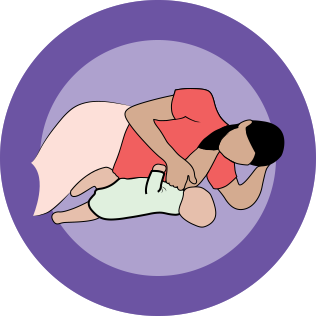
SIDE-LYING HOLD

Side-Lying Hold

  1. For the right breast, lie on your right side with your baby facing you.
  2. Pull your baby close. Your baby’s mouth should be level with your nipple.
  3. In this position, you can cradle your baby’s back with your left arm and support yourself with your right arm and/or pillows.
  4. Keep loose clothing and bedding away from your baby.
  5. Reverse for the left breast.

This hold is useful when:

  • You had a C-section
  • You want to rest while baby feeds
  • You are breastfeeding in the middle of the night
  • You and your baby are comfortable in this position
CROSS-CRADLE HOLD

Cross-Cradle Hold

  1. For the right breast, use your left arm to hold your baby’s head at your right breast and baby’s body toward your left side. A pillow across your lap can help support your left arm.
  2. Gently place your left hand behind your baby’s ears and neck, with your thumb and index finger behind each ear and your palm between baby’s shoulder blades. Turn your baby’s body toward yours so your tummies are touching.
  3. Hold your breast as if you are squeezing a sandwich. To protect your back, avoid leaning down to your baby. Instead, bring your baby to you.
  4. As your baby’s mouth opens, push gently with your left palm on baby’s head to help them latch on. Make sure you keep your fingers out of the way.
  5. Reverse for the left breast.

This hold is useful when:

  • Your baby is premature
  • Your baby has a weak suck
  • Your baby needs help to stay latched
  • Your baby needs extra head support
  • You and your baby are comfortable in this position
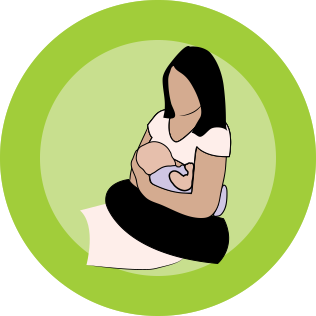
CLUTCH OR “FOOTBALL” HOLD

Clutch or “Football” Hold

  1. For the right breast, hold your baby level, facing up, at your right side.
  2. Put your baby’s head near your right nipple and support their back and legs under your right arm.
  3. Hold the base of your baby’s head with your right palm. A pillow underneath your right arm can help support your baby’s weight.
  4. To protect your back, avoid leaning down to your baby. Bring baby to you instead.
  5. Reverse for the left breast.

This hold is useful when:

  • You had a C-section
  • You have large breasts
  • You have flat or inverted nipples
  • You have a strong milk let-down
  • You are breastfeeding twins
  • Your baby likes to feed in an upright position
  • Your baby has reflux
  • You and your baby are comfortable in this position
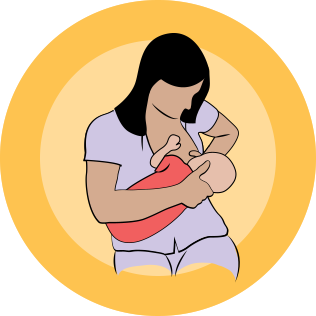
CRADLE HOLD

Cradle Hold

  1. For the right breast, cradle your baby with your right arm. Your baby will be on their left side across your lap, facing you at nipple level.
  2. Your baby’s head will rest on your right forearm with your baby’s back along your inner arm and palm.
  3. Turn your baby’s tummy toward your tummy. Your left hand is free to support your breast, if needed. Pillows can help support your arm and elbow.
  4. To protect your back, avoid leaning down to your baby. Instead, bring your baby to you.
  5. Reverse for the left breast.

This hold is useful when:

  • Your baby needs help latching on
  • You and your baby are comfortable in this position
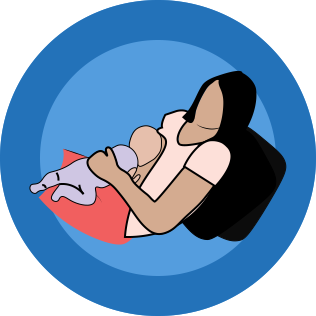
Laid-Back Hold

Laid-Back Hold

  1. Lean back on a pillow with your baby’s tummy touching yours and their head at breast level. Some moms find that sitting up nearly straight works well. Others prefer to lean back and lie almost flat.
  2. You can place your baby’s cheek near your breast, or you may want to use one hand to hold your breast near your baby. It’s up to you and what you think feels best.
  3. Your baby will naturally find your nipple, latch, and begin to suckle.

This hold is useful when:

  • Your baby is placed on your chest right after birth
  • You have a strong milk let-down
  • You have large breasts
  • You and your baby are comfortable in this position