Skip to Content Skip to Footer
Wyoming WIC
Wyoming WIC
  • Home
  • Women
    • Women
      Breastfeeding
    • Women
      Healthy Tips for Moms
    • Women
      Postpartum
    • Women
      Pregnant
  • Infants
    • Infants
      Feeding & Nutrition
    • Infants
      Growth & Development
  • Children
    • Children
      Toddlers
    • Children
      2-5 Year Olds
  • Families
    • Families
      Activity and Play
    • Families
      Dads
    • Families
      Food & Family Meals
    • Families
      Immunizations
    • Families
      Safety
  • Live Well Blog
  • Food Shopping Guide
  • Español
Person meditating peacefully on a couch at home.

Feeling the Burn? Get Heartburn Help Now!

  • Home
  • Live Well Blog
  • Feeling the Burn? Get Heartburn Help Now!
Feeling-the-Burn-Get-Heartburn-Help-Now-QR-code
November 9, 2022 Women

Destiny loved wearing clothes to show off her baby bump. Her pregnancy was going great, except for the frequent heartburn. What Destiny didn’t know was her skinny jeans and tight tops could actually be making her heartburn worse! Destiny was ready to try anything because it seemed like no matter what she ate or drank, she felt the burn. Heartburn is painful, and it’s a common problem to have during pregnancy — especially in the second half. Luckily, it’s usually a problem that’s easy to solve.
What Causes Heartburn?

Hormones. Like other changes your body goes through during pregnancy, this one can also be blamed on hormones. Hormones cause the muscle between your stomach and your esophagus to relax. (The esophagus is the tube that connects your stomach to your throat.) If the muscle relaxes when it shouldn’t, stomach acid can creep up into the esophagus and throat, which causes a strong burning feeling.

A growing baby. As babies grow during pregnancy, they push up on the stomach, pushing the stomach towards the esophagus.

Too much in the stomach. Eating or drinking too much at a time can cause the stomach to “overflow” and stomach acid to “back up”.

What Causes Heartburn?
Pregnant woman experiencing heartburn, sitting on grey couch.

What Can You Do?

Pregnant woman enjoying fruit salad at home.
  • Avoid tight-fitting clothes. They may be stylish, but wearing clothing that’s too tight can make heartburn worse.
  • Eat mini-meals. This can also help other pregnancy problems like nausea and lack of energy.
  • Sip, don’t slurp! Drink small amounts of liquid with your meals and have most of your fluids between meals.
  • Get in the right position.
  • Lying down causes stomach acid to move up and cause heartburn, so don’t lie down right after eating. It’s best to wait two to three hours after eating before lying down.
  • Avoid bending over after you eat. Leaning over to pick up a child, to pick up toys or to pull weeds can all move stomach acid where it shouldn’t be.
  • Elevate your head when sleeping. Keeping your head four to six inches higher than your body may help.
Pregnant woman sitting on a couch, smiling gently.
Pregnant woman walking by a scenic lakeside path.
  • Eat slowly and chew your food well. Digestion starts in the mouth, so if you chew your food well, your food will have to spend less time in the stomach.
  • Quit smoking and avoid secondhand smoke. Chemicals in smoke relax the muscle that keeps stomach contents where they belong.
  • Relax! Take a walk after you eat. This can help with digestion and also decrease stress, which can be a trigger for heartburn.
  • Know your trigger foods, which can vary for everyone, but commonly include:
  • Caffeinated drinks like coffee and tea
  • Greasy and fried foods
  • Carbonated drinks like soda or sparkling water
  • Citrus fruits like orange juice and lemonade
  • Tomatoes, tomato sauce, ketchup and mustard
  • Salsa and spicy foods
  • Onion and garlic
  • Chocolate and mint
Pregnant woman declines desserts, hand raised.

Destiny was surprised that she was doing a lot of things to make her heartburn worse. Once she changed her diet and other habits, that burning sensation was mostly a thing of the past!

Heartburn-Friendly Menu

BREAKFAST

2 eggs

Scrambled eggs on a white background.

apple slices

Two apple halves stacked, displaying seeds inside.

whole wheat toast

Slice of toasted bread against white background.

½ cup milk

Glass of milk on white background.

SNACK

yogurt

Wooden bowl filled with creamy yogurt.

sliced peach

Sliced peaches with vibrant, juicy interiors.

LUNCH

small tortillas with beans, lettuce, low-fat cheese, bell pepper, and cilantro

Soft taco filled with vegetables and meat.

watermelon

Watermelon slice with a black seed on top.

½ cup milk

Glass of milk on white background.

SNACK

Carrot and celery sticks with hummus dip

Carrot, celery sticks with hummus on plate.

whole grain crackers

Stack of whole grain crackers on white background.

grapes

Red grapes with cut halves displayed on white background.

Dinner

spinach salad

Fresh salad with spinach, cherry tomatoes, and cheese.

grilled chicken

Sliced grilled chicken breast on white background.

baked sweet potato

Baked sweet potato with orange flesh exposed.

½ cup WIC juice

Glass of orange juice on white background.

Snack

cereal with milk

Bowl of cornflakes with milk, top view.

half a banana with peanut butter

Half-peeled banana resting on white background.
Smooth peanut butter swirl on white background.
StarRemember to drink water between meals and snacks.
  • Infant
    • Infant Pacifiers:
      Benefits, Safety Tips, and When to Wean
    • The Basics of Paced Bottle-Feeding
    • How Do I Know If My Baby Could Be Tongue-Tied?
    • Protect Your Baby from Cronobacter
    • Exploring the World with Baby – Sensory Play
  • Children
    • Shopping With Kids: A Simple Way to Help Them Like More Foods
    • Pumpkin Fun: Free and Healthy Activities for Kids Under 5
    • Letting Your Child Play with Food Can Be a Good Thing
    • Is Snack Time Treat Time?
    • Fun Ways to Learn About Healthy Food and Get Moving!
  • General /Family
    • Meet the Milks: Dairy and Plant-Based Choices
    • Avoiding Food Waste
    • The 2025-2030 Dietary Guidelines for Americans – What Families Need to Know
    • Finding Calm When Life Gets Busy: Stress-Management for Parents
    • February Is National Heart Month: Simple Ways to Show Your Heart Some Love
  • Women
    • Breastfeeding and Returning to Work: Tips for Pumping & Planning
    • Increasing Milk Supply: Myths vs. Facts About Breastfeeding
    • Pumping Basics & Safe Breast Milk Storage Guide
    • Getting a Good Latch: Breastfeeding Positions & Holds That Help
    • Newborn Hunger Cues: How to Know When Your Baby Is Hungry or Full
  • Recipes
    • Fresh & Easy Spring Snacks for Toddlers
    • Fresh & Easy Spring Veggie Pasta
    • Heart-Healthy Recipe: Banana Berry Oatmeal Cups
    • Is the Chia Seed Challenge Worth It?
    • Extra Vegetables Quiche
Wyoming WIC WDH Public Health

CONTACT US

1-888-996-9378
health.wyo.gov/wic
  • How to apply for WIC

Resources

  • WIC Shopper
  • WIC Smart
  • WIC Breastfeeding Support
  • Wyoming Medicaid
  • Wyoming 211
  • Tell a friend about WIC!
  • Guide to Using Your WIC Benefits
  • Wyoming WIC Facebook
  • Wyoming WIC Instagram
  • Wyoming WIC

USDA is an equal opportunity provider, employer, and lender.

Cookie PolicyPrivacy Policy

© Brush Art Corporation
This website is operated by Brush Art Corporation on behalf of the Wyoming Department of Health.

Install this web app on your iPhone: tap and then Add to Home Screen.

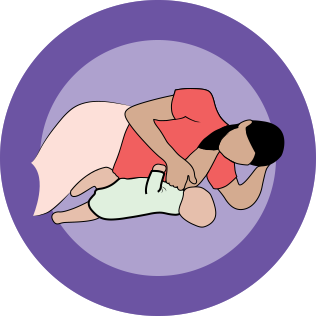
SIDE-LYING HOLD

Side-Lying Hold

  1. For the right breast, lie on your right side with your baby facing you.
  2. Pull your baby close. Your baby’s mouth should be level with your nipple.
  3. In this position, you can cradle your baby’s back with your left arm and support yourself with your right arm and/or pillows.
  4. Keep loose clothing and bedding away from your baby.
  5. Reverse for the left breast.

This hold is useful when:

  • You had a C-section
  • You want to rest while baby feeds
  • You are breastfeeding in the middle of the night
  • You and your baby are comfortable in this position
CROSS-CRADLE HOLD

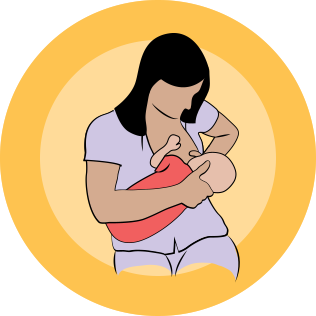
Cross-Cradle Hold

  1. For the right breast, use your left arm to hold your baby’s head at your right breast and baby’s body toward your left side. A pillow across your lap can help support your left arm.
  2. Gently place your left hand behind your baby’s ears and neck, with your thumb and index finger behind each ear and your palm between baby’s shoulder blades. Turn your baby’s body toward yours so your tummies are touching.
  3. Hold your breast as if you are squeezing a sandwich. To protect your back, avoid leaning down to your baby. Instead, bring your baby to you.
  4. As your baby’s mouth opens, push gently with your left palm on baby’s head to help them latch on. Make sure you keep your fingers out of the way.
  5. Reverse for the left breast.

This hold is useful when:

  • Your baby is premature
  • Your baby has a weak suck
  • Your baby needs help to stay latched
  • Your baby needs extra head support
  • You and your baby are comfortable in this position
CLUTCH OR “FOOTBALL” HOLD

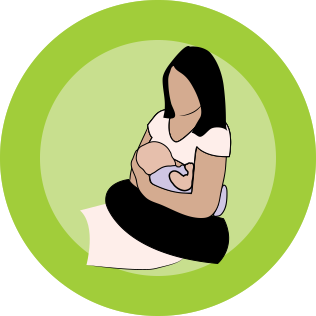
Clutch or “Football” Hold

  1. For the right breast, hold your baby level, facing up, at your right side.
  2. Put your baby’s head near your right nipple and support their back and legs under your right arm.
  3. Hold the base of your baby’s head with your right palm. A pillow underneath your right arm can help support your baby’s weight.
  4. To protect your back, avoid leaning down to your baby. Bring baby to you instead.
  5. Reverse for the left breast.

This hold is useful when:

  • You had a C-section
  • You have large breasts
  • You have flat or inverted nipples
  • You have a strong milk let-down
  • You are breastfeeding twins
  • Your baby likes to feed in an upright position
  • Your baby has reflux
  • You and your baby are comfortable in this position
CRADLE HOLD

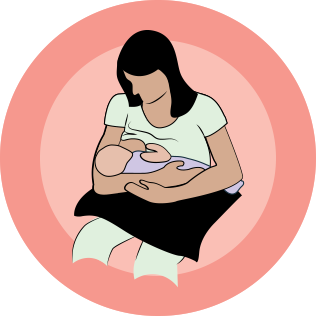
Cradle Hold

  1. For the right breast, cradle your baby with your right arm. Your baby will be on their left side across your lap, facing you at nipple level.
  2. Your baby’s head will rest on your right forearm with your baby’s back along your inner arm and palm.
  3. Turn your baby’s tummy toward your tummy. Your left hand is free to support your breast, if needed. Pillows can help support your arm and elbow.
  4. To protect your back, avoid leaning down to your baby. Instead, bring your baby to you.
  5. Reverse for the left breast.

This hold is useful when:

  • Your baby needs help latching on
  • You and your baby are comfortable in this position
Laid-Back Hold

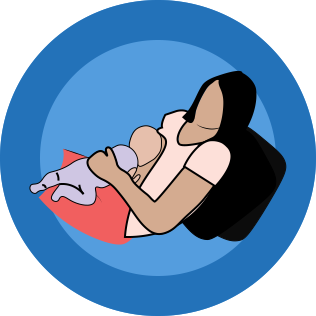
Laid-Back Hold

  1. Lean back on a pillow with your baby’s tummy touching yours and their head at breast level. Some moms find that sitting up nearly straight works well. Others prefer to lean back and lie almost flat.
  2. You can place your baby’s cheek near your breast, or you may want to use one hand to hold your breast near your baby. It’s up to you and what you think feels best.
  3. Your baby will naturally find your nipple, latch, and begin to suckle.

This hold is useful when:

  • Your baby is placed on your chest right after birth
  • You have a strong milk let-down
  • You have large breasts
  • You and your baby are comfortable in this position