Bedtime can be a tricky time for many families. Having a routine (that works!) each night can help. When kids know what to expect they feel less stressed, which is good for their growth, development, and behavior. You don’t have to wait until bedtime becomes a problem to start a routine. You can start when your baby is around 4-6 months old and adjust as they grow.
Here’s how to create a BETTER bedtime routine:
Make sure your child’s sleeping area is safe. Infants should always sleep on their back, in a crib, and without any blankets, toys, or other objects near them that they could suffocate on.
Set a firm time for bedtime to begin and end each night. For example, if bedtime begins at 7:00 PM and ends at 8:00 PM, this means at 7:00 PM it’s time to take a bath, brush teeth, and put on pajamas before being in bed by 8:00 PM.
A light snack before bedtime that’s high in protein and low in sugar may be helpful. Just remember that teeth need to be brushed afterwards!
Create a calm atmosphere – dim the lights, turn off screens, and lower the noise level. Reading books or playing soft music while holding or rocking your child can also help them relax. Even when they’re tiny, reading books before bed is a GREAT habit to start.
For toddlers and older kids, avoid screen time for at least an hour before bed!
There’s no magic trick to getting kids to sleep, but having a consistent bedtime routine can make nights smoother. Stick with your routine for better bedtimes and you’ll help your child learn important skills they’ll use for life!
It can be helpful to start putting your baby down to sleep when they’re still awake. This helps them learn to fall asleep on their own, which is a skill they’ll use for life. If your child’s routine gets disrupted because of teething, illness, or growth spurts, just get back to it when they’re feeling better.
As toddlers get older, they might try to avoid bedtime. This is normal. Being consistent with your routines and keeping bedtime to under an hour can help. Instead of suddenly telling them it’s bedtime, give them reminders as it approaches.
Sometimes, you might need to talk to your child’s doctor about their sleep habits. This could be if they snore, wake up often during the night, are very fussy before bed, or simply can’t sleep at night. These might signal a need for medical help. Before trying any sleep aids, white noise machines, or sleep suits, talk to your child’s doctor. Using medication or herbal supplements to help your child sleep is not recommended unless prescribed by a doctor.
Install this web app on your iPhone: tap and then Add to Home Screen.
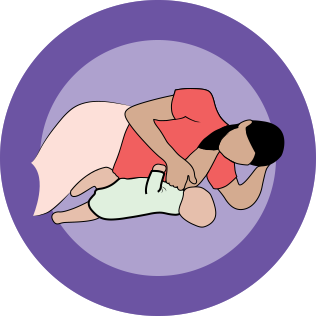
Side-Lying Hold
For the right breast, lie on your right side with your baby facing you.
Pull your baby close. Your baby’s mouth should be level with your nipple.
In this position, you can cradle your baby’s back with your left arm and support yourself with your right arm and/or pillows.
Keep loose clothing and bedding away from your baby.
Reverse for the left breast.
This hold is useful when:
You had a C-section
You want to rest while baby feeds
You are breastfeeding in the middle of the night
You and your baby are comfortable in this position
Cross-Cradle Hold
For the right breast, use your left arm to hold your baby’s head at your right breast and baby’s body toward your left side. A pillow across your lap can help support your left arm.
Gently place your left hand behind your baby’s ears and neck, with your thumb and index finger behind each ear and your palm between baby’s shoulder blades. Turn your baby’s body toward yours so your tummies are touching.
Hold your breast as if you are squeezing a sandwich. To protect your back, avoid leaning down to your baby. Instead, bring your baby to you.
As your baby’s mouth opens, push gently with your left palm on baby’s head to help them latch on. Make sure you keep your fingers out of the way.
Reverse for the left breast.
This hold is useful when:
Your baby is premature
Your baby has a weak suck
Your baby needs help to stay latched
Your baby needs extra head support
You and your baby are comfortable in this position
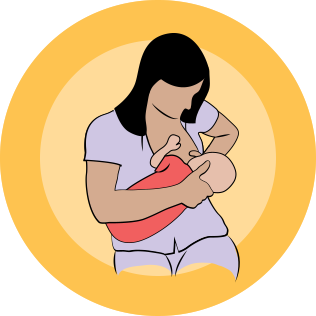
Clutch or “Football” Hold
For the right breast, hold your baby level, facing up, at your right side.
Put your baby’s head near your right nipple and support their back and legs under your right arm.
Hold the base of your baby’s head with your right palm. A pillow underneath your right arm can help support your baby’s weight.
To protect your back, avoid leaning down to your baby. Bring baby to you instead.
Reverse for the left breast.
This hold is useful when:
You had a C-section
You have large breasts
You have flat or inverted nipples
You have a strong milk let-down
You are breastfeeding twins
Your baby likes to feed in an upright position
Your baby has reflux
You and your baby are comfortable in this position
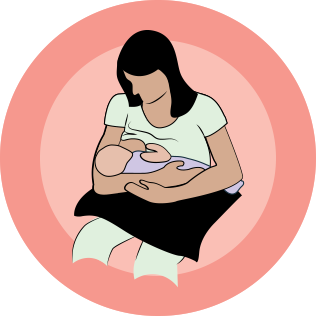
Cradle Hold
For the right breast, cradle your baby with your right arm. Your baby will be on their left side across your lap, facing you at nipple level.
Your baby’s head will rest on your right forearm with your baby’s back along your inner arm and palm.
Turn your baby’s tummy toward your tummy. Your left hand is free to support your breast, if needed. Pillows can help support your arm and elbow.
To protect your back, avoid leaning down to your baby. Instead, bring your baby to you.
Reverse for the left breast.
This hold is useful when:
Your baby needs help latching on
You and your baby are comfortable in this position
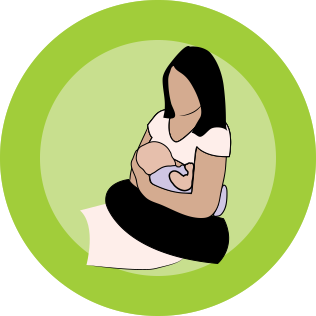
Laid-Back Hold
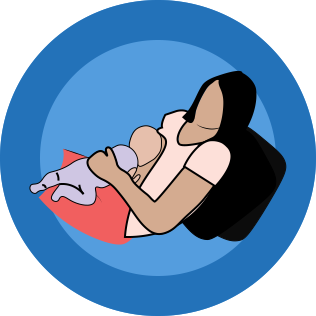
Lean back on a pillow with your baby’s tummy touching yours and their head at breast level. Some moms find that sitting up nearly straight works well. Others prefer to lean back and lie almost flat.
You can place your baby’s cheek near your breast, or you may want to use one hand to hold your breast near your baby. It’s up to you and what you think feels best.
Your baby will naturally find your nipple, latch, and begin to suckle.
This hold is useful when:
Your baby is placed on your chest right after birth
You have a strong milk let-down
You have large breasts
You and your baby are comfortable in this position