Skip to Content Skip to Footer
Wyoming WIC
Wyoming WIC
  • Home
  • Women
    • Women
      Breastfeeding
    • Women
      Healthy Tips for Moms
    • Women
      Postpartum
    • Women
      Pregnant
  • Infants
    • Infants
      Feeding & Nutrition
    • Infants
      Growth & Development
  • Children
    • Children
      Toddlers
    • Children
      2-5 Year Olds
  • Families
    • Families
      Activity and Play
    • Families
      Dads
    • Families
      Food & Family Meals
    • Families
      Immunizations
    • Families
      Safety
  • Content Suite
  • Food Shopping Guide
  • Español
Play Garden

Content Suite By Live Well

  • Home
  • Content Suite By Live Well
Scroll Nurse Kaylee’s Videos
Food, Feelings, and Your Child’s Health | How Nutrition Affects Mood
August 19, 2026
Children

Food, Feelings, and Your Child’s Health | How Nutrition Affects Mood

Food, Feelings, and Your Child’s Health Have you ever noticed your child seems tired, cranky, or full of energy depending on what they’ve eaten? Food does more than help children grow. It also helps support their mood, learning, and overall health. The foods your child eats can affect how they feel, think, and play each […]


Read More
0
0
Simple Child Safety Tips Every Parent Should Know
July 15, 2026
Children

Simple Child Safety Tips Every Parent Should Know

Simple Ways to Help Keep Your Child Safe Keeping young children safe can feel like a full-time job. Babies and toddlers are naturally curious. They love to climb, explore, grab, and taste everything around them. While bumps and bruises are a normal part of growing up, many serious injuries can be prevented with a few […]

Read More
0
0
Shopping With Kids: A Simple Way to Help Them Like More Foods
March 4, 2026
Children

Shopping With Kids: A Simple Way to Help Them Like More Foods

A Simple Way to Help Kids Like More Foods Getting kids to try new foods can feel hard. One helpful place to start is the grocery store. When kids get to help shop for food, they are more likely to taste and accept those foods later. Shopping together helps kids feel curious, confident, and proud […]

Read More
0
0
Pumpkin Fun: Free and Healthy Activities for Kids Under 5
October 15, 2025
Children

Pumpkin Fun: Free and Healthy Activities for Kids Under 5

Play, Learn, and Grow with Pumpkins Pumpkins aren’t just for carving! They’re healthy, fun, and great for learning, too. Pumpkins are full of good stuff like vitamins A and C. These help keep your child’s eyes healthy and support their immune system, which helps them fight off sickness. Pumpkins also have fiber, which helps with […]

Read More
0
0
Letting Your Child Play with Food Can Be a Good Thing
August 27, 2025
Children

Letting Your Child Play with Food Can Be a Good Thing

Letting Your Child Play with Food Can Be a Good Thing You may have heard (or even said yourself), “Don’t play with your food!” But what if playing with food actually helped your child learn and grow? It turns out that letting your child touch, mash, and explore their food can be good for their […]

Read More
0
0
Is Snack Time Treat Time?
July 16, 2025
Children

Is Snack Time Treat Time?

Many people think snacks and treats are the same. But they’re not! Let’s break it down. What Is a Snack? A snack is a small amount of food you eat between meals. Healthy snacks—like apple slices or cheese—give your body energy and help you stay full. Is a Snack Always a Treat? No. A snack […]

Read More
0
0
Fun Ways to Learn About Healthy Food and Get Moving!
June 25, 2025
Children

Fun Ways to Learn About Healthy Food and Get Moving!

Eat. Move. Thrive. Eating good food and moving your body are both important for staying healthy. Mix good food and physical activity together and you have a recipe for fun! Learning about healthy food is a skill we need for life. When kids move while they learn, it helps them remember things better. Moving more […]

Read More
0
0
Your Questions Answered: Taking Care of Your Child’s Teeth Age 1-5
May 21, 2025
Children

Your Questions Answered: Taking Care of Your Child’s Teeth Age 1-5

Keeping your child’s teeth healthy from an early age helps prevent cavities and sets the stage for lifelong good habits. Here are answers to common questions about caring for your child’s teeth and gums. How Do Cavities Start? Everyone has bacteria in their mouth. When bacteria in the mouth mixes with food, it forms a […]

Read More
0
0
Fluoride and Your Child’s Teeth: What Parents Need to Know
April 30, 2025
Children

Fluoride and Your Child’s Teeth: What Parents Need to Know

What Is Fluoride? Fluoride is a natural mineral found in soil, water, and some foods. It helps strengthen tooth enamel and prevent cavities by slowing the growth of harmful bacteria. Many communities add it to tap water to help keep teeth strong. You may have heard a lot about fluoride lately. Is it good or […]

Read More
0
0
Foods to Help Boost Your Child’s Immune System
March 5, 2025
Children

Foods to Help Boost Your Child’s Immune System

Your child’s immune system is their body’s natural defense against germs. A strong immune system keeps them healthy and helps fight off harmful bacteria and viruses. You can support your child’s immune system by offering nutritious foods, water throughout the day, and making sure they get plenty of sleep and exercise. Here are a few […]

Read More
0
0
Making Mealtimes Pleasant and Pressure-Free
January 29, 2025
Children

Making Mealtimes Pleasant and Pressure-Free

Mealtimes with young children can be messy, unpredictable, and, at times, frustrating. As parents, we want our children to eat well and grow healthy. But sometimes, we try too hard—pressuring, pleading, or begging them to eat. The good news? Mealtimes can be a lot less stressful for both you and your child when you take […]

Read More
0
0
1 2 … 4
Wyoming WIC WDH Public Health

CONTACT US

1-888-996-9378
health.wyo.gov/wic
  • How to apply for WIC

Resources

  • WIC Shopper
  • WIC Smart
  • WIC Breastfeeding Support
  • Wyoming Medicaid
  • Wyoming 211
  • Tell a friend about WIC!
  • Guide to Using Your WIC Benefits
  • Wyoming WIC Facebook
  • Wyoming WIC Instagram
  • Wyoming WIC

USDA is an equal opportunity provider, employer, and lender.

Cookie PolicyPrivacy Policy

© Brush Art Corporation
This website is operated by Brush Art Corporation on behalf of the Wyoming Department of Health.

Install this web app on your iPhone: tap and then Add to Home Screen.

Share to Social

Share this link via

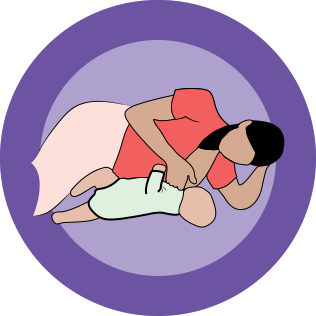
SIDE-LYING HOLD

Side-Lying Hold

  1. For the right breast, lie on your right side with your baby facing you.
  2. Pull your baby close. Your baby’s mouth should be level with your nipple.
  3. In this position, you can cradle your baby’s back with your left arm and support yourself with your right arm and/or pillows.
  4. Keep loose clothing and bedding away from your baby.
  5. Reverse for the left breast.

This hold is useful when:

  • You had a C-section
  • You want to rest while baby feeds
  • You are breastfeeding in the middle of the night
  • You and your baby are comfortable in this position
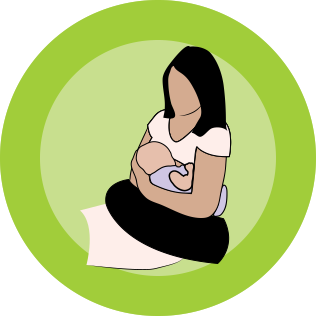
CROSS-CRADLE HOLD

Cross-Cradle Hold

  1. For the right breast, use your left arm to hold your baby’s head at your right breast and baby’s body toward your left side. A pillow across your lap can help support your left arm.
  2. Gently place your left hand behind your baby’s ears and neck, with your thumb and index finger behind each ear and your palm between baby’s shoulder blades. Turn your baby’s body toward yours so your tummies are touching.
  3. Hold your breast as if you are squeezing a sandwich. To protect your back, avoid leaning down to your baby. Instead, bring your baby to you.
  4. As your baby’s mouth opens, push gently with your left palm on baby’s head to help them latch on. Make sure you keep your fingers out of the way.
  5. Reverse for the left breast.

This hold is useful when:

  • Your baby is premature
  • Your baby has a weak suck
  • Your baby needs help to stay latched
  • Your baby needs extra head support
  • You and your baby are comfortable in this position
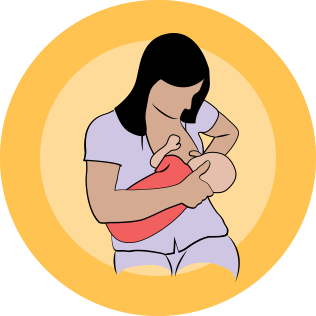
CLUTCH OR “FOOTBALL” HOLD

Clutch or “Football” Hold

  1. For the right breast, hold your baby level, facing up, at your right side.
  2. Put your baby’s head near your right nipple and support their back and legs under your right arm.
  3. Hold the base of your baby’s head with your right palm. A pillow underneath your right arm can help support your baby’s weight.
  4. To protect your back, avoid leaning down to your baby. Bring baby to you instead.
  5. Reverse for the left breast.

This hold is useful when:

  • You had a C-section
  • You have large breasts
  • You have flat or inverted nipples
  • You have a strong milk let-down
  • You are breastfeeding twins
  • Your baby likes to feed in an upright position
  • Your baby has reflux
  • You and your baby are comfortable in this position
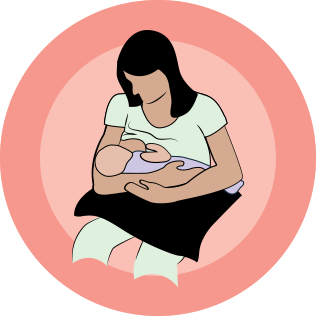
CRADLE HOLD

Cradle Hold

  1. For the right breast, cradle your baby with your right arm. Your baby will be on their left side across your lap, facing you at nipple level.
  2. Your baby’s head will rest on your right forearm with your baby’s back along your inner arm and palm.
  3. Turn your baby’s tummy toward your tummy. Your left hand is free to support your breast, if needed. Pillows can help support your arm and elbow.
  4. To protect your back, avoid leaning down to your baby. Instead, bring your baby to you.
  5. Reverse for the left breast.

This hold is useful when:

  • Your baby needs help latching on
  • You and your baby are comfortable in this position
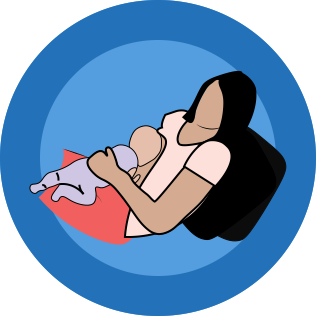
Laid-Back Hold

Laid-Back Hold

  1. Lean back on a pillow with your baby’s tummy touching yours and their head at breast level. Some moms find that sitting up nearly straight works well. Others prefer to lean back and lie almost flat.
  2. You can place your baby’s cheek near your breast, or you may want to use one hand to hold your breast near your baby. It’s up to you and what you think feels best.
  3. Your baby will naturally find your nipple, latch, and begin to suckle.

This hold is useful when:

  • Your baby is placed on your chest right after birth
  • You have a strong milk let-down
  • You have large breasts
  • You and your baby are comfortable in this position