
Skip to Content Skip to Footer
Wyoming WIC
Wyoming WIC
  • Home
  • Women
    • Women
      Breastfeeding
    • Women
      Healthy Tips for Moms
    • Women
      Postpartum
    • Women
      Pregnant
  • Infants
    • Infants
      Feeding & Nutrition
    • Infants
      Growth & Development
  • Children
    • Children
      Toddlers
    • Children
      2-5 Year Olds
  • Families
    • Families
      Activity and Play
    • Families
      Dads
    • Families
      Food & Family Meals
    • Families
      Immunizations
    • Families
      Safety
  • Live Well Blog
  • Food Shopping Guide
  • Español
banner

Understanding Food Allergies

  • Home
  • Live Well Blog
  • Understanding Food Allergies
Understanding-Food-Allergies-QR-code
February 23, 2022 General /Family

What’s a Food allergy?

When the body reacts to a food in a way that is not normal, this is a food allergy reaction. A reaction can be mild (like sneezing or runny nose) or dangerous (severe vomiting and diarrhea or trouble breathing). Some people are “intolerant or sensitive” to a food but this is not a food allergy because the immune system is not involved. A food that causes an allergic reaction is called an allergen or allergenic food.

What are the signs?

Food allergy reactions may include:

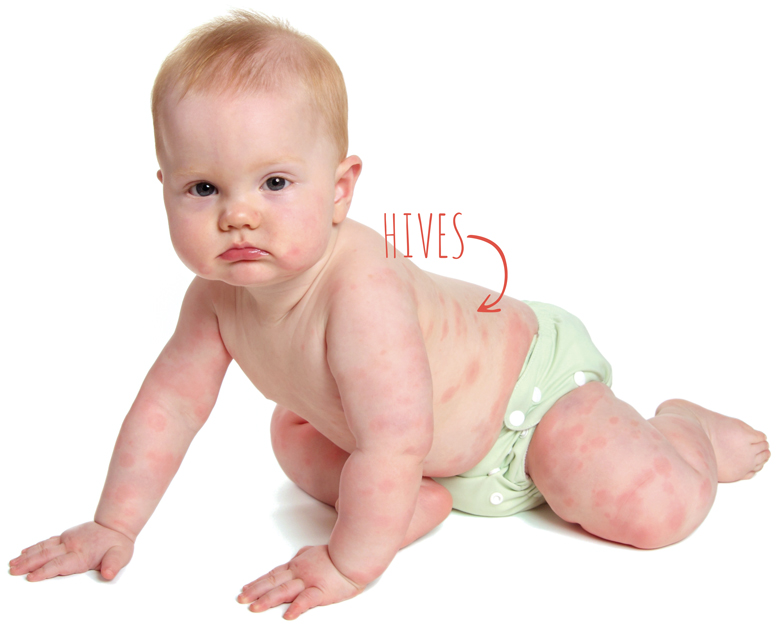
  • Hives (red swollen bumps or patches)
  • Itchy, watery eyes
  • Tingling of the tongue or mout
  • Swelling of the mouth and throat
  • Vomiting and/or diarrhea
  • A drop in blood pressure that may lead to death

Allergic reactions are unpredictable. Most reactions to food allergies are not life threatening, but bad reactions can happen. Anaphylaxis is a serious, life-threatening allergic reaction that usually affects more than one part of the body. It must be treated quickly. Epinephrine (a shot that is given with an auto injector like Epi-Pen) can treat anaphylaxis.

bac_BabyHives

What should I do if I think my child has an allergy?

See the doctor as soon as possible. Tell the school, babysitters, grandparents, friends and relatives if there are foods they need to avoid giving to your child.

Why are food allergies increasing?

No one knows why food allergies have become more common. Researchers are studying changes in our environment, lifestyle and diets as possible reasons.

Common Allergens

The most common food allergies are to milk, egg, peanuts, tree nuts, soy, wheat, fish or shellfish.

Can food allergies be prevented?

Maybe. A recent study showed that giving peanut foods to older infants at highest risk for allergy may reduce the risk of peanut allergies. This study prompted experts to recommend that peanut protein be introduced in a safe way to infants between 4-11 months. If your child has eczema or an egg allergy, or a parent or sibling with allergies, ask their doctor about the safest way to introduce peanuts. Whether high risk or not, guidelines do not recommend avoiding potential food allergens to prevent food allergies.

How will the doctor make a diagnosis?

The doctor will ask many questions like:

  • What foods have caused reactions?
  • What have the reactions been like?
  • How long did it take after the food was eaten to react and how long did it last?
  • Did the reaction happen every time the food was eaten?
  • Did anyone else have a reaction to the same food at the same time?

Depending on your child’s history, the doctor may order skin or blood tests. The best way to diagnose a food allergy is to eat the food while the doctor is watching. This is called an oral food challenge.

My Child Has a Food Allergy — What Next?

Learn as much as possible and teach children about their allergies in a way that suits their age. A child with a food allergy should never eat the food that causes a reaction. Eating just a crumb-size (or smaller) piece of a food allergen can cause life-threatening reactions. Skin contact can cause redness, swelling and itchiness, but is not life-threatening. Very young children could have a serious reaction when they rub food into their eyes or nose. Just being in the same room with an allergenic food is not dangerous.

Always read the ingredient list on food labels carefully. If a food does not have a label, ask questions to see if it is safe. Never eat a food that you are not sure about.

Learn to prevent cross-contact. When a food, utensil (like a spoon or spatula) or even hands, touches an allergy-causing food, this could cause a reaction. To prevent allergic reactions, use different serving utensils for allergy-causing foods and wash hands and surfaces that touch allergenic foods. Cross-contact can also happen when a food is processed in the same factory as an allergenic food. For example, when peanuts are processed in the same factory as wheat.

Work with your school to educate them about food allergies. School can be a safe place for kids with allergies, but reactions can and do happen at school. Make sure the school has up-to-date medication (such as Epi-pens) and instructions from your child’s doctor.

How can WIC help if there is a food allergy in our family?

  • A WIC Certifying Professional Authority, who may be a registered dietitian, nutritionist or paraprofessional, can substitute soymilk or tofu in place of milk; and beans instead of peanut butter in your WIC food package due to a food allergy.
  • Corn and rice-based WIC cereals are available for those with wheat allergy.
  • Children and women with certain documented medical conditions may qualify to receive allergen-free medical formulas with a prescription from a health care provider.

Organizations That Can Help

Food Allergy Anaphylaxis Connection Team (FAACT)

www.foodallergyawareness.org

Food Allergy Research and Education (FARE)

www.foodallergy.org

Kids with Food Allergies (KFA)

www.kidswithfoodallergies.org

  • Infant
    • The Basics of Paced Bottle-Feeding
    • How Do I Know If My Baby Could Be Tongue-Tied?
    • Protect Your Baby from Cronobacter
    • Exploring the World with Baby – Sensory Play
    • Get Your Baby “Back” to Sleep in a Safe Environment
  • Children
    • Shopping With Kids: A Simple Way to Help Them Like More Foods
    • Pumpkin Fun: Free and Healthy Activities for Kids Under 5
    • Letting Your Child Play with Food Can Be a Good Thing
    • Is Snack Time Treat Time?
    • Fun Ways to Learn About Healthy Food and Get Moving!
  • General /Family
    • Avoiding Food Waste
    • The 2025-2030 Dietary Guidelines for Americans – What Families Need to Know
    • Finding Calm When Life Gets Busy: Stress-Management for Parents
    • February Is National Heart Month: Simple Ways to Show Your Heart Some Love
    • 10 Ways to Enjoy Avocados – And Helpful Tips to Feed with Confidence
  • Women
    • Newborn Hunger Cues: How to Know When Your Baby Is Hungry or Full
    • How to Know Your Baby Is Getting Enough Breastmilk
    • Breastfeeding Through Growth Spurts and Sleep Changes
    • Baby Blues… or Is It Something More?
    • Gut Health and Gestational Diabetes
  • Recipes
    • Heart-Healthy Recipe: Banana Berry Oatmeal Cups
    • Is the Chia Seed Challenge Worth It?
    • Extra Vegetables Quiche
    • Easy Pumpkin Muffins
    • Confetti Bean Salad
Wyoming WIC WDH Public Health

CONTACT US

1-888-996-9378
health.wyo.gov/wic
  • How to apply for WIC

Resources

  • WIC Shopper
  • WIC Smart
  • WIC Breastfeeding Support
  • Wyoming Medicaid
  • Wyoming 211
  • Tell a friend about WIC!
  • Guide to Using Your WIC Benefits
  • Wyoming WIC Facebook
  • Wyoming WIC Instagram
  • Wyoming WIC

USDA is an equal opportunity provider, employer, and lender.

Cookie PolicyPrivacy Policy

© Brush Art Corporation
This website is operated by Brush Art Corporation on behalf of the Wyoming Department of Health.

Install this web app on your iPhone: tap and then Add to Home Screen.
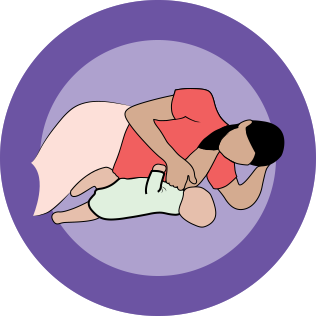
SIDE-LYING HOLD

Side-Lying Hold

  1. For the right breast, lie on your right side with your baby facing you.
  2. Pull your baby close. Your baby’s mouth should be level with your nipple.
  3. In this position, you can cradle your baby’s back with your left arm and support yourself with your right arm and/or pillows.
  4. Keep loose clothing and bedding away from your baby.
  5. Reverse for the left breast.

This hold is useful when:

  • You had a C-section
  • You want to rest while baby feeds
  • You are breastfeeding in the middle of the night
  • You and your baby are comfortable in this position
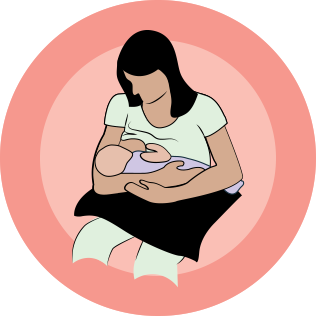
CROSS-CRADLE HOLD

Cross-Cradle Hold

  1. For the right breast, use your left arm to hold your baby’s head at your right breast and baby’s body toward your left side. A pillow across your lap can help support your left arm.
  2. Gently place your left hand behind your baby’s ears and neck, with your thumb and index finger behind each ear and your palm between baby’s shoulder blades. Turn your baby’s body toward yours so your tummies are touching.
  3. Hold your breast as if you are squeezing a sandwich. To protect your back, avoid leaning down to your baby. Instead, bring your baby to you.
  4. As your baby’s mouth opens, push gently with your left palm on baby’s head to help them latch on. Make sure you keep your fingers out of the way.
  5. Reverse for the left breast.

This hold is useful when:

  • Your baby is premature
  • Your baby has a weak suck
  • Your baby needs help to stay latched
  • Your baby needs extra head support
  • You and your baby are comfortable in this position
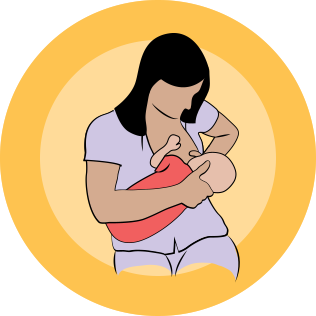
CLUTCH OR “FOOTBALL” HOLD

Clutch or “Football” Hold

  1. For the right breast, hold your baby level, facing up, at your right side.
  2. Put your baby’s head near your right nipple and support their back and legs under your right arm.
  3. Hold the base of your baby’s head with your right palm. A pillow underneath your right arm can help support your baby’s weight.
  4. To protect your back, avoid leaning down to your baby. Bring baby to you instead.
  5. Reverse for the left breast.

This hold is useful when:

  • You had a C-section
  • You have large breasts
  • You have flat or inverted nipples
  • You have a strong milk let-down
  • You are breastfeeding twins
  • Your baby likes to feed in an upright position
  • Your baby has reflux
  • You and your baby are comfortable in this position
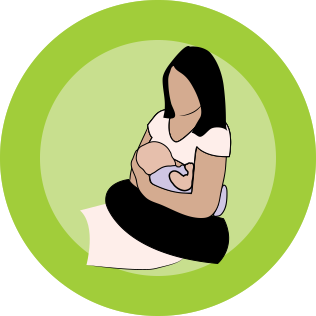
CRADLE HOLD

Cradle Hold

  1. For the right breast, cradle your baby with your right arm. Your baby will be on their left side across your lap, facing you at nipple level.
  2. Your baby’s head will rest on your right forearm with your baby’s back along your inner arm and palm.
  3. Turn your baby’s tummy toward your tummy. Your left hand is free to support your breast, if needed. Pillows can help support your arm and elbow.
  4. To protect your back, avoid leaning down to your baby. Instead, bring your baby to you.
  5. Reverse for the left breast.

This hold is useful when:

  • Your baby needs help latching on
  • You and your baby are comfortable in this position
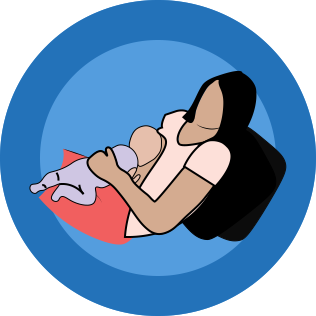
Laid-Back Hold

Laid-Back Hold

  1. Lean back on a pillow with your baby’s tummy touching yours and their head at breast level. Some moms find that sitting up nearly straight works well. Others prefer to lean back and lie almost flat.
  2. You can place your baby’s cheek near your breast, or you may want to use one hand to hold your breast near your baby. It’s up to you and what you think feels best.
  3. Your baby will naturally find your nipple, latch, and begin to suckle.

This hold is useful when:

  • Your baby is placed on your chest right after birth
  • You have a strong milk let-down
  • You have large breasts
  • You and your baby are comfortable in this position