
Skip to Content Skip to Footer
Wyoming WIC
Wyoming WIC
  • Home
  • Women
    • Women
      Breastfeeding
    • Women
      Healthy Tips for Moms
    • Women
      Postpartum
    • Women
      Pregnant
  • Infants
    • Infants
      Feeding & Nutrition
    • Infants
      Growth & Development
  • Children
    • Children
      Toddlers
    • Children
      2-5 Year Olds
  • Families
    • Families
      Activity and Play
    • Families
      Dads
    • Families
      Food & Family Meals
    • Families
      Immunizations
    • Families
      Safety
  • Live Well Blog
  • Food Shopping Guide
  • Español
banner

Preventing Gestational Diabetes

  • Home
  • Live Well Blog
  • Preventing Gestational Diabetes
Preventing-Gestational-Diabetes-QR-code
January 19, 2022 Women

Pregnancy & Weight

Finding out you are pregnant is such an exciting time! Knowing you are now caring for not just yourself, but your baby too, is a great motivator to help you eat healthy and stay active. The thing is, sometimes pregnancy can make this hard to do. When you’re pregnant, your appetite and hormones may change, which can make you want to eat a lot some days and very little others. While controlling what and how much you eat can be a challenge, it’s so important for a healthy pregnancy.

Hormone changes and gaining too much weight during pregnancy can lead to insulin resistance, which can cause an increase in your body’s blood sugar levels. This can cause excess weight gain — which while you are pregnant can lead to gestational diabetes.

Gestational Diabetes: What is it and why is it a problem?

Gestational diabetes is when blood sugar levels are higher than they should be during pregnancy. It can lead to problems for both mom and baby. A pregnant mom with high blood sugar could lead to a baby growing too fast and too big. If the baby is too large it may result in an unplanned, emergency C-section or difficult delivery. Another problem for the baby could be low blood sugar (also known as hypoglycemia) at birth. Long term, both women with gestational diabetes and their babies are more likely to develop Type 2 diabetes later in life.

Who is at risk?

Anyone can get diabetes during pregnancy, but you are at higher risk if you:

  • Are overweight
  • Have Polycystic Ovary Syndrome (PCOS)
  • Have a family history of Type 2 diabetes
  • Previously had a baby weighing more than 9 lbs
  • Are Black, Latina, Asian, Pacific Islander or American Indian

Most health care providers screen moms-to-be for diabetes between the 24th and 28th week of pregnancy, when gestational diabetes is more likely to occur. However, if you are at higher risk, your doctor may order a screening test at your first prenatal visit.

The blood tests that are done are:

Glucose Challenge Test

This test consists of drinking a sugary liquid and getting your blood tested 1 hour later. If your test result is abnormal, your health care provider may order a more thorough test known as a glucose tolerance test.

Glucose Tolerance Test

Your blood sugar is tested 4 times over 3 hours. The first blood draw is done fasting (when you haven’t had anything to eat for 8-10 hours). Next, you are given a sugary drink and your blood sugar is tested again after 1 hour, 2 hours and 3 hours later. If two or more of the results are high, then you may be diagnosed with gestational diabetes.

Prevention

You can prevent diabetes in pregnancy by eating a healthy diet and staying active.

  • Eat small balanced meals
  • A good way to balance your plate is to make ½ your plate fruits and vegetables, ¼ whole grains and ¼ protein foods like fish, eggs, beef and chicken
  • Make half of the grains you eat whole grains
  • Avoid “empty calories” from foods like cakes, cookies, chips and sugary cereals
  • Eat high fiber foods (sources include fruits, vegetables, whole grains like whole wheat bread, brown rice, whole wheat couscous, quinoa and oatmeal)
  • Eat plenty of vegetables and fruits
  • Avoid sugar-sweetened drinks (like soda, lemonade, iced tea and fruit juices)
  • Avoid skipping meals; this can lead to overeating later in the day

Treatment

If diabetes is caught early and moms control their blood sugar, women with gestational diabetes can have healthy pregnancies and healthy babies.

Depending on your blood sugar levels, your health care provider may ask you to test your blood sugar before and after meals, and advise you to limit your portions of high-carb foods like rice, pasta and breads. If your blood sugars remain high, medication may be needed. Medication can include pills or insulin. The goal of treatment is to control blood sugar levels to prevent problems for both mom and baby.

Prevention is key — talk to your health care team about your individual needs. blue leg
  • Infant
    • When to Start Peanut and Egg to Help Prevent Allergies
    • The Basics of Paced Bottle-Feeding
    • How Do I Know If My Baby Could Be Tongue-Tied?
    • Protect Your Baby from Cronobacter
    • Exploring the World with Baby – Sensory Play
  • Children
    • Shopping With Kids: A Simple Way to Help Them Like More Foods
    • Pumpkin Fun: Free and Healthy Activities for Kids Under 5
    • Letting Your Child Play with Food Can Be a Good Thing
    • Is Snack Time Treat Time?
    • Fun Ways to Learn About Healthy Food and Get Moving!
  • General /Family
    • The 2025-2030 Dietary Guidelines for Americans – What Families Need to Know
    • Finding Calm When Life Gets Busy: Stress-Management for Parents
    • February Is National Heart Month: Simple Ways to Show Your Heart Some Love
    • 10 Ways to Enjoy Avocados – And Helpful Tips to Feed with Confidence
    • Food, Feelings, and Finding Balance: Understanding Disordered Eating
  • Women
    • Newborn Hunger Cues: How to Know When Your Baby Is Hungry or Full
    • How to Know Your Baby Is Getting Enough Breastmilk
    • Breastfeeding Through Growth Spurts and Sleep Changes
    • Baby Blues… or Is It Something More?
    • Gut Health and Gestational Diabetes
  • Recipes
    • Heart-Healthy Recipe: Banana Berry Oatmeal Cups
    • Is the Chia Seed Challenge Worth It?
    • Extra Vegetables Quiche
    • Easy Pumpkin Muffins
    • Confetti Bean Salad
Wyoming WIC WDH Public Health

CONTACT US

1-888-996-9378
health.wyo.gov/wic
  • How to apply for WIC

Resources

  • WIC Shopper
  • WIC Smart
  • WIC Breastfeeding Support
  • Wyoming Medicaid
  • Wyoming 211
  • Tell a friend about WIC!
  • Guide to Using Your WIC Benefits
  • Wyoming WIC Facebook
  • Wyoming WIC Instagram
  • Wyoming WIC

USDA is an equal opportunity provider, employer, and lender.

Cookie PolicyPrivacy Policy

© Brush Art Corporation
This website is operated by Brush Art Corporation on behalf of the Wyoming Department of Health.

Install this web app on your iPhone: tap and then Add to Home Screen.
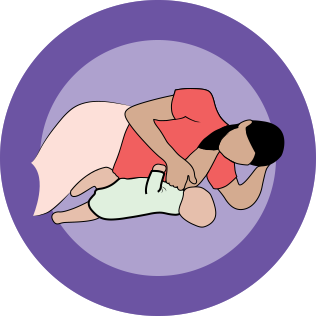
SIDE-LYING HOLD

Side-Lying Hold

  1. For the right breast, lie on your right side with your baby facing you.
  2. Pull your baby close. Your baby’s mouth should be level with your nipple.
  3. In this position, you can cradle your baby’s back with your left arm and support yourself with your right arm and/or pillows.
  4. Keep loose clothing and bedding away from your baby.
  5. Reverse for the left breast.

This hold is useful when:

  • You had a C-section
  • You want to rest while baby feeds
  • You are breastfeeding in the middle of the night
  • You and your baby are comfortable in this position
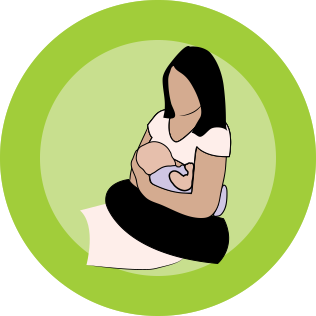
CROSS-CRADLE HOLD

Cross-Cradle Hold

  1. For the right breast, use your left arm to hold your baby’s head at your right breast and baby’s body toward your left side. A pillow across your lap can help support your left arm.
  2. Gently place your left hand behind your baby’s ears and neck, with your thumb and index finger behind each ear and your palm between baby’s shoulder blades. Turn your baby’s body toward yours so your tummies are touching.
  3. Hold your breast as if you are squeezing a sandwich. To protect your back, avoid leaning down to your baby. Instead, bring your baby to you.
  4. As your baby’s mouth opens, push gently with your left palm on baby’s head to help them latch on. Make sure you keep your fingers out of the way.
  5. Reverse for the left breast.

This hold is useful when:

  • Your baby is premature
  • Your baby has a weak suck
  • Your baby needs help to stay latched
  • Your baby needs extra head support
  • You and your baby are comfortable in this position
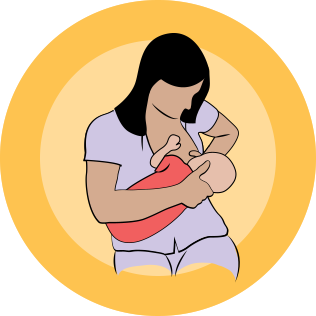
CLUTCH OR “FOOTBALL” HOLD

Clutch or “Football” Hold

  1. For the right breast, hold your baby level, facing up, at your right side.
  2. Put your baby’s head near your right nipple and support their back and legs under your right arm.
  3. Hold the base of your baby’s head with your right palm. A pillow underneath your right arm can help support your baby’s weight.
  4. To protect your back, avoid leaning down to your baby. Bring baby to you instead.
  5. Reverse for the left breast.

This hold is useful when:

  • You had a C-section
  • You have large breasts
  • You have flat or inverted nipples
  • You have a strong milk let-down
  • You are breastfeeding twins
  • Your baby likes to feed in an upright position
  • Your baby has reflux
  • You and your baby are comfortable in this position
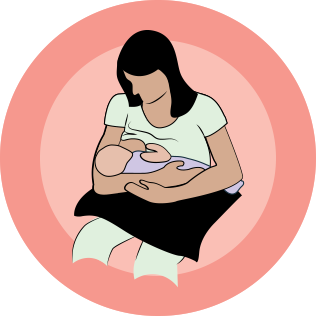
CRADLE HOLD

Cradle Hold

  1. For the right breast, cradle your baby with your right arm. Your baby will be on their left side across your lap, facing you at nipple level.
  2. Your baby’s head will rest on your right forearm with your baby’s back along your inner arm and palm.
  3. Turn your baby’s tummy toward your tummy. Your left hand is free to support your breast, if needed. Pillows can help support your arm and elbow.
  4. To protect your back, avoid leaning down to your baby. Instead, bring your baby to you.
  5. Reverse for the left breast.

This hold is useful when:

  • Your baby needs help latching on
  • You and your baby are comfortable in this position
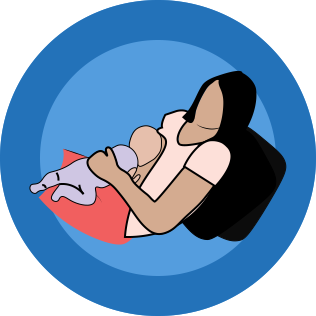
Laid-Back Hold

Laid-Back Hold

  1. Lean back on a pillow with your baby’s tummy touching yours and their head at breast level. Some moms find that sitting up nearly straight works well. Others prefer to lean back and lie almost flat.
  2. You can place your baby’s cheek near your breast, or you may want to use one hand to hold your breast near your baby. It’s up to you and what you think feels best.
  3. Your baby will naturally find your nipple, latch, and begin to suckle.

This hold is useful when:

  • Your baby is placed on your chest right after birth
  • You have a strong milk let-down
  • You have large breasts
  • You and your baby are comfortable in this position