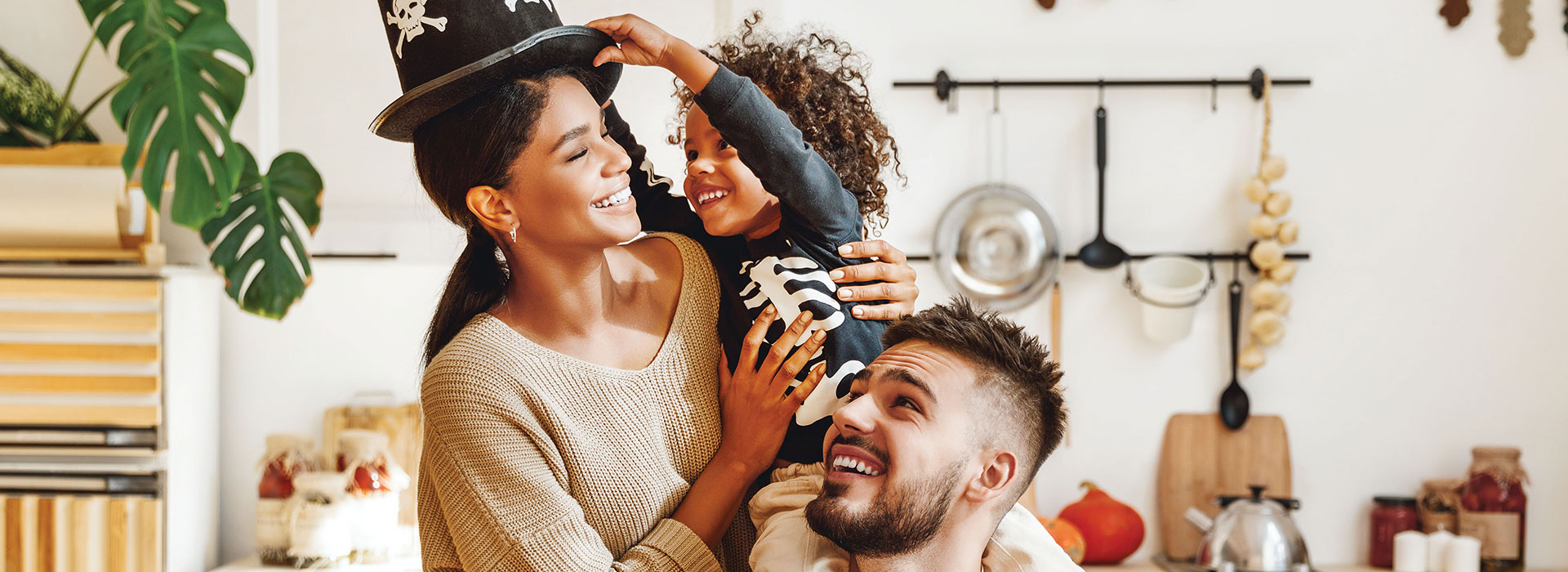
Whether you’re dressing up and going door-to-door, or staying warm inside, there’s nothing to get spooked about with these Healthier Halloween tips. Try these scary good ideas to make your Halloween festivities a little healthier for your family, friends, and trick-or-treaters.
Fill up on nutrition first.
Here’s the deal: as soon as your child’s favorite candy goes into their trick-or-treat bag, they’re going to want to eat it. Can you blame them!? To help curb the temptation to snack on candy while walking from house to house, fill their tummy with a healthy meal before you head out.
Limit the haul.
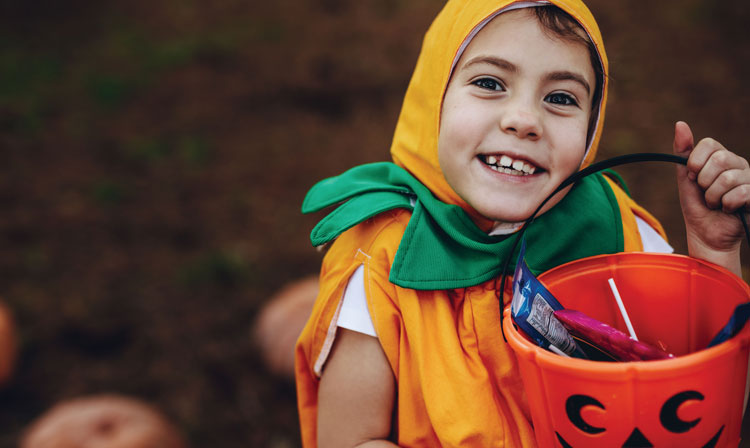
No one needs a full pillowcase of candy! Instead, choose a smaller collection container for your child and steer clear of the pillowcase method. Encourage your kids to only take one piece of candy from each house so they’ll be able to visit more houses in the neighborhood.
Halloween can be a great way to get some exercise!
Get moving.
Halloween can be a great way to get some exercise! Have some fun with a zombie dance party, three-legged monster race, spider crawl, or small pumpkin toss. Make trick-or-treating a fun family activity by walking instead of driving from house to house. Set a goal of how many houses or streets you’ll visit, or compete in teams to do as many as you can. Bring a bottle of water and flashlight for everyone, and wear comfortable shoes for walking.
Halloween can be a great time to talk with kids about moderation and making smart eating choices.
Look before you eat.
Check expiration dates and inspect all candy or other treats before allowing children to eat them. Don’t let children eat anything with questionable or unknown ingredients, especially if they have food allergies.
Have a plan.
Halloween can be a great time to talk with kids about moderation and making smart eating choices. Decide in advance how much candy your child will be allowed to take at each house, keep and eat. Help older kids decide what to do with excess candy.
Here are some ideas for enjoying the evening’s haul responsibly and getting rid of leftover candy:
Let your child keep enough candy to have one or two pieces a day for one or two weeks ‒ long enough for the excitement to wane. Throw away, donate or repurpose the rest.
“Buy back” candy from your child with money or tokens they can trade in for a fun activity, like a day at the zoo, an afternoon playing at the park, or trip to go ice skating.
Save extra candy for holiday baking (yes, the holidays are right around the corner!)
Save it to fill a piñata for a birthday celebration or to give out with Valentine cards.
When your child asks for a piece of candy, pair it with a healthy snack: an apple, a banana, or celery with peanut butter.
Some dentists’ offices have buy-back or trade-in programs, too.
Use it in an arts and crafts project or to decorate a holiday gingerbread house.
Donate excess candy to a homeless shelter, children’s hospital or care package program for troops overseas. A familiar sweet treat from home can be comforting during the holidays.
Have no fear – with these tips, you’ll limit the tricks for a safe, healthy, and fun Halloween!
Install this web app on your iPhone: tap and then Add to Home Screen.
Share to Social
Share this link via
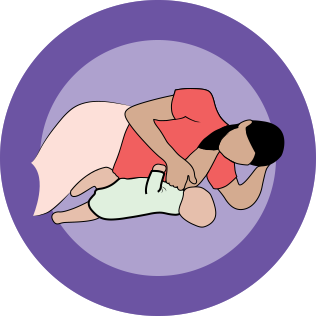
Side-Lying Hold
For the right breast, lie on your right side with your baby facing you.
Pull your baby close. Your baby’s mouth should be level with your nipple.
In this position, you can cradle your baby’s back with your left arm and support yourself with your right arm and/or pillows.
Keep loose clothing and bedding away from your baby.
Reverse for the left breast.
This hold is useful when:
You had a C-section
You want to rest while baby feeds
You are breastfeeding in the middle of the night
You and your baby are comfortable in this position
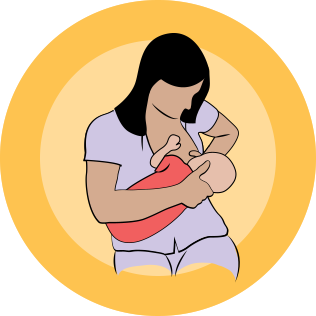
Cross-Cradle Hold
For the right breast, use your left arm to hold your baby’s head at your right breast and baby’s body toward your left side. A pillow across your lap can help support your left arm.
Gently place your left hand behind your baby’s ears and neck, with your thumb and index finger behind each ear and your palm between baby’s shoulder blades. Turn your baby’s body toward yours so your tummies are touching.
Hold your breast as if you are squeezing a sandwich. To protect your back, avoid leaning down to your baby. Instead, bring your baby to you.
As your baby’s mouth opens, push gently with your left palm on baby’s head to help them latch on. Make sure you keep your fingers out of the way.
Reverse for the left breast.
This hold is useful when:
Your baby is premature
Your baby has a weak suck
Your baby needs help to stay latched
Your baby needs extra head support
You and your baby are comfortable in this position
Clutch or “Football” Hold
For the right breast, hold your baby level, facing up, at your right side.
Put your baby’s head near your right nipple and support their back and legs under your right arm.
Hold the base of your baby’s head with your right palm. A pillow underneath your right arm can help support your baby’s weight.
To protect your back, avoid leaning down to your baby. Bring baby to you instead.
Reverse for the left breast.
This hold is useful when:
You had a C-section
You have large breasts
You have flat or inverted nipples
You have a strong milk let-down
You are breastfeeding twins
Your baby likes to feed in an upright position
Your baby has reflux
You and your baby are comfortable in this position
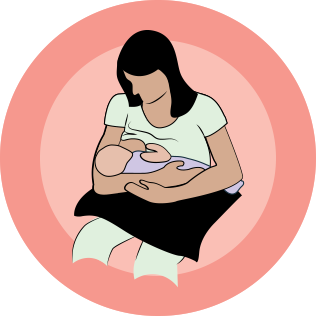
Cradle Hold
For the right breast, cradle your baby with your right arm. Your baby will be on their left side across your lap, facing you at nipple level.
Your baby’s head will rest on your right forearm with your baby’s back along your inner arm and palm.
Turn your baby’s tummy toward your tummy. Your left hand is free to support your breast, if needed. Pillows can help support your arm and elbow.
To protect your back, avoid leaning down to your baby. Instead, bring your baby to you.
Reverse for the left breast.
This hold is useful when:
Your baby needs help latching on
You and your baby are comfortable in this position
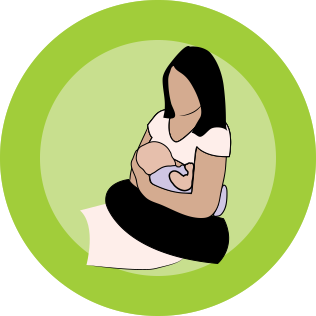
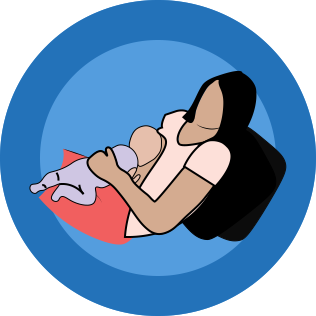
Laid-Back Hold
Lean back on a pillow with your baby’s tummy touching yours and their head at breast level. Some moms find that sitting up nearly straight works well. Others prefer to lean back and lie almost flat.
You can place your baby’s cheek near your breast, or you may want to use one hand to hold your breast near your baby. It’s up to you and what you think feels best.
Your baby will naturally find your nipple, latch, and begin to suckle.
This hold is useful when:
Your baby is placed on your chest right after birth
You have a strong milk let-down
You have large breasts
You and your baby are comfortable in this position
















Do you find this Blog helpful?
Show some love here!
No comments yet. Be the first to share your thoughts!