Guilt is a feeling we all experience when we think we’ve fallen short of expectations, whether they’re set by ourselves or others.
Mom guilt, specifically, is when we feel like we’re not doing enough for our children, regardless of whether we’re stay-at-home moms, working moms, young moms, or older moms. Nearly every mom encounters it at some point. Our inner voice can be both our biggest cheerleader and our harshest critic, making us feel like we’re not spending enough time with our kids, not cooking perfect meals, not keeping a spotless house, or missing important milestones.
As parents, we have certain expectations for how we want to raise our children, often based on our own upbringing, societal pressures, and what we hope our kids will achieve.
While becoming a parent is a joyful experience, it can also bring feelings of overwhelm, anger, anxiety, stress, or depression, all of which contribute to mom guilt.
We all have limited time each day to accomplish everything we need to do, so it’s important to prioritize tasks. Making a list and staying organized can help reduce feelings of overwhelm and stress. Remember, it’s okay if some things don’t get done right away.
Don’t compare yourself to others, whether it’s friends, family, or people on social media. Every parent and child is unique, so comparing yourself to others is both unhealthy and unrealistic.
There’s no such thing as a perfect mom, so be kind to yourself and respect your own differences.
Guilt and stress can have long-term health consequences, including increased blood pressure, depression, obesity, sleep problems, and other risks of illness. Taking care of yourself is essential for being able to care for others.
Don’t feel guilty about taking time for yourself—
it doesn’t have to be fancy or expensive.
Recharge your batteries by trying simple activities such as:
Exercising
Taking a Walk
Having a Bath or Shower Alone
Reading
Watching TV
Painting Your Nails
Spending Time with Friends
Practicing Prayer or Meditation
Don’t hesitate to reach out to WIC, a trusted friend, or seek professional help, if you’re struggling. Asking for help isn’t a sign of weakness—it’s a sign of strength. Parenting is full of constant changes and challenges, but it’s important to let go of guilt, practice self-compassion, and recognize that you’re doing the best you can with the knowledge and resources you have. Your children love you unconditionally, imperfections and all.
Asking for help isn’t a sign of weakness—it’s a sign of strength.
Your children love you unconditionally, imperfections and all.
Install this web app on your iPhone: tap and then Add to Home Screen.
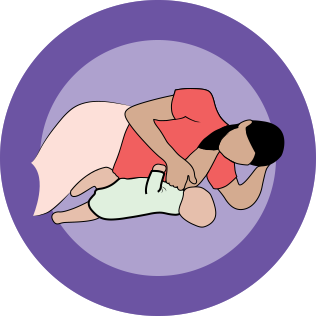
Side-Lying Hold
For the right breast, lie on your right side with your baby facing you.
Pull your baby close. Your baby’s mouth should be level with your nipple.
In this position, you can cradle your baby’s back with your left arm and support yourself with your right arm and/or pillows.
Keep loose clothing and bedding away from your baby.
Reverse for the left breast.
This hold is useful when:
You had a C-section
You want to rest while baby feeds
You are breastfeeding in the middle of the night
You and your baby are comfortable in this position
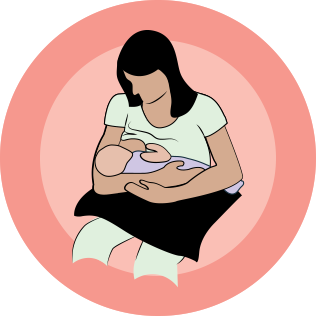
Cross-Cradle Hold
For the right breast, use your left arm to hold your baby’s head at your right breast and baby’s body toward your left side. A pillow across your lap can help support your left arm.
Gently place your left hand behind your baby’s ears and neck, with your thumb and index finger behind each ear and your palm between baby’s shoulder blades. Turn your baby’s body toward yours so your tummies are touching.
Hold your breast as if you are squeezing a sandwich. To protect your back, avoid leaning down to your baby. Instead, bring your baby to you.
As your baby’s mouth opens, push gently with your left palm on baby’s head to help them latch on. Make sure you keep your fingers out of the way.
Reverse for the left breast.
This hold is useful when:
Your baby is premature
Your baby has a weak suck
Your baby needs help to stay latched
Your baby needs extra head support
You and your baby are comfortable in this position
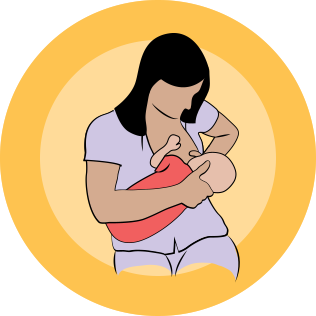
Clutch or “Football” Hold
For the right breast, hold your baby level, facing up, at your right side.
Put your baby’s head near your right nipple and support their back and legs under your right arm.
Hold the base of your baby’s head with your right palm. A pillow underneath your right arm can help support your baby’s weight.
To protect your back, avoid leaning down to your baby. Bring baby to you instead.
Reverse for the left breast.
This hold is useful when:
You had a C-section
You have large breasts
You have flat or inverted nipples
You have a strong milk let-down
You are breastfeeding twins
Your baby likes to feed in an upright position
Your baby has reflux
You and your baby are comfortable in this position
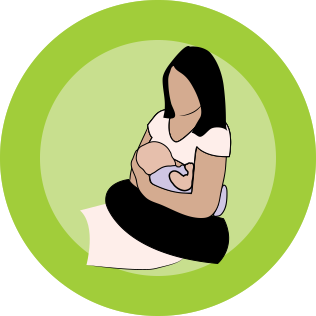
Cradle Hold
For the right breast, cradle your baby with your right arm. Your baby will be on their left side across your lap, facing you at nipple level.
Your baby’s head will rest on your right forearm with your baby’s back along your inner arm and palm.
Turn your baby’s tummy toward your tummy. Your left hand is free to support your breast, if needed. Pillows can help support your arm and elbow.
To protect your back, avoid leaning down to your baby. Instead, bring your baby to you.
Reverse for the left breast.
This hold is useful when:
Your baby needs help latching on
You and your baby are comfortable in this position
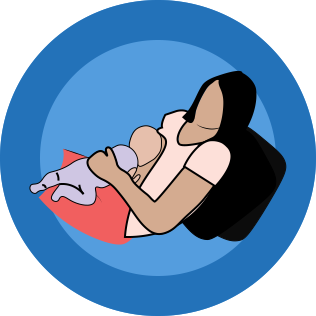
Laid-Back Hold
Lean back on a pillow with your baby’s tummy touching yours and their head at breast level. Some moms find that sitting up nearly straight works well. Others prefer to lean back and lie almost flat.
You can place your baby’s cheek near your breast, or you may want to use one hand to hold your breast near your baby. It’s up to you and what you think feels best.
Your baby will naturally find your nipple, latch, and begin to suckle.
This hold is useful when:
Your baby is placed on your chest right after birth
You have a strong milk let-down
You have large breasts
You and your baby are comfortable in this position