Wyoming WIC
Tongue-Tied-banner

How Do I Know If My Baby Could Be Tongue-Tied?

Tongue-Tied-QR
December 3, 2025 Infant

food Instructions How Do I Know If My Baby Could Be Tongue-Tied?

A tongue-tie happens when the little string under your baby’s tongue is too tight or short. This can make it hard for your baby to move their tongue. You might notice a small dimple at the tip of your baby’s tongue or see that their tongue doesn’t move past their gums when they cry.

Small baby cry
babies-age

Only a small number of babies (less than 1 in 10) are born with tongue-tie,
but having it “clipped” has become more common in recent years. Talk to your baby’s doctor if you think your baby may be tongue-tied. They can check your baby and refer you if treatment is needed.

Some-bottmo-flower

SOME IMPORTANT FACTS:

Tongue-tie can run in families.

About half of babies with tongue-tie have no problems breastfeeding.

Clipping may help if your baby is not getting enough milk or if your nipples hurt during feeding. But there are many other causes for pain or feeding problems, so it’s best to have your provider take a look first.

If tongue-tie isn’t causing feeding trouble, most experts suggest waiting until your child is older (around age 4) to see if it affects speech. As kids grow, the tissue under the tongue often stretches or disappears on its own.

If your baby seems frustrated while feeding or you are in pain, try pumping your milk until you can have your baby checked.

There is no proof that “lip ties,” “cheek ties,” or mouth exercises help.

Remember:
Every baby is different.

The best next step is to talk with your baby’s healthcare provider – they can help you decide what’s right for your family.

REFERENCES:

Install this web app on your iPhone: tap ios-share and then Add to Home Screen.

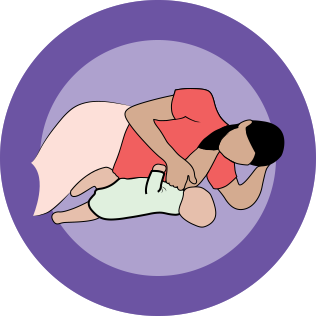
SIDE-LYING HOLD

Side-Lying Hold

  1. For the right breast, lie on your right side with your baby facing you.
  2. Pull your baby close. Your baby’s mouth should be level with your nipple.
  3. In this position, you can cradle your baby’s back with your left arm and support yourself with your right arm and/or pillows.
  4. Keep loose clothing and bedding away from your baby.
  5. Reverse for the left breast.

This hold is useful when:

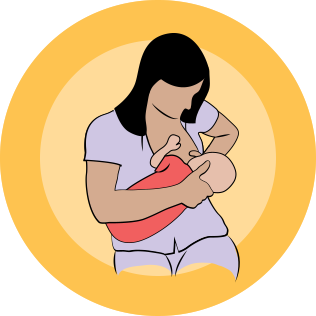
CROSS-CRADLE HOLD

Cross-Cradle Hold

  1. For the right breast, use your left arm to hold your baby’s head at your right breast and baby’s body toward your left side. A pillow across your lap can help support your left arm.
  2. Gently place your left hand behind your baby’s ears and neck, with your thumb and index finger behind each ear and your palm between baby’s shoulder blades. Turn your baby’s body toward yours so your tummies are touching.
  3. Hold your breast as if you are squeezing a sandwich. To protect your back, avoid leaning down to your baby. Instead, bring your baby to you.
  4. As your baby’s mouth opens, push gently with your left palm on baby’s head to help them latch on. Make sure you keep your fingers out of the way.
  5. Reverse for the left breast.

This hold is useful when:

CLUTCH OR “FOOTBALL” HOLD

Clutch or “Football” Hold

  1. For the right breast, hold your baby level, facing up, at your right side.
  2. Put your baby’s head near your right nipple and support their back and legs under your right arm.
  3. Hold the base of your baby’s head with your right palm. A pillow underneath your right arm can help support your baby’s weight.
  4. To protect your back, avoid leaning down to your baby. Bring baby to you instead.
  5. Reverse for the left breast.

This hold is useful when:

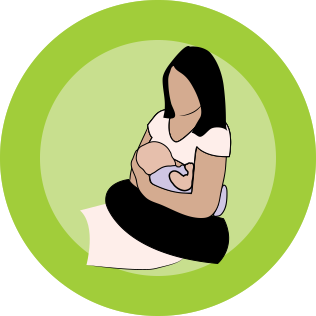
CRADLE HOLD

Cradle Hold

  1. For the right breast, cradle your baby with your right arm. Your baby will be on their left side across your lap, facing you at nipple level.
  2. Your baby’s head will rest on your right forearm with your baby’s back along your inner arm and palm.
  3. Turn your baby’s tummy toward your tummy. Your left hand is free to support your breast, if needed. Pillows can help support your arm and elbow.
  4. To protect your back, avoid leaning down to your baby. Instead, bring your baby to you.
  5. Reverse for the left breast.

This hold is useful when:

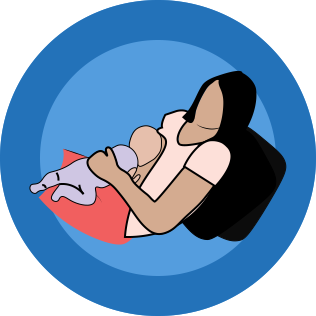
Laid-Back Hold

Laid-Back Hold

  1. Lean back on a pillow with your baby’s tummy touching yours and their head at breast level. Some moms find that sitting up nearly straight works well. Others prefer to lean back and lie almost flat.
  2. You can place your baby’s cheek near your breast, or you may want to use one hand to hold your breast near your baby. It’s up to you and what you think feels best.
  3. Your baby will naturally find your nipple, latch, and begin to suckle.

This hold is useful when: