
Skip to Content Skip to Footer
Wyoming WIC
Wyoming WIC
  • Home
  • Women
    • Women
      Breastfeeding
    • Women
      Healthy Tips for Moms
    • Women
      Postpartum
    • Women
      Pregnant
  • Infants
    • Infants
      Feeding & Nutrition
    • Infants
      Growth & Development
  • Children
    • Children
      Toddlers
    • Children
      2-5 Year Olds
  • Families
    • Families
      Activity and Play
    • Families
      Dads
    • Families
      Food & Family Meals
    • Families
      Immunizations
    • Families
      Safety
  • Live Well Blog
  • Food Shopping Guide
  • Español
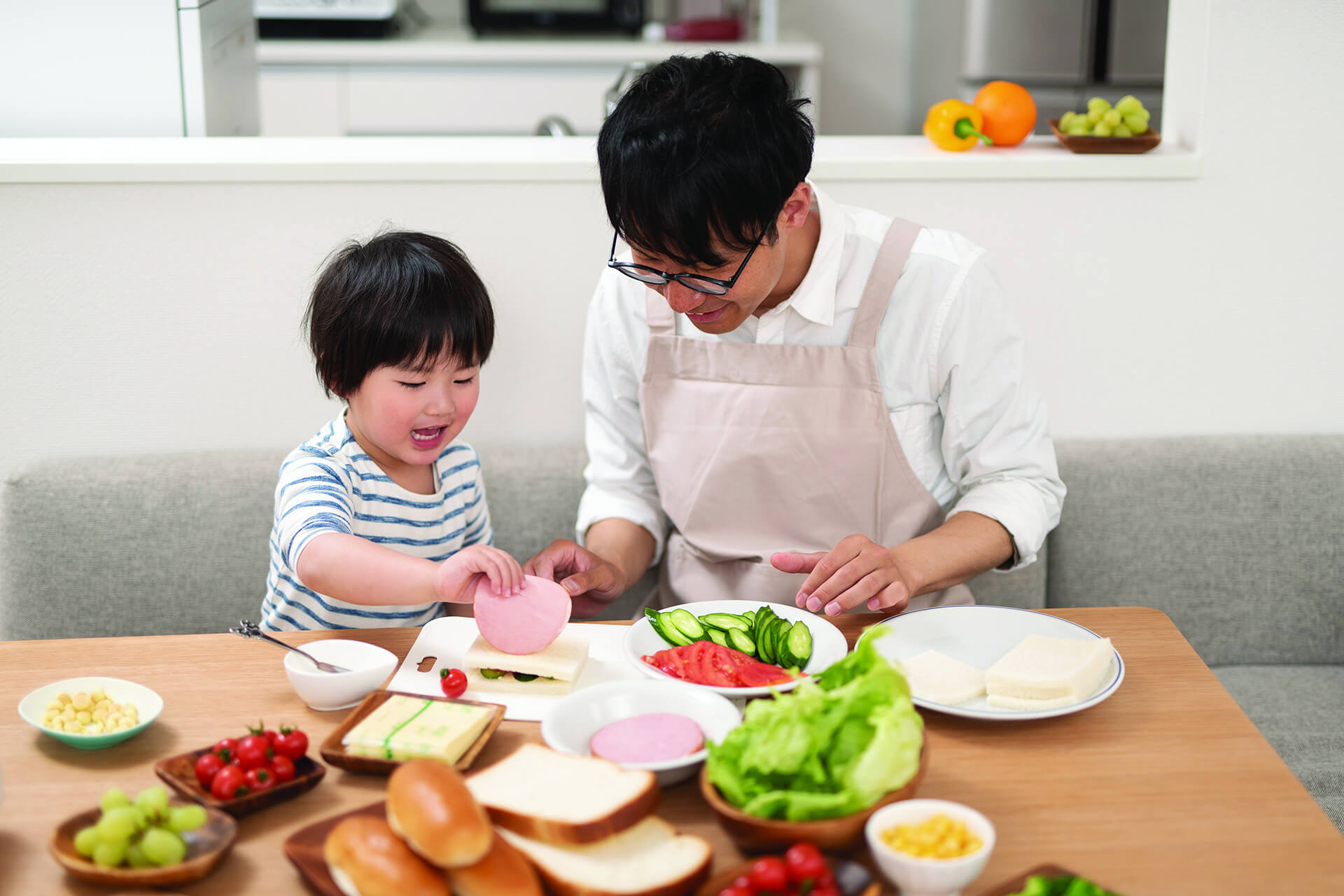
Dad son cooking

Food Safety for the Whole Family

  • Home
  • Live Well Blog
  • Food Safety for the Whole Family
Food-Safety-for-the-Whole-Family-QR-code
February 28, 2024 General /Family

Did you know you are more likely to get sick with a food-borne illness when you’re pregnant?

If you have kids under five, they’re also at higher risk of food borne illness because their immune system is still developing.
That’s why it’s super important to follow the steps for food safety.


Clean

  • You already know how critical hand washing is, but do you do it often enough? Always wash for 15-20 seconds (one slow verse of the birthday song) before cooking and after using the restroom, touching things like pets, your hair, diapers, after blowing your nose or after handling raw eggs, meat, poultry or seafood.
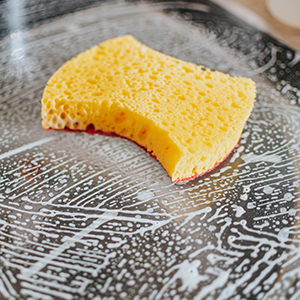
  • Oops! You could be spreading bacteria on your countertop if you’re using a sponge or rag that isn’t clean. Wash sponges and dish rags every day. Sanitize a sponge by wetting it then put in the microwave on high for 1 minute. You can also put sponges in the dishwasher on the hottest and longest cycle + dry cycle, or soak sponges or rags in a bleach solution of ½ teaspoon unscented bleach with 4 cups of warm water. You can also use this solution to sanitize countertops and then air dry.
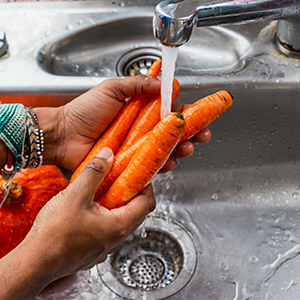
  • Bacteria on produce can also make you sick. Wash the outside of fruits and vegetables with water, using a brush if possible, for at least 30 seconds, even if you don’t plan on eating the skin.
hand washing
Washing brush
Wash fruits and vegetables with water
pink number

Separate

  • Always keep raw meats, poultry, seafood, and produce separate. At the store, put them in separate bags to bring home.
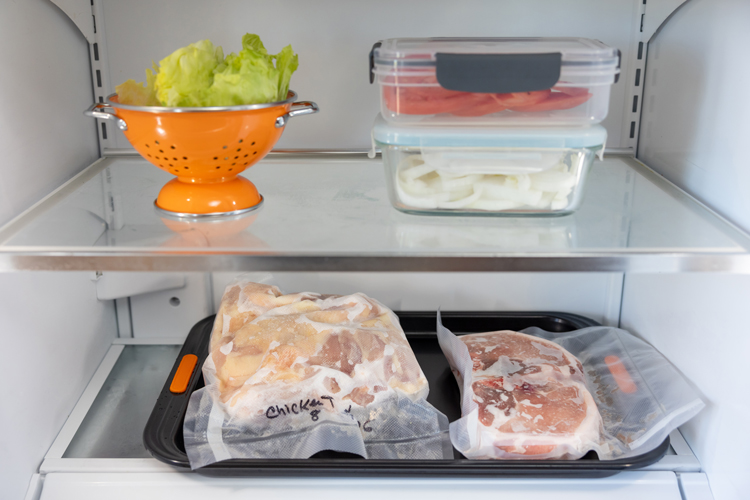
  • Store raw protein foods away from other foods in the refrigerator, especially produce. When defrosting meats, put the package in a bowl to prevent blood from spilling onto other foods. Never thaw food on the counter—it’s best to thaw or marinate meat, poultry and seafood in the refrigerator. You can also defrost in the microwave if you cook it right away.
  • It’s best to designate a different cutting board for meat and produce to make sure the juices stay separate.
food in fridge
Family Cooking
purple number

Cook… and Chill!

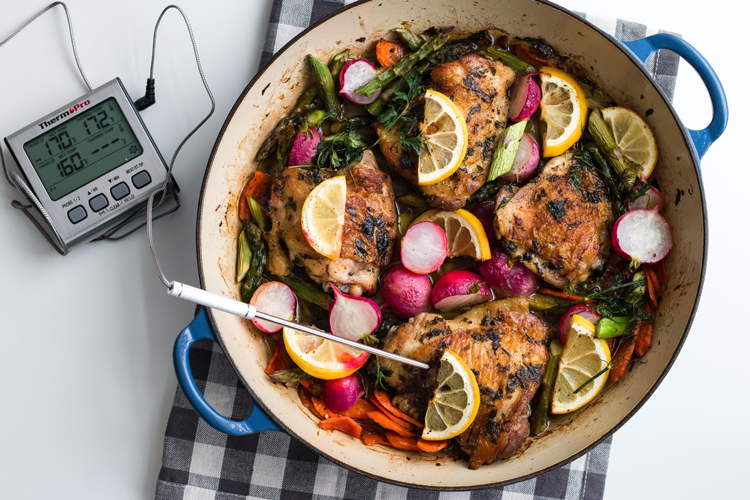
  • Cook meats to a safe temperature. The best way to know if a food is “done” is to use a food thermometer and cook to these internal temperatures:
  • 145° F – Beef, Pork, Veal, Ham, Lamb, Fish, and Shellfish
  • 160° F – Ground meats and Eggs
  • 165° F – All Poultry, Leftovers, and Casseroles
  • Avoid eating uncooked foods made with raw eggs like homemade ice cream, raw cake batter or homemade Caesar salad dressing. Also don’t eat raw cookie dough, even if it doesn’t have eggs because uncooked flour can carry bacteria.
  • Cook eggs until the yolk and white are firm to the touch— “over medium.”
  • Cook fish and shellfish until the proper internal temperature or until they are opaque.
Cook meats
Cook eggs
  • Keep food above 140° F after cooking.
  • Don’t keep food at room temperature for more than 2 hours, limit to 1 hour if you are outside and it’s 90° F or hotter.
  • When putting leftovers away, put in shallow containers so they cool quickly.
  • Set your refrigerator at 40° F or below and your freezer at 0° F or below.

A Few More Tips Just for Pregnancy

  • Heat deli meat, hot dogs, fermented and dry sausage to steaming.
  • Say “no thanks” to cold, pre-made deli foods like chicken or tuna salad.
  • Avoid eating pâté and cold meat spreads from the refrigerated or deli section. Spreads that are in cans, jars, or sealed packets are okay.
  • Don’t eat smoked seafood such as lox, seafood jerky or nova-style unless you heat it to 165° F first.
  • Don’t drink raw unpasteurized juice such as cider or fresh squeezed orange juice unless you boil them for at least one minute first.
  • Soft cheeses like queso blanco, queso fresco, brie, feta, camembert or Roquefort are okay ONLY if the label says, “made with pasteurized milk.”
  • Avoid raw sprouts.
  • If possible DON’T clean cat litter boxes when you’re pregnant and don’t let cats on food prep or eating areas. Cats often carry a parasite called Toxoplasma gondii which can live in cat feces (poop) and can be spread from a cat’s paws to other surfaces. Most people will show no symptoms after being infected. But for pregnant women, the infection can be serious and cause miscarriage.
Blue star

Sometimes foods are recalled due to bacteria that could make you sick. Find a list of recalled food items here:
https://www.cdc.gov/foodsafety/outbreaks/lists/outbreaks-list.html?CDC_AA_refVal=https%3A%2F%2Fwww.cdc.gov%2Ffoodsafety%2Foutbreaks%2Fmultistate-outbreaks%2Foutbreaks-list.html

  • Infant
    • The Basics of Paced Bottle-Feeding
    • How Do I Know If My Baby Could Be Tongue-Tied?
    • Protect Your Baby from Cronobacter
    • Exploring the World with Baby – Sensory Play
    • Get Your Baby “Back” to Sleep in a Safe Environment
  • Children
    • Shopping With Kids: A Simple Way to Help Them Like More Foods
    • Pumpkin Fun: Free and Healthy Activities for Kids Under 5
    • Letting Your Child Play with Food Can Be a Good Thing
    • Is Snack Time Treat Time?
    • Fun Ways to Learn About Healthy Food and Get Moving!
  • General /Family
    • Finding Calm When Life Gets Busy: Stress-Management for Parents
    • February Is National Heart Month: Simple Ways to Show Your Heart Some Love
    • 10 Ways to Enjoy Avocados – And Helpful Tips to Feed with Confidence
    • Food, Feelings, and Finding Balance: Understanding Disordered Eating
    • Liquid Calories – Time to Rethink Your Drink?
  • Women
    • Breastfeeding Through Growth Spurts and Sleep Changes
    • Baby Blues… or Is It Something More?
    • Gut Health and Gestational Diabetes
    • Blood Pressure: Do You Know Your Numbers?
    • Make a Plan to Pump
  • Recipes
    • Heart-Healthy Recipe: Banana Berry Oatmeal Cups
    • Is the Chia Seed Challenge Worth It?
    • Extra Vegetables Quiche
    • Easy Pumpkin Muffins
    • Confetti Bean Salad
Wyoming WIC WDH Public Health

CONTACT US

1-888-996-9378
health.wyo.gov/wic
  • How to apply for WIC

Resources

  • WIC Shopper
  • WIC Smart
  • WIC Breastfeeding Support
  • Wyoming Medicaid
  • Wyoming 211
  • Tell a friend about WIC!
  • Guide to Using Your WIC Benefits
  • Wyoming WIC Facebook
  • Wyoming WIC Instagram
  • Wyoming WIC

USDA is an equal opportunity provider, employer, and lender.

Cookie PolicyPrivacy Policy

© Brush Art Corporation
This website is operated by Brush Art Corporation on behalf of the Wyoming Department of Health.

Install this web app on your iPhone: tap and then Add to Home Screen.

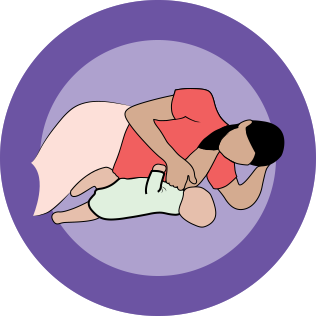
SIDE-LYING HOLD

Side-Lying Hold

  1. For the right breast, lie on your right side with your baby facing you.
  2. Pull your baby close. Your baby’s mouth should be level with your nipple.
  3. In this position, you can cradle your baby’s back with your left arm and support yourself with your right arm and/or pillows.
  4. Keep loose clothing and bedding away from your baby.
  5. Reverse for the left breast.

This hold is useful when:

  • You had a C-section
  • You want to rest while baby feeds
  • You are breastfeeding in the middle of the night
  • You and your baby are comfortable in this position
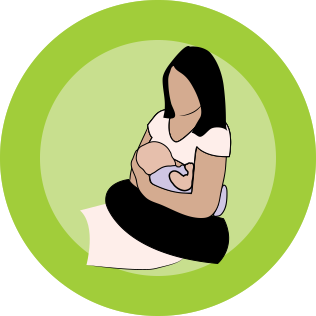
CROSS-CRADLE HOLD

Cross-Cradle Hold

  1. For the right breast, use your left arm to hold your baby’s head at your right breast and baby’s body toward your left side. A pillow across your lap can help support your left arm.
  2. Gently place your left hand behind your baby’s ears and neck, with your thumb and index finger behind each ear and your palm between baby’s shoulder blades. Turn your baby’s body toward yours so your tummies are touching.
  3. Hold your breast as if you are squeezing a sandwich. To protect your back, avoid leaning down to your baby. Instead, bring your baby to you.
  4. As your baby’s mouth opens, push gently with your left palm on baby’s head to help them latch on. Make sure you keep your fingers out of the way.
  5. Reverse for the left breast.

This hold is useful when:

  • Your baby is premature
  • Your baby has a weak suck
  • Your baby needs help to stay latched
  • Your baby needs extra head support
  • You and your baby are comfortable in this position
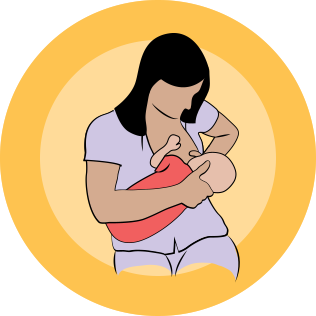
CLUTCH OR “FOOTBALL” HOLD

Clutch or “Football” Hold

  1. For the right breast, hold your baby level, facing up, at your right side.
  2. Put your baby’s head near your right nipple and support their back and legs under your right arm.
  3. Hold the base of your baby’s head with your right palm. A pillow underneath your right arm can help support your baby’s weight.
  4. To protect your back, avoid leaning down to your baby. Bring baby to you instead.
  5. Reverse for the left breast.

This hold is useful when:

  • You had a C-section
  • You have large breasts
  • You have flat or inverted nipples
  • You have a strong milk let-down
  • You are breastfeeding twins
  • Your baby likes to feed in an upright position
  • Your baby has reflux
  • You and your baby are comfortable in this position
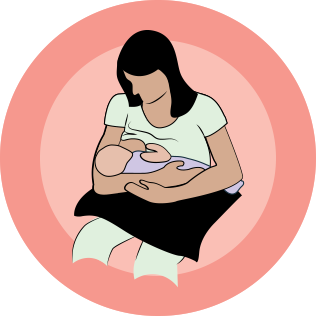
CRADLE HOLD

Cradle Hold

  1. For the right breast, cradle your baby with your right arm. Your baby will be on their left side across your lap, facing you at nipple level.
  2. Your baby’s head will rest on your right forearm with your baby’s back along your inner arm and palm.
  3. Turn your baby’s tummy toward your tummy. Your left hand is free to support your breast, if needed. Pillows can help support your arm and elbow.
  4. To protect your back, avoid leaning down to your baby. Instead, bring your baby to you.
  5. Reverse for the left breast.

This hold is useful when:

  • Your baby needs help latching on
  • You and your baby are comfortable in this position
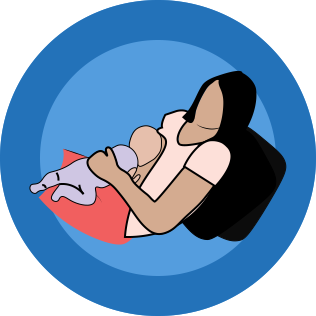
Laid-Back Hold

Laid-Back Hold

  1. Lean back on a pillow with your baby’s tummy touching yours and their head at breast level. Some moms find that sitting up nearly straight works well. Others prefer to lean back and lie almost flat.
  2. You can place your baby’s cheek near your breast, or you may want to use one hand to hold your breast near your baby. It’s up to you and what you think feels best.
  3. Your baby will naturally find your nipple, latch, and begin to suckle.

This hold is useful when:

  • Your baby is placed on your chest right after birth
  • You have a strong milk let-down
  • You have large breasts
  • You and your baby are comfortable in this position