


Skip to Content Skip to Footer
Wyoming WIC
Wyoming WIC
  • Home
  • Women
    • Women
      Breastfeeding
    • Women
      Healthy Tips for Moms
    • Women
      Postpartum
    • Women
      Pregnant
  • Infants
    • Infants
      Feeding & Nutrition
    • Infants
      Growth & Development
  • Children
    • Children
      Toddlers
    • Children
      2-5 Year Olds
  • Families
    • Families
      Activity and Play
    • Families
      Dads
    • Families
      Food & Family Meals
    • Families
      Immunizations
    • Families
      Safety
  • Content Suite
  • Food Shopping Guide
  • Español
Child and adult playing soccer in a garden

Exercise Snacks: Fun and Easy Ways to Be Active

  • Home
  • Content Suite
  • Exercise Snacks: Fun and Easy Ways to Be Active
Square QR code on plain backdrop
April 16, 2025 General /Family

We all know being active is good for our health, but between school, work, TV, and video games, both kids and parents spend a lot of time sitting. Finding time for exercise can feel overwhelming, but there’s a simple solution—exercise snacks!

What Are Exercise Snacks?

Child piggybacking, adults smiling, having fun outdoors

Exercise snacks are short bursts of movement that last one to five minutes.

Think of them as mini-workouts that fit easily into your day. No gym, special equipment, or extra time needed!

To benefit from exercise snacking, aim for at least three (3) exercise snacks a day or more.

These quick activities add up over time, helping to build healthy habits and improve overall well-being.

Benefits of Exercise Snacks

These small bursts of activity can:

Outline heart with intricate symmetrical inner patterns
Support Heart Health:

Short, quick movements can strengthen the heart and improve circulation.

Music notes with vertical and horizontal lines, blue outline
Build Muscle Strength:

Regular activity helps muscles grow and stay strong.

Blue outlined airplane design with circular elements
Boost Mood and Focus:

Physical activity releases endorphins, which help improve mood and sharpen concentration.
Fork lifts pumpkin into truck bed at market

Fun Exercise Snack Ideas for Kids (and Parents too!)

Woman and two children dancing outside together happily

Make It a Family Affair
Kids learn by watching their parents. When families exercise together, they build healthy habits and spend quality time together. Consider setting reminders or making a fun activity chart to track everyone’s movement.

Try these simple activities to get moving:
Blue circle with centered checkmark symbol
Stair Climbing

Go up and down the stairs for a minute.

Blue circle with centered checkmark symbol
Jumping Jacks

A quick and fun, full-body workout.

Blue circle with centered checkmark symbol
Skipping Rope

Great for the heart and coordination.

Blue circle with centered checkmark symbol
Chair Squats

Sit and stand using a chair for support.

Blue circle with centered checkmark symbol
Lunges

Strengthen legs and improve balance.

Blue circle with centered checkmark symbol
Push-ups

Do them on the floor or against a wall.

Blue circle with centered checkmark symbol
Dancing

Turn on a favorite song and move!

Blue circle with centered checkmark symbol
Ball Toss

Throwing and catching helps coordination.
Easy Ways to Add Exercise Snacks to Your Day

  • During TV Commercials: Use these breaks for a quick activity like jumping jacks.
  • Work or Homework Breaks: Short movement sessions or a quick walk around the block can refresh the mind and body.
  • Morning Routine: Start the day with a couple of minutes of stretching or dancing.
  • Pre-Dinner Time: While waiting for dinner, encourage a fun activity like skipping rope.

Exercise Snacks + Healthy Eating = A Stronger Body

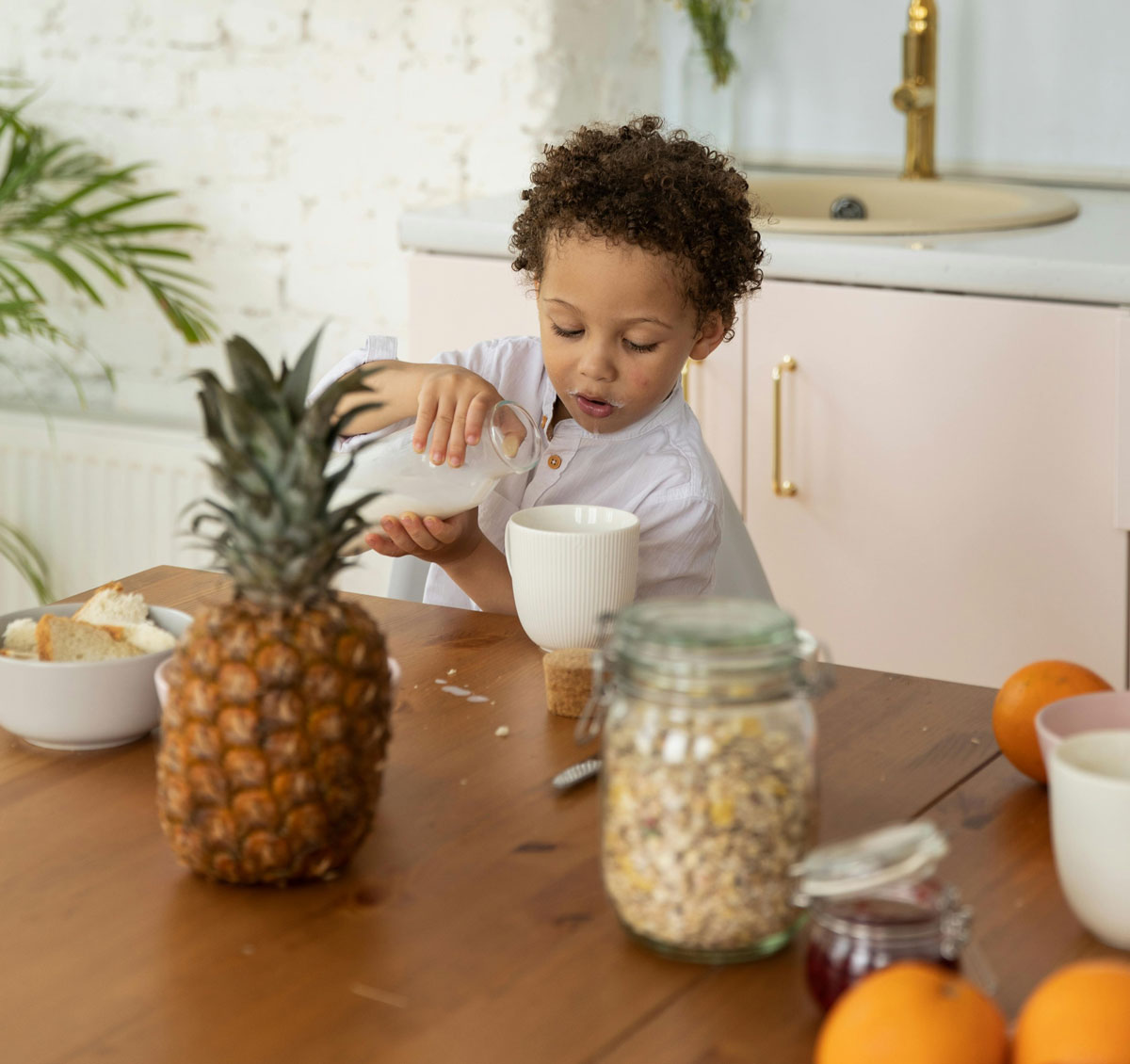
Child pouring milk into a bowl on table

Being active is important and eating well helps fuel the body. WIC-approved foods offer the nutrients you and your children need to stay energized and grow strong.

Here are a few food and exercise combos to try:

  • After a fun dance session, offer a banana or apple slices with peanut butter for a natural energy boost.
  • Following a round of jumping jacks, offer a yogurt cup for protein to help build muscles.
  • Before heading outside to play, offer a whole-grain tortilla with cheese to provide the strength they need to keep going.
  • For hydration after active play, offer a glass of low-fat milk or water instead of sugary drinks.

Safety Tips

Before getting started, keep these in mind:

  • Warm-Up: start with gentle movements to prepare your muscles for activity.
  • Proper Footwear: wear appropriate shoes to prevent injuries.
  • Listen to Your Body: if you feel any pain or discomfort, stop.
Woman lifting happy baby outdoors, both smiling brightly

By adding exercise snacks into you and your child’s day, you’re promoting a healthier lifestyle in a fun and manageable way.

These mini-movements all add up to big benefits over time, promoting healthy habits that can last a lifetime.

REFERENCES

https://health.clevelandclinic.org/exercise-snacks

Author: Amanda Hojnacki

Do you find this Blog helpful?

Show some love here!

SMS Communication Consent

No comments yet. Be the first to share your thoughts!

Scroll To Top

You May Also Like...

September 16, 2026

Kid-Friendly Apple Cinnamon Oat Cups | WIC Recipe

Apple Cinnamon Oat Cups: A Kid-Friendly Taste of Fall September often brings busy mornings, new school routines, and the first hints of fall. It’s also a great time to enjoy…

Read More
0
1
September 2, 2026

Protecting Your Family from Cyclospora: Summer Food & Water Safety

How to Protect Your Family from Cyclospora Food safety is always a hot topic in the summer; rising temperatures means more bacteria growth when food isn’t handled properly. And when…

Read More
0
0
July 22, 2026

The Benefits of Family Meals for Kids and Parents

The Benefits of Eating Meals Together as a Family Think about your family meals for a moment. How often does your family sit down and eat together? Is the TV…

Read More
0
0
WATCH VIDEOS
  • Infant
    • Infant Pacifiers: Benefits, Safety Tips, and When to Wean
    • When to Start Peanut and Egg to Help Prevent Allergies
    • The Basics of Paced Bottle-Feeding
    • How Do I Know If My Baby Could Be Tongue-Tied?
    • Protect Your Baby from Cronobacter
  • Children
    • Food, Feelings, and Your Child’s Health | How Nutrition Affects Mood
    • Simple Child Safety Tips Every Parent Should Know
    • Shopping With Kids: A Simple Way to Help Them Like More Foods
    • Pumpkin Fun: Free and Healthy Activities for Kids Under 5
    • Letting Your Child Play with Food Can Be a Good Thing
  • General /Family
    • Kid-Friendly Apple Cinnamon Oat Cups | WIC Recipe
    • Protecting Your Family from Cyclospora: Summer Food & Water Safety
    • The Benefits of Family Meals for Kids and Parents
    • Meet the Milks: Dairy and Plant-Based Choices
    • Avoiding Food Waste
  • Women
    • Breastfeeding After a C-Section: Tips for WIC Moms
    • Breastfeeding Nipple Pain: What’s Normal and When to Get Help
    • Cluster Feeding Explained | WIC Breastfeeding Support
    • Breastfeeding Support Available Through WIC | Pumps, Peer Counselors & More
    • How Partners Can Support Breastfeeding
  • Recipes
    • Boo-Berry Yogurt Cups: Easy Halloween Snack for Kids
    • Rainbow Fruit Salsa with Cinnamon Chips | Healthy Family Snack Recipe
    • Healthy Red, White, and Blue Snacks for Kids
    • Simple Meals with Canned Fish: Easy, Healthy & Budget-Friendly Ideas
    • Fresh & Easy Spring Snacks for Toddlers
Wyoming WIC WDH Public Health

CONTACT US

1-888-996-9378
health.wyo.gov/wic
  • How to apply for WIC

Resources

  • WIC Shopper
  • WIC Smart
  • WIC Breastfeeding Support
  • Wyoming Medicaid
  • Wyoming 211
  • Tell a friend about WIC!
  • Guide to Using Your WIC Benefits
  • Wyoming WIC Facebook
  • Wyoming WIC Instagram
  • Wyoming WIC

USDA is an equal opportunity provider, employer, and lender.

Cookie PolicyPrivacy Policy

© Brush Art Corporation
This website is operated by Brush Art Corporation on behalf of the Wyoming Department of Health.

Install this web app on your iPhone: tap and then Add to Home Screen.
Share to Social

Share this link via

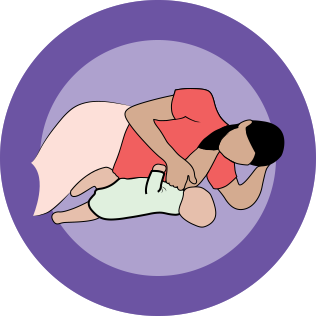
SIDE-LYING HOLD

Side-Lying Hold

  1. For the right breast, lie on your right side with your baby facing you.
  2. Pull your baby close. Your baby’s mouth should be level with your nipple.
  3. In this position, you can cradle your baby’s back with your left arm and support yourself with your right arm and/or pillows.
  4. Keep loose clothing and bedding away from your baby.
  5. Reverse for the left breast.

This hold is useful when:

  • You had a C-section
  • You want to rest while baby feeds
  • You are breastfeeding in the middle of the night
  • You and your baby are comfortable in this position
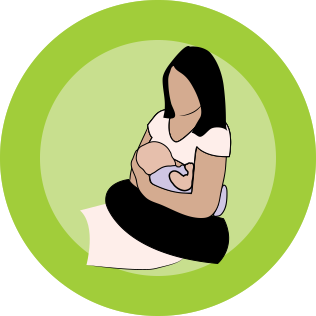
CROSS-CRADLE HOLD

Cross-Cradle Hold

  1. For the right breast, use your left arm to hold your baby’s head at your right breast and baby’s body toward your left side. A pillow across your lap can help support your left arm.
  2. Gently place your left hand behind your baby’s ears and neck, with your thumb and index finger behind each ear and your palm between baby’s shoulder blades. Turn your baby’s body toward yours so your tummies are touching.
  3. Hold your breast as if you are squeezing a sandwich. To protect your back, avoid leaning down to your baby. Instead, bring your baby to you.
  4. As your baby’s mouth opens, push gently with your left palm on baby’s head to help them latch on. Make sure you keep your fingers out of the way.
  5. Reverse for the left breast.

This hold is useful when:

  • Your baby is premature
  • Your baby has a weak suck
  • Your baby needs help to stay latched
  • Your baby needs extra head support
  • You and your baby are comfortable in this position
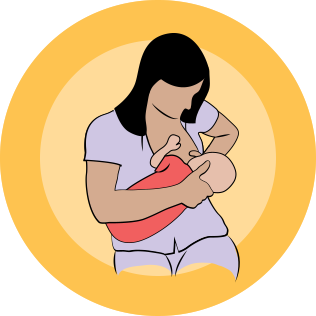
CLUTCH OR “FOOTBALL” HOLD

Clutch or “Football” Hold

  1. For the right breast, hold your baby level, facing up, at your right side.
  2. Put your baby’s head near your right nipple and support their back and legs under your right arm.
  3. Hold the base of your baby’s head with your right palm. A pillow underneath your right arm can help support your baby’s weight.
  4. To protect your back, avoid leaning down to your baby. Bring baby to you instead.
  5. Reverse for the left breast.

This hold is useful when:

  • You had a C-section
  • You have large breasts
  • You have flat or inverted nipples
  • You have a strong milk let-down
  • You are breastfeeding twins
  • Your baby likes to feed in an upright position
  • Your baby has reflux
  • You and your baby are comfortable in this position
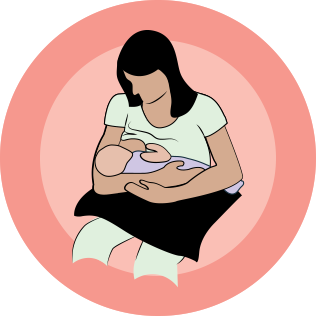
CRADLE HOLD

Cradle Hold

  1. For the right breast, cradle your baby with your right arm. Your baby will be on their left side across your lap, facing you at nipple level.
  2. Your baby’s head will rest on your right forearm with your baby’s back along your inner arm and palm.
  3. Turn your baby’s tummy toward your tummy. Your left hand is free to support your breast, if needed. Pillows can help support your arm and elbow.
  4. To protect your back, avoid leaning down to your baby. Instead, bring your baby to you.
  5. Reverse for the left breast.

This hold is useful when:

  • Your baby needs help latching on
  • You and your baby are comfortable in this position
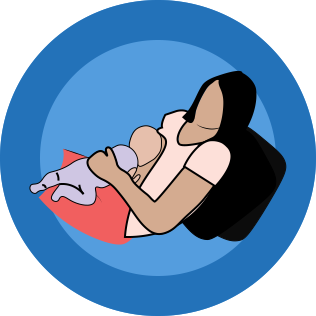
Laid-Back Hold

Laid-Back Hold

  1. Lean back on a pillow with your baby’s tummy touching yours and their head at breast level. Some moms find that sitting up nearly straight works well. Others prefer to lean back and lie almost flat.
  2. You can place your baby’s cheek near your breast, or you may want to use one hand to hold your breast near your baby. It’s up to you and what you think feels best.
  3. Your baby will naturally find your nipple, latch, and begin to suckle.

This hold is useful when:

  • Your baby is placed on your chest right after birth
  • You have a strong milk let-down
  • You have large breasts
  • You and your baby are comfortable in this position