
Skip to Content Skip to Footer
Wyoming WIC
Wyoming WIC
  • Home
  • Women
    • Women
      Breastfeeding
    • Women
      Healthy Tips for Moms
    • Women
      Postpartum
    • Women
      Pregnant
  • Infants
    • Infants
      Feeding & Nutrition
    • Infants
      Growth & Development
  • Children
    • Children
      Toddlers
    • Children
      2-5 Year Olds
  • Families
    • Families
      Activity and Play
    • Families
      Dads
    • Families
      Food & Family Meals
    • Families
      Immunizations
    • Families
      Safety
  • Content Suite
  • Food Shopping Guide
  • Español
Baby feet held gently in adult hands

Choosing Day Care

  • Home
  • Content Suite
  • Choosing Day Care
Black and white QR code on square background
March 9, 2022 Infant

If you are returning to work or school after you have your baby, chances are that finding day care is on the top of your to-do list. As a parent, it’s up to you to find a caregiver you trust who knows how you want your baby fed and taken care of while you’re away. Here’s a step-by-step guide on how to choose and communicate with your day-care provider to make sure your little one stays safe and healthy.

Ask yourself a few questions:

  • Do you want a day care close to home or close to work or school? If you are breastfeeding, having day care close to where you work can allow you to go during lunch to nurse your baby.
  • Do you want childcare in a home or in a commercial day-care center?
  • Do you prefer to have a friend or relative take care of your child? Free day care is great but may come with “strings attached” such as not having your wishes followed for feeding, sleep, screen time or smoking around the baby.

Check it out:

You can search for state-licensed day-care providers on the internet. Licensing requires providers to follow health and safety rules.

Visit a few day-care facilities — both home and commercial sites. Stay a while to observe:

  • Do workers wash their hands thoroughly after changing diapers, wiping noses and before feeding time?
  • Are there enough workers to give the children the attention they need?
  • Are there smoke detectors, outlet covers, and childproof handles on cabinets and doors?
  • Are there children there who seem sick? Ask what the policy is for illness.
  • Are there TV or video screens on?
  • Ask if they participate in the Child and Adult Food Care Food Program (CACFP). This national food program is available in licensed family day care homes, childcare centers and Head Start programs. The CACFP meal patterns ensure that nutritious foods are offered for breakfast, lunch, and either snack or supper. Child-care providers also receive training on infant care, menu planning, food safety and nutrition education.
  • Ask to see their current license or letter from the most recent inspection.

When looking at day care in a home setting or with a friend or relative:

  • Do people smoke inside the home? No one should smoke around babies or children. Third hand smoke can stick to clothes, furniture and walls and also hurt a baby’s health, even if no one actually smokes around the baby.
  • Is there a TV or screen on for many hours? Even if educational, screen time can harm a baby’s language development.
  • Is the house childproof? If not, will the provider be open to making it childproof?
  • Are there pesticides used in the home? This can be dangerous for baby.
  • Will your relative or friend be likely to follow your wishes about feeding, naptime and screen time?
  • Are there pets in the home? If so, are they child-friendly?

What about feeding?

  • Babies should be fed “on demand” rather than on a schedule and should not be encouraged to finish a bottle once they show signs they are full.
  • Ask about how human milk is stored and warmed up. It should be heated in warm water — not in the microwave.
  • Ask to see the weekly menu. Your baby is growing and will be eating table foods in less than a year!

It may not be easy to leave your baby, but soon you will both be used to the new routine. Remember that you do have control over how your baby is cared for when you are not around, especially if you make finding quality child care a top priority. Green footprint symbol on white background

Do you find this Blog helpful?

Show some love here!

SMS Communication Consent

No comments yet. Be the first to share your thoughts!

Scroll To Top

You May Also Like...

June 3, 2026

Infant Pacifiers: Benefits, Safety Tips, and When to Wean

What Parents Should Know About Infant Pacifiers Paci, binky, nookie – whatever you choose to call it, pacifiers can be a helpful tool for soothing babies. Many parents have questions…

Read More
0
1
April 1, 2026

When to Start Peanut and Egg to Help Prevent Allergies

How Starting Solid Foods at the Right Time May Help Prevent Food Allergies Years ago, parents were told to wait before giving babies foods that might cause allergies. Some pregnant…

Read More
0
0
December 17, 2025

The Basics of Paced Bottle-Feeding

The Basics of Paced Bottle-Feeding Paced bottle-feeding helps your baby eat slowly and take breaks – just like they would if they were breastfeeding. It can also help prevent overfeeding…

Read More
0
0
WATCH VIDEOS
  • Infant
    • Infant Pacifiers: Benefits, Safety Tips, and When to Wean
    • When to Start Peanut and Egg to Help Prevent Allergies
    • The Basics of Paced Bottle-Feeding
    • How Do I Know If My Baby Could Be Tongue-Tied?
    • Protect Your Baby from Cronobacter
  • Children
    • Food, Feelings, and Your Child’s Health | How Nutrition Affects Mood
    • Simple Child Safety Tips Every Parent Should Know
    • Shopping With Kids: A Simple Way to Help Them Like More Foods
    • Pumpkin Fun: Free and Healthy Activities for Kids Under 5
    • Letting Your Child Play with Food Can Be a Good Thing
  • General /Family
    • Kid-Friendly Apple Cinnamon Oat Cups | WIC Recipe
    • Protecting Your Family from Cyclospora: Summer Food & Water Safety
    • The Benefits of Family Meals for Kids and Parents
    • Meet the Milks: Dairy and Plant-Based Choices
    • Avoiding Food Waste
  • Women
    • Breastfeeding After a C-Section: Tips for WIC Moms
    • Breastfeeding Nipple Pain: What’s Normal and When to Get Help
    • Cluster Feeding Explained | WIC Breastfeeding Support
    • Breastfeeding Support Available Through WIC | Pumps, Peer Counselors & More
    • How Partners Can Support Breastfeeding
  • Recipes
    • Boo-Berry Yogurt Cups: Easy Halloween Snack for Kids
    • Rainbow Fruit Salsa with Cinnamon Chips | Healthy Family Snack Recipe
    • Healthy Red, White, and Blue Snacks for Kids
    • Simple Meals with Canned Fish: Easy, Healthy & Budget-Friendly Ideas
    • Fresh & Easy Spring Snacks for Toddlers
Wyoming WIC WDH Public Health

CONTACT US

1-888-996-9378
health.wyo.gov/wic
  • How to apply for WIC

Resources

  • WIC Shopper
  • WIC Smart
  • WIC Breastfeeding Support
  • Wyoming Medicaid
  • Wyoming 211
  • Tell a friend about WIC!
  • Guide to Using Your WIC Benefits
  • Wyoming WIC Facebook
  • Wyoming WIC Instagram
  • Wyoming WIC

USDA is an equal opportunity provider, employer, and lender.

Cookie PolicyPrivacy Policy

© Brush Art Corporation
This website is operated by Brush Art Corporation on behalf of the Wyoming Department of Health.

Install this web app on your iPhone: tap and then Add to Home Screen.
Share to Social

Share this link via

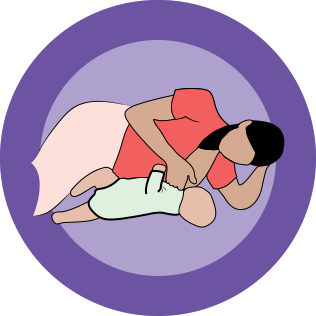
SIDE-LYING HOLD

Side-Lying Hold

  1. For the right breast, lie on your right side with your baby facing you.
  2. Pull your baby close. Your baby’s mouth should be level with your nipple.
  3. In this position, you can cradle your baby’s back with your left arm and support yourself with your right arm and/or pillows.
  4. Keep loose clothing and bedding away from your baby.
  5. Reverse for the left breast.

This hold is useful when:

  • You had a C-section
  • You want to rest while baby feeds
  • You are breastfeeding in the middle of the night
  • You and your baby are comfortable in this position
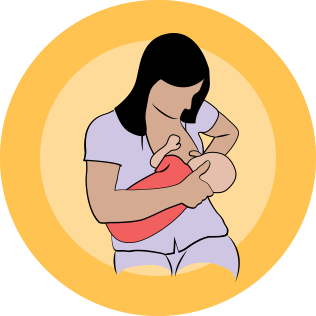
CROSS-CRADLE HOLD

Cross-Cradle Hold

  1. For the right breast, use your left arm to hold your baby’s head at your right breast and baby’s body toward your left side. A pillow across your lap can help support your left arm.
  2. Gently place your left hand behind your baby’s ears and neck, with your thumb and index finger behind each ear and your palm between baby’s shoulder blades. Turn your baby’s body toward yours so your tummies are touching.
  3. Hold your breast as if you are squeezing a sandwich. To protect your back, avoid leaning down to your baby. Instead, bring your baby to you.
  4. As your baby’s mouth opens, push gently with your left palm on baby’s head to help them latch on. Make sure you keep your fingers out of the way.
  5. Reverse for the left breast.

This hold is useful when:

  • Your baby is premature
  • Your baby has a weak suck
  • Your baby needs help to stay latched
  • Your baby needs extra head support
  • You and your baby are comfortable in this position
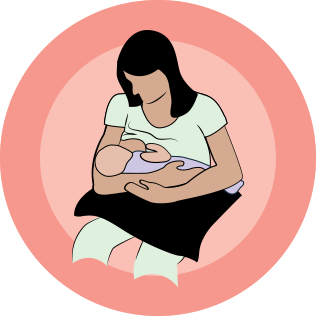
CLUTCH OR “FOOTBALL” HOLD

Clutch or “Football” Hold

  1. For the right breast, hold your baby level, facing up, at your right side.
  2. Put your baby’s head near your right nipple and support their back and legs under your right arm.
  3. Hold the base of your baby’s head with your right palm. A pillow underneath your right arm can help support your baby’s weight.
  4. To protect your back, avoid leaning down to your baby. Bring baby to you instead.
  5. Reverse for the left breast.

This hold is useful when:

  • You had a C-section
  • You have large breasts
  • You have flat or inverted nipples
  • You have a strong milk let-down
  • You are breastfeeding twins
  • Your baby likes to feed in an upright position
  • Your baby has reflux
  • You and your baby are comfortable in this position
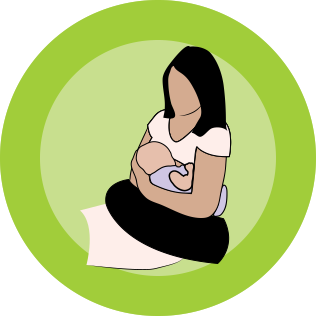
CRADLE HOLD

Cradle Hold

  1. For the right breast, cradle your baby with your right arm. Your baby will be on their left side across your lap, facing you at nipple level.
  2. Your baby’s head will rest on your right forearm with your baby’s back along your inner arm and palm.
  3. Turn your baby’s tummy toward your tummy. Your left hand is free to support your breast, if needed. Pillows can help support your arm and elbow.
  4. To protect your back, avoid leaning down to your baby. Instead, bring your baby to you.
  5. Reverse for the left breast.

This hold is useful when:

  • Your baby needs help latching on
  • You and your baby are comfortable in this position
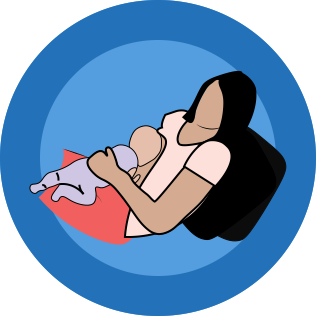
Laid-Back Hold

Laid-Back Hold

  1. Lean back on a pillow with your baby’s tummy touching yours and their head at breast level. Some moms find that sitting up nearly straight works well. Others prefer to lean back and lie almost flat.
  2. You can place your baby’s cheek near your breast, or you may want to use one hand to hold your breast near your baby. It’s up to you and what you think feels best.
  3. Your baby will naturally find your nipple, latch, and begin to suckle.

This hold is useful when:

  • Your baby is placed on your chest right after birth
  • You have a strong milk let-down
  • You have large breasts
  • You and your baby are comfortable in this position