Skip to Content Skip to Footer
Wyoming WIC
Wyoming WIC
  • Home
  • Women
    • Women
      Breastfeeding
    • Women
      Healthy Tips for Moms
    • Women
      Postpartum
    • Women
      Pregnant
  • Infants
    • Infants
      Feeding & Nutrition
    • Infants
      Growth & Development
  • Children
    • Children
      Toddlers
    • Children
      2-5 Year Olds
  • Families
    • Families
      Activity and Play
    • Families
      Dads
    • Families
      Food & Family Meals
    • Families
      Immunizations
    • Families
      Safety
  • Content Suite
  • Food Shopping Guide
  • Español
Play Garden

Content Suite By Live Well

  • Home
  • Content Suite By Live Well
Scroll Nurse Kaylee’s Videos
Infant Pacifiers: Benefits, Safety Tips, and When to Wean
June 3, 2026
Infant

Infant Pacifiers: Benefits, Safety Tips, and When to Wean

What Parents Should Know About Infant Pacifiers Paci, binky, nookie – whatever you choose to call it, pacifiers can be a helpful tool for soothing babies. Many parents have questions about when to use them, how to use them safely, and what to do when it’s time to stop. Why Do Babies Like Pacifiers? Babies […]

Read More
0
1
The Basics of Paced Bottle-Feeding
December 17, 2025
Infant

The Basics of Paced Bottle-Feeding

The Basics of Paced Bottle-Feeding Paced bottle-feeding helps your baby eat slowly and take breaks – just like they would if they were breastfeeding. It can also help prevent overfeeding and tummy upset. Follow these simple steps to make feeding time safe, calm, and comfortable for both you and your baby. Watch for hunger cues […]

Read More
0
0
How Do I Know If My Baby Could Be Tongue-Tied?
December 3, 2025
Infant

How Do I Know If My Baby Could Be Tongue-Tied?

How Do I Know If My Baby Could Be Tongue-Tied? A tongue-tie happens when the little string under your baby’s tongue is too tight or short. This can make it hard for your baby to move their tongue. You might notice a small dimple at the tip of your baby’s tongue or see that their […]

Read More
0
0
Protect Your Baby from Cronobacter
October 23, 2024
Infant

Protect Your Baby from Cronobacter

A germ you’ve probably never heard of could be very dangerous to your baby. Cronobacter is a common germ found in many places—the yard, kitchen, and living room, just to name a few. It can get into our homes from our shoes or hands and can spread as we touch countertops and utensils. Cronobacter can […]

Read More
0
0
Exploring the World with Baby – Sensory Play
July 31, 2024
Infant

Exploring the World with Baby – Sensory Play

Sensory Play, what is it, and why does it matter? Parents often hear about the importance of sensory play for their babies and kids, but what exactly is it, and why does it matter? Sensory play involves using our body movements and our five senses—sight, smell, sound, feel, and taste—in everyday activities. It helps babies […]


Read More
0
0
Get Your Baby “Back” to Sleep in a Safe Environment
July 17, 2024
Infant

Get Your Baby “Back” to Sleep in a Safe Environment

If you look at photos of your crib from when you were growing up, chances are you’d see bumper pads, a cute blanket and maybe even some stuffed animals. We now know that all those things, even though adorable, could increase the risk of a baby dying from a sleep related infant death. Sudden Unexplained […]

Read More
0
0
Taking Care of Tiny Teeth
June 12, 2024
Infant

Taking Care of Tiny Teeth

Teething is a big milestone for babies. Some babies start getting teeth around 3-4 months old, while others may not until they’re 6-12 months or even a bit later. It’s…

Read More
0
0
Helping Your Baby Learn
May 15, 2024
Infant

Helping Your Baby Learn

Did you know your baby’s ability to learn starts even before they’re born? This is why taking care of yourself and avoiding drugs, alcohol, and smoking during pregnancy is so important. What your baby experiences before birth can affect how they grow and learn later. Helping your baby learn starts before they are born and […]

Read More
0
0
A Parent’s Guide to Colic
May 8, 2024
Infant

A Parent’s Guide to Colic

All Babies Cry All babies cry, but what if the crying is really, really intense? Well, it may be colic. Colic is more than just regular fussiness or crying. It’s when a baby cries a lot, really loud, and really intense at least 3 days a week, for over 3 hours each time. The crying […]

Read More
0
0
The Importance of Developmental Milestones
April 17, 2024
Infant

The Importance of Developmental Milestones

As a parent, you’re probably familiar with questions about your baby’s development and achievements at each doctor’s visit. And as you observe your little one’s daily discoveries, you might wonder about the significance of these developmental milestones. Let’s explore what these milestones are and why they hold so much importance in your child’s early years. […]

Read More
0
0
Burps and Gas and Farts, Oh My!
April 10, 2024
Infant

Burps and Gas and Farts, Oh My!

Burping, having gas, and farting is normal and, in most babies, indicates good gut health, but it can be extremely painful for some babies, and stressful for their parents. Excess gas without burping or farting can lead to bloating which can be painful. Common causes of gas are: Not burping frequently enough Prolonged crying Not […]

Read More
0
0
1 2 … 5
Wyoming WIC WDH Public Health

CONTACT US

1-888-996-9378
health.wyo.gov/wic
  • How to apply for WIC

Resources

  • WIC Shopper
  • WIC Smart
  • WIC Breastfeeding Support
  • Wyoming Medicaid
  • Wyoming 211
  • Tell a friend about WIC!
  • Guide to Using Your WIC Benefits
  • Wyoming WIC Facebook
  • Wyoming WIC Instagram
  • Wyoming WIC

USDA is an equal opportunity provider, employer, and lender.

Cookie PolicyPrivacy Policy

© Brush Art Corporation
This website is operated by Brush Art Corporation on behalf of the Wyoming Department of Health.

Install this web app on your iPhone: tap and then Add to Home Screen.

Share to Social

Share this link via

SIDE-LYING HOLD

Side-Lying Hold

  1. For the right breast, lie on your right side with your baby facing you.
  2. Pull your baby close. Your baby’s mouth should be level with your nipple.
  3. In this position, you can cradle your baby’s back with your left arm and support yourself with your right arm and/or pillows.
  4. Keep loose clothing and bedding away from your baby.
  5. Reverse for the left breast.

This hold is useful when:

  • You had a C-section
  • You want to rest while baby feeds
  • You are breastfeeding in the middle of the night
  • You and your baby are comfortable in this position
CROSS-CRADLE HOLD

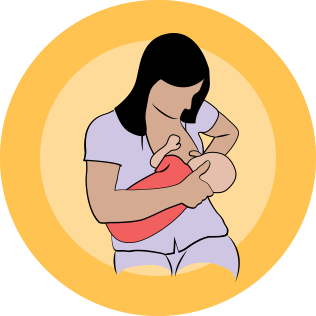
Cross-Cradle Hold

  1. For the right breast, use your left arm to hold your baby’s head at your right breast and baby’s body toward your left side. A pillow across your lap can help support your left arm.
  2. Gently place your left hand behind your baby’s ears and neck, with your thumb and index finger behind each ear and your palm between baby’s shoulder blades. Turn your baby’s body toward yours so your tummies are touching.
  3. Hold your breast as if you are squeezing a sandwich. To protect your back, avoid leaning down to your baby. Instead, bring your baby to you.
  4. As your baby’s mouth opens, push gently with your left palm on baby’s head to help them latch on. Make sure you keep your fingers out of the way.
  5. Reverse for the left breast.

This hold is useful when:

  • Your baby is premature
  • Your baby has a weak suck
  • Your baby needs help to stay latched
  • Your baby needs extra head support
  • You and your baby are comfortable in this position
CLUTCH OR “FOOTBALL” HOLD

Clutch or “Football” Hold

  1. For the right breast, hold your baby level, facing up, at your right side.
  2. Put your baby’s head near your right nipple and support their back and legs under your right arm.
  3. Hold the base of your baby’s head with your right palm. A pillow underneath your right arm can help support your baby’s weight.
  4. To protect your back, avoid leaning down to your baby. Bring baby to you instead.
  5. Reverse for the left breast.

This hold is useful when:

  • You had a C-section
  • You have large breasts
  • You have flat or inverted nipples
  • You have a strong milk let-down
  • You are breastfeeding twins
  • Your baby likes to feed in an upright position
  • Your baby has reflux
  • You and your baby are comfortable in this position
CRADLE HOLD

Cradle Hold

  1. For the right breast, cradle your baby with your right arm. Your baby will be on their left side across your lap, facing you at nipple level.
  2. Your baby’s head will rest on your right forearm with your baby’s back along your inner arm and palm.
  3. Turn your baby’s tummy toward your tummy. Your left hand is free to support your breast, if needed. Pillows can help support your arm and elbow.
  4. To protect your back, avoid leaning down to your baby. Instead, bring your baby to you.
  5. Reverse for the left breast.

This hold is useful when:

  • Your baby needs help latching on
  • You and your baby are comfortable in this position
Laid-Back Hold

Laid-Back Hold

  1. Lean back on a pillow with your baby’s tummy touching yours and their head at breast level. Some moms find that sitting up nearly straight works well. Others prefer to lean back and lie almost flat.
  2. You can place your baby’s cheek near your breast, or you may want to use one hand to hold your breast near your baby. It’s up to you and what you think feels best.
  3. Your baby will naturally find your nipple, latch, and begin to suckle.

This hold is useful when:

  • Your baby is placed on your chest right after birth
  • You have a strong milk let-down
  • You have large breasts
  • You and your baby are comfortable in this position