A new baby brings so much more joy… and often a lot of questions for new parents. Here are some helpful answers to many of the common questions about life with a newborn.
How much and how often should my baby eat?
When your baby is born, their stomach is only the size of a marble, so don’t be worried if they don’t drink much. Their stomach will gradually grow; by day 10, it will be the size of a large chicken egg!
Your baby’s feedings will also depend on their birth weight and if they were born early.
No matter what you feed your baby, it’s best to feed “on demand”—that is, when they show signs of hunger.
When breast/chestfeeding, baby will want to nurse about every 2-3 hours for 20-30 minutes each time. Your milk supply will adjust to the amount that their stomach will hold. During growth spurts, they will feed more often or “cluster feed.”
If formula feeding, at first, they may only drink 1-3 ounces of formula every 3-4 hours. This amount will gradually increase to 4 ounces per feeding around the end of the first month.
How do I know if my baby is hungry?
Look for your baby’s cues or signs that they are hungry such as “rooting” or moving their head around with their mouth open; smacking their lips or chewing on their hands.
Keep in mind “crying” is a late sign of hunger—the feeding will go better if it’s before your baby says, “Feed me now—I’m starving!”
How much crying is normal?
All babies cry—it’s their way of telling you they need something. Most babies have different cries, such as: hunger, pain, distress or anger. Over time you will learn what your baby’s cries mean.
Good ways to help comfort your baby are swaddling, rocking, patting their back, walking, swaying, shushing, singing and car rides. If your baby frequently cries but can’t be easily comforted, talk to their health care provider. Most importantly, even though you are tired and frustrated, never shake or hit your baby. Always ask someone for help.
How much should my baby sleep?
Newborns usually will sleep 16-17 hours a day, but it may only be for 1-2 hours at a time. As they get older, their nap times will be longer and they’ll also be awake for longer periods.
Remember—it is always safest to put babies on their backs to sleep and sleeping in the same bed with your baby (co-sleeping) is not recommended.
Is spitting up normal?
It is very common for a baby to spit up. Some of the reasons babies spit up are: overfeeding, not burping, being laid down flat right after a feeding and reflux.
One important way to prevent spit up is to burp your baby at least once, when you change sides if breast/chestfeeding or halfway through the bottle. Burp your baby more often if they spit up frequently. If your baby often spits up large amounts or seems uncomfortable after spitting up, talk with their health care provider.
Is my baby’s poop normal?
The first few poops will be black and tarry; this is called meconium. Over the first few days of life, your baby’s poop will change in color from black to dark green and/or yellow.
Babies who are fed human milk will have a watery, mustard color poop with little white seed-like curds in it. For formula-fed babies, it will be yellow or tan and a little less watery. Normal colors for poop are yellow, tan, green or brown. If your baby’s poop is gray, white, or red, tell your baby’s health care provider.
How often should my baby poop?
Newborns poop a lot—often after every feeding. While some babies poop less, all babies should have at least 1 poop (bowel movement) a day during their first month.
Between one to two months of age, your
baby’s bowel habits will change; the poop will be larger in size and less often.
If you have questions about your newborn, reach out to WIC for help and support. They are happy to help you and your little one as you learn about your new life together!
Do you find this Blog helpful?
Show some love here!
No comments yet. Be the first to share your thoughts!
Install this web app on your iPhone: tap and then Add to Home Screen.
Share to Social
Share this link via
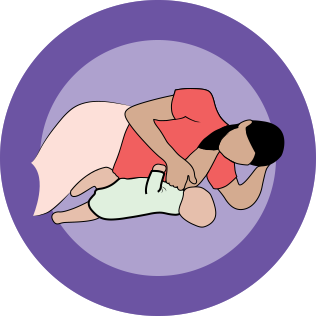
Side-Lying Hold
For the right breast, lie on your right side with your baby facing you.
Pull your baby close. Your baby’s mouth should be level with your nipple.
In this position, you can cradle your baby’s back with your left arm and support yourself with your right arm and/or pillows.
Keep loose clothing and bedding away from your baby.
Reverse for the left breast.
This hold is useful when:
You had a C-section
You want to rest while baby feeds
You are breastfeeding in the middle of the night
You and your baby are comfortable in this position
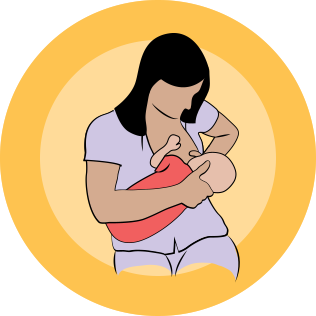
Cross-Cradle Hold
For the right breast, use your left arm to hold your baby’s head at your right breast and baby’s body toward your left side. A pillow across your lap can help support your left arm.
Gently place your left hand behind your baby’s ears and neck, with your thumb and index finger behind each ear and your palm between baby’s shoulder blades. Turn your baby’s body toward yours so your tummies are touching.
Hold your breast as if you are squeezing a sandwich. To protect your back, avoid leaning down to your baby. Instead, bring your baby to you.
As your baby’s mouth opens, push gently with your left palm on baby’s head to help them latch on. Make sure you keep your fingers out of the way.
Reverse for the left breast.
This hold is useful when:
Your baby is premature
Your baby has a weak suck
Your baby needs help to stay latched
Your baby needs extra head support
You and your baby are comfortable in this position
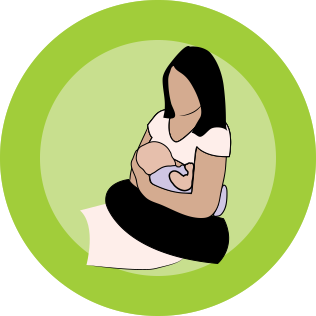
Clutch or “Football” Hold
For the right breast, hold your baby level, facing up, at your right side.
Put your baby’s head near your right nipple and support their back and legs under your right arm.
Hold the base of your baby’s head with your right palm. A pillow underneath your right arm can help support your baby’s weight.
To protect your back, avoid leaning down to your baby. Bring baby to you instead.
Reverse for the left breast.
This hold is useful when:
You had a C-section
You have large breasts
You have flat or inverted nipples
You have a strong milk let-down
You are breastfeeding twins
Your baby likes to feed in an upright position
Your baby has reflux
You and your baby are comfortable in this position
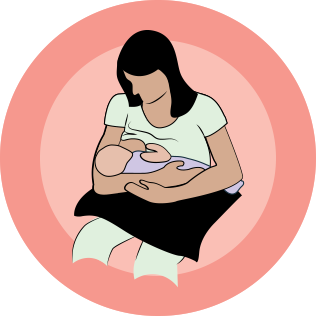
Cradle Hold
For the right breast, cradle your baby with your right arm. Your baby will be on their left side across your lap, facing you at nipple level.
Your baby’s head will rest on your right forearm with your baby’s back along your inner arm and palm.
Turn your baby’s tummy toward your tummy. Your left hand is free to support your breast, if needed. Pillows can help support your arm and elbow.
To protect your back, avoid leaning down to your baby. Instead, bring your baby to you.
Reverse for the left breast.
This hold is useful when:
Your baby needs help latching on
You and your baby are comfortable in this position
Laid-Back Hold
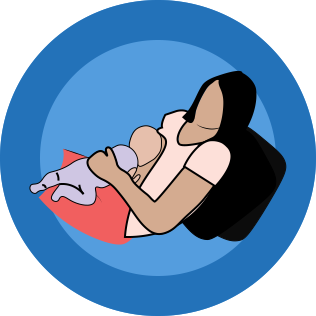
Lean back on a pillow with your baby’s tummy touching yours and their head at breast level. Some moms find that sitting up nearly straight works well. Others prefer to lean back and lie almost flat.
You can place your baby’s cheek near your breast, or you may want to use one hand to hold your breast near your baby. It’s up to you and what you think feels best.
Your baby will naturally find your nipple, latch, and begin to suckle.
This hold is useful when:
Your baby is placed on your chest right after birth
You have a strong milk let-down
You have large breasts
You and your baby are comfortable in this position





Do you find this Blog helpful?
Show some love here!
No comments yet. Be the first to share your thoughts!