Summertime brings back memories of vacations, warm nights, fireflies, ice-cold lemonade and backyard barbecues. These barbecues can be magical times — bringing family, friends and neighbors around the table for fellowship and good food. You know it’s summer when you smell a backyard grill going!
Arielle has been given the task of hosting the annual family barbecue this year. It’s a big job to plan for 20 members of her family to come over for dinner! Arielle has decided to make some changes in her family’s diet, starting at the barbecue. She’s a little worried that her family may not enjoy her menu choices, but she knows their favorite foods can be lightened up and be just as tasty!
She has several questions running through her mind. What’s going to be on the menu? Can I fix some healthy items? Will my family like these new dishes?
Arielle decided to include the usual – hamburgers and hot dogs, but she will buy leaner meat and turkey hot dogs, as well as whole grain buns. She will also add some grilled chicken and salads to the menu to lighten things up.
Salads are a great way to explore the bounty of fresh fruits and vegetables that are in season during the summer. They are also a perfect way to recycle leftovers.
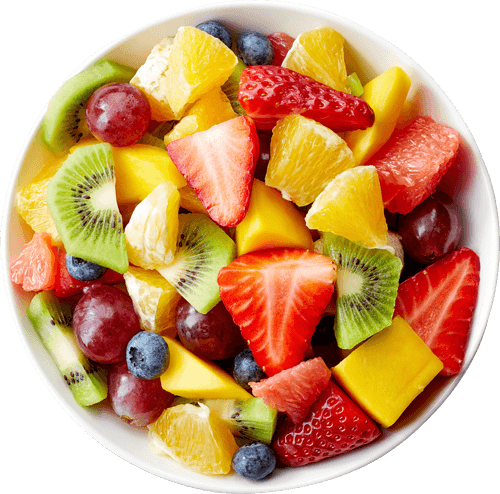
The following recipe showcases a variety of fresh fruits and vegetables that will add texture, taste, and color to the menu.
Fruit Salad
Makes about 10 - ½ cup servings.
INGREDIENTS
1 fresh mango, diced
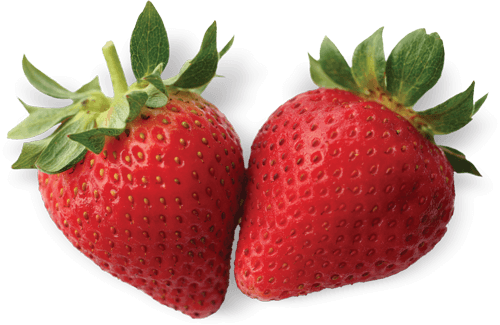
1 cup sliced fresh strawberries
1 peach, peeled and cut into bite-sized pieces
1 cup seedless grapes, cut in half
10 ounces pineapple chunks, packed in juice
½ cup low-fat yogurt
DIRECTIONS
Wash the fresh fruit and slice or chop as directed. Place all in a serving bowl. Drain the pineapple in a strainer and put it in the bowl with the rest of the fruit. (Keep the juice to enjoy later.) Pour the yogurt on top of the fruit and gently mix it all together. Serve and enjoy.
This salad is low cost and easy to prepare. Enjoy this salad and enjoy your summer!
Do you find this Blog helpful?
Show some love here!
No comments yet. Be the first to share your thoughts!
Install this web app on your iPhone: tap and then Add to Home Screen.
Share to Social
Share this link via
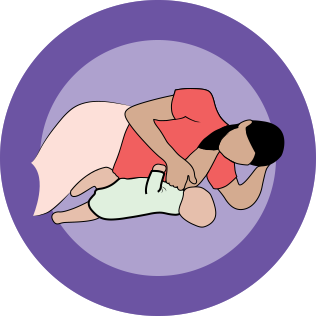
Side-Lying Hold
For the right breast, lie on your right side with your baby facing you.
Pull your baby close. Your baby’s mouth should be level with your nipple.
In this position, you can cradle your baby’s back with your left arm and support yourself with your right arm and/or pillows.
Keep loose clothing and bedding away from your baby.
Reverse for the left breast.
This hold is useful when:
You had a C-section
You want to rest while baby feeds
You are breastfeeding in the middle of the night
You and your baby are comfortable in this position
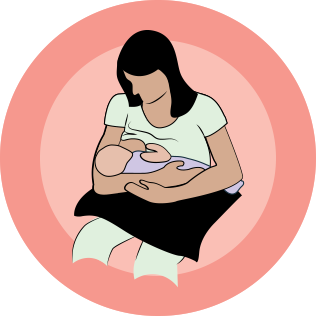
Cross-Cradle Hold
For the right breast, use your left arm to hold your baby’s head at your right breast and baby’s body toward your left side. A pillow across your lap can help support your left arm.
Gently place your left hand behind your baby’s ears and neck, with your thumb and index finger behind each ear and your palm between baby’s shoulder blades. Turn your baby’s body toward yours so your tummies are touching.
Hold your breast as if you are squeezing a sandwich. To protect your back, avoid leaning down to your baby. Instead, bring your baby to you.
As your baby’s mouth opens, push gently with your left palm on baby’s head to help them latch on. Make sure you keep your fingers out of the way.
Reverse for the left breast.
This hold is useful when:
Your baby is premature
Your baby has a weak suck
Your baby needs help to stay latched
Your baby needs extra head support
You and your baby are comfortable in this position
Clutch or “Football” Hold
For the right breast, hold your baby level, facing up, at your right side.
Put your baby’s head near your right nipple and support their back and legs under your right arm.
Hold the base of your baby’s head with your right palm. A pillow underneath your right arm can help support your baby’s weight.
To protect your back, avoid leaning down to your baby. Bring baby to you instead.
Reverse for the left breast.
This hold is useful when:
You had a C-section
You have large breasts
You have flat or inverted nipples
You have a strong milk let-down
You are breastfeeding twins
Your baby likes to feed in an upright position
Your baby has reflux
You and your baby are comfortable in this position
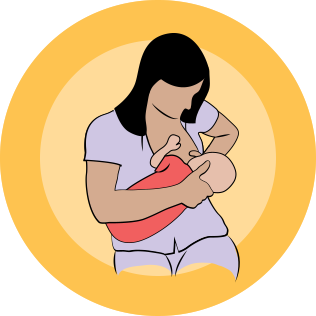
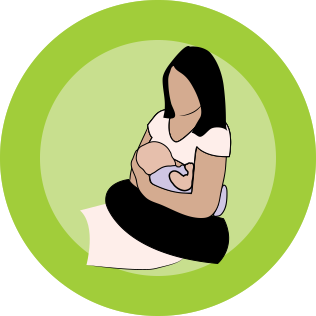
Cradle Hold
For the right breast, cradle your baby with your right arm. Your baby will be on their left side across your lap, facing you at nipple level.
Your baby’s head will rest on your right forearm with your baby’s back along your inner arm and palm.
Turn your baby’s tummy toward your tummy. Your left hand is free to support your breast, if needed. Pillows can help support your arm and elbow.
To protect your back, avoid leaning down to your baby. Instead, bring your baby to you.
Reverse for the left breast.
This hold is useful when:
Your baby needs help latching on
You and your baby are comfortable in this position
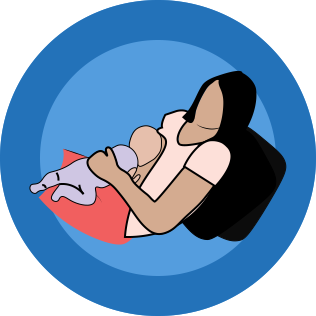
Laid-Back Hold
Lean back on a pillow with your baby’s tummy touching yours and their head at breast level. Some moms find that sitting up nearly straight works well. Others prefer to lean back and lie almost flat.
You can place your baby’s cheek near your breast, or you may want to use one hand to hold your breast near your baby. It’s up to you and what you think feels best.
Your baby will naturally find your nipple, latch, and begin to suckle.
This hold is useful when:
Your baby is placed on your chest right after birth
You have a strong milk let-down
You have large breasts
You and your baby are comfortable in this position



Do you find this Blog helpful?
Show some love here!
No comments yet. Be the first to share your thoughts!