As a new mom, I thought I would never get a full night’s sleep again. It seemed as soon as I would get to sleep, the fussing and crying would start. But, eventually, I got a full four hours of sleep in a row and it was amazing! I felt like my brain could work again.
Being a new parent and not sleeping much is hard. Understanding why your baby wakes up so often can make things a little easier.
#2
#1
Babies begin sleeping before birth, but their sleep patterns are often the opposite of ours. When you move during the day you naturally “rock” your baby, but when you lie down at night, the rocking stops. You may think your baby has days and nights mixed up but it’s really because they haven’t developed their natural sleep rhythm yet. The “circadian rhythm” is the body’s internal clock that sets sleep cycles. It’s controlled by a part of the brain that doesn’t develop until about 6 weeks of age.
#1
Newborns fall asleep dreaming and keep dreaming for 20-30 minutes after falling asleep. When your newborn dreams, they are in a light sleep and can wake up easily. They may twitch, move their eyes, make noises or startle. You can help them stay asleep longer by continuing to hold them during this lighter sleep phase and lay them down after they are fully relaxed into a deep sleep.
#2
#3
#3
During your baby’s first month, you can help them feel more secure by swaddling them in a light blanket. This keeps your baby feeling cozy and warm without being overheated. As your baby gets older, they will need space to roll around in their crib — you should stop swaddling and put them to bed in the center of the crib.
#4
Creating a safe sleep environment for your newborn is essential to prevent Sudden Infant Death Syndrome (SIDS). A newborn should always be put to sleep on their back on a firm mattress with nothing else – no blankets, toys, or pillows. Your baby should share your room, but never your bed. Keeping them close to your bed in their own cradle, bassinet or crib is a good idea for the first few weeks.
#4
#5
#5
It is normal and important for your newborn to wake up every 2 to 3 hours to eat, have their diaper changed and bond with you. Newborns have very tiny stomachs and need to be fed often or “on demand.” Over time, you will learn your baby’s different cues and when you need to respond right away and when you can let them calm down on their own.
Newborns sleep in short periods of time which add up to 16-18 hours a day. Babies begin to have sleep patterns when they are about 6 weeks old. By about 6 months, most babies have a fairly regular sleep cycle, but that doesn’t mean all 6-month-olds will sleep through the night!
Having a newborn often comes with lack of sleep and fatigue, so here are some words of wisdom:
Nap. It really helps. Even if you can’t fall asleep, at least lie down and rest. Your body and mind need it to function.
Taking a walk, eating healthy, avoiding alcohol, and limiting your caffeine will also help with your sleep shortage.
Let people help you — especially with household chores.
Most importantly, if you ever feel too overwhelmed or stressed, talk to someone.
Do you find this Blog helpful?
Show some love here!
No comments yet. Be the first to share your thoughts!
Install this web app on your iPhone: tap and then Add to Home Screen.
Share to Social
Share this link via
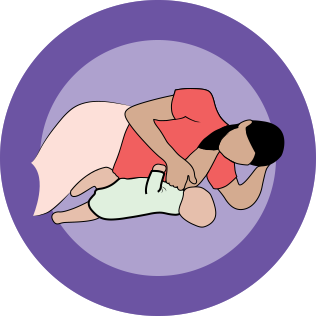
Side-Lying Hold
For the right breast, lie on your right side with your baby facing you.
Pull your baby close. Your baby’s mouth should be level with your nipple.
In this position, you can cradle your baby’s back with your left arm and support yourself with your right arm and/or pillows.
Keep loose clothing and bedding away from your baby.
Reverse for the left breast.
This hold is useful when:
You had a C-section
You want to rest while baby feeds
You are breastfeeding in the middle of the night
You and your baby are comfortable in this position
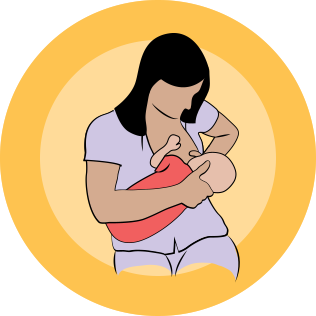
Cross-Cradle Hold
For the right breast, use your left arm to hold your baby’s head at your right breast and baby’s body toward your left side. A pillow across your lap can help support your left arm.
Gently place your left hand behind your baby’s ears and neck, with your thumb and index finger behind each ear and your palm between baby’s shoulder blades. Turn your baby’s body toward yours so your tummies are touching.
Hold your breast as if you are squeezing a sandwich. To protect your back, avoid leaning down to your baby. Instead, bring your baby to you.
As your baby’s mouth opens, push gently with your left palm on baby’s head to help them latch on. Make sure you keep your fingers out of the way.
Reverse for the left breast.
This hold is useful when:
Your baby is premature
Your baby has a weak suck
Your baby needs help to stay latched
Your baby needs extra head support
You and your baby are comfortable in this position
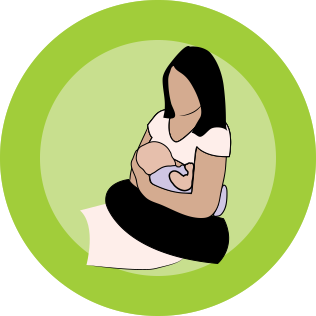
Clutch or “Football” Hold
For the right breast, hold your baby level, facing up, at your right side.
Put your baby’s head near your right nipple and support their back and legs under your right arm.
Hold the base of your baby’s head with your right palm. A pillow underneath your right arm can help support your baby’s weight.
To protect your back, avoid leaning down to your baby. Bring baby to you instead.
Reverse for the left breast.
This hold is useful when:
You had a C-section
You have large breasts
You have flat or inverted nipples
You have a strong milk let-down
You are breastfeeding twins
Your baby likes to feed in an upright position
Your baby has reflux
You and your baby are comfortable in this position
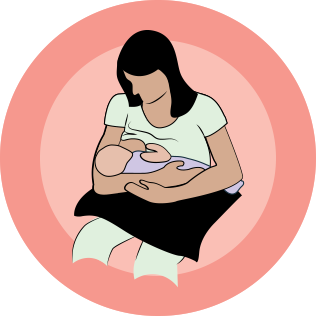
Cradle Hold
For the right breast, cradle your baby with your right arm. Your baby will be on their left side across your lap, facing you at nipple level.
Your baby’s head will rest on your right forearm with your baby’s back along your inner arm and palm.
Turn your baby’s tummy toward your tummy. Your left hand is free to support your breast, if needed. Pillows can help support your arm and elbow.
To protect your back, avoid leaning down to your baby. Instead, bring your baby to you.
Reverse for the left breast.
This hold is useful when:
Your baby needs help latching on
You and your baby are comfortable in this position
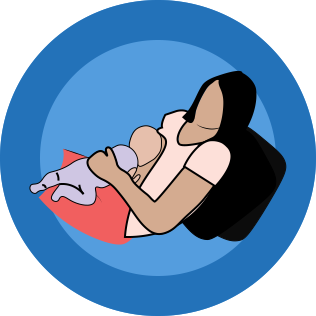
Laid-Back Hold
Lean back on a pillow with your baby’s tummy touching yours and their head at breast level. Some moms find that sitting up nearly straight works well. Others prefer to lean back and lie almost flat.
You can place your baby’s cheek near your breast, or you may want to use one hand to hold your breast near your baby. It’s up to you and what you think feels best.
Your baby will naturally find your nipple, latch, and begin to suckle.
This hold is useful when:
Your baby is placed on your chest right after birth
You have a strong milk let-down
You have large breasts
You and your baby are comfortable in this position






Do you find this Blog helpful?
Show some love here!
No comments yet. Be the first to share your thoughts!