Skip to Content Skip to Footer
Wyoming WIC
Wyoming WIC
  • Home
  • Women
    • Women
      Breastfeeding
    • Women
      Healthy Tips for Moms
    • Women
      Postpartum
    • Women
      Pregnant
  • Infants
    • Infants
      Feeding & Nutrition
    • Infants
      Growth & Development
  • Children
    • Children
      Toddlers
    • Children
      2-5 Year Olds
  • Families
    • Families
      Activity and Play
    • Families
      Dads
    • Families
      Food & Family Meals
    • Families
      Immunizations
    • Families
      Safety
  • Live Well Blog
  • Food Shopping Guide
  • Español
children books banner

My Favorite Children’s Books

  • Home
  • Live Well Blog
  • My Favorite Children’s Books
My-Favorite-Childrens-Books-QR-code
February 16, 2022 General /Family

The memories of snuggling up with my kids to read a book before bedtime still warms my heart. Now one of my favorite times is reading to my grandkids. The worries of the day fade away while we go on an adventure inside the pages of their favorite books. They point to the pictures, tell me what they’re thinking, and we giggle. It’s hard to believe that something so fun is also good for their education.

As a preschool teacher and family child care provider, I can always tell which children have been read to often. They are the ones that listen best, understand more, and have an easier time learning to read.

Reading to your Child = Success in School

Research backs up what I’ve personally observed. There is a direct link between a parent reading to a child every day and that child’s success in school.

The more words a child hears, the more words they will know and say. This helps them to understand more words and to read when they are older. Reading to your child also helps them learn the basics of reading. For example, children see that letters represent sounds, which make up words. These words are read from left to right and from the top of the page to the bottom. Children who are read to everyday have a big advantage over children who are not read to.

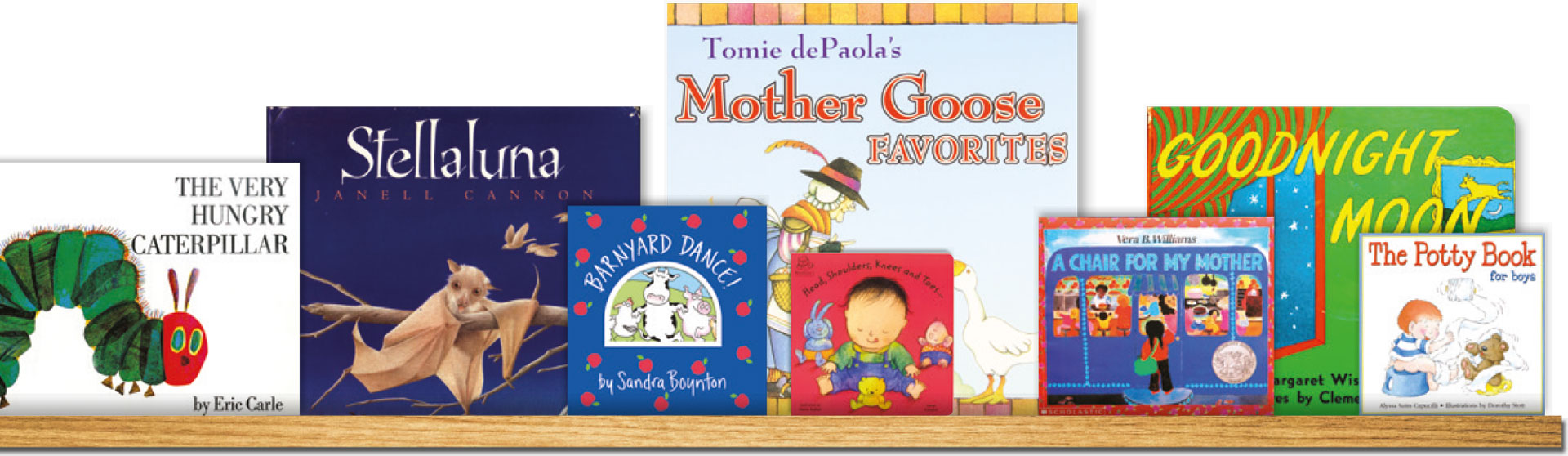
There are a lot of books that parents will enjoy as much as their child does. Even books for babies can be fun for adults to read. My husband’s favorite book to read to his grandchildren is Barnyard Dance! by Sandra Boynton. Everyone is stomping their feet, clapping their hands, making animal sounds, and dancing around the room.
My very favorite book for young children, is one I used to think was boring, Goodnight Moon by Margaret Wise Brown. I’ve learned to love it because my grandchildren all loved it and, unlike my husband’s favorite book, it helped calm them down and go to sleep. A bonus is that Goodnight Moon contains all 44 sounds found in the English language.

This helps toddlers be able to hear the difference in words that sound similar. I consider Goodnight Moon to be a must-own book for every young child.

Children should own some of their own books to look at over and over again when they want. A book can become as loved as a favorite toy, and children find that a favorite book can be comforting. I get great deals on children’s books at garage sales, second-hand stores, and used bookstores. Scholastic Reading Club has great values on new books that you can order through most preschools and elementary schools. The library is a wonderful resource too. Children enjoy visiting it as much as a field trip and they love to pick out books to borrow. There is often a scheduled reading time at the library, which children enjoy.

Look at the pictures, read to your child, snuggle, and giggle. You are helping to ensure your child’s future success. The benefits and the memories of reading to your children will last a lifetime.

children's books on shelf

A list of some of my favorite books…

0-3

BOOKS FOR NEWBORNS THROUGH THREE YEAR OLDS.

Baby Touch and Feel: Quack! Quack! by Priddy Books Baby Faces: Smile! by Roberta Grobel Intrater (all of her books) Tomie dePaola’s Mother Goose by Tomie dePaola Barnyard Dance! by Sandra Boynton. Head, Shoulders, Knees and Toes by Kubler The Potty Book for Boys; The Potty Book for Girls by Alyssa Satin Capucilli

3-5

BOOKS FOR THREE TO FIVE YEAR OLDS.

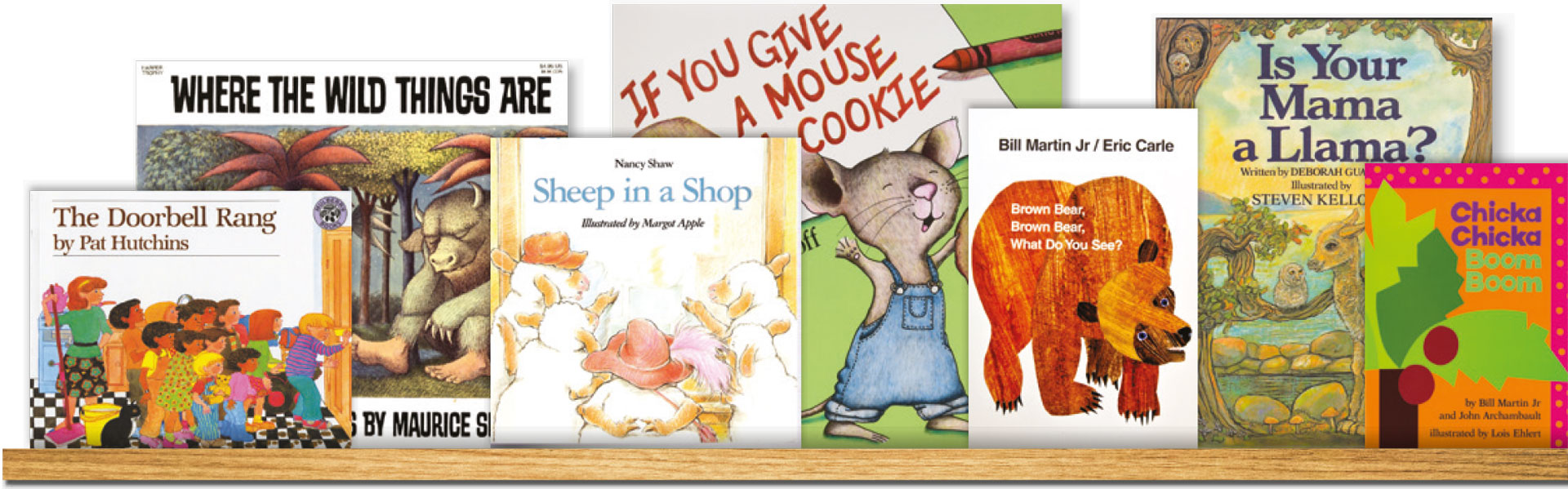
Is Your Mama a Llama? by Deborah Guarino The Door Bell Rang by Pat Hutchins Green Eggs and Ham by Dr. Seuss Stellaluna by Janell Cannon The Paper Bag Princess by Robert Munsch A Chair for My Mother by Vera Williams
Kids book

0-5

BOOKS FOR NEWBORN TO FIVE YEAR OLDS.

Goodnight Moon by Margaret Wise Brown. Brown Bear, Brown Bear, What Do You See? by Bill Martin, Jr. and Eric Carle Pete the Cat: I Love my White Shoes by Eric Litwin If You Give a Mouse a Cookie by Laura Numeroff The Very Hungry Caterpillar by Eric Carle Go Away Big Green Monster by Ed Emberley Llama, Llama, Red Pajama by Anna Dewdney We’re Going on a Bear Hunt by Michael Rosen and Helen Oxenbury Chicka Chicka Boom Boom by Bill Martin, Jr. Sheep in a Shop by Nancy Shaw The Little Mouse, the Red Ripe Strawberry, and the Big Hungry Bear by Audrey and Don Wood Where the Wild Things Are by Maurice Sendak Goldilocks and the Three Bears retold and illustrated by Jan Brett blue leg
  • Infant
    • The Basics of Paced Bottle-Feeding
    • How Do I Know If My Baby Could Be Tongue-Tied?
    • Protect Your Baby from Cronobacter
    • Exploring the World with Baby – Sensory Play
    • Get Your Baby “Back” to Sleep in a Safe Environment
  • Children
    • Shopping With Kids: A Simple Way to Help Them Like More Foods
    • Pumpkin Fun: Free and Healthy Activities for Kids Under 5
    • Letting Your Child Play with Food Can Be a Good Thing
    • Is Snack Time Treat Time?
    • Fun Ways to Learn About Healthy Food and Get Moving!
  • General /Family
    • The 2025-2030 Dietary Guidelines for Americans – What Families Need to Know
    • Finding Calm When Life Gets Busy: Stress-Management for Parents
    • February Is National Heart Month: Simple Ways to Show Your Heart Some Love
    • 10 Ways to Enjoy Avocados – And Helpful Tips to Feed with Confidence
    • Food, Feelings, and Finding Balance: Understanding Disordered Eating
  • Women
    • Newborn Hunger Cues: How to Know When Your Baby Is Hungry or Full
    • How to Know Your Baby Is Getting Enough Breastmilk
    • Breastfeeding Through Growth Spurts and Sleep Changes
    • Baby Blues… or Is It Something More?
    • Gut Health and Gestational Diabetes
  • Recipes
    • Heart-Healthy Recipe: Banana Berry Oatmeal Cups
    • Is the Chia Seed Challenge Worth It?
    • Extra Vegetables Quiche
    • Easy Pumpkin Muffins
    • Confetti Bean Salad
Wyoming WIC WDH Public Health

CONTACT US

1-888-996-9378
health.wyo.gov/wic
  • How to apply for WIC

Resources

  • WIC Shopper
  • WIC Smart
  • WIC Breastfeeding Support
  • Wyoming Medicaid
  • Wyoming 211
  • Tell a friend about WIC!
  • Guide to Using Your WIC Benefits
  • Wyoming WIC Facebook
  • Wyoming WIC Instagram
  • Wyoming WIC

USDA is an equal opportunity provider, employer, and lender.

Cookie PolicyPrivacy Policy

© Brush Art Corporation
This website is operated by Brush Art Corporation on behalf of the Wyoming Department of Health.

Install this web app on your iPhone: tap and then Add to Home Screen.

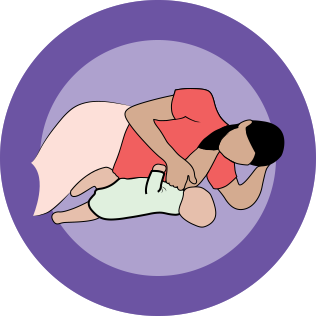
SIDE-LYING HOLD

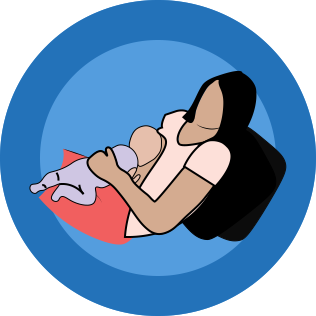
Side-Lying Hold

  1. For the right breast, lie on your right side with your baby facing you.
  2. Pull your baby close. Your baby’s mouth should be level with your nipple.
  3. In this position, you can cradle your baby’s back with your left arm and support yourself with your right arm and/or pillows.
  4. Keep loose clothing and bedding away from your baby.
  5. Reverse for the left breast.

This hold is useful when:

  • You had a C-section
  • You want to rest while baby feeds
  • You are breastfeeding in the middle of the night
  • You and your baby are comfortable in this position
CROSS-CRADLE HOLD

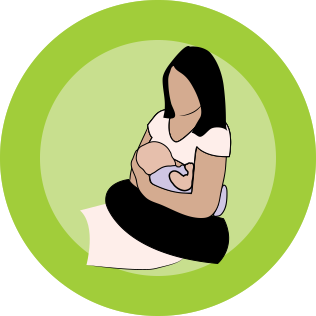
Cross-Cradle Hold

  1. For the right breast, use your left arm to hold your baby’s head at your right breast and baby’s body toward your left side. A pillow across your lap can help support your left arm.
  2. Gently place your left hand behind your baby’s ears and neck, with your thumb and index finger behind each ear and your palm between baby’s shoulder blades. Turn your baby’s body toward yours so your tummies are touching.
  3. Hold your breast as if you are squeezing a sandwich. To protect your back, avoid leaning down to your baby. Instead, bring your baby to you.
  4. As your baby’s mouth opens, push gently with your left palm on baby’s head to help them latch on. Make sure you keep your fingers out of the way.
  5. Reverse for the left breast.

This hold is useful when:

  • Your baby is premature
  • Your baby has a weak suck
  • Your baby needs help to stay latched
  • Your baby needs extra head support
  • You and your baby are comfortable in this position
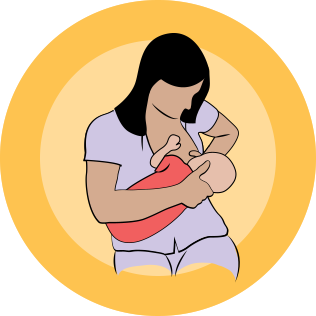
CLUTCH OR “FOOTBALL” HOLD

Clutch or “Football” Hold

  1. For the right breast, hold your baby level, facing up, at your right side.
  2. Put your baby’s head near your right nipple and support their back and legs under your right arm.
  3. Hold the base of your baby’s head with your right palm. A pillow underneath your right arm can help support your baby’s weight.
  4. To protect your back, avoid leaning down to your baby. Bring baby to you instead.
  5. Reverse for the left breast.

This hold is useful when:

  • You had a C-section
  • You have large breasts
  • You have flat or inverted nipples
  • You have a strong milk let-down
  • You are breastfeeding twins
  • Your baby likes to feed in an upright position
  • Your baby has reflux
  • You and your baby are comfortable in this position
CRADLE HOLD

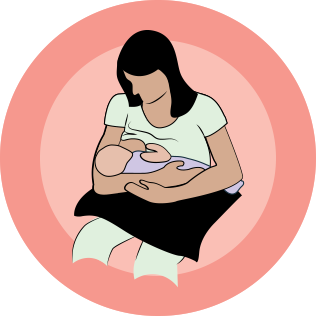
Cradle Hold

  1. For the right breast, cradle your baby with your right arm. Your baby will be on their left side across your lap, facing you at nipple level.
  2. Your baby’s head will rest on your right forearm with your baby’s back along your inner arm and palm.
  3. Turn your baby’s tummy toward your tummy. Your left hand is free to support your breast, if needed. Pillows can help support your arm and elbow.
  4. To protect your back, avoid leaning down to your baby. Instead, bring your baby to you.
  5. Reverse for the left breast.

This hold is useful when:

  • Your baby needs help latching on
  • You and your baby are comfortable in this position
Laid-Back Hold

Laid-Back Hold

  1. Lean back on a pillow with your baby’s tummy touching yours and their head at breast level. Some moms find that sitting up nearly straight works well. Others prefer to lean back and lie almost flat.
  2. You can place your baby’s cheek near your breast, or you may want to use one hand to hold your breast near your baby. It’s up to you and what you think feels best.
  3. Your baby will naturally find your nipple, latch, and begin to suckle.

This hold is useful when:

  • Your baby is placed on your chest right after birth
  • You have a strong milk let-down
  • You have large breasts
  • You and your baby are comfortable in this position