Skip to Content Skip to Footer
Wyoming WIC
Wyoming WIC
  • Home
  • Women
    • Women
      Breastfeeding
    • Women
      Healthy Tips for Moms
    • Women
      Postpartum
    • Women
      Pregnant
  • Infants
    • Infants
      Feeding & Nutrition
    • Infants
      Growth & Development
  • Children
    • Children
      Toddlers
    • Children
      2-5 Year Olds
  • Families
    • Families
      Activity and Play
    • Families
      Dads
    • Families
      Food & Family Meals
    • Families
      Immunizations
    • Families
      Safety
  • Live Well Blog
  • Food Shopping Guide
  • Español
liquid-calories-banner-Image

Liquid Calories – Time to Rethink Your Drink?

  • Home
  • Live Well Blog
  • Liquid Calories – Time to Rethink Your Drink?
Liquid-Calories-QR
January 14, 2026 General /Family

Drinks-icon When Drinks Add Up

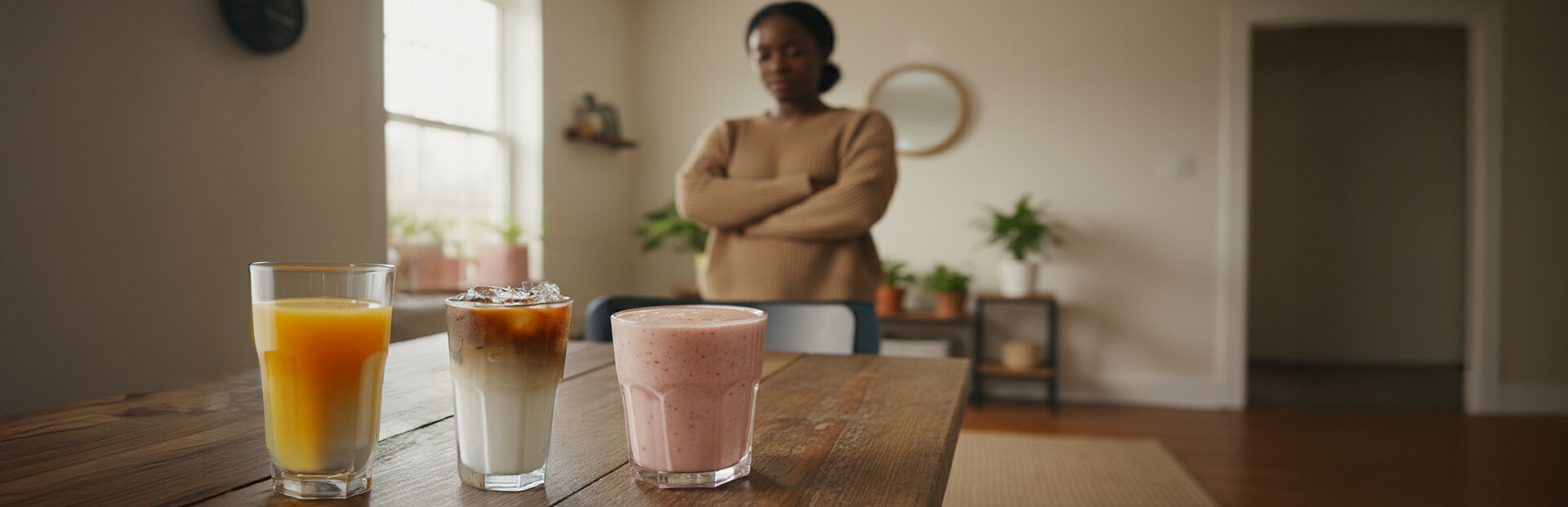
Nilea loved starting her day with a big cup of coffee and flavored creamer. In the afternoon, she reached for a 20-ounce soda to stay awake. At home, she poured a large glass of juice to relax. When she felt stressed, she treated herself to a smoothie. She thought these choices were harmless – and even healthier than a milkshake.

drinks-coffee-flavored-creamer
When-Drinks-Add-Up

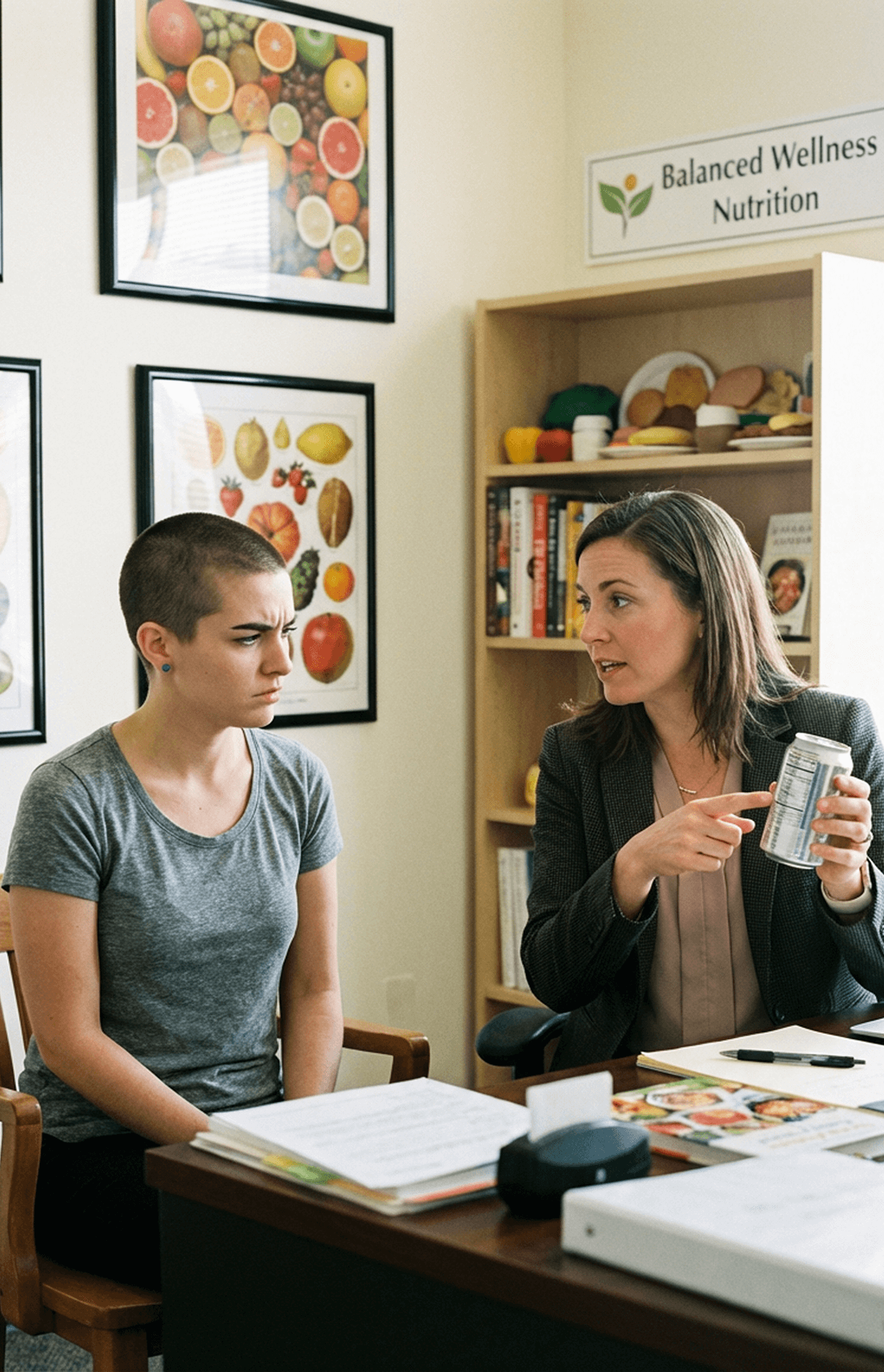
But Nilea was frustrated. She was trying to lose 10 pounds of baby weight, and nothing was changing.

When she met with her nutritionist, she learned something surprising: her drinks were adding a lot of calories and sugar, which may be why she was struggling to
lose weight.

IN ONE DAY, HER DRINKS ADDED UP TO:
510 Calories
80 Grams of Added Sugar
(that’s 20 teaspoons – almost ½ cup of sugar!)
36 Grams of Natural Sugar
257 Milligrams of Caffeine

She couldn’t believe she was drinking so many calories. And she worried about her children, who were starting to copy her habits. They sipped her soda, drank lots of juice, and one child would only drink chocolate milk. She knew it was time to make a change for herself and her family.

Healthy” Drinks Helping Are These “Healthy” Drinks Helping… or Hurting?

Many drinks seem healthy, but it’s easy to get more sugar and calories than we realize.

JuiceJUICE MilkMILK SmoothieSMOOTHIES Chocolate milkCHOCOLATE MILK
Juice has vitamin C, but: Milk is full of good nutrients like protein and calcium, but: Smoothies seem like a healthier choice, but: Chocolate milk offers calcium and protein, but:
It is easy to drink too much. Too much can push out foods rich in iron. A regular mango smoothie can have 430 calories and 23 teaspoons of sugar. Bottled chocolate milk has 2½ teaspoons of added sugar in one cup.
The calories and natural sugars add up fast. Low iron can lead to iron deficiency. Even a “light” version may still have 220 calories and 10 teaspoons of sugar. Mixing 2 teaspoons of chocolate powder into plain milk adds only ½ teaspoon of sugar.

Fast Facts for Families

  • Kids ages 2–5 get almost 13 teaspoons of added sugar each day – mostly from sweets and sugary drinks.
  • Caffeine can lead to poor sleep and shorter sleep time in children.
  • Sugary drinks increase the risk of heart disease and type 2 diabetes in kids and adults.
  • Soda, lemonade, sports drinks, and energy drinks can hurt tooth enamel.
  • Babies who drink sugary drinks are more likely to keep drinking them as they grow.
  • Adults who drink 1–2 sugary drinks a day have a 26% higher risk of type 2 diabetes.

Guidelines ot Healthy Habits Simple Guidelines to Support Healthy Habits

You don’t need to give up every favorite drink. You can make small, steady choices that feel good for your family, like:

  • No added sugar for babies under 2 years.
  • No more than 6 teaspoons of added sugar per day for kids over the age of 2 years.
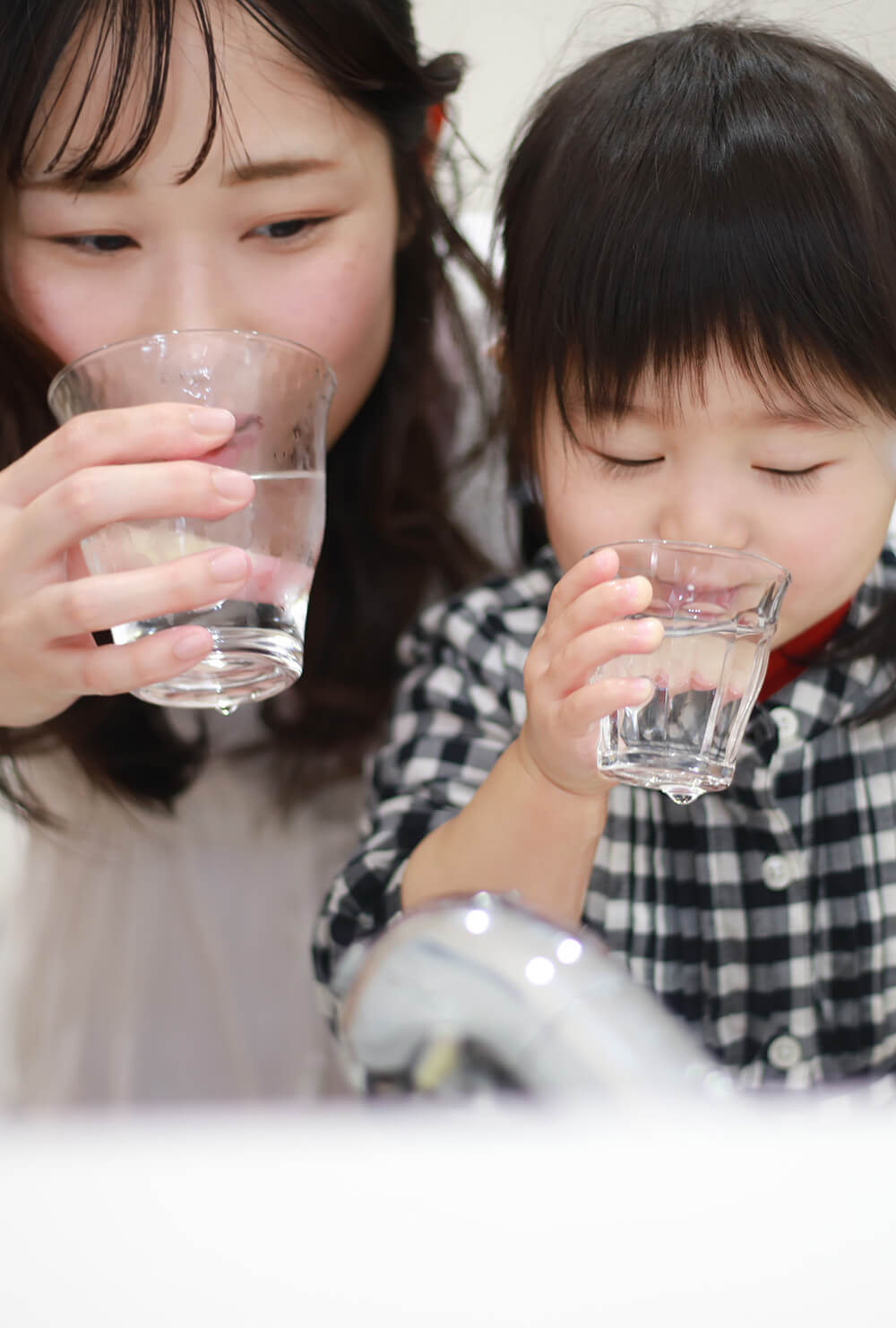
  • ✓ Choosing water as the best everyday drink for everyone. If you’re not a fan of plain water, try adding a squeeze of lemon, lime, or orange juice for flavor.

WIC recommends:

  • ✓ No more than 2 cups of milk per day for children.
  • ✓ No more than 4 ounces (½ cup) of juice per day.
healthy-habits-bg

Your Choices Matter – for Your Health and the Planet

Single-serve drinks in plastic bottles create a lot of waste. Most plastic never breaks down fully. Many plastic bottles also may leak tiny plastic pieces (microplastics) to the drinks inside.

A study found:

  • People who drink only bottled water may swallow 90,000 microplastics a year, whereas tap water drinkers may take in about 4,000 microplastics a year.
  • One liter of bottled water can contain about 240,000 tiny pieces of plastic, mostly nanoplastics.
tab-water

Choosing tap water and reusable bottles helps your health, your budget, and the environment.

Small Changes Big Difference You Can Make Small Changes That Make a Big Difference

If you feel overwhelmed, you’re not alone. Many families struggle with sugary drinks. But you have the power to help your family build healthy habits, one step at a time. Start with one easy change, like:
  • ✓ Swapping one soda for water
  • ✓ Serving smaller juice portions, or diluting juice with water
  • ✓ Mixing chocolate milk powder into plain milk
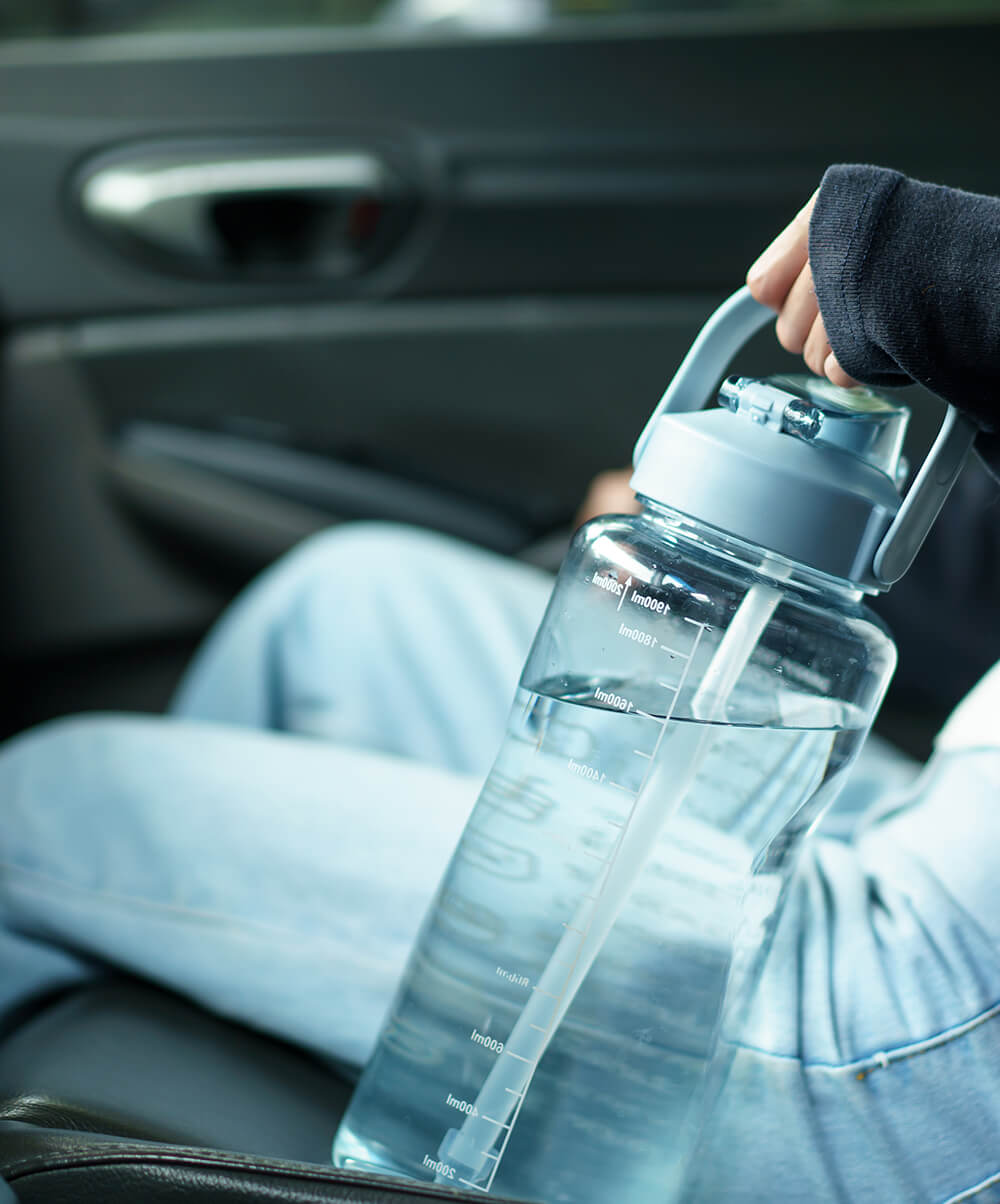
  • ✓ Keeping refillable water bottles handy in the car or diaper bag
Small-Changes-bg
blood-pressure-heart-icon

Every small shift adds up, and WIC is here to support you along the way.
You’re doing an amazing job caring for your family and making healthy drink choices are another way to help them grow strong.

REFERENCES:

Centers for Disease Control and Prevention. (2024, January). Fast facts: sugar-sweetened beverage consumption.
https://www.cdc.gov/nutrition/php/data-research/sugar-sweetened-beverages.html#:~:text=Adults,by%20state%20–%20United%20States%2C%202021

Cox KD, Covernton GA, Davies HL, Dower JF, Juanes F, Dudas SE. Human Consumption of Microplastics. Environ. Sci. Technol. 2019, 53, 12, 7068–7074.
https://pubs.acs.org/doi/10.1021/acs.est.9b01517

Dietary Guidelines for Americans. (2025). Top 10 Things You Need to Know About the Dietary Guidelines for Americans, 2020–2025.
https://www.dietaryguidelines.gov/2020-2025-dietary-guidelines-online-materials/top-10-things-you-need-know

Healthy Eating Research. (2025, January). Healthy Beverage Consumption in School-Age Children and Adolescents.
https://healthyeatingresearch.org/wp-content/uploads/2025/01/Technical-Report-FINAL.pdf

Imoisili OE, Park S, Lundean EA, Yaroch AL, Blanck HM. Daily Adolescent Sugar-Sweetened Beverage Intake Is Associated With Select Adolescent, Not Parent, Attitudes About Limiting Sugary Drink and Junk Food Intake. American Journal of Health Promotion. 2019;34(1):76–82.
https://journals.sagepub.com/doi/abs/10.1177/0890117119868382

Li Y, Tau L, Wang Q, Wang F, Li G, Song M. Potential Health Impact of Microplastics: A Review of Environmental Distribution, Human Exposure, and Toxic Effect. Environ. Health. 2023, 1, 4, 249–257.
https://journals.sagepub.com/doi/abs/10.1177/0890117119868382

Malik VS, Hu FB. The role of sugar-sweetened beverages in the global epidemics of obesity and chronic diseases. Nat Rev Endocrinol. 2022 Apr;18(4):205–218.
https://pmc.ncbi.nlm.nih.gov/articles/PMC8778490/

Mayo Clinic. (2023, November). Type 2 diabetes in children.
https://www.mayoclinic.org/diseases-conditions/type-2-diabetes-in-children/symptoms-causes/syc-20355318#:~:text=Diet.,or%20sibling%20with%20the%20disease

Qian N, Gao X, Lang X, et al. Rapid single-particle chemical imaging of nanoplastics by SRS microscopy. Proc Natl Acad Sci U S A. 2024;121(3):e2300582121.
https://journals.sagepub.com/doi/abs/10.1177/0890117119868382

Texas WIC. (2025). What and how much should I feed my child?
https://texaswic.org/health-nutrition/children/what-and-how-much-should-i-feed-my-child

Texas WIC. (2025). Tooth Care.
https://texaswic.org/health-nutrition/children/tooth-care

Tropical Smoothie Café. (2024, November 14). Health & Nutrition Guide.
https://d1yg02isjcwtyb.cloudfront.net/wp-content/uploads/2025/01/Promo-1-Nutrition-PDF.pdf

Vos MB, Kaar JL, Welsh JA, et al. Added Sugars and Cardiovascular Disease Risk in Children: A
Scientific Statement From the American Heart Association.
Circulation. 2017;135(19):e1017-e1034.
https://www.ahajournals.org/doi/10.1161/cir.0000000000000439

By Bridget Swinney, MS, RDN, LD

  • Infant
    • The Basics of Paced Bottle-Feeding
    • How Do I Know If My Baby Could Be Tongue-Tied?
    • Protect Your Baby from Cronobacter
    • Exploring the World with Baby – Sensory Play
    • Get Your Baby “Back” to Sleep in a Safe Environment
  • Children
    • Shopping With Kids: A Simple Way to Help Them Like More Foods
    • Pumpkin Fun: Free and Healthy Activities for Kids Under 5
    • Letting Your Child Play with Food Can Be a Good Thing
    • Is Snack Time Treat Time?
    • Fun Ways to Learn About Healthy Food and Get Moving!
  • General /Family
    • Finding Calm When Life Gets Busy: Stress-Management for Parents
    • February Is National Heart Month: Simple Ways to Show Your Heart Some Love
    • 10 Ways to Enjoy Avocados – And Helpful Tips to Feed with Confidence
    • Food, Feelings, and Finding Balance: Understanding Disordered Eating
    • Is the Chia Seed Challenge Worth It?
  • Women
    • Breastfeeding Through Growth Spurts and Sleep Changes
    • Baby Blues… or Is It Something More?
    • Gut Health and Gestational Diabetes
    • Blood Pressure: Do You Know Your Numbers?
    • Make a Plan to Pump
  • Recipes
    • Heart-Healthy Recipe: Banana Berry Oatmeal Cups
    • Is the Chia Seed Challenge Worth It?
    • Extra Vegetables Quiche
    • Easy Pumpkin Muffins
    • Confetti Bean Salad
Wyoming WIC WDH Public Health

CONTACT US

1-888-996-9378
health.wyo.gov/wic
  • How to apply for WIC

Resources

  • WIC Shopper
  • WIC Smart
  • WIC Breastfeeding Support
  • Wyoming Medicaid
  • Wyoming 211
  • Tell a friend about WIC!
  • Guide to Using Your WIC Benefits
  • Wyoming WIC Facebook
  • Wyoming WIC Instagram
  • Wyoming WIC

USDA is an equal opportunity provider, employer, and lender.

Cookie PolicyPrivacy Policy

© Brush Art Corporation
This website is operated by Brush Art Corporation on behalf of the Wyoming Department of Health.

Install this web app on your iPhone: tap and then Add to Home Screen.

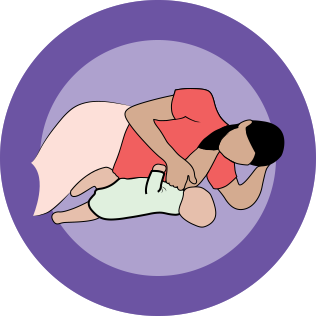
SIDE-LYING HOLD

Side-Lying Hold

  1. For the right breast, lie on your right side with your baby facing you.
  2. Pull your baby close. Your baby’s mouth should be level with your nipple.
  3. In this position, you can cradle your baby’s back with your left arm and support yourself with your right arm and/or pillows.
  4. Keep loose clothing and bedding away from your baby.
  5. Reverse for the left breast.

This hold is useful when:

  • You had a C-section
  • You want to rest while baby feeds
  • You are breastfeeding in the middle of the night
  • You and your baby are comfortable in this position
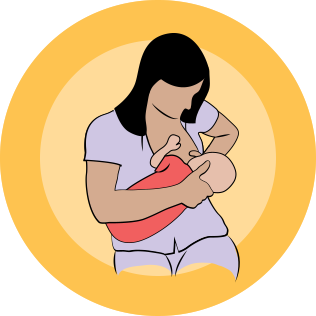
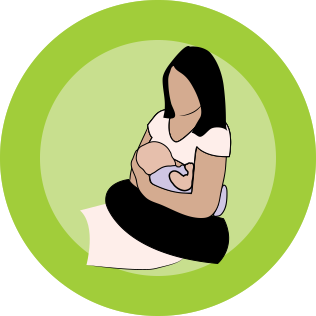
CROSS-CRADLE HOLD

Cross-Cradle Hold

  1. For the right breast, use your left arm to hold your baby’s head at your right breast and baby’s body toward your left side. A pillow across your lap can help support your left arm.
  2. Gently place your left hand behind your baby’s ears and neck, with your thumb and index finger behind each ear and your palm between baby’s shoulder blades. Turn your baby’s body toward yours so your tummies are touching.
  3. Hold your breast as if you are squeezing a sandwich. To protect your back, avoid leaning down to your baby. Instead, bring your baby to you.
  4. As your baby’s mouth opens, push gently with your left palm on baby’s head to help them latch on. Make sure you keep your fingers out of the way.
  5. Reverse for the left breast.

This hold is useful when:

  • Your baby is premature
  • Your baby has a weak suck
  • Your baby needs help to stay latched
  • Your baby needs extra head support
  • You and your baby are comfortable in this position
CLUTCH OR “FOOTBALL” HOLD

Clutch or “Football” Hold

  1. For the right breast, hold your baby level, facing up, at your right side.
  2. Put your baby’s head near your right nipple and support their back and legs under your right arm.
  3. Hold the base of your baby’s head with your right palm. A pillow underneath your right arm can help support your baby’s weight.
  4. To protect your back, avoid leaning down to your baby. Bring baby to you instead.
  5. Reverse for the left breast.

This hold is useful when:

  • You had a C-section
  • You have large breasts
  • You have flat or inverted nipples
  • You have a strong milk let-down
  • You are breastfeeding twins
  • Your baby likes to feed in an upright position
  • Your baby has reflux
  • You and your baby are comfortable in this position
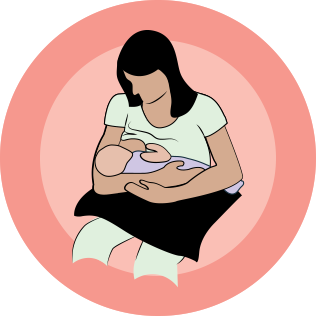
CRADLE HOLD

Cradle Hold

  1. For the right breast, cradle your baby with your right arm. Your baby will be on their left side across your lap, facing you at nipple level.
  2. Your baby’s head will rest on your right forearm with your baby’s back along your inner arm and palm.
  3. Turn your baby’s tummy toward your tummy. Your left hand is free to support your breast, if needed. Pillows can help support your arm and elbow.
  4. To protect your back, avoid leaning down to your baby. Instead, bring your baby to you.
  5. Reverse for the left breast.

This hold is useful when:

  • Your baby needs help latching on
  • You and your baby are comfortable in this position
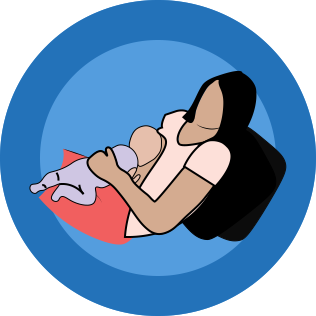
Laid-Back Hold

Laid-Back Hold

  1. Lean back on a pillow with your baby’s tummy touching yours and their head at breast level. Some moms find that sitting up nearly straight works well. Others prefer to lean back and lie almost flat.
  2. You can place your baby’s cheek near your breast, or you may want to use one hand to hold your breast near your baby. It’s up to you and what you think feels best.
  3. Your baby will naturally find your nipple, latch, and begin to suckle.

This hold is useful when:

  • Your baby is placed on your chest right after birth
  • You have a strong milk let-down
  • You have large breasts
  • You and your baby are comfortable in this position