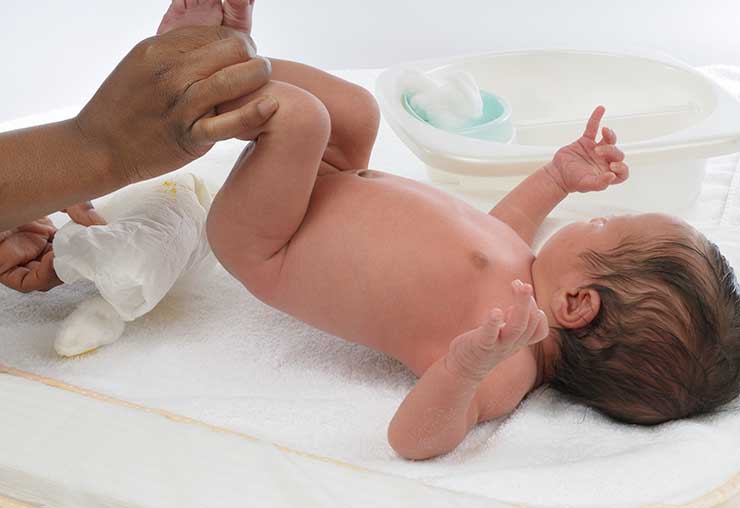
The crying…the sleepless nights…the constant diaper changes…caring for a baby is a lot of work! Sadly, frustration and fatigue can push some caregivers to their limit, leading them to physically hurt their babies.
Shaken Baby Syndrome (SBS) is the leading cause of child abuse death in the United States, with one out of four shaken babies dying as a result. Babies under the age of 1 year (especially those 2 to 4 months of age) are at greatest risk for SBS because they tend to cry often and longer than older, larger children. However, Shaken Baby Syndrome injuries have been reported in children up to age 5.
Shaking a baby in a moment of frustration can cause a lifetime of problems. Babies have heavy heads and weak neck muscles, so even a few seconds of forceful shaking can cause serious damage. When a child is shaken, the head jerks back-and-forth causing the brain to slam against the inside of the skull. This shaking can lead to many different injuries, including brain damage and even death.
WHAT CAN HAPPEN IF A BABY IS SHAKEN?<
Right Away:
Breathing may stop or become irregular
Heart may stop
Extreme irritability
Limp arms and legs
Decreased level or complete loss of consciousness
Vomiting
Seizures
Pain and uncontrollable crying
Decreased appetite, or vomiting for no reason
Poor sucking or swallowing
Change in sleep pattern or can’t be awakened
Head or forehead appears larger than usual or soft-spot on head appears to be bulging
Not able to lift head
Not able to focus eyes or track movement
Unequal size of pupils
Death
In the Future:
Learning disabilities
Developmental delays
Physical disabilities
Blindness
Loss of hearing
Speech disabilities
Cerebral Palsy
Seizures
Behavior disorders
Death
If you think a baby has been shaken, take the child to the hospital immediately. This could be the difference between life and death.
STOP. CALM DOWN. GET HELP.
You knew your baby would cry…but you never imagined how frustrating that crying would become when you can’t get it to stop. After trying everything — with no success — to calm and comfort your baby, you may feel like you’re about to lose your cool. DON’T. Shaking, throwing, hitting, or hurting a baby in any way is NEVER okay. If the crying overwhelms you, stop, calm down, and get help.
Keeping Your Cool
To calm your crying baby, try:
Picking them up
Rubbing their back
Gently rocking them
Singing or talking to them
Making funny faces to make them smile
Offering a pacifier or toy
If you’re still having trouble calming the crying, try the following:
Check for signs of discomfort like tight clothing, a wet diaper, or being too hot or too cold
Look for cues your baby is hungry or needs to be burped
Take them to a quiet room
Take a walk with your baby using a stroller
Safely put your baby in an infant swing
Call the doctor if you think your child may be sick
If you find yourself pushed to the limit, take a minute to calm yourself down:
Breeeeathe. Slowly inhale through your nose for 5 seconds, then slowly exhale through your mouth. Repeat.
Give yourself a short break. Lay your baby in a crib on their back, go to another room, then go back to check on them after 5 to 10 minutes.
Get rid of stress by running in place for a few minutes or doing a few jumping jacks.
Call a friend, relative, neighbor, parent, or helpline for support.
Find time to take care of yourself. Eat a variety of healthy foods, drink plenty of water and try to get in a little daily physical activity. Although it may not always be easy, make sleep a priority.
Reach out to WIC for support — they are there to help!
Remember, if you’ve done all you can do and you’re still not able to calm your baby, it’s not your fault, nor your baby’s. You are not a bad parent or caregiver. Take a deep breath…things will get easier!
Childhelp National Child Abuse Hotline 1-800-4ACHILD This 24-hour crisis hotline offers support, information, literature, and referrals.
Do you find this Blog helpful?
Show some love here!
No comments yet. Be the first to share your thoughts!
Install this web app on your iPhone: tap and then Add to Home Screen.
Share to Social
Share this link via
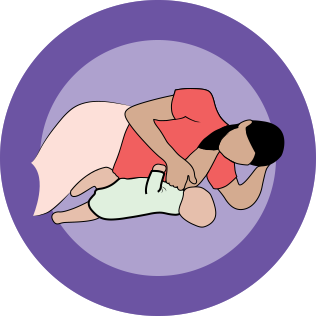
Side-Lying Hold
For the right breast, lie on your right side with your baby facing you.
Pull your baby close. Your baby’s mouth should be level with your nipple.
In this position, you can cradle your baby’s back with your left arm and support yourself with your right arm and/or pillows.
Keep loose clothing and bedding away from your baby.
Reverse for the left breast.
This hold is useful when:
You had a C-section
You want to rest while baby feeds
You are breastfeeding in the middle of the night
You and your baby are comfortable in this position
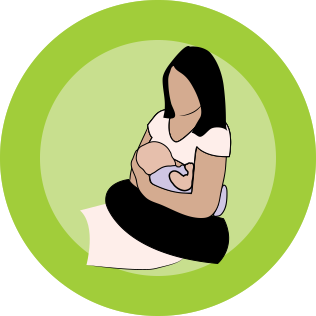
Cross-Cradle Hold
For the right breast, use your left arm to hold your baby’s head at your right breast and baby’s body toward your left side. A pillow across your lap can help support your left arm.
Gently place your left hand behind your baby’s ears and neck, with your thumb and index finger behind each ear and your palm between baby’s shoulder blades. Turn your baby’s body toward yours so your tummies are touching.
Hold your breast as if you are squeezing a sandwich. To protect your back, avoid leaning down to your baby. Instead, bring your baby to you.
As your baby’s mouth opens, push gently with your left palm on baby’s head to help them latch on. Make sure you keep your fingers out of the way.
Reverse for the left breast.
This hold is useful when:
Your baby is premature
Your baby has a weak suck
Your baby needs help to stay latched
Your baby needs extra head support
You and your baby are comfortable in this position
Clutch or “Football” Hold
For the right breast, hold your baby level, facing up, at your right side.
Put your baby’s head near your right nipple and support their back and legs under your right arm.
Hold the base of your baby’s head with your right palm. A pillow underneath your right arm can help support your baby’s weight.
To protect your back, avoid leaning down to your baby. Bring baby to you instead.
Reverse for the left breast.
This hold is useful when:
You had a C-section
You have large breasts
You have flat or inverted nipples
You have a strong milk let-down
You are breastfeeding twins
Your baby likes to feed in an upright position
Your baby has reflux
You and your baby are comfortable in this position
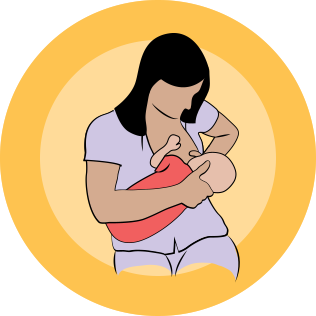
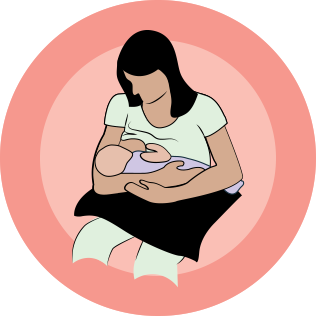
Cradle Hold
For the right breast, cradle your baby with your right arm. Your baby will be on their left side across your lap, facing you at nipple level.
Your baby’s head will rest on your right forearm with your baby’s back along your inner arm and palm.
Turn your baby’s tummy toward your tummy. Your left hand is free to support your breast, if needed. Pillows can help support your arm and elbow.
To protect your back, avoid leaning down to your baby. Instead, bring your baby to you.
Reverse for the left breast.
This hold is useful when:
Your baby needs help latching on
You and your baby are comfortable in this position
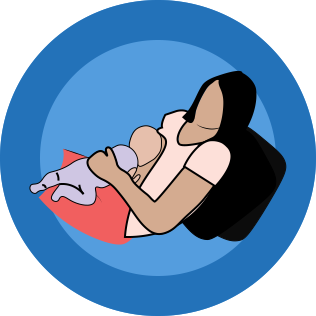
Laid-Back Hold
Lean back on a pillow with your baby’s tummy touching yours and their head at breast level. Some moms find that sitting up nearly straight works well. Others prefer to lean back and lie almost flat.
You can place your baby’s cheek near your breast, or you may want to use one hand to hold your breast near your baby. It’s up to you and what you think feels best.
Your baby will naturally find your nipple, latch, and begin to suckle.
This hold is useful when:
Your baby is placed on your chest right after birth
You have a strong milk let-down
You have large breasts
You and your baby are comfortable in this position










Do you find this Blog helpful?
Show some love here!
No comments yet. Be the first to share your thoughts!