At the end of a long day, the last thing you want to do is spend hours in the kitchen cooking dinner. With a little planning, a quick and healthy dinner is possible, even on the busiest days. Avoid the drive-thru with these easy ideas. Your family, waistline and wallet will thank you!
Plan Ahead. At the end of a long day, just trying to decide what to eat can be a tough task and can take precious time. Set aside a few minutes to plan your menu for the week. Use your menu to create your grocery list, which will help you save both time and money at the store. Write preparation tips right on the menu, such as “Thaw chicken on Wednesday night,” or “Make hard cooked eggs on Monday’’ so ingredients are ready when you need them. Place your menu on the refrigerator with a magnet as an easy reference.
Cook Once, Eat Twice. To save prep time, cook enough so that you can use it in more than one meal. Bake 3-4 chicken breasts at once, and use half in chicken tacos one night, and use the other half in chicken salad sandwiches the next night. Cook enough ground turkey or beef for spaghetti tonight and use or freeze the rest for chili on another night. Cooking extra veggies, pasta or rice for later also saves time.
Go Meatless. Cutting out meat for a meal or two can really cut your prep time. Canned beans make a quick, filling meal. Beans also contain protein, fiber and vitamins and are low in fat. Add black beans to brown rice and a side of steamed veggies, or top a large salad with chickpeas, a hard cooked egg and your favorite raw veggies.
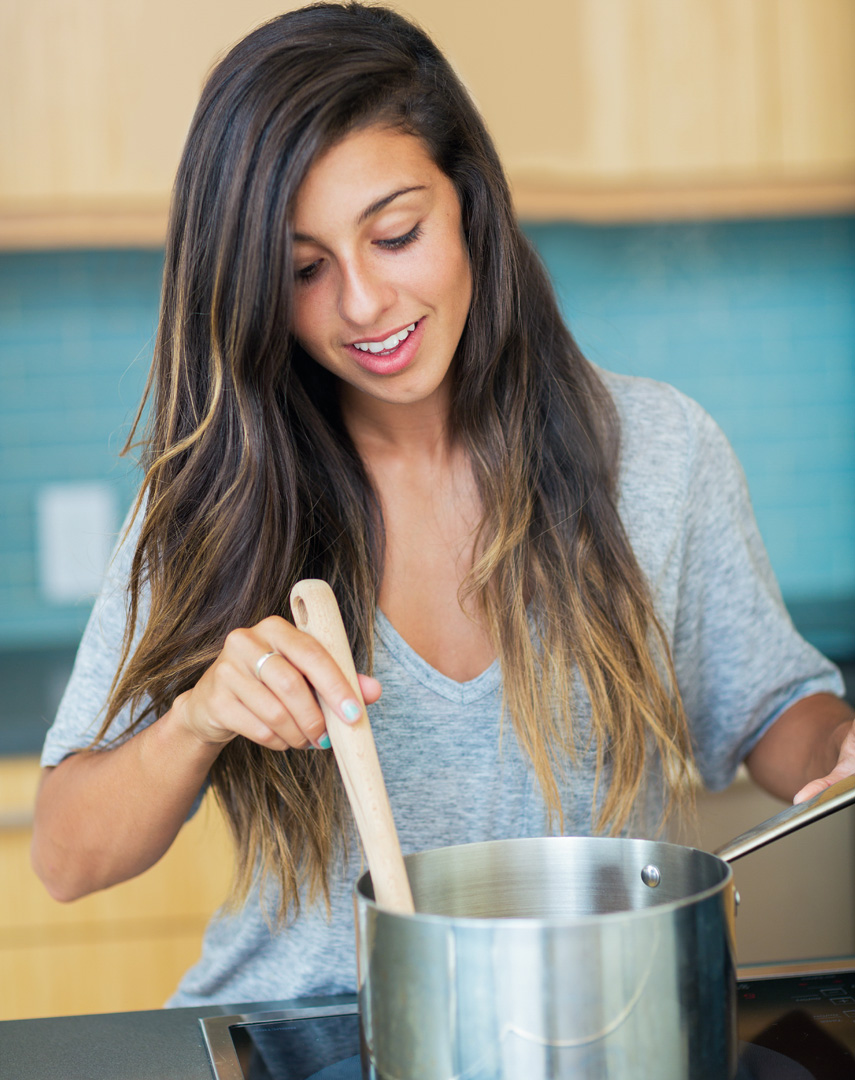
Make a One-Dish Meal. Sometimes it’s the cleanup that makes cooking so tiring. Spend less time washing dishes by cooking a one-dish meal. A stir-fry can be cooked in 30 minutes or less and all ingredients are sautéed in the same saucepan. Chicken thighs or a beef roast can be cooked with potatoes, onions and carrots in a large casserole dish for a hearty and delicious meal.
Try Frozen or Canned Veggies. Vegetables that are frozen or canned can be prepared quickly in the microwave or on the stovetop, and are a healthy option if you don’t have time to cook fresh veggies. Try adding frozen peas and carrots to a pot of boiling pasta, drain the pasta and veggies, top with tuna, and dinner is done!
Take it Slow. Dust off that slow cooker! Slow cookers allow you to toss all of the ingredients together at the beginning of the day, and dinner will be waiting for you when you walk through the door in the evening. If your mornings are too hectic for prep, place the ingredients into the slow cooker insert the night before, cover and place in the refrigerator. Add the insert to the slow cooker base on your way out the door the next morning.
Fast & Easy Stuffed Peppers
Makes 4 Servings
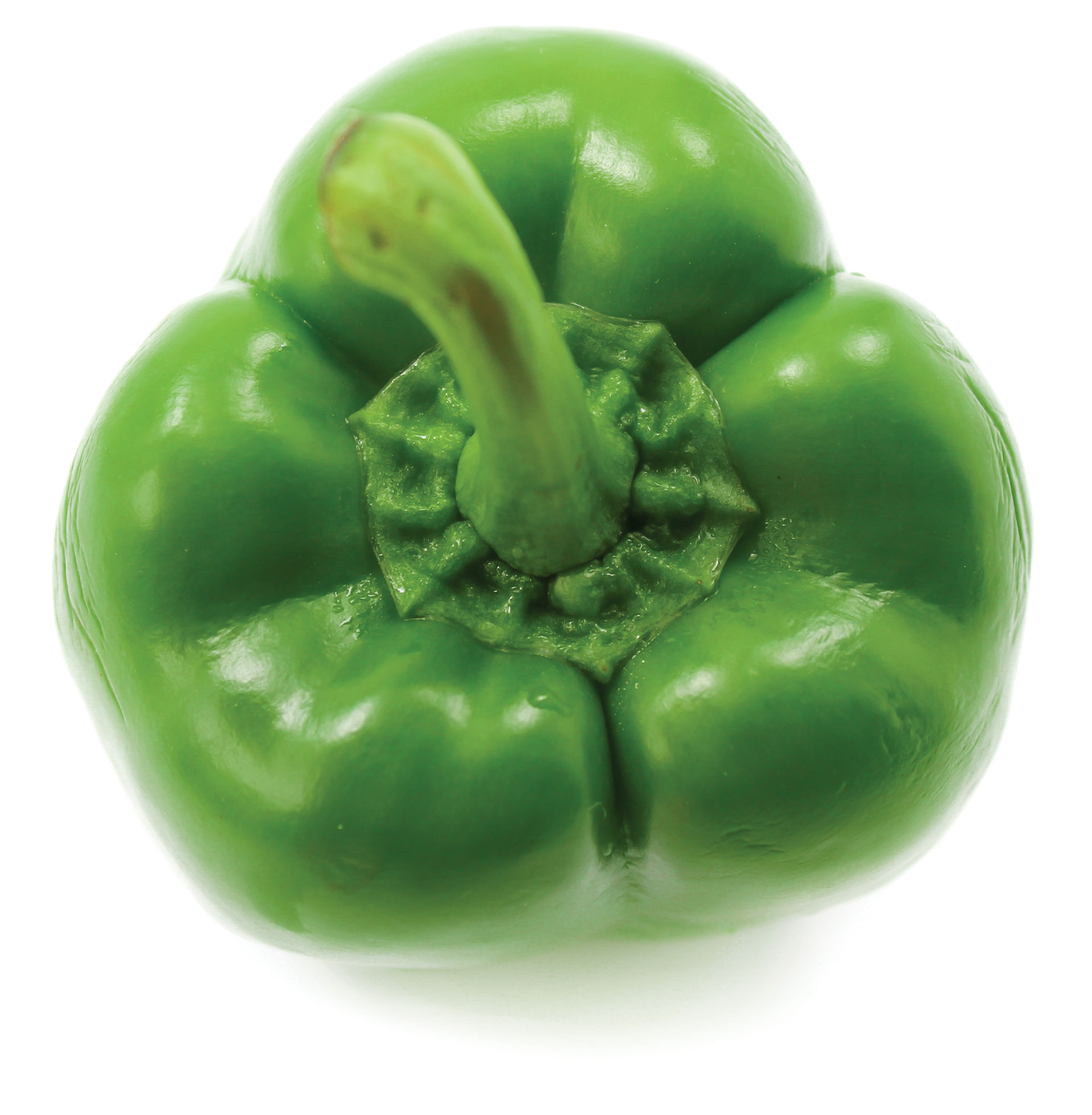
4 bell peppers
1- 15.25 ounce can low sodium black beans, drained
1 cup cooked brown rice
1 ¼ cup salsa
1 cup (4 oz) shredded cheddar cheese
Preheat oven to 375 degrees.
With a small knife, cut a large hole through the top and core of each bell pepper. When you remove the top, the seeds and core should come out too. Rinse bell peppers well under running water, rinsing out all remaining seeds.
In a bowl, combine black beans, rice, salsa and ¾ cup of shredded cheese. Stir well. Stuff bell peppers with black bean mixture. Stand bell peppers in a 9 by 9 inch casserole dish and cover with foil.
Bake for 20 minutes. Remove foil and bake for an additional 5 minutes, or until the peppers are tender. Sprinkle bell peppers with remaining 1/4 cup of cheese.
Nutrient Information per Serving:
300 calories, 11 g fat, 627 mg sodium, 38 g carbohydrate, 9 g fiber, 16 g protein, 160% vitamin C, 26% calcium, 16% iron, 7% vitamin A
Do you find this Blog helpful?
Show some love here!
No comments yet. Be the first to share your thoughts!
Install this web app on your iPhone: tap and then Add to Home Screen.
Share to Social
Share this link via
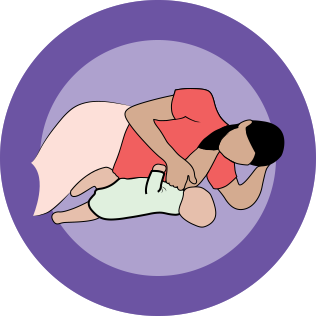
Side-Lying Hold
For the right breast, lie on your right side with your baby facing you.
Pull your baby close. Your baby’s mouth should be level with your nipple.
In this position, you can cradle your baby’s back with your left arm and support yourself with your right arm and/or pillows.
Keep loose clothing and bedding away from your baby.
Reverse for the left breast.
This hold is useful when:
You had a C-section
You want to rest while baby feeds
You are breastfeeding in the middle of the night
You and your baby are comfortable in this position
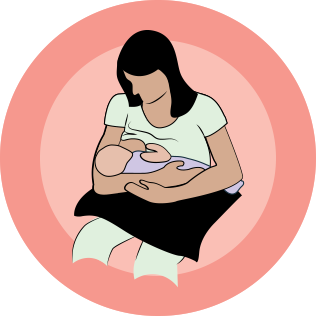
Cross-Cradle Hold
For the right breast, use your left arm to hold your baby’s head at your right breast and baby’s body toward your left side. A pillow across your lap can help support your left arm.
Gently place your left hand behind your baby’s ears and neck, with your thumb and index finger behind each ear and your palm between baby’s shoulder blades. Turn your baby’s body toward yours so your tummies are touching.
Hold your breast as if you are squeezing a sandwich. To protect your back, avoid leaning down to your baby. Instead, bring your baby to you.
As your baby’s mouth opens, push gently with your left palm on baby’s head to help them latch on. Make sure you keep your fingers out of the way.
Reverse for the left breast.
This hold is useful when:
Your baby is premature
Your baby has a weak suck
Your baby needs help to stay latched
Your baby needs extra head support
You and your baby are comfortable in this position
Clutch or “Football” Hold
For the right breast, hold your baby level, facing up, at your right side.
Put your baby’s head near your right nipple and support their back and legs under your right arm.
Hold the base of your baby’s head with your right palm. A pillow underneath your right arm can help support your baby’s weight.
To protect your back, avoid leaning down to your baby. Bring baby to you instead.
Reverse for the left breast.
This hold is useful when:
You had a C-section
You have large breasts
You have flat or inverted nipples
You have a strong milk let-down
You are breastfeeding twins
Your baby likes to feed in an upright position
Your baby has reflux
You and your baby are comfortable in this position
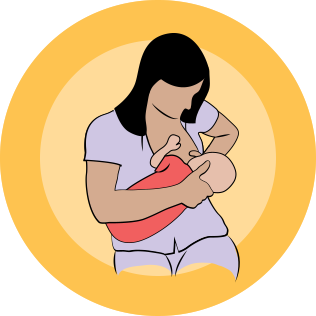
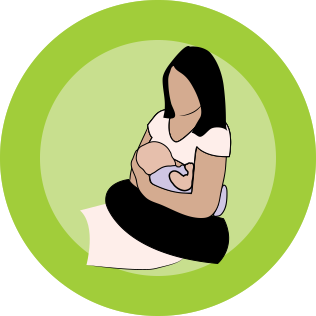
Cradle Hold
For the right breast, cradle your baby with your right arm. Your baby will be on their left side across your lap, facing you at nipple level.
Your baby’s head will rest on your right forearm with your baby’s back along your inner arm and palm.
Turn your baby’s tummy toward your tummy. Your left hand is free to support your breast, if needed. Pillows can help support your arm and elbow.
To protect your back, avoid leaning down to your baby. Instead, bring your baby to you.
Reverse for the left breast.
This hold is useful when:
Your baby needs help latching on
You and your baby are comfortable in this position
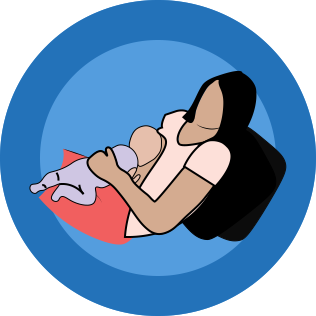
Laid-Back Hold
Lean back on a pillow with your baby’s tummy touching yours and their head at breast level. Some moms find that sitting up nearly straight works well. Others prefer to lean back and lie almost flat.
You can place your baby’s cheek near your breast, or you may want to use one hand to hold your breast near your baby. It’s up to you and what you think feels best.
Your baby will naturally find your nipple, latch, and begin to suckle.
This hold is useful when:
Your baby is placed on your chest right after birth
You have a strong milk let-down
You have large breasts
You and your baby are comfortable in this position




Do you find this Blog helpful?
Show some love here!
No comments yet. Be the first to share your thoughts!