This Cheesy Veggie & Rice Casserole is a delicious, comforting dish packed with nutrients.
With hearty ingredients like kale, mushrooms, onions, and brown rice, this casserole delivers a good dose of fiber, vitamins, and minerals. Kale and mushrooms provide antioxidants and support immune health, while brown rice adds whole-grain goodness for steady energy. Topped with melty cheese, this recipe is sure to be a hit with kids and grown-ups alike, making it a perfect choice for a balanced, veggie-packed meal.
Preparation Time: 30 minutes
Cooking Time: 60 minutes
Servings: 6
Ingredients:
2 cups Low-sodium chicken broth
1 cup Brown rice, uncooked, long- grain, regular, dry
1 Tbsp Margarine
¾ cup Fresh onions, diced
3 cups Fresh mushrooms, sliced
1 tsp Garlic, minced
¼ tsp Salt
¼ tsp Ground black pepper
¼ tsp Onion powder
1 Tbsp and 1 tsp Whole- wheat flour
¾ cup Low-fat (1%) milk
1 qt or 4 oz Fresh kale, finely chopped
1 cup Low-fat cheddar cheese, shredded
¾ cup Low-fat mozzarella cheese, low-moisture, part-skim, shredded
This recipe is sure to be a hit with kids and grown-ups alike!
Directions:
Preheat oven to 350 °F (for convection oven: 325 °F).
Pour chicken broth in a medium saucepan and bring to a boil.
Place brown rice in a small baking dish (8” x 8” x 2”).
Pour boiling broth over brown rice. Stir. Cover baking dish tightly.
Bake in oven for 40 minutes.
Remove cooked rice from oven. Set aside.
Make the mushroom sauce: in a medium non-stick saucepan, add margarine, onions, mushrooms, minced garlic, salt, pepper, and onion powder. Stir constantly over medium-high heat until mushrooms are soft, about 3 minutes.
Sprinkle flour over mushroom mixture. Stir well. After one minute, reduce to medium-low heat.
Add milk, stirring constantly until smooth. Sauce will become creamy and thick in texture. Remove from heat and set aside.
In a small bowl, combine cheese together and set aside.
Lightly coat a baking dish (9” x 9”) with cooking spray, then assemble the casserole layers evenly into the baking dish as follows:
• First (bottom) layer: cooked rice
• Second layer: mushroom sauce
• Third layer: kale
• Fourth (top) layer: sprinkle with cheese mixture.
Cover baking dish tightly.
Bake again in the oven for 15-20 minutes (convection oven: 325 °F for 5-10 minutes).
Remove from oven and allow to cool for a few minutes before cutting into 6 pieces.
Serve, freeze, or refrigerate leftovers within 2 hours.
Nutrients Per Serving:
Calories 251 Protein 16 g Carbohydrates 37 g Dietary Fiber 4 g Total Sugars 3 g
Total Fat 7 g Saturated Fat 3 g Cholesterol 8 mg Sodium 401 mg Vitamin A 196 mcg RAE
Vitamin C 10 mg Vitamin D 27 IU Calcium 266 mg Iron 3 mg Potassium 351 mg
Install this web app on your iPhone: tap and then Add to Home Screen.
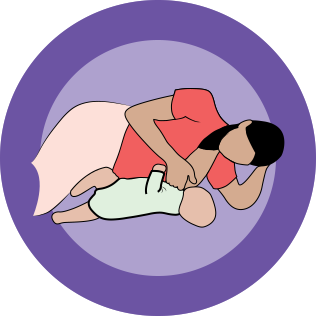
Side-Lying Hold
For the right breast, lie on your right side with your baby facing you.
Pull your baby close. Your baby’s mouth should be level with your nipple.
In this position, you can cradle your baby’s back with your left arm and support yourself with your right arm and/or pillows.
Keep loose clothing and bedding away from your baby.
Reverse for the left breast.
This hold is useful when:
You had a C-section
You want to rest while baby feeds
You are breastfeeding in the middle of the night
You and your baby are comfortable in this position
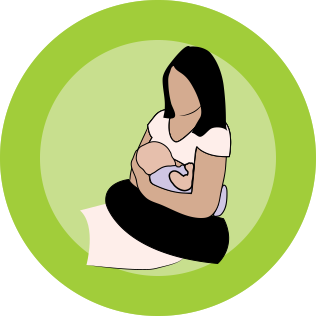
Cross-Cradle Hold
For the right breast, use your left arm to hold your baby’s head at your right breast and baby’s body toward your left side. A pillow across your lap can help support your left arm.
Gently place your left hand behind your baby’s ears and neck, with your thumb and index finger behind each ear and your palm between baby’s shoulder blades. Turn your baby’s body toward yours so your tummies are touching.
Hold your breast as if you are squeezing a sandwich. To protect your back, avoid leaning down to your baby. Instead, bring your baby to you.
As your baby’s mouth opens, push gently with your left palm on baby’s head to help them latch on. Make sure you keep your fingers out of the way.
Reverse for the left breast.
This hold is useful when:
Your baby is premature
Your baby has a weak suck
Your baby needs help to stay latched
Your baby needs extra head support
You and your baby are comfortable in this position
Clutch or “Football” Hold
For the right breast, hold your baby level, facing up, at your right side.
Put your baby’s head near your right nipple and support their back and legs under your right arm.
Hold the base of your baby’s head with your right palm. A pillow underneath your right arm can help support your baby’s weight.
To protect your back, avoid leaning down to your baby. Bring baby to you instead.
Reverse for the left breast.
This hold is useful when:
You had a C-section
You have large breasts
You have flat or inverted nipples
You have a strong milk let-down
You are breastfeeding twins
Your baby likes to feed in an upright position
Your baby has reflux
You and your baby are comfortable in this position
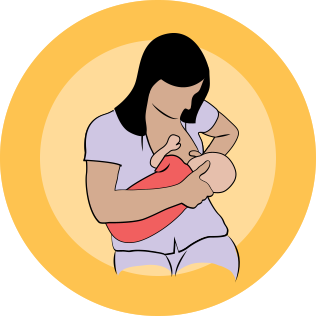
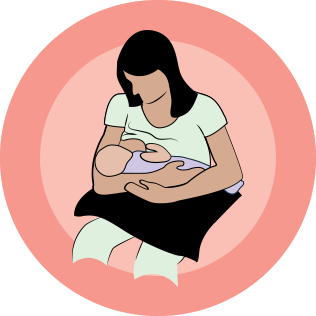
Cradle Hold
For the right breast, cradle your baby with your right arm. Your baby will be on their left side across your lap, facing you at nipple level.
Your baby’s head will rest on your right forearm with your baby’s back along your inner arm and palm.
Turn your baby’s tummy toward your tummy. Your left hand is free to support your breast, if needed. Pillows can help support your arm and elbow.
To protect your back, avoid leaning down to your baby. Instead, bring your baby to you.
Reverse for the left breast.
This hold is useful when:
Your baby needs help latching on
You and your baby are comfortable in this position
Laid-Back Hold
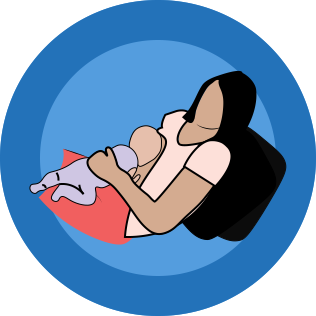
Lean back on a pillow with your baby’s tummy touching yours and their head at breast level. Some moms find that sitting up nearly straight works well. Others prefer to lean back and lie almost flat.
You can place your baby’s cheek near your breast, or you may want to use one hand to hold your breast near your baby. It’s up to you and what you think feels best.
Your baby will naturally find your nipple, latch, and begin to suckle.
This hold is useful when:
Your baby is placed on your chest right after birth
You have a strong milk let-down
You have large breasts
You and your baby are comfortable in this position









 and then Add to Home Screen.