Physical Activity for… Babies, Toddlers, and Parents
By: Christina mcGeough, mph, rd, CDCES
Physical activity is important for a physical, emotional, and overall health. However, as a new parents it may be difficult to get back into a routine. At first, you might find that the exercises you did before baby are not as enjoyable anymore. Or you may feel too tired or like you have no time to exercise. Whether you are newly postpartum or entering the toddler or preschool stage of parenthood, physical activity doesn’t have to be impossible to fit into your weekly schedule.
When I first became a mom, I looked forward to resuming outdoor running and spinning classes at my local gym. At first, coordinating my runs or going to a gym class was hard because of how frequently I was breastfeeding. I thought I could just jump right back into running, but boy was I wrong! Once I was around 8 weeks postpartum with my firstborn, I strapped on my two sports bras and sneakers, and headed out on my first run. After a few short blocks things didn’t feel quite right. My body was not ready; I felt weak and unprepared. Along the way I realized that physical activity could be what I made of it, whether it was long walks with the baby in the stroller or his carrier, a mommy and me yoga class, or a structured gym class.
Let’s explore physical activity options for babies, toddlers, and parents.
Newborn stage: 0-3 months
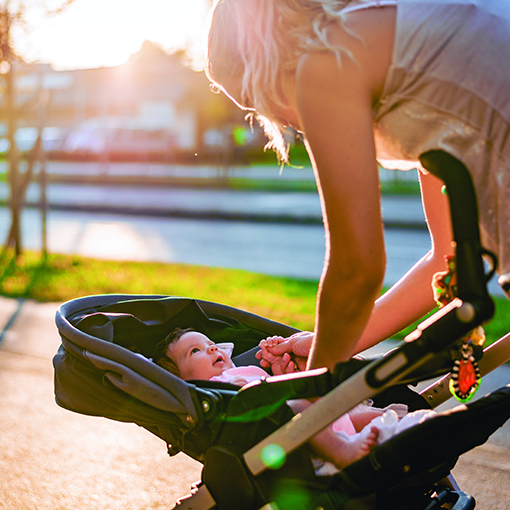
At this stage, everything is new and awkward. New parents are tired and adjusting to life with a baby. Many new parents find the easiest activity to incorporate is walking. Walking gets you out of the house, gives you some much needed Vitamin D, and helps with your mood. The movement of the stroller and/or carrier can also help your baby sleep. Another important activity for your baby is to have tummy time throughout the day to help them develop good head and neck control.
Infant Stage: 4-12 months
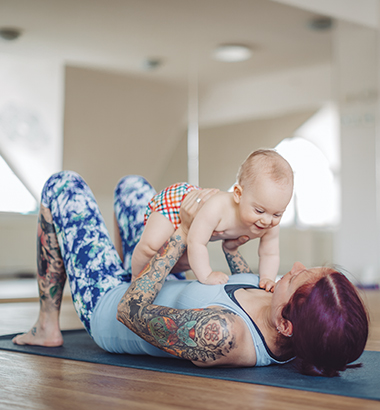
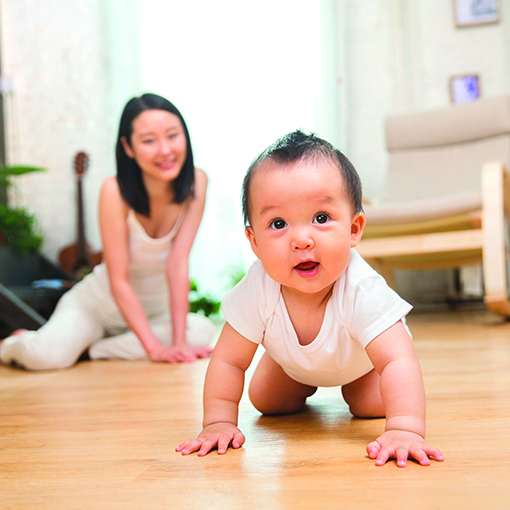
Your baby will be more alert, playful, and start doing all kinds of things like rolling, sitting, and crawling during this time. Walks are still great for the whole family and may be an important part of your baby’s daily routine. Parents may even enjoy runs with a jogging stroller or parent and baby fitness classes.
Toddler stage: 13-24 months
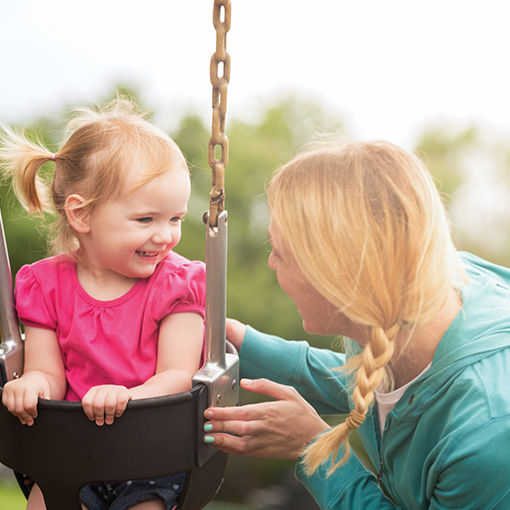
During this time your toddler is on the move, learning to walk and climb. They are curious and active. Park strolls and trips to the playground are a fun way to help them get that endless energy out. Parents are often actively running after their toddlers, but it is also important to carve out time for self-care. This is also a good stage for parents to work on their own physical strength and endurance to help keep up with their little ones.
Preschool stage: 3-5 years old
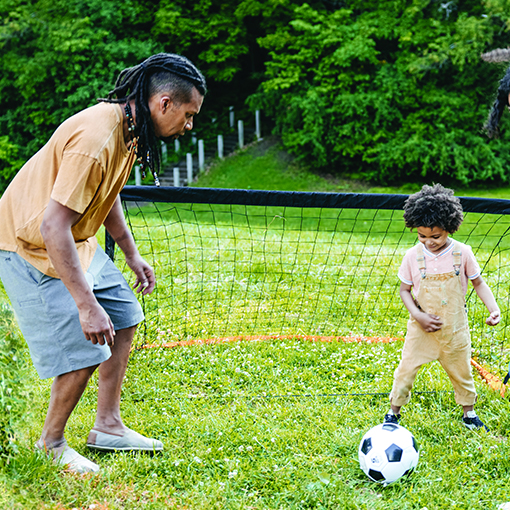
Children are much more coordinated at this stage and may enjoy soccer, basketball, or swim class. Organized sports activities for children encourage both physical activity and healthy social skills. It’s important for parents to prioritize physical activity for themselves too: aim to get at least 150 minutes of physical activity a week with a combination of aerobic and strength training activities.
When we get busy as parents, the easiest thing for us to take out of our routine
is exercise. However, incorporating joyful movement into your week doesn’t
have to be complicated, expensive, or overwhelming. Find an activity you
love, do it at a time that works for you, and stick with it.
Install this web app on your iPhone: tap and then Add to Home Screen.
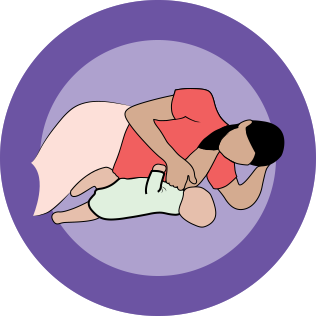
Side-Lying Hold
For the right breast, lie on your right side with your baby facing you.
Pull your baby close. Your baby’s mouth should be level with your nipple.
In this position, you can cradle your baby’s back with your left arm and support yourself with your right arm and/or pillows.
Keep loose clothing and bedding away from your baby.
Reverse for the left breast.
This hold is useful when:
You had a C-section
You want to rest while baby feeds
You are breastfeeding in the middle of the night
You and your baby are comfortable in this position
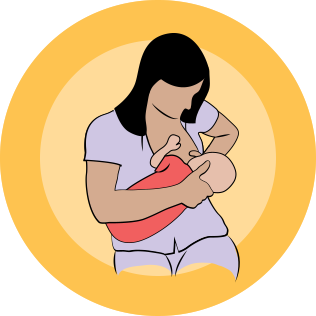
Cross-Cradle Hold
For the right breast, use your left arm to hold your baby’s head at your right breast and baby’s body toward your left side. A pillow across your lap can help support your left arm.
Gently place your left hand behind your baby’s ears and neck, with your thumb and index finger behind each ear and your palm between baby’s shoulder blades. Turn your baby’s body toward yours so your tummies are touching.
Hold your breast as if you are squeezing a sandwich. To protect your back, avoid leaning down to your baby. Instead, bring your baby to you.
As your baby’s mouth opens, push gently with your left palm on baby’s head to help them latch on. Make sure you keep your fingers out of the way.
Reverse for the left breast.
This hold is useful when:
Your baby is premature
Your baby has a weak suck
Your baby needs help to stay latched
Your baby needs extra head support
You and your baby are comfortable in this position
Clutch or “Football” Hold
For the right breast, hold your baby level, facing up, at your right side.
Put your baby’s head near your right nipple and support their back and legs under your right arm.
Hold the base of your baby’s head with your right palm. A pillow underneath your right arm can help support your baby’s weight.
To protect your back, avoid leaning down to your baby. Bring baby to you instead.
Reverse for the left breast.
This hold is useful when:
You had a C-section
You have large breasts
You have flat or inverted nipples
You have a strong milk let-down
You are breastfeeding twins
Your baby likes to feed in an upright position
Your baby has reflux
You and your baby are comfortable in this position
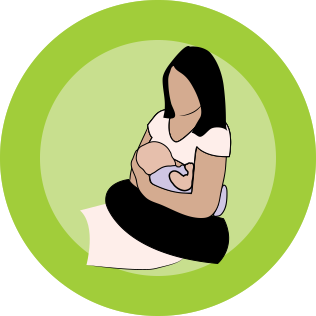
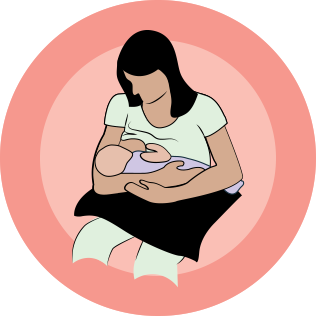
Cradle Hold
For the right breast, cradle your baby with your right arm. Your baby will be on their left side across your lap, facing you at nipple level.
Your baby’s head will rest on your right forearm with your baby’s back along your inner arm and palm.
Turn your baby’s tummy toward your tummy. Your left hand is free to support your breast, if needed. Pillows can help support your arm and elbow.
To protect your back, avoid leaning down to your baby. Instead, bring your baby to you.
Reverse for the left breast.
This hold is useful when:
Your baby needs help latching on
You and your baby are comfortable in this position
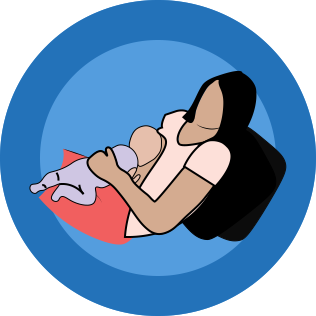
Laid-Back Hold
Lean back on a pillow with your baby’s tummy touching yours and their head at breast level. Some moms find that sitting up nearly straight works well. Others prefer to lean back and lie almost flat.
You can place your baby’s cheek near your breast, or you may want to use one hand to hold your breast near your baby. It’s up to you and what you think feels best.
Your baby will naturally find your nipple, latch, and begin to suckle.
This hold is useful when:
Your baby is placed on your chest right after birth
You have a strong milk let-down
You have large breasts
You and your baby are comfortable in this position