
Skip to Content Skip to Footer
Wyoming WIC
Wyoming WIC
  • Home
  • Women
    • Women
      Breastfeeding
    • Women
      Healthy Tips for Moms
    • Women
      Postpartum
    • Women
      Pregnant
  • Infants
    • Infants
      Feeding & Nutrition
    • Infants
      Growth & Development
  • Children
    • Children
      Toddlers
    • Children
      2-5 Year Olds
  • Families
    • Families
      Activity and Play
    • Families
      Dads
    • Families
      Food & Family Meals
    • Families
      Immunizations
    • Families
      Safety
  • Live Well Blog
  • Food Shopping Guide
  • Español
Mother breastfeeding baby in cozy, sunlit room

Chest/Breastfeeding in Public… Stay Calm and Nurse On

  • Home
  • Live Well Blog
  • Chest/Breastfeeding in Public… Stay Calm and Nurse On
Black QR code against a simple white backdrop
November 23, 2022 Infant

Moms and babies both benefit from human milk. However, previous generations bottle-fed their babies, so many people have never seen someone chest/breastfeeding. Even your friends may have never seen a nursing mom. That’s one reason that nursing in public has a degree of “shock value”. Some even think chest/breastfeeding is a private activity that should be done behind closed doors (or in bathroom stalls.) On-the-go moms need to feed their babies “on-demand” — wherever, whenever! If you are shy or easily embarrassed, know that there are ways to chest/breastfeed discreetly.

Two women breastfeeding infants on a cozy couch
Tips for chest/breastfeeding in public:
  • ✓ First, remember that nursing in public will quickly become “normal”. The more you do it, the easier it becomes.
  • ✓ Don’t panic in the early days. Take each day as it comes, even if you feel you need to cover up more now, this may change as you gain confidence.
  • ✓ Practice feeding at home in front of a full-length mirror. Feeding in front of a mirror gives a better idea of the view others get when you are nursing.
  • ✓ Practice a few times in a place you feel comfortable — perhaps a quiet park, friendly library, café, the food court or on a bus next to a window.
  • ✓ Choose an easy-access bra. Many mothers find a sports bra or a tube top works well for them; rather than having to undo a snap or other fastening, they can simply pull the cup of the bra down under their chest/breast to feed the baby. A zippered sports bra may also provide easy access. If you are using a nursing bra where you need to lower the cup, practice undoing it one-handed at home so you are confident about doing it out in public. Check with your local WIC program, as some provide nursing bras for exclusively chest/breastfeeding moms.
  • ✓ Smile if you notice someone glancing in your direction as you feed your baby. If you show your confidence with a friendly smile, you may defuse the situation.
  • ✓ Leave. If you are feeling upset or bullied, you may want to just leave. Just know you have done nothing wrong.

Discreet Chest/Breastfeeding Positions to Use in Public

Create your own “privacy zone” by trying different positions. You must practice different positions in order to know which positions are best for feeding without showing too much. A good position to start with is the cradle position. Mothers sometimes feel more exposed if they use a hold such as the clutch/ruby/football hold, because the breast is not hidden by baby’s head. If that position works for you and baby, try changing it to an upright “V-Clutch hold”, which works even better for some moms.

Mother breastfeeding baby outdoors in peaceful setting

Position yourself for privacy

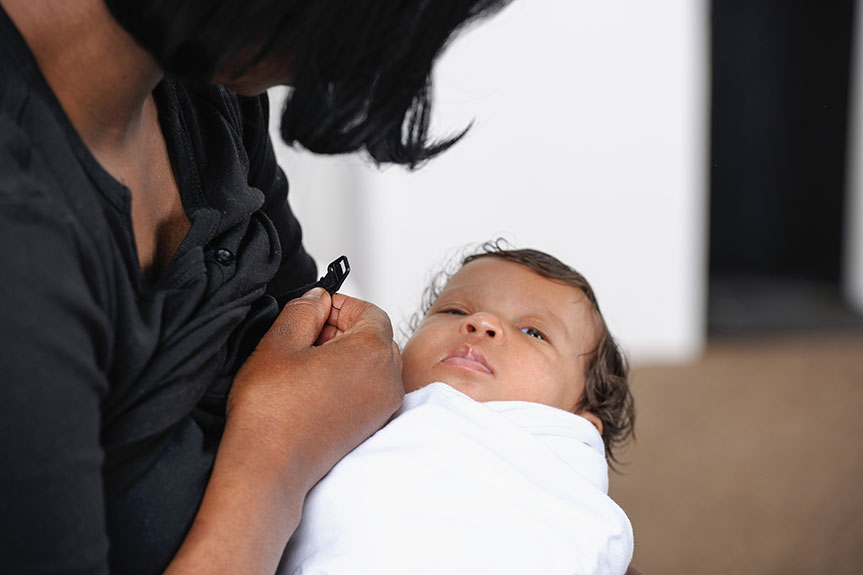
Mother preparing to breastfeed a swaddled infant

Hold baby’s head close to you so they’re blocking your chest/breast, then lift your outer shirt up and unhook the fastener of the nursing bra or tank top. The undershirt can stay tucked in so you don’t have to expose your chest/breast or your belly, while just enough is free to latch onto. Afterwards, fasten your bra and pull your shirt down. Switching sides? Position your shirt as if you’re closing up shop, reposition baby and start feeding.

Ways to cover up while nursing

  • If you feel self-conscious and are sensitive to how you are seen by others try the following:
  • ✓ Experiment with different clothing such as specific clothes made for nursing.
  • ✓ Wear a stretchy vest top that can be pulled down at one side to feed, with an open shirt / cardigan over the top.
  • ✓ Use a Baby carrier, sling, or wrap. Using them to carry baby gives you some hands-free time, and helps to sooth a fussy infant.
  • ✓ A blanket, burp cloth, scarf, shawl and other baby covers can all work well if you just want a little extra coverage while baby is latching.
Woman breastfeeding an infant, sitting on a couch

Know the Law

Chest/Breastfeeding in public is legal. In the United States, laws about breastfeeding vary from state to state; a federal law only applies to federal government properties such as post offices and national parks.
All 50 States have passed laws that either allow women to chest/breastfeed in public, or protects them from prosecution for indecent exposure. For more information on your state chest/breastfeeding laws, see the National Conference of State Legislatures, www.NCSL.org.
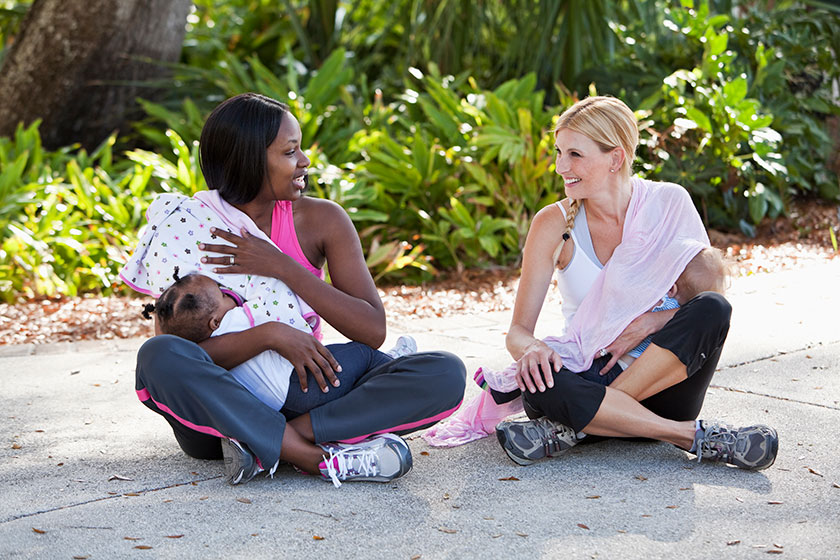
Two women sitting outdoors, breastfeeding and chatting

“Try layering; like a tank top and long sleeve shirt.”

– KELSEY

“Once my husband realized how good it was for us, he was all for it!”

– PAOLA

“Knowing about public breastfeeding laws in my state made me feel confident.”

– JACKIE

“At first I was nervous that people would be judgmental and rude if they somehow realized what I was doing. So, when I actually received a few smiling nods and even a compliment while nursing in public I was on cloud nine.”

– SHAY
  • Infant
    • Infant Pacifiers: Benefits, Safety Tips, and When to Wean
    • The Basics of Paced Bottle-Feeding
    • How Do I Know If My Baby Could Be Tongue-Tied?
    • Protect Your Baby from Cronobacter
    • Exploring the World with Baby – Sensory Play
  • Children
    • Shopping With Kids: A Simple Way to Help Them Like More Foods
    • Pumpkin Fun: Free and Healthy Activities for Kids Under 5
    • Letting Your Child Play with Food Can Be a Good Thing
    • Is Snack Time Treat Time?
    • Fun Ways to Learn About Healthy Food and Get Moving!
  • General /Family
    • Meet the Milks: Dairy and Plant-Based Choices
    • Avoiding Food Waste
    • The 2025-2030 Dietary Guidelines for Americans – What Families Need to Know
    • Finding Calm When Life Gets Busy: Stress-Management for Parents
    • February Is National Heart Month: Simple Ways to Show Your Heart Some Love
  • Women
    • How Partners Can Support Breastfeeding
    • Common Breastfeeding Challenges and Simple Solutions for Parents
    • Paced Bottle-Feeding: How to Feed Your Baby the Right Way
    • Breastfeeding and Returning to Work: Tips for Pumping & Planning
    • Increasing Milk Supply: Myths vs. Facts About Breastfeeding
  • Recipes
    • Healthy Red, White, and Blue Snacks for Kids
    • Simple Meals with Canned Fish: Easy, Healthy & Budget-Friendly Ideas
    • Fresh & Easy Spring Snacks for Toddlers
    • Fresh & Easy Spring Veggie Pasta
    • Heart-Healthy Recipe: Banana Berry Oatmeal Cups
Wyoming WIC WDH Public Health

CONTACT US

1-888-996-9378
health.wyo.gov/wic
  • How to apply for WIC

Resources

  • WIC Shopper
  • WIC Smart
  • WIC Breastfeeding Support
  • Wyoming Medicaid
  • Wyoming 211
  • Tell a friend about WIC!
  • Guide to Using Your WIC Benefits
  • Wyoming WIC Facebook
  • Wyoming WIC Instagram
  • Wyoming WIC

USDA is an equal opportunity provider, employer, and lender.

Cookie PolicyPrivacy Policy

© Brush Art Corporation
This website is operated by Brush Art Corporation on behalf of the Wyoming Department of Health.

Install this web app on your iPhone: tap and then Add to Home Screen.

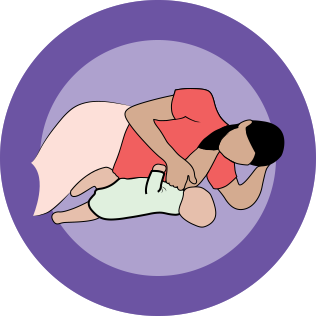
SIDE-LYING HOLD

Side-Lying Hold

  1. For the right breast, lie on your right side with your baby facing you.
  2. Pull your baby close. Your baby’s mouth should be level with your nipple.
  3. In this position, you can cradle your baby’s back with your left arm and support yourself with your right arm and/or pillows.
  4. Keep loose clothing and bedding away from your baby.
  5. Reverse for the left breast.

This hold is useful when:

  • You had a C-section
  • You want to rest while baby feeds
  • You are breastfeeding in the middle of the night
  • You and your baby are comfortable in this position
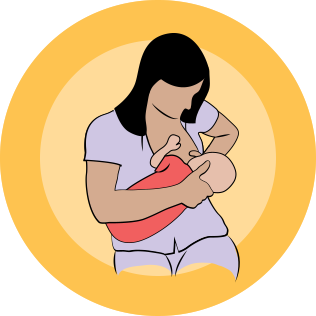
CROSS-CRADLE HOLD

Cross-Cradle Hold

  1. For the right breast, use your left arm to hold your baby’s head at your right breast and baby’s body toward your left side. A pillow across your lap can help support your left arm.
  2. Gently place your left hand behind your baby’s ears and neck, with your thumb and index finger behind each ear and your palm between baby’s shoulder blades. Turn your baby’s body toward yours so your tummies are touching.
  3. Hold your breast as if you are squeezing a sandwich. To protect your back, avoid leaning down to your baby. Instead, bring your baby to you.
  4. As your baby’s mouth opens, push gently with your left palm on baby’s head to help them latch on. Make sure you keep your fingers out of the way.
  5. Reverse for the left breast.

This hold is useful when:

  • Your baby is premature
  • Your baby has a weak suck
  • Your baby needs help to stay latched
  • Your baby needs extra head support
  • You and your baby are comfortable in this position
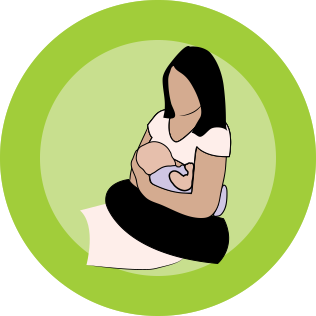
CLUTCH OR “FOOTBALL” HOLD

Clutch or “Football” Hold

  1. For the right breast, hold your baby level, facing up, at your right side.
  2. Put your baby’s head near your right nipple and support their back and legs under your right arm.
  3. Hold the base of your baby’s head with your right palm. A pillow underneath your right arm can help support your baby’s weight.
  4. To protect your back, avoid leaning down to your baby. Bring baby to you instead.
  5. Reverse for the left breast.

This hold is useful when:

  • You had a C-section
  • You have large breasts
  • You have flat or inverted nipples
  • You have a strong milk let-down
  • You are breastfeeding twins
  • Your baby likes to feed in an upright position
  • Your baby has reflux
  • You and your baby are comfortable in this position
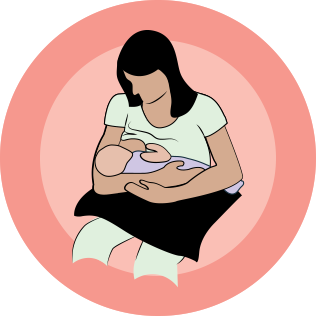
CRADLE HOLD

Cradle Hold

  1. For the right breast, cradle your baby with your right arm. Your baby will be on their left side across your lap, facing you at nipple level.
  2. Your baby’s head will rest on your right forearm with your baby’s back along your inner arm and palm.
  3. Turn your baby’s tummy toward your tummy. Your left hand is free to support your breast, if needed. Pillows can help support your arm and elbow.
  4. To protect your back, avoid leaning down to your baby. Instead, bring your baby to you.
  5. Reverse for the left breast.

This hold is useful when:

  • Your baby needs help latching on
  • You and your baby are comfortable in this position
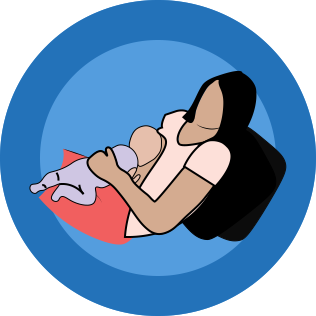
Laid-Back Hold

Laid-Back Hold

  1. Lean back on a pillow with your baby’s tummy touching yours and their head at breast level. Some moms find that sitting up nearly straight works well. Others prefer to lean back and lie almost flat.
  2. You can place your baby’s cheek near your breast, or you may want to use one hand to hold your breast near your baby. It’s up to you and what you think feels best.
  3. Your baby will naturally find your nipple, latch, and begin to suckle.

This hold is useful when:

  • Your baby is placed on your chest right after birth
  • You have a strong milk let-down
  • You have large breasts
  • You and your baby are comfortable in this position