Skip to Content Skip to Footer
Wyoming WIC
Wyoming WIC
  • Home
  • Women
    • Women
      Breastfeeding
    • Women
      Healthy Tips for Moms
    • Women
      Postpartum
    • Women
      Pregnant
  • Infants
    • Infants
      Feeding & Nutrition
    • Infants
      Growth & Development
  • Children
    • Children
      Toddlers
    • Children
      2-5 Year Olds
  • Families
    • Families
      Activity and Play
    • Families
      Dads
    • Families
      Food & Family Meals
    • Families
      Immunizations
    • Families
      Safety
  • Live Well Blog
  • Food Shopping Guide
  • Español

Mom Strong! Your Guide to Keeping You and Your Baby Healthy

The ideas below can keep you and your baby healthy. Please follow your doctor’s guidance before returning to your pre-pregnancy activities.

If your pregnancy has ended with a loss (miscarriage, stillbirth, birth defect, infant death), click HERE to find resources, support, and strength you need to heal.

  • Home
  • Women
  • Healthy Tips for Moms
  • Mom Strong
Healthy Tips for Moms
Tips for Keeping Baby Healthy
Feeding Your Baby
Immunizations
Shielding Your Family from Lead Poisoning
Mental Health
Family Planning
Resources
Mom Strong QR Code

HEALTHY TIPS FOR MOMS

Moms need to make sure they’re looking after themselves. Going to all the check-ups and seeking regular care with your doctor is a big part of that. Taking care of yourself means doing stuff that helps you feel nice and happy. And it’s totally fine to ask people in your family, or your friends, to help you so you can rest and have some time for yourself.
Healthy baby nutrition including fruits and water
Eat healthy

Continue to eat the foods you had while you were on WIC to make sure you get:
  • Folic acid to reduce the risk of some birth defects.
  • Iron to keep your energy up.
  • Calcium to build strong teeth, bones, and help muscles work.
  • Eat meals and snacks when you’re hungry and include fruits and veggies.
  • Drink plenty of water to stay hydrated.

Fruits and water bottle representing baby nutrition
relax

It is important to unwind in a way that works for you. Being kind to yourself helps you be the best mom you can be.
  • Try a warm bubble bath, deep breathing, yoga, meditation, or massage therapy.
  • Listen to soothing music, or read a book.
  • When possible, sleep when the baby does.

Baby bathtub representing bathing and hygiene
GENTLE MOVEMENT

Gentle movement can benefit women of all ages and fitness levels and can include physical activities that are low-impact and easy on the body.

Focus on fluid motions that can help with flexibility, strength, and mental clarity without the strain of high-intensity exercises.

Gentle movement could include: yoga class, walking, swimming or water aerobics, dancing, stretching, cycling.

TIPS FOR KEEPING BABY HEALTHY

Keep yourself and your baby away from secondhand smoke.
Always place your baby on his or her back for all sleep times, naps and at night.
Place your baby in a high chair (using a safety belt) to sit with the family during mealtime.
Select a car seat based on your child’s age, height, and weight. Continue using a car seat for as long as possible if your child fits the seat’s height and weight safety requirements.

Wyoming Highway Patrol: Child Passenger Safety Fact Sheet
From birth to 24 months, video chat with family and friends may benefit your baby. Interacting with family and friends can help build strong social bonds.

Children and infants who spend more time watching screens (TV, phone, tablet) can have poor sleep, delays in learning and social skills, weight gain, and behavior problems. Children who are over 2 years old can enjoy up to 1 hour of screen time per day. Spend time talking and playing with your child to promote brain growth.
Help your child to be active for at least 60 minutes a day.

Feeding Your Baby

As you journey through motherhood, it’s important to know that there are various paths you can take when it comes to feeding your little one — whether it’s directly at the breast, pumping breast milk for those times you’re apart, combining breast and formula feeding, or choosing formula feeding; each way is special and tailored to fit your unique life and your baby’s needs.
BreastfeedingBaby
  • Breastfeeding

    When you think about feeding your baby from the breast, you should know it takes practice for both you and your baby to get it right. Sometimes it can be tough and might make your breasts feel sore. It also means you need to be there for every feeding or pump your milk if you are away. You should check with a doctor or a nurse if it hurts or if you are worried about how much milk the baby is getting. It’s a big choice, and it’s okay to ask for help to decide if it’s the best way for you.
  • Pumping

    When you think about pumping milk for your baby, you should know it takes time and you’ll need to do it frequently to keep up with your baby’s hunger. You’ll need a good pump (available at your friendly WIC office), and you have to make sure everything stays super clean so the milk is safe. It’s like a puzzle to figure out the best times to pump and feed your baby. Sometimes, you might feel a little tied down because you have to stick to a schedule. But pumping is great because it lets other people help with feeding and you can still give your baby the good stuff that’s in breast milk. If you have questions, you should talk to a doctor, WIC nutritionist, or a lactation consultant to make the best plan.
  • Combination Feeding

    When you think about combination feeding, you should remember a few things. First, starting both breast milk and formula might confuse some babies because they drink from the breast and bottle differently. Second, making sure your baby gets enough food is super important, so keeping track of how much your baby eats from both the breast and bottle helps. Also, you need to know that your body makes milk based on how much your baby eats, so if you give more formula, your body might make less milk.
  • Formula Feeding

    When you think about formula feeding, you should remember to always use clean water and bottles to keep your baby safe from germs. WIC cannot provide all of the formula that your baby will need, so you need to plan to purchase some formula each month. You also have to measure and mix the formula right so the baby’s tummy is happy. You won’t need to feed the baby as often because formula takes longer for babies to digest than breast milk. Plus, you can get help with feeding since anyone can give the baby a bottle, which is handy! Sometimes babies need to change formulas, you and your pediatrician can find the formula that works best for your baby.
Explore the Stages of Breastfeeding

Immunizations

Vaccines protect against serious diseases such as measles, mumps, rotavirus, rubella, polio, tetanus, chickenpox, whooping cough, RSV, and more. These diseases can make your baby very sick and can even result in brain damage or death.

Benefits

The benefits of protecting your child against a serious disease outweigh the possible side effects from vaccines. Most side effects from vaccines are minor, treatable, and do not last long. Serious reactions are very rare. If you have concerns or questions, talk to your child’s doctor.

Adults need vaccines too.
The recommended vaccination schedule is designed to protect you and your growing family before being exposed to potentially life-threatening diseases. There are vaccines you can get while you are pregnant, that help protect your baby even after they are born.

Download the Docket App to view immunization records for your family
Immunizations
Learn more about vaccines for children
Vaccine Information for Adults
Vaccines and Pregnancy
Vaccine Resources
Heart

Shielding your family from lead poisoning

Keeping your family safe from lead is super important for your little ones and for any moms who are expecting or just had a baby. Lead can be very harmful, especially to kids and unborn babies.

Make sure your home is lead-safe!

  • If you live in an older house with chipped paint, get it checked out and fixed because old paint might have lead.
  • Always let the cold water run for a few moments before using it, to help clear out any lead from old pipes.
  • Feed your family foods that are good at fighting lead, like fruits high in vitamin C, leafy greens, and dairy products that are full of calcium.

Remember, simple steps like regular hand washing and keeping your home dust-free can make a big difference in protecting your family from lead.

Childhood Lead Poisoning Prevention
Wyoming Department of Health - Lead Poisoning

Mental Health

Have you been worried about the way you feel? Deep feelings of sadness, difficulty sleeping, irritability, changes in appetite, and trouble concentrating may be a sign of depression. You can become depressed while pregnant or after you’ve had your baby. It is important to tell a doctor or nurse about your concerns.

If you need immediate help, please call 988 or text WYO to 741741. You will be connected with a trained counselor that provides free emotional support and crisis counseling to people in distress.

Search for Mental Health Treatment Services

Search for Mental Health Treatment Services

Family Planning

Plan for growing your family. Talk with your doctor about your plans to get pregnant.

If you are planning to get pregnant, you need 400 micrograms (mcg) of folic acid (folate) every day from fortified foods and/or vitamins in addition to eating a healthy diet. Taking enough folic acid at least one month before and during pregnancy, helps prevent defects in your baby’s spine and brain as they grow.

Foods that have folate include:

  • beans
  • peas
  • oranges
  • orange juice
  • dark-green leafy vegetables
  • fortified grain products like ready-to-eat breakfast cereals

Avoid alcohol, tobacco, and drug use.

Smoking during pregnancy is the single most preventable cause of illness and death among mothers and infants.

Fetal Alcohol Syndrome has life-long effects for children and their families. When a woman is pregnant, there is no safe time, amount, or type of alcohol, tobacco, or other drug use.

Pregnant by Choice
Baby Tricycle
FAMILY PLANNING

Perhaps you are not ready to plan for your next child or you are done having children. If birth control is part of your family plan, you can begin talking to your doctor about it while you are still pregnant. It is also important to let your doctor know if you plan to breastfeed, because some birth control methods may have hormones that limit your milk production.

Resources

Food assistance
  • Food Assistance by County
  • SNAP Food Assistance
  • Cent$ible Nutrition
Substance Use Treatment Services
Wyoming Quit Tobacco
  • Call 800-QUIT-NOW (800-784-8669)
    Pregnant women can text: MOM to 222888 for help quitting tobacco
  • Substance Use Treatment Providers
Domestic Abuse Support
Call 911 if you are in immediate danger.  
 
  • Domestic Violence Hotline
    800-799-SAFE (7233)
    Chat Line
  • National Sexual Assault Hotline
    800-656-HOPE (4673)
    Chat Line
  • Learn About Healthy Relationships
    866-331-8453
    Chat Line
other
  • Family Services Assistance Programs
  • Medicaid & Kid Care Chip
    1-855-294-2127

You Got This!

Whether you’re counting down the days until you meet your baby or you’re already adapting to life with your little one, trust in your incredible strength. You’re doing an amazing job. Every step of the way, remember: YOU GOT THIS!

Wyoming WIC WDH Public Health

CONTACT US

1-888-996-9378
health.wyo.gov/wic
  • How to apply for WIC

Resources

  • WIC Shopper
  • WIC Smart
  • WIC Breastfeeding Support
  • Wyoming Medicaid
  • Wyoming 211
  • Tell a friend about WIC!
  • Guide to Using Your WIC Benefits
  • Wyoming WIC Facebook
  • Wyoming WIC Instagram
  • Wyoming WIC

USDA is an equal opportunity provider, employer, and lender.

Cookie PolicyPrivacy Policy

© Brush Art Corporation
This website is operated by Brush Art Corporation on behalf of the Wyoming Department of Health.

Install this web app on your iPhone: tap and then Add to Home Screen.

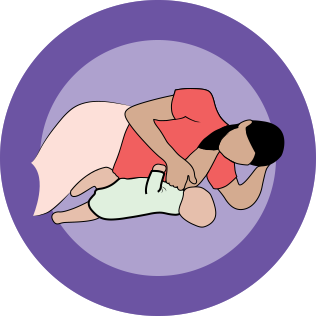
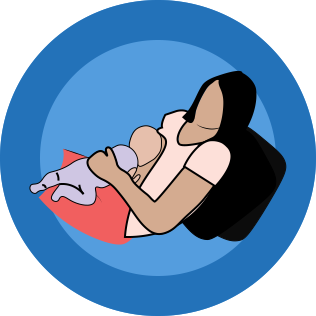
SIDE-LYING HOLD

Side-Lying Hold

  1. For the right breast, lie on your right side with your baby facing you.
  2. Pull your baby close. Your baby’s mouth should be level with your nipple.
  3. In this position, you can cradle your baby’s back with your left arm and support yourself with your right arm and/or pillows.
  4. Keep loose clothing and bedding away from your baby.
  5. Reverse for the left breast.

This hold is useful when:

  • You had a C-section
  • You want to rest while baby feeds
  • You are breastfeeding in the middle of the night
  • You and your baby are comfortable in this position
CROSS-CRADLE HOLD

Cross-Cradle Hold

  1. For the right breast, use your left arm to hold your baby’s head at your right breast and baby’s body toward your left side. A pillow across your lap can help support your left arm.
  2. Gently place your left hand behind your baby’s ears and neck, with your thumb and index finger behind each ear and your palm between baby’s shoulder blades. Turn your baby’s body toward yours so your tummies are touching.
  3. Hold your breast as if you are squeezing a sandwich. To protect your back, avoid leaning down to your baby. Instead, bring your baby to you.
  4. As your baby’s mouth opens, push gently with your left palm on baby’s head to help them latch on. Make sure you keep your fingers out of the way.
  5. Reverse for the left breast.

This hold is useful when:

  • Your baby is premature
  • Your baby has a weak suck
  • Your baby needs help to stay latched
  • Your baby needs extra head support
  • You and your baby are comfortable in this position
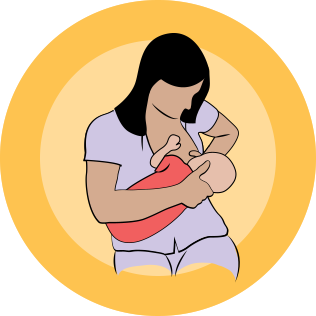
CLUTCH OR “FOOTBALL” HOLD

Clutch or “Football” Hold

  1. For the right breast, hold your baby level, facing up, at your right side.
  2. Put your baby’s head near your right nipple and support their back and legs under your right arm.
  3. Hold the base of your baby’s head with your right palm. A pillow underneath your right arm can help support your baby’s weight.
  4. To protect your back, avoid leaning down to your baby. Bring baby to you instead.
  5. Reverse for the left breast.

This hold is useful when:

  • You had a C-section
  • You have large breasts
  • You have flat or inverted nipples
  • You have a strong milk let-down
  • You are breastfeeding twins
  • Your baby likes to feed in an upright position
  • Your baby has reflux
  • You and your baby are comfortable in this position
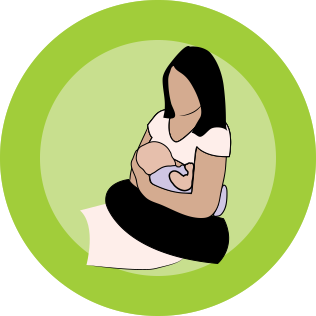
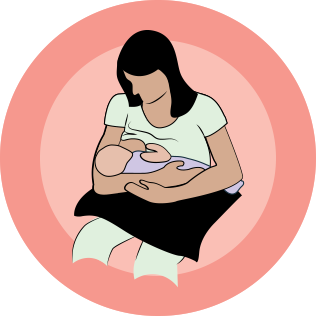
CRADLE HOLD

Cradle Hold

  1. For the right breast, cradle your baby with your right arm. Your baby will be on their left side across your lap, facing you at nipple level.
  2. Your baby’s head will rest on your right forearm with your baby’s back along your inner arm and palm.
  3. Turn your baby’s tummy toward your tummy. Your left hand is free to support your breast, if needed. Pillows can help support your arm and elbow.
  4. To protect your back, avoid leaning down to your baby. Instead, bring your baby to you.
  5. Reverse for the left breast.

This hold is useful when:

  • Your baby needs help latching on
  • You and your baby are comfortable in this position
Laid-Back Hold

Laid-Back Hold

  1. Lean back on a pillow with your baby’s tummy touching yours and their head at breast level. Some moms find that sitting up nearly straight works well. Others prefer to lean back and lie almost flat.
  2. You can place your baby’s cheek near your breast, or you may want to use one hand to hold your breast near your baby. It’s up to you and what you think feels best.
  3. Your baby will naturally find your nipple, latch, and begin to suckle.

This hold is useful when:

  • Your baby is placed on your chest right after birth
  • You have a strong milk let-down
  • You have large breasts
  • You and your baby are comfortable in this position