




Skip to Content Skip to Footer
Wyoming WIC
Wyoming WIC
  • Home
  • Women
    • Women
      Breastfeeding
    • Women
      Healthy Tips for Moms
    • Women
      Postpartum
    • Women
      Pregnant
  • Infants
    • Infants
      Feeding & Nutrition
    • Infants
      Growth & Development
  • Children
    • Children
      Toddlers
    • Children
      2-5 Year Olds
  • Families
    • Families
      Activity and Play
    • Families
      Dads
    • Families
      Food & Family Meals
    • Families
      Immunizations
    • Families
      Safety
  • Live Well Blog
  • Food Shopping Guide
  • Español
Infant Feeding Guide

Infant Feeding Guide

  • Home
  • Infants
  • Feeding & Nutrition
  • Infant Feeding Guide
Infant_feeding_qr_english
background of Feeding Your Newborn Birth to 3 Months

Feeding Your Newborn Birth to 3 Months

Feeding Your Newborn Birth to 3 Months

Newborns have small stomachs and need to eat frequently. As they grow, babies can take in more milk and become better at eating, so feedings may become further apart and take less time. To do well with eating, newborns may need help being calm and staying awake. Help your newborn by paying attention to cues and feed him when he wants to eat – before he gets upset from crying. At this age, babies get their nutritional and emotional needs met with only breast milk or formula.

Newborns and young infants like to eat about every 1-3 hours at first. Follow your baby's cues. As they get older, they will eat more and feedings will increase to every 2-4 hours. If you are feeding formula, it is best to offer an iron-fortified formula.

  • Feeding Cues
  • Feeding Guidance (Breastfeeding and/or Formula)

Feeding Cues

curve designRounded curve design

Learn to understand your baby’s feeding cues:

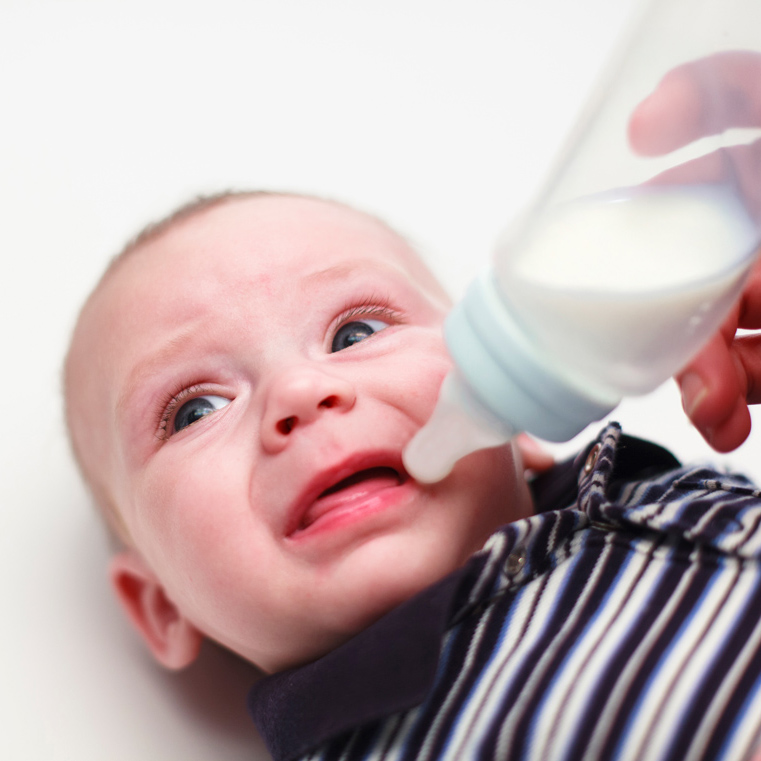
Baby Crying

Hungry. Begin feeding when baby shows some of these signs of hunger:

  • Wakes from sleep and becomes more alert and active.
  • Turns their head toward you, opens their mouth or roots for the nipple.
  • Moves hands toward mouth.
  • Makes sucking or lip-smacking sounds.
  • Gets fussy.
  • Loses interest in talking or playing.
  • Crying (Late cue!)
Mouth opening

Full. Stop feeding when baby shows you she is finished:

  • Pushes away from the nipple.
  • Spits out nipple.
  • Slows down and stops eating.
  • Relaxes hands and arms.
  • Falls asleep.
  • Becomes stiff or arches back.

Feeding Guidance (Breastfeeding and/or Formula)

Support your baby in eating well:

  • Feed your baby when he shows signs of being hungry, when he is alert and calm.
  • Allow him to eat at his own pace – whether that means a lot or a little, quickly or slowly, continuously or start-and-stop.
  • Expect to feed your baby 8-10 times in 24 hours. Follow your baby’s feeding cues.
  • Bring him to the table with you when you eat. He loves being with you and will start to learn what eating is all about.
  • After feeding, spend some time talking or playing. When he is drowsy and calm, put him to bed and allow him to fall asleep on his own.

Signs that your baby is eating and growing well:

  • Look for 6-8 wet diapers a day and many poopy ones.
    Baby’s Age Wet Poops
    Day 1
    Day 2
    Day 3
    *Day 4+

    * This amount lasts up to the first month or longer.

  • Your baby will grow in weight and length consistently.

By following the Satter Division of Responsibility in feeding, your baby will eat the amount she needs and grow in the way that’s right for her. You are responsible for the “what” of feeding—breast milk or formula—while your baby determines the “when, where, how much, and how quickly she eats”.

Call your pediatrician or the WIC office for help if:

  • Baby is losing weight after the first week of life.
  • Feedings are extremely short or long.
  • Baby is overly sleepy and hard to wake up.
  • Baby has less than 6 wet or poopy diapers a day.
  • Baby refuses to eat or is overly fussy and colicky.

Rounded curve design

background of Feeding Your Infant <br>4 to 5 Months

Feeding Your Infant
4 to 5 Months

Feeding Your Infant 4 to 5 Months

Before teeth come in, wipe gums with a soft, clean washcloth after each feeding, especially before bed.

Don’t follow a schedule — instead continue to feed on demand. Babies will eat more often than usual during growth spurts. Let your baby tell you when they have had enough.

During growth spurts, at 2 to 4 weeks, 6 weeks, 3-4 months, and 6 months, your baby may need to eat more often. Follow your baby's lead and feed more frequently if they show they are hungry.

  • Feeding Cues
  • Feeding Guidance (Breastfeeding and/or Formula)

Feeding Cues

curve designRounded curve design

Look for clusters of these cues together to know what your baby is trying to tell you they need.

Baby Happy

Hungry. Pay attention to feeding cues and feed her when she wants to eat:

  • Wide opening mouth and turning head toward you.
  • Moves hands toward the mouth.
  • Makes sucking or lip-smacking sounds.
  • Makes feeding/swallowing sounds.
  • Gets fussy.
  • Crying (Late cue!)
Turning head seeking

Full. Stop feeding when baby shows you he is finished:

  • Pushes away from or spits out nipple.
  • Slows down and stops drinking.
  • Relaxes hands and arms.
  • Falls asleep.
  • Becomes stiff or arches back.

Note: Babies start to show signs of teething around 3-6 months. You may also notice more drooling and fussiness. Feed on demand and consider teething aides to keep them comfortable.

Feeding Guidance (Breastfeeding and/or Formula)

Rounded curve design

Dad supporting Mom breastfeeding

Support your baby in eating well:

  • Feed your baby when they show signs of being hungry, when they are alert and calm.
  • Allow your child to eat at their own pace – whether that means a lot or a little, quickly or slowly, continuously or start-and-stop.
  • Expect to feed your baby 8-10 times in 24 hours. Follow your baby’s feeding cues.
  • Bring your child to the table with you when you eat. Your child loves being with you and will start to learn what eating is all about.
  • After feeding, spend some time talking or playing. When your child is drowsy and calm, put them to bed and allow them to fall asleep on their own.

Wait to start solids.

  • Babies may show readiness to start solids around 5-6 months.
  • Start solids based on what your baby can do, not on how old they are: when they can sit up, see food coming, and open up for it.

Signs that your baby is eating and growing well:

  • Look for around 6+ wet and/or poopy diapers a day.
  • Your baby’s poop habits may start to change. The number of poops can vary. Some babies poop every time they eat, some once a day, some more or less than that – some might not poop for a day or more. Poop can range from soft and runny to more firm poop.
  • No matter if your baby drinks breast milk or formula, their pooping pattern is probably fine as long as the poop isn’t hard and doesn’t have mucus or blood in it.
  • Your baby will grow in weight and length consistently.
background of Feeding Your Older Baby <br>6 to 9 Months

Feeding Your Older Baby
6 to 9 Months

Feeding Your Older Baby 6 to 9 Months

Start offering small sips of water from an open cup.

Start solids based on what your baby can do.

  • Feeding Cues and Signs of Readiness for Solids
  • Feeding Guidance (Breastfeeding and/or Formula)

Feeding Cues and Signs of Readiness for Solids

curve design

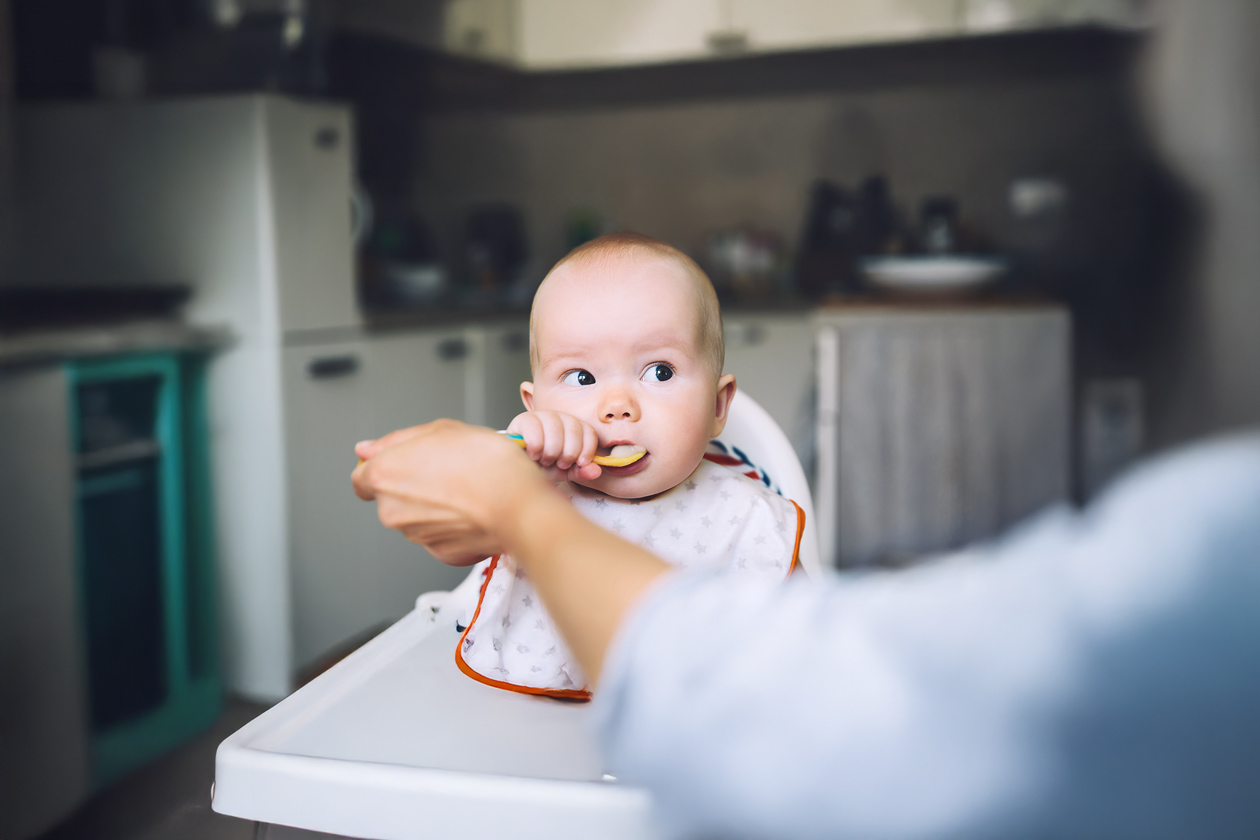
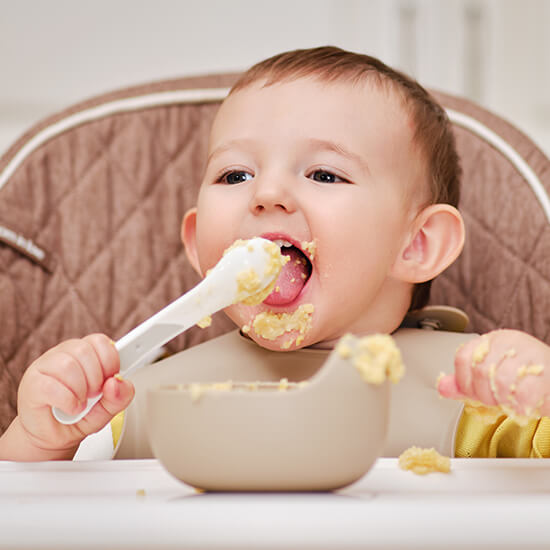
Baby eating food

Offer solid foods based on what your baby can do:

  • Your child should be able to sit well with support and hold their head up; but it’s even better if they can sit on their own for several seconds.
  • Let your child participate in feeding. They might:
      • Want your help guiding the spoon to her open mouth.
      • Grab the spoon and bang it on the table.
      • Drop the spoon on the floor.
      • Touch the food and smear it around.
      • Want to feed herself.

    If you choose to spoon feed, follow your child’s eating cues. Offer, but don’t force. Follow your child’s pace. Make eye contact and smile. Don’t force food. Stop when your child is done. Some babies prefer spoon feeding early on for cereals and smashed foods. Others do not. There is no right or wrong way to offer solids. Follow your baby’s lead and do what works best for the two of you. At this stage of feeding, make sure the foods you offer are soft and in pieces your baby can handle and not choke on.

  • This is all part of the learning process and growing up with eating:
    • Some babies will eagerly accept solid foods from the beginning, while others may take longer to adjust to the different tastes and textures.
    • One baby might be excited to feed themselves using a spoon, quickly learn to close their lips over the spoon and swallow and enjoy experimenting with it, while another may show little interest in using a spoon and prefer to wait until they can finger-feed prefer to wait until they can finger-feed with family food.

Feeding Guidance (Breastfeeding and/or Formula)

Rounded curve design

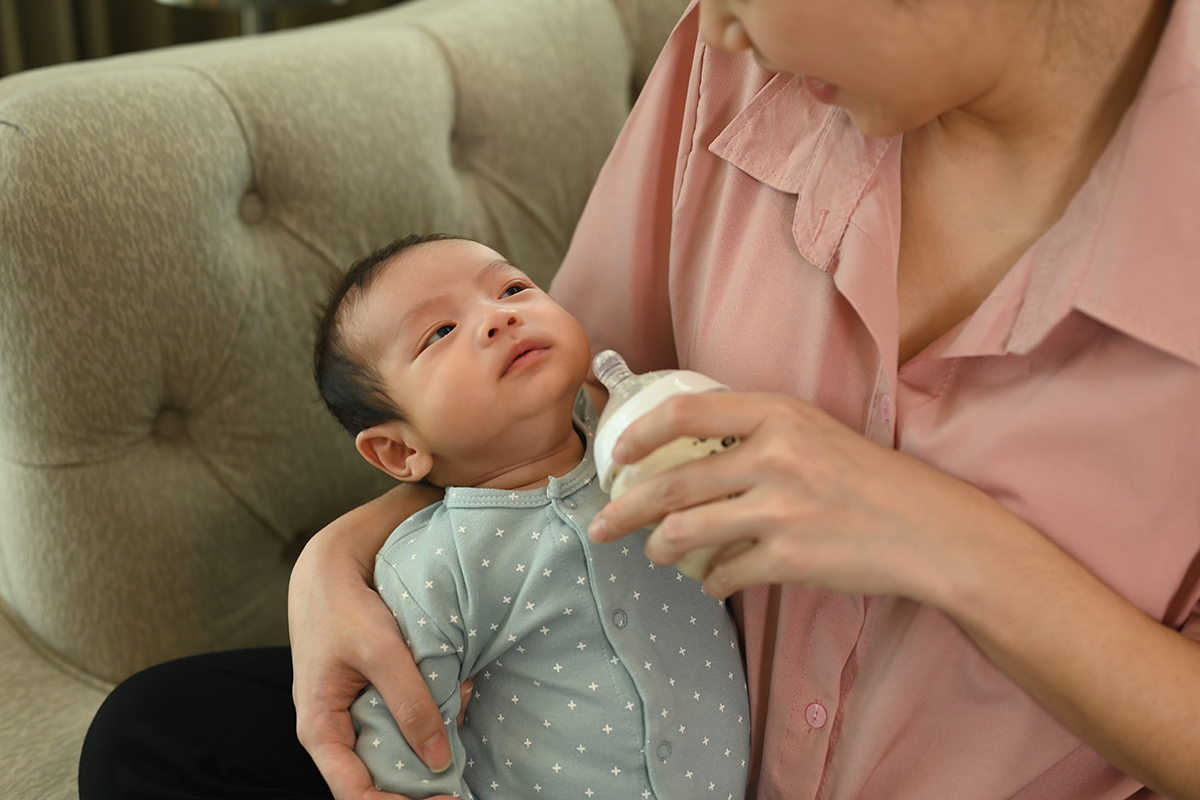
Bottle Feeding
  • Continue to breast or bottle feed. When you are introducing solids, the majority of your baby’s nutrition will still come from the breast or the bottle. Consider offering the breast or bottle after the meal. As your baby eats more solids you can expect breast and bottle feeding to become spaced further apart. Your baby’s hunger and growth will guide how much they eat.
  • Continue breastmilk and/or formula, but if your baby is showing signs of readiness for solids, then you can start offering foods.
  • When offering solid foods, have her sitting in a high chair looking straight ahead.
  • Hold the spoon a few inches in front of her mouth and wait to see if she opens up for it. Let her take the lead—she might want to eat a lot or just a little, quickly or at a more relaxed pace.
  • The meal is done when she stops opening, swallowing, smearing, dropping, or banging.
  • You will help your baby develop her mouth skills by starting to introduce thicker and lumpier foods, along with soft pieces of family food at meals. She will begin to eat more regularly and at longer intervals, so feeding times will be a mix of her demands and a schedule that you determine. Including her in meals now will offer more opportunities to learn about eating and participating in family meal times.
  • It’s all about supporting each baby’s unique journey and making mealtime a joyful experience for everyone!
Click here to see what meal and snacks might look like for your older baby when they are 6 to 9 months old.
background of Feeding Your Almost Toddler 10 to 18 Months

Feeding Your Almost Toddler 10 to 18 Months

Feeding Your Almost Toddler 10 to 18 Months

Offer milk, water, and beverages from an open cup.

Your baby is learning and growing with eating.

  • Include Your Child in Family Meals
  • Feeding Guidance (Breastfeeding and/or Formula) and Getting Started with Sit-Down Snacks

Include Your Child in Family Meals

curve design

Finger foods can be small
  • Offer your child foods that will help with his learning starting with mushy food fed from the spoon, to thicker, lumpier food, and then progressing to finger foods.
  • Finger foods can be small, soft pieces of the same foods you eat.
  • Don’t plan meals with only his preferences in mind. Babies learn and grow by eating the foods you eat.
  • Let him eat his way—with fingers or spoon, as much or little, fast or slow, and in any order—even if he chooses to eat dessert first.
  • Offer breast milk or formula in an open cup, not a bottle at mealtimes.
  • Wait until he is a year or more old and well established on eating solid food at the table to offer whole milk in a cup.
  • Follow Satter’s Division of Responsibility at meals: Let him eat or not. Let him have more if he wants.
  • Give him lots of chances to try new food and learn to like it. He many need as many as 10 to 20 tries before he learns to eat a new food.
  • Let him get down when he finishes – even if its only been a few minutes.

Feeding Guidance (Breastfeeding and/or Formula) and Getting Started with Sit-Down Snacks

Rounded curve design

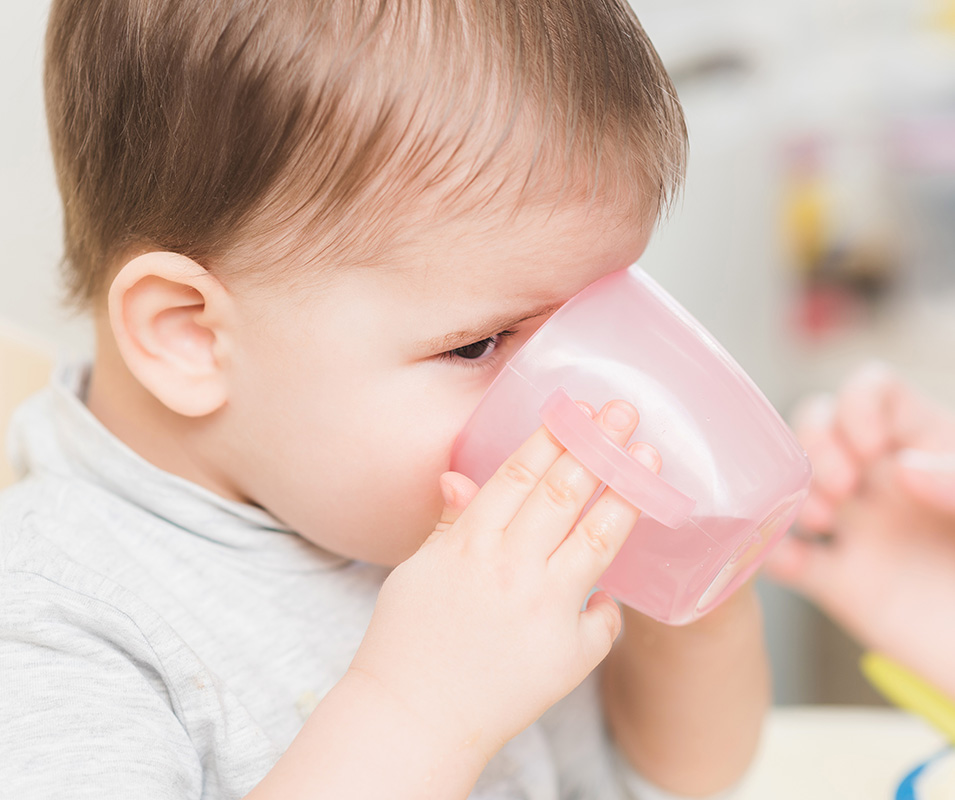
Toddler Drinking Water
  • Breastmilk or formula continues to be your child’s main source of nutrition until approximately 12 months old.
  • During the older baby stage, in response to your child’s increased regularity with feeding, you offered snacks partly on demand and partly on a schedule that you determined.
  • At the almost-toddler stage, you should continue to help your child transition from demand feeding to a more structured routine by offering sit-down snacks approximately every two to three hours between meals. This allows your child to arrive at mealtime feeling hungry (but not starving) and, as a result, better able to behave well and show interest in the food you offer.
  • While your child may enjoy eating and drinking on the go, they won’t learn to like the foods you eat if they are always given special snacks that are prepared in a way that caters only to their preferences.
  • Offer nipple feedings (breastmilk or formula) until your child is weaned, as a structured, sit-down snack. Offer only water between meals and snacks in an open cup.
  • You are working toward establishing the meals-plus-snacks routine of the division of responsibility for older children: Parents do the what, when, and where of feeding, children do the how much and whether of eating.
Click here to see what meal and snacks might look like for your almost toddler when they are 10 to 18 months old.
background of Food Sensitivity and <br> Allergy Basics

Food Sensitivity and
Allergy Basics

Food Sensitivity and Allergy Basics

For infants, food sensitivity means their bodies can’t properly digest certain foods or might find certain foods irritating to their digestive system. Being sensitive to a food may make some babies cry and fuss due to stomach aches, bloating, and loose stools. Food sensitivities generally last less than twenty-four hours. Not all sensitivities are reactions to foods. Be cautious about eliminating food just because a baby was fussy.

A food allergy is different. It happens when the body’s immune system sees a food as a threat. Food allergy reactions can happen within minutes to a few hours after eating a food and can vary from mild to severe. Food allergies are more serious than food sensitivities and must be carefully watched. The reaction can cause symptoms such as hives, itchy skin rashes, vomiting, unusual stools, breathing problems, wheezing, coughing, or sneezing.

The most common food allergens are:
  1. Cow’s milk
  2. Eggs
  3. Peanuts
  4. Soy
  5. Wheat
  6. Nuts from trees (such as walnuts, pistachios, pecans, cashews)
  7. Fish (such as tuna, salmon, cod)
  8. Shellfish (such as shrimp and lobster)
  9. Sesame

Give these foods at home, where you can watch for allergic reactions. Watch for the difference between a true food allergy or something else. There are many things that can be confused with a food allergy. Call 911 immediately if signs of a more severe allergic reaction such as a change in skin tone, difficulty breathing, or facial swelling.

Be sure to share with your doctor your family’s medical history when it comes to allergies. If your baby has severe eczema, an egg allergy, or a strong family history of food allergies, talk to your doctor before introducing peanut or other highly allergenic foods.

Allergy Basics
Heart

The good news is that many food allergies are outgrown in early childhood. About 80% to 90% of kids outgrow allergies to eggs, milk, wheat, and soy by age 5. Some allergies, however, last longer. It is best to avoid suspected foods if your baby has any signs of an allergic reaction until you can consult with your doctor.

Some mothers worry about passing allergens through their breast milk from something they themselves have eaten. Only 2-3 out of 100 breastfed babies show allergies to a food in the mother’s diet – most often to the cow’s milk in their mother’s diet. Human breast milk typically does not cause allergic reactions in breastfeeding infants.

Some breastfed babies may be sensitive to spicy or gassy foods in mom’s diet. These reactions are usually mild and short-lived. If your baby has ongoing issues, discuss the signs and symptoms with your doctor.

Introducing Peanut Butter (and other allergenic foods):

Research suggests trying peanut and other common allergenic foods early may help prevent food allergies later in life. This can be especially helpful for families with eczema or other food-related allergies.

Introduce your baby to peanut butter and other common allergens (such as egg) around 6 months of age, after they have tried other solid foods. Watch your baby for any reaction for two hours after they try it.

Trying Peanut Butter

Mix peanut butter with water, formula, breast milk, or food:

  • Thin 2 tsp. of peanut butter with 2-3 tsp. hot water, formula, or breast milk. Allow to cool before serving.
  • Blend 2 tsp. of peanut butter into 2-3 Tbsp. of foods like infant cereal or pureed fruits, vegetables, chicken, or tofu.
Trying Eggs

Offer well-cooked eggs (never raw or runny) such as:

  • Mash 1–2 teaspoons of hard-boiled egg yolk and mix with breast milk, formula, or water until smooth.
  • Scramble and cook an egg thoroughly, then mash or finely chop and offer 1–2 teaspoons.
  • Blend or mix cooked egg into baby cereal, pureed vegetables, or mashed potatoes for an easy first taste.


If your baby eats an allergenic food without a reaction, keep offering it a few times each week to help prevent allergies.

Tips for introducing solid foods to your baby with food allergies in mind

Many parents have questions and concerns about how to safely introduce potentially allergenic foods to their baby. The following are some tips for introducing solid foods to your baby with food allergies in mind:

  • Start with foods that are of low allergy risk, like baby cereal or smooth, single-ingredient foods such as baby vegetables, fruits, cereals, or meats.
  • Start with one single-ingredient food at a time and watch for symptoms to identify any potential food allergies. Wait 2 to 3 days between each new food.
  • If your baby shows signs of an allergic reaction, stop giving the food and seek medical advice.
  • Continue to give these foods on a regular basis if your baby tolerates them without any reactions.

Be aware that the acid in some foods such as berries, tomatoes, citrus fruits, and vegetables may be irritating to your baby and cause a rash around the mouth. This is not an allergic reaction to the food.

While not a food allergy, babies should not be given honey until their first birthday. Honey commonly has a bacteria that can make them sick.

Once your baby tolerates a few first foods, gradually start by offering small tastes of potentially allergenic foods such as:

  • Cow’s milk products
  • Eggs
  • Fish and shellfish
  • Tree nuts and peanuts
  • Wheat, soy, and sesame

While processed dairy products such as yogurt are okay, whole cow’s milk is not recommended before 1 year of age.

If your baby has had severe or ongoing eczema, or an immediate allergic reaction to any food—especially ones that are more likely to cause allergies, like eggs—they are considered to be at a higher risk for developing a peanut allergy. It’s important to consult with your baby’s healthcare provider to determine the best way and time to introduce highly allergenic foods.

Allergy Baby
Heart
background of Feeding Tips

Feeding Tips

Feeding Tips

HOW YOUR BABY SHOWS YOU THEY’RE HUNGRY OR FULL

  • I'm Hungry
  • I'm Full

I'm Hungry

  • Happy baby smiling
    Stirring
  • Close-up of baby's eye
    Mouth opening
  • Baby crying
    Turning head seeking/rooting

I'm Full

  • Baby looking full and content after feeding
    Sucking slows or stops
  • Father feeding a toddler
    Hands/arms relax
  • Newborn baby sleeping in mother's arms
    Turns or pushes away
Click here to learn more about your baby’s behavior.

Feeding breast milk and formula:

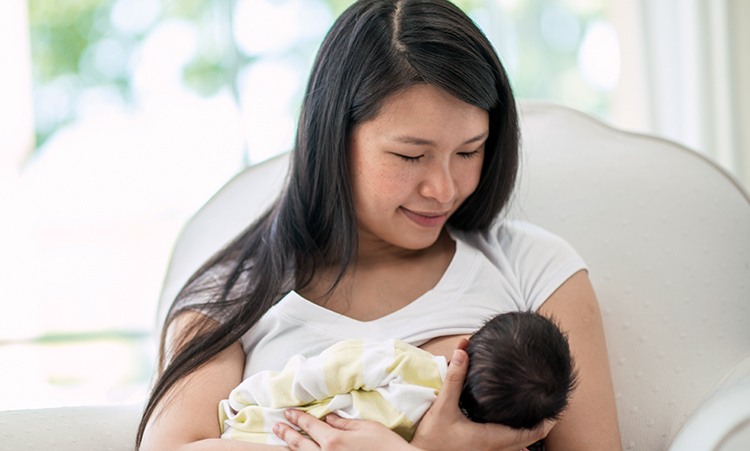
Mother holding her newborn baby at home

Breast milk or formula is all your baby needs for the first six months of life. Your baby’s digestive system is not ready for anything else until about 6 months of age.

Feed your baby on-demand, when they show signs of hunger, like sucking on their hands or smacking their lips. Stop feeding when they show signs they are full, like turning their head away, relaxing their hands, or falling asleep.

If bottle feeding, offer a small amount at a time. You might start with 2-3 oz and offer more as your baby grows. Learn your baby’s hunger and fullness cues and offer amounts accordingly. Avoid trying to get your baby to drink more or less. Be responsive and follow their lead.

The American Academy of Pediatrics recommends breastfeeding for the first six months and that breastfeeding continue for at least 24 months, or longer, as desired by mother and baby.

Feeding solid foods:

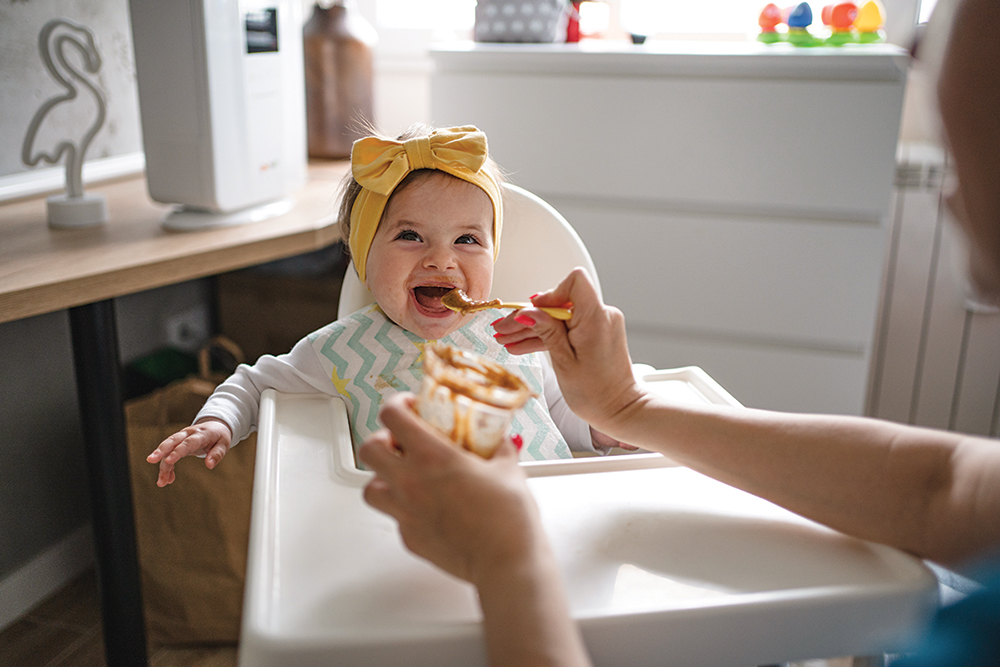
Baby being spoon-fed baby food

Wait to offer solid foods until your baby:

  • Can sit up and hold up their own head.
  • Opens their mouth when they see food.
  • Can close their lips around a spoon.

Try one new food at a time.
Wait 5 days before trying another new food to watch for allergies. Food allergies may include wheezing, rash, or diarrhea.

Babies under one year should NOT have honey, cow’s milk or other non-dairy drinks, or foods that can cause choking, like nuts or whole grapes.

All babies are different.
Talk with WIC or your baby’s healthcare provider about your baby’s needs.

Safe Food Choices

Young children have an underdeveloped immune system. Their bodies are not able to fight germs and sickness as well as adults. They are at higher risk of food poisoning. Food poisoning can lead to diarrhea or vomiting and babies can become easily dehydrated. Foodborne illness or food poisoning is sometimes confused with a food allergy.

Food poisoning is caused by bacteria in spoiled or undercooked food. To prevent food poisoning, some foods are safer than others. Riskier choices include:

  • Raw or undercooked poultry or meat
  • Raw or undercooked sprouts (such as alfalfa and bean)
  • Unwashed fresh fruits and vegetables (including lettuce and other leafy greens)
  • Cut melon left out for more than 2 hours
  • Unpasteurized juice or cider
  • Unpasteurized (raw) milk and dairy products made from unpasteurized milk
  • Soft cheese made from unpasteurized (raw) milk (e.g. queso fresco, camembert, and blue-veined cheese)
  • Raw or undercooked (runny) eggs, and foods that contain raw or undercooked eggs (Caesar salad dressing, raw cookie dough or batter, homemade eggnog)
  • Raw or undercooked fish or shellfish, including sashimi, sushi, and ceviche
  • Raw dough or raw batter made with raw (uncooked) flour
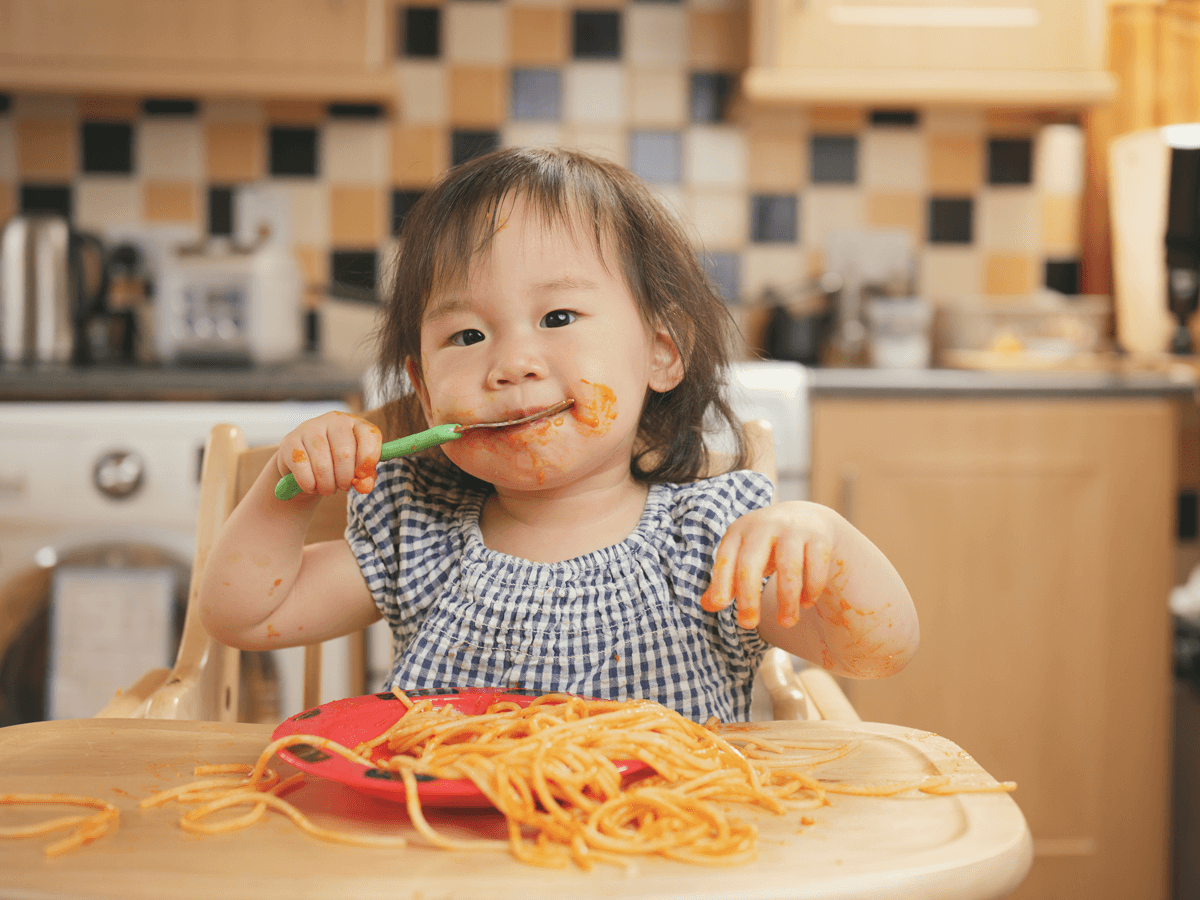
Baby Eat Noodles
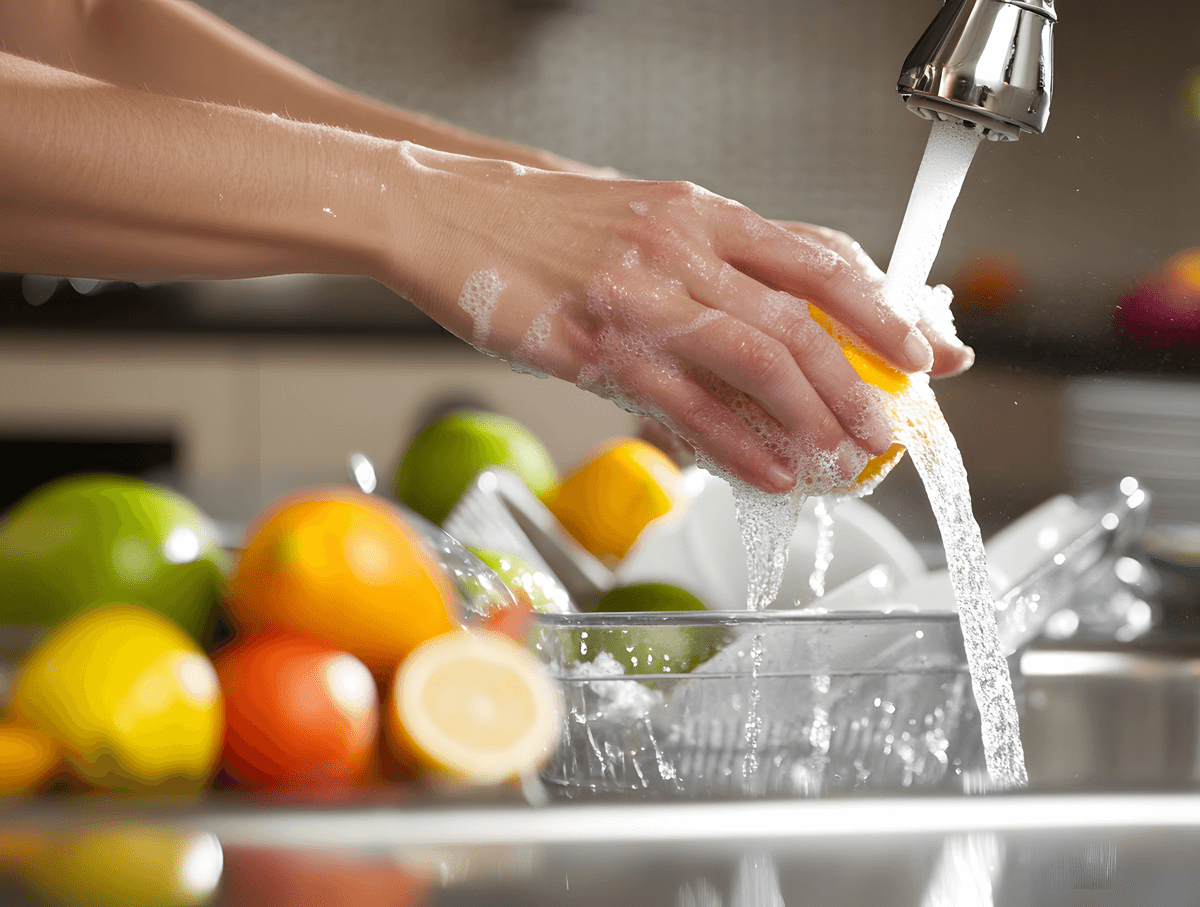
Wash Fruits
Follow the four food safety steps to prevent food-related illnesses for you and your baby:
  1. Wash your hands and surfaces (including cutting boards, utensils, and countertops) often. Rinse fresh fruits and vegetables under running water.
  2. Separate raw meat, poultry, seafood, and eggs from ready-to-eat foods (foods that won’t be cooked). Use separate cutting surfaces or clean surface with hot, soapy water after preparing each food item.
  3. Cook food to the right temperature. Use a food thermometer to ensure foods are cooked to a safe internal temperature. Microwave food thoroughly.
  4. Refrigerate foods promptly. Bacteria multiply quickly at room temperature.
background of Trusted Resources

Trusted Resources

Trusted Resources

Baby Eat Fruits

American Academy of Pediatrics – Nutrition – HealthyChildren.org

Center for Disease Control and Prevention – Making Safe Food Choices

Ellyn Satter Institute – How to Feed

Food Safety – 4 Steps to Food Safety

Mayo Clinic – Healthy Lifestyle

Wyoming WIC WDH Public Health

CONTACT US

1-888-996-9378
health.wyo.gov/wic
  • How to apply for WIC

Resources

  • WIC Shopper
  • WIC Smart
  • WIC Breastfeeding Support
  • Wyoming Medicaid
  • Wyoming 211
  • Tell a friend about WIC!
  • Guide to Using Your WIC Benefits
  • Wyoming WIC Facebook
  • Wyoming WIC Instagram
  • Wyoming WIC

USDA is an equal opportunity provider, employer, and lender.

Cookie PolicyPrivacy Policy

© Brush Art Corporation
This website is operated by Brush Art Corporation on behalf of the Wyoming Department of Health.

Install this web app on your iPhone: tap and then Add to Home Screen.

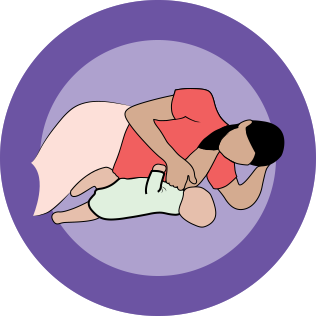
SIDE-LYING HOLD

Side-Lying Hold

  1. For the right breast, lie on your right side with your baby facing you.
  2. Pull your baby close. Your baby’s mouth should be level with your nipple.
  3. In this position, you can cradle your baby’s back with your left arm and support yourself with your right arm and/or pillows.
  4. Keep loose clothing and bedding away from your baby.
  5. Reverse for the left breast.

This hold is useful when:

  • You had a C-section
  • You want to rest while baby feeds
  • You are breastfeeding in the middle of the night
  • You and your baby are comfortable in this position
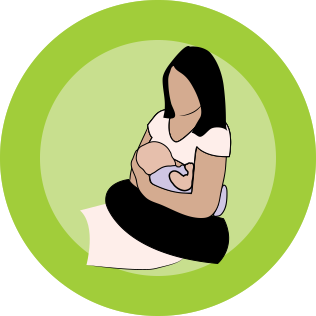
CROSS-CRADLE HOLD

Cross-Cradle Hold

  1. For the right breast, use your left arm to hold your baby’s head at your right breast and baby’s body toward your left side. A pillow across your lap can help support your left arm.
  2. Gently place your left hand behind your baby’s ears and neck, with your thumb and index finger behind each ear and your palm between baby’s shoulder blades. Turn your baby’s body toward yours so your tummies are touching.
  3. Hold your breast as if you are squeezing a sandwich. To protect your back, avoid leaning down to your baby. Instead, bring your baby to you.
  4. As your baby’s mouth opens, push gently with your left palm on baby’s head to help them latch on. Make sure you keep your fingers out of the way.
  5. Reverse for the left breast.

This hold is useful when:

  • Your baby is premature
  • Your baby has a weak suck
  • Your baby needs help to stay latched
  • Your baby needs extra head support
  • You and your baby are comfortable in this position
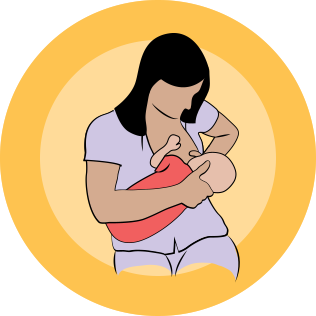
CLUTCH OR “FOOTBALL” HOLD

Clutch or “Football” Hold

  1. For the right breast, hold your baby level, facing up, at your right side.
  2. Put your baby’s head near your right nipple and support their back and legs under your right arm.
  3. Hold the base of your baby’s head with your right palm. A pillow underneath your right arm can help support your baby’s weight.
  4. To protect your back, avoid leaning down to your baby. Bring baby to you instead.
  5. Reverse for the left breast.

This hold is useful when:

  • You had a C-section
  • You have large breasts
  • You have flat or inverted nipples
  • You have a strong milk let-down
  • You are breastfeeding twins
  • Your baby likes to feed in an upright position
  • Your baby has reflux
  • You and your baby are comfortable in this position
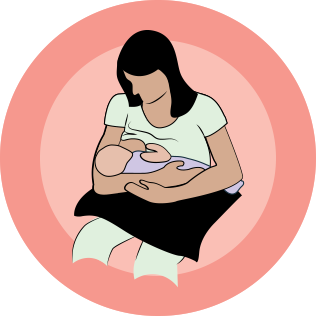
CRADLE HOLD

Cradle Hold

  1. For the right breast, cradle your baby with your right arm. Your baby will be on their left side across your lap, facing you at nipple level.
  2. Your baby’s head will rest on your right forearm with your baby’s back along your inner arm and palm.
  3. Turn your baby’s tummy toward your tummy. Your left hand is free to support your breast, if needed. Pillows can help support your arm and elbow.
  4. To protect your back, avoid leaning down to your baby. Instead, bring your baby to you.
  5. Reverse for the left breast.

This hold is useful when:

  • Your baby needs help latching on
  • You and your baby are comfortable in this position
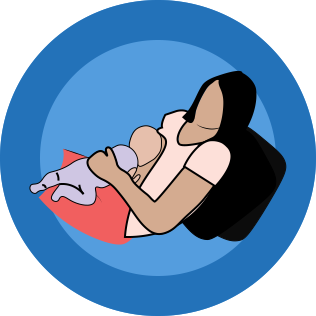
Laid-Back Hold

Laid-Back Hold

  1. Lean back on a pillow with your baby’s tummy touching yours and their head at breast level. Some moms find that sitting up nearly straight works well. Others prefer to lean back and lie almost flat.
  2. You can place your baby’s cheek near your breast, or you may want to use one hand to hold your breast near your baby. It’s up to you and what you think feels best.
  3. Your baby will naturally find your nipple, latch, and begin to suckle.

This hold is useful when:

  • Your baby is placed on your chest right after birth
  • You have a strong milk let-down
  • You have large breasts
  • You and your baby are comfortable in this position