Skip to Content Skip to Footer
Wyoming WIC
Wyoming WIC
  • Home
  • Women
    • Women
      Breastfeeding
    • Women
      Healthy Tips for Moms
    • Women
      Postpartum
    • Women
      Pregnant
  • Infants
    • Infants
      Feeding & Nutrition
    • Infants
      Growth & Development
  • Children
    • Children
      Toddlers
    • Children
      2-5 Year Olds
  • Families
    • Families
      Activity and Play
    • Families
      Dads
    • Families
      Food & Family Meals
    • Families
      Immunizations
    • Families
      Safety
  • Live Well Blog
  • Food Shopping Guide
  • Español

Caring for your baby6 to 12 Months

  • Home
  • Infants
  • Growth & Development
  • 6 to 12 Months
I Am Your Baby
With Your Help I'll Learn to Eat Foods
I Will Go Through 4 Stages of Foods
Make My First Food a Single Food
I Need to Eat My Way
Let Me Eat Food With My Fingers
How much should I eat?
Family Meals
Teach Me To Drink From a Cup
Food Safety
Foods To Avoid
Introducing Peanut Butter
Play with me!
Look what I can do!
Keep Me Safe and Healthy
6-to-12-Months-EN-QR

I Am Your Baby

I grow best with love and the right food.

  • I need breast milk or formula with iron until I turn one. You can still breastfeed me after I am one year old.
  • I know when I am hungry or full. I let you know by the way I act. Please feed me when I act hungry. Let me eat until I act full.
  • I will have a growth spurt around 6 months. I might nurse more often or longer.
  • I am growing fast. If I take breast milk or formula from a bottle, there might be times I might drink more than usual at a feeding.
  • When I am about 7 or 8 months old, help me learn how to drink from a cup. Offer a cup with breast milk, formula, or water at meals and snacks.
  • Hold me, look at me, and give me your full attention when you feed me from a bottle. I feel safe in your arms. Include me in family meals.
  • Sometimes I stop eating to talk with you or look around. I am not full yet. Please talk to me. I love our time together.

With Your Help I’ll Learn to Eat Foods

When I’m about 6 months old, I can start to eat solid foods. Please go slowly. If our family has allergies or I was born early, talk to my healthcare provider or WIC before I start solid foods.

Offer me only one new food at a time. My body must get used to each one. Start with a single food. It could be baby cereal, vegetables, fruit, or meat. I might only eat 1 or 2 spoonfuls or nothing at all.

According to the Academy of Pediatrics, wait 2-3 days before you give me another food. If I throw up, wheeze, get a rash, or diarrhea stop feeding me the food. Food allergy reactions may begin within minutes of eating a food or hours after eating a food. Call my doctor right away and tell WIC. I may need medical attention.

Be Sure I’m Ready

To eat solid foods, I must be able to:

  • Sit up and hold my head steady.
  • Show I want food by opening my mouth.
  • Show I don’t want food by closing my mouth or turning my head away from you.

I Will Go Through 4 Stages of Foods:

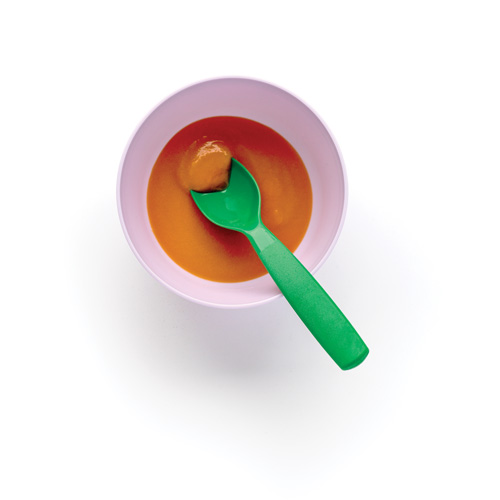
1

Smooth: strained or puréed

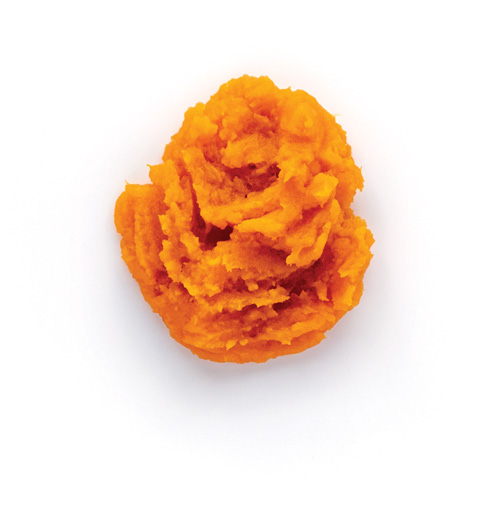
2

Mashed: smooth with some tiny lumps

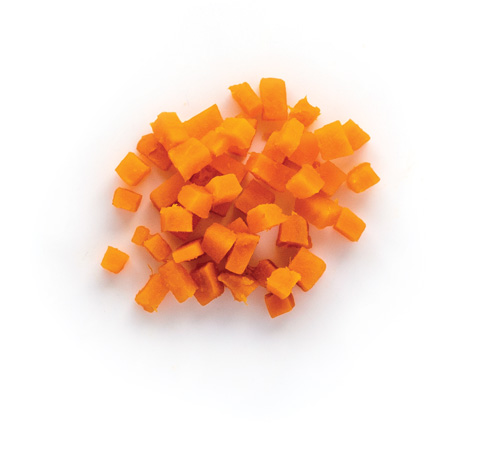
3

Chopped: more lumps

4

Pieces of table foods

As I learn to eat, you can begin to offer thicker and lumpier food. Be sure I can safely handle food from one stage before I try the next one.

Foods taste new to me

I might spit it out or make a face. If I keep my mouth closed, don’t force me to eat. You can offer it again another time. I sometimes need to see, smell, touch, or taste food lots of time – on my own – before I decide if I like it or not.

Make My First Food a Single Food

  • There is no special order for how you offer me new foods. Don't worry, I won't dislike vegetables if you give me fruits first.
  • Offer me only one new food at a time. This helps me adjust to new foods.
  • Make it thin by adding breast milk or formula. You can gradually make it thicker.
  • I might eat about a teaspoon to start with and then more as I get used to eating from a spoon.

Wait at least 2-3 days before trying another new food.

  • Offer familiar foods along with a new food.
  • Watch for signs of food allergies like vomiting, wheezing, diarrhea, skin rash, or swelling. If I have a reaction to a new food, call my healthcare provider or take me to the emergency room.
  • Offering me new foods allows me to explore and learn. Add on to foods I enjoy and offer a variety of items like breast milk or formula, meats, cereal, crackers, vegetables, fruits, eggs, and fish.

I Need to Eat My Way

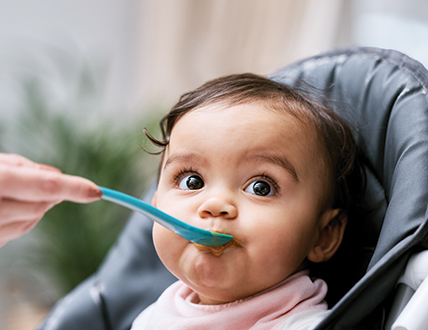
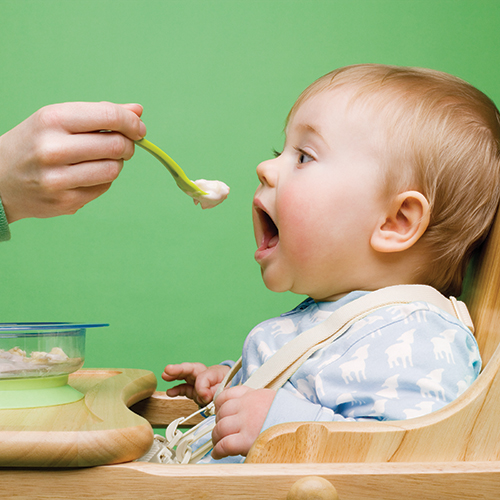
Baby in high chair being fed with a spoon.

I’ll open my mouth if I want more food.

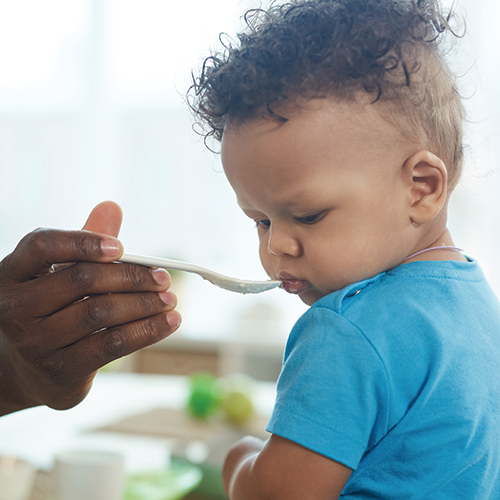
Adult hand feeding a young child with a spoon.

I’ll keep my mouth closed or turn my head if I don’t want more food; don’t force me to eat.

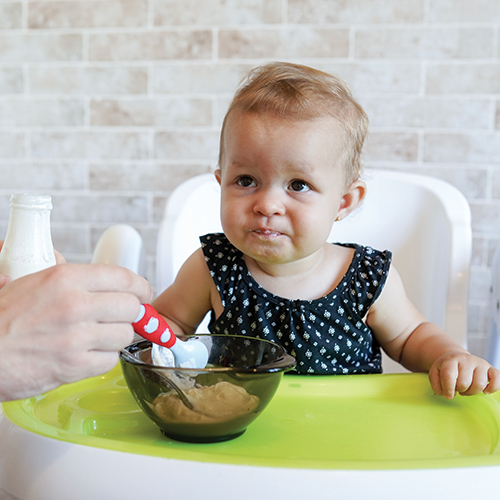
Baby in a high chair eating with a spoon.

I might spit food out or make a face. I’m learning new flavors and how to move food around in my mouth.

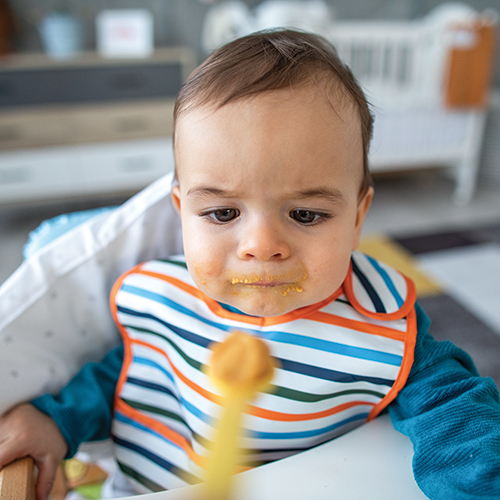
Baby eating solid food

If I don’t like something, wait a week and let me try it again. I might need to try a new food 10 times or more before I like it!

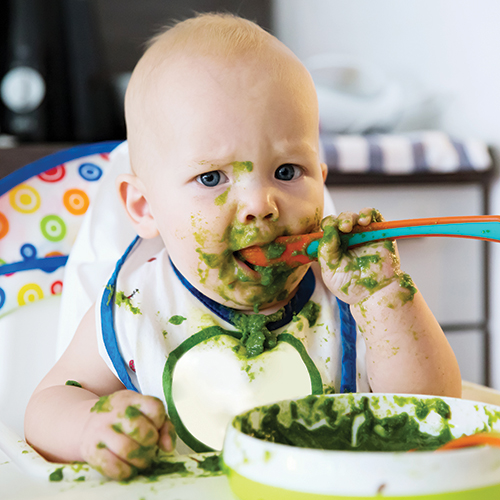
Messy baby eating greens

I’ll get food on my hands, face, and in my hair. Try not to stress about the mess. Be proud of me as I learn to eat.

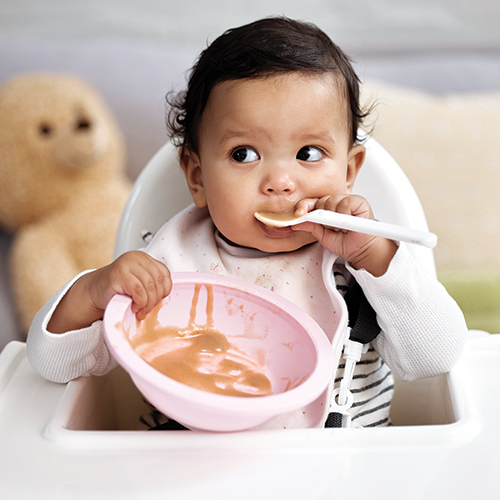
Toddler self feeding bowl

Let me feed myself with my hands or a spoon. I use my jaw to mash food and my tongue and fingers to move it in my mouth.

Baby eating with family

Eat with me at our family meals. I eat better when you are with me. Let’s turn the TV and cell phone off so we can talk.

LET ME EAT FOOD WITH MY FINGERS​

By 8 or 9 months (or sooner), I might want to eat food with my fingers. Follow my lead. You may still need to use a spoon to feed me, but let me try to feed myself, too. Hold off a bit on small, round pieces of food such as grapes and hot dogs or stringy items like some meats that could cause me to choke.

Make foods safe so I won’t choke on them. Safe “finger” foods are:

  • Soft, bite-size pieces of cooked vegetables or soft fruit
  • Soft, bite-size pieces of cooked meat, chicken, or turkey
  • Mashed cooked beans, egg yolk, or tofu
  • Chopped noodles or rice
  • Bite-size pieces of toast, plain crackers, or soft tortilla
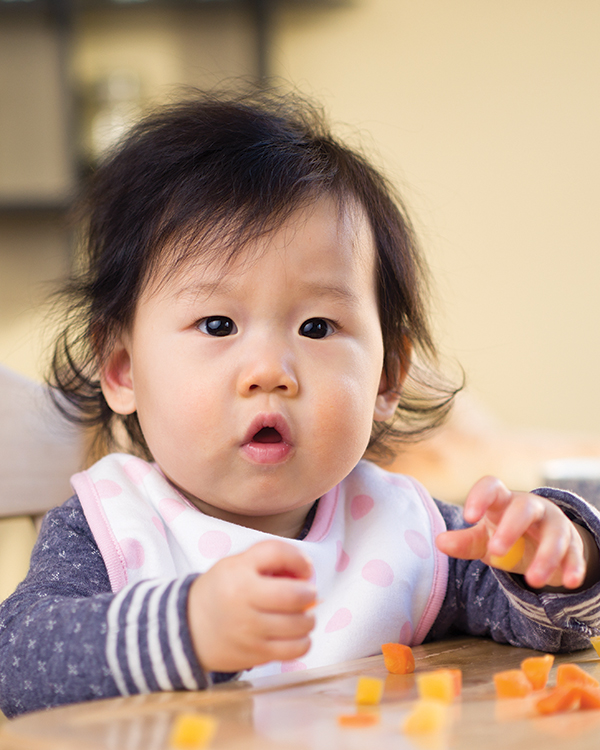
A baby wearing a bib sits at a table.
Make pieces of food no bigger than your thumbnail.

HOW MUCH SHOULD I EAT?​

During my first year of life, most of my nutrition is still coming from breast milk or formula. Eating solid foods is mostly about learning how to eat, and experiencing new tastes and textures. My foods will change as I learn and grow.

For me, amounts are often small. I may start out eating only a few teaspoons. You might offer me purees or lumpier foods like mashed potatoes or bananas. As I get better at eating, you can offer me soft, cut up foods or foods I can pick up by myself.

My appetite can change from day to day. So, don’t worry if I eat more one day and less the next. Start slow and add on new foods. We’ll learn together. Eating together should be enjoyable for both of us.

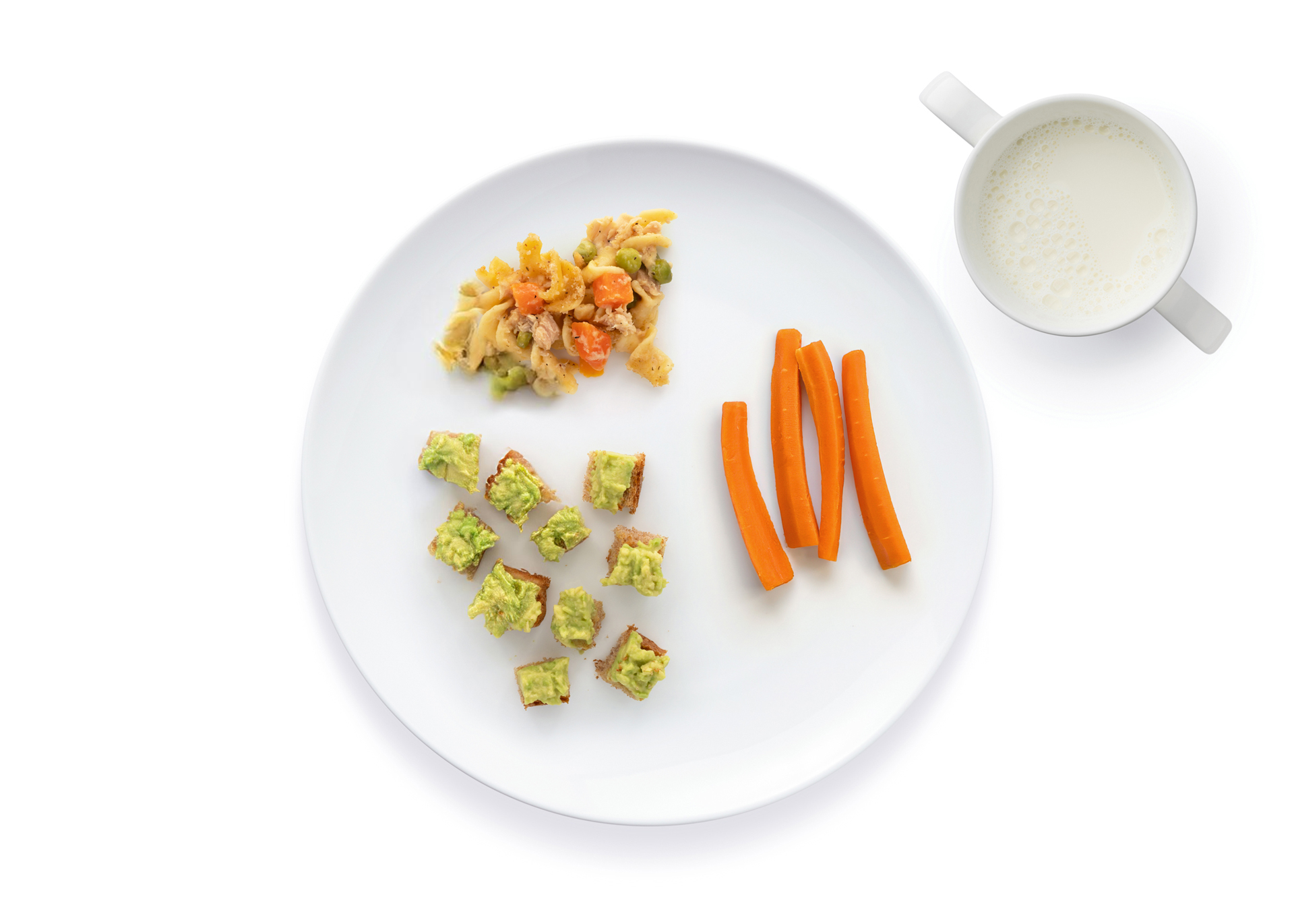
Below are some samples of what my meal might look like – but remember it could be more or less or different textures.

6 - 8 MONTHS​

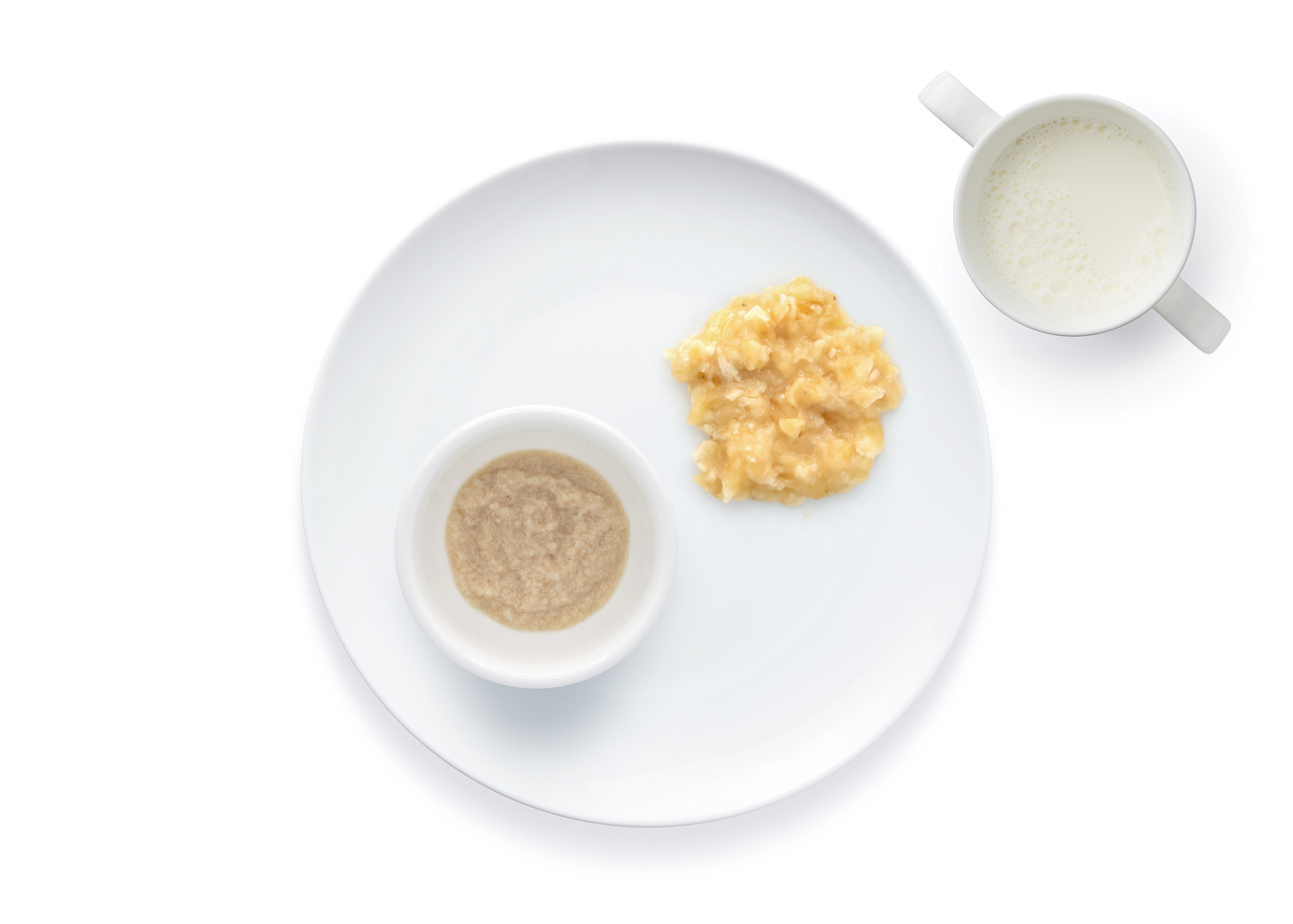
Breakfast

Infant cereal
Mashed banana and oatmeal on a plate
Breast milk or formula in an open cup
Mashed banana

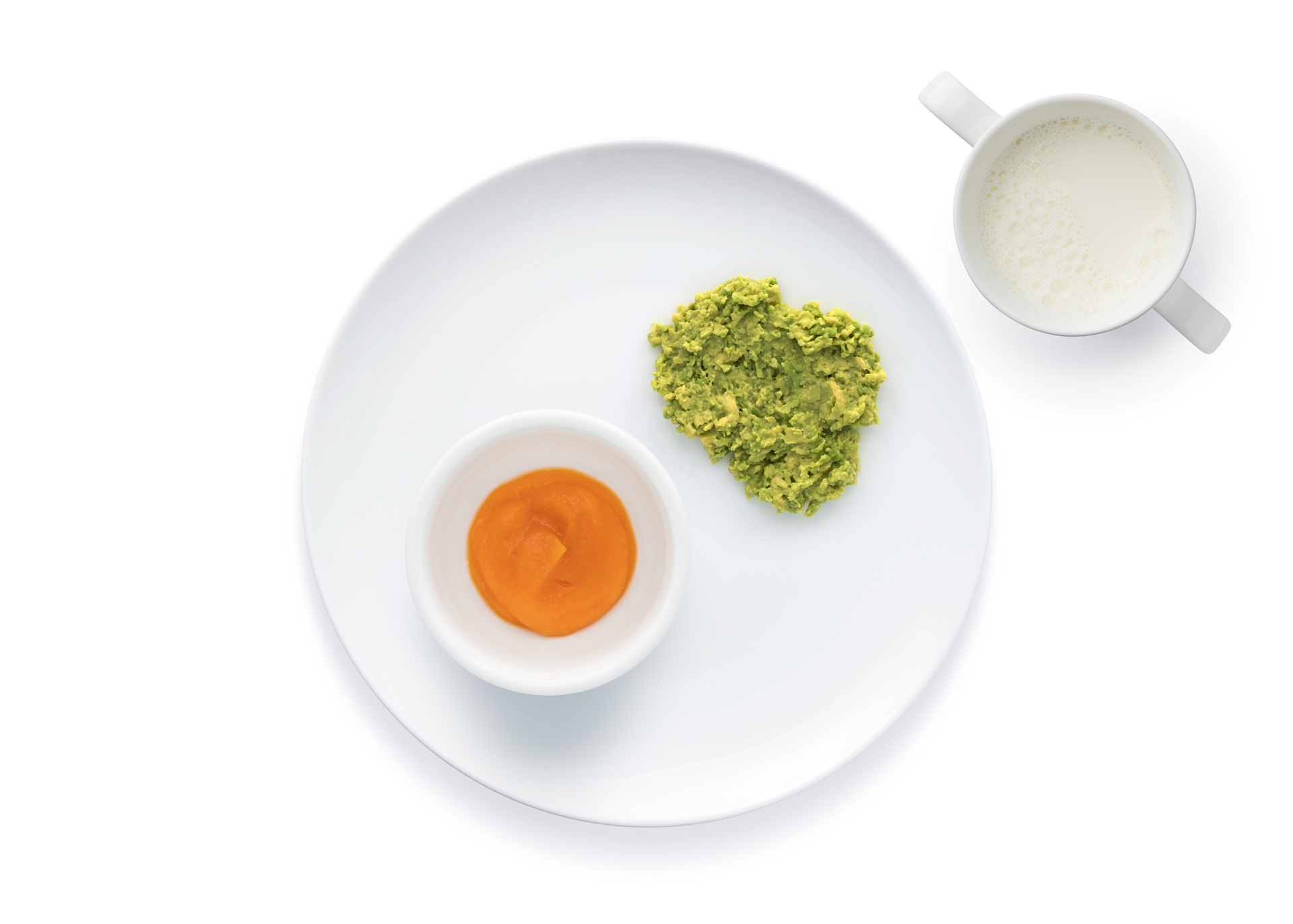
Lunch

Pureed sweet potato
White plate with mashed avocado.
Breast milk or formula in an open cup
Mashed avocado

Dinner

Applesauce
White plate with orange, green, and beige purees.
Breast milk or formula in an open cup
Mashed butternut squash
Pureed broccoli
An infant serving is approximately 1-3 tablespoons (more or less depending on baby’s appetite). Serve one or two foods at a meal when starting out and build from there.
Let me eat until I show signs I’m full. I might close my lips, turn or shake my head, or raise my arm. Let me stop eating and get down when I’m done.

8 - 10 Months

Breakfast

Banana chunks
Oatmeal with diced strawberries
diced banana, scrambled eggs, oatmeal with strawberries, and a cup of milk.
Breast milk or formula in an open cup
Scrambled egg

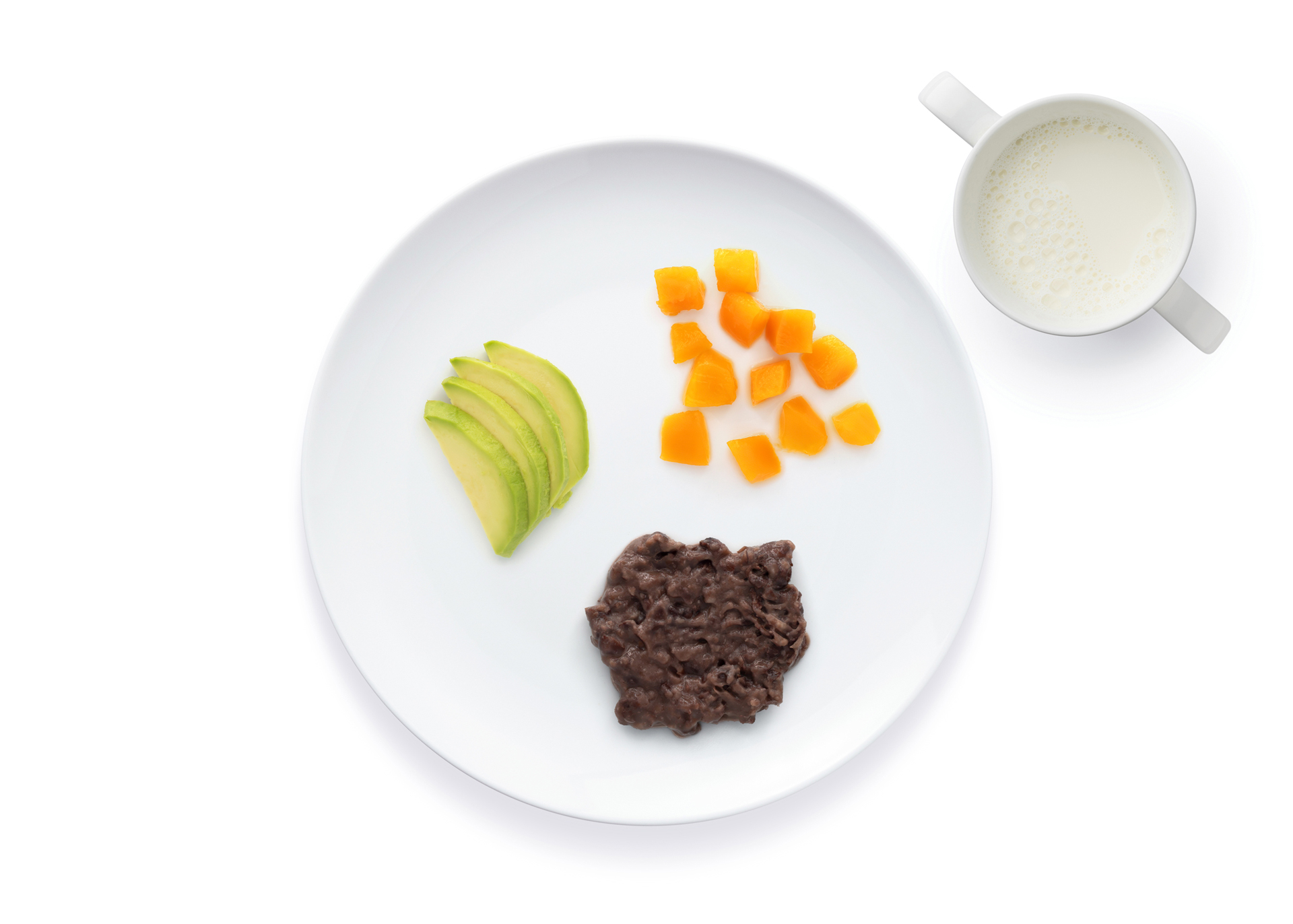
Lunch

Avocado slices
sliced avocado, diced mango, mashed beans.
Breast milk or formula in an open cup
Cut up peach slices
Mashed black beans

Dinner

mashed potatoes with gravy
Mashed broccoli
Plate with mashed potatoes, broccoli, kiwi slices.
Breast milk or formula in an open cup
Cut up kiwi
chunky applesauce

– OR –

cut up salmon
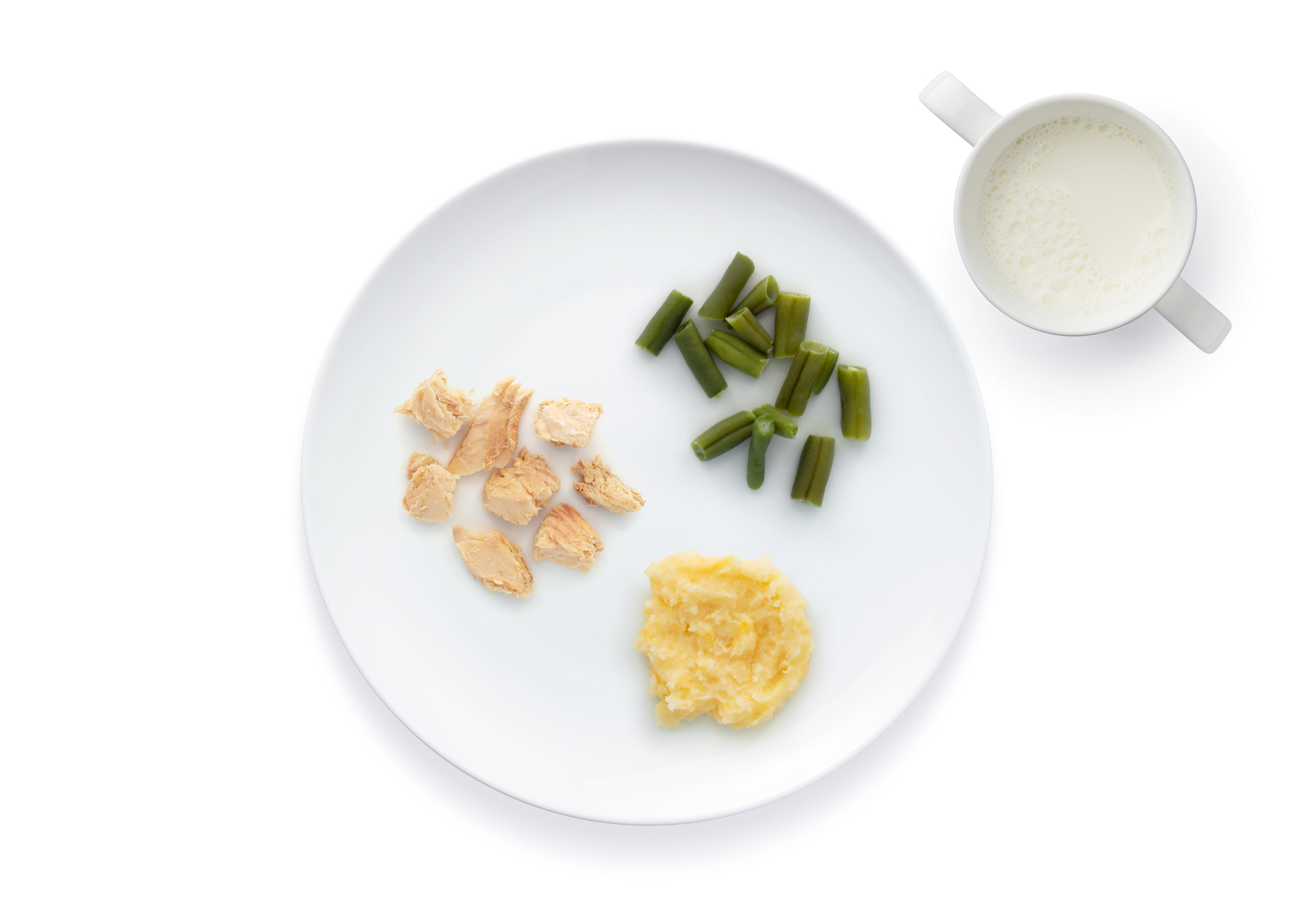
Chicken, green beans, and mashed potatoes
Breast milk or formula in an open cup
Chopped green beans
Cheesy mashed potatoes
A serving is approximately 1-3 tablespoons of a food; consider offering 3 food items at a meal.
Let me eat until I show signs I’m full. I might close my lips, turn or shake my head, or raise my arm. Let me stop eating and get down when I’m done.

10 - 12 Months

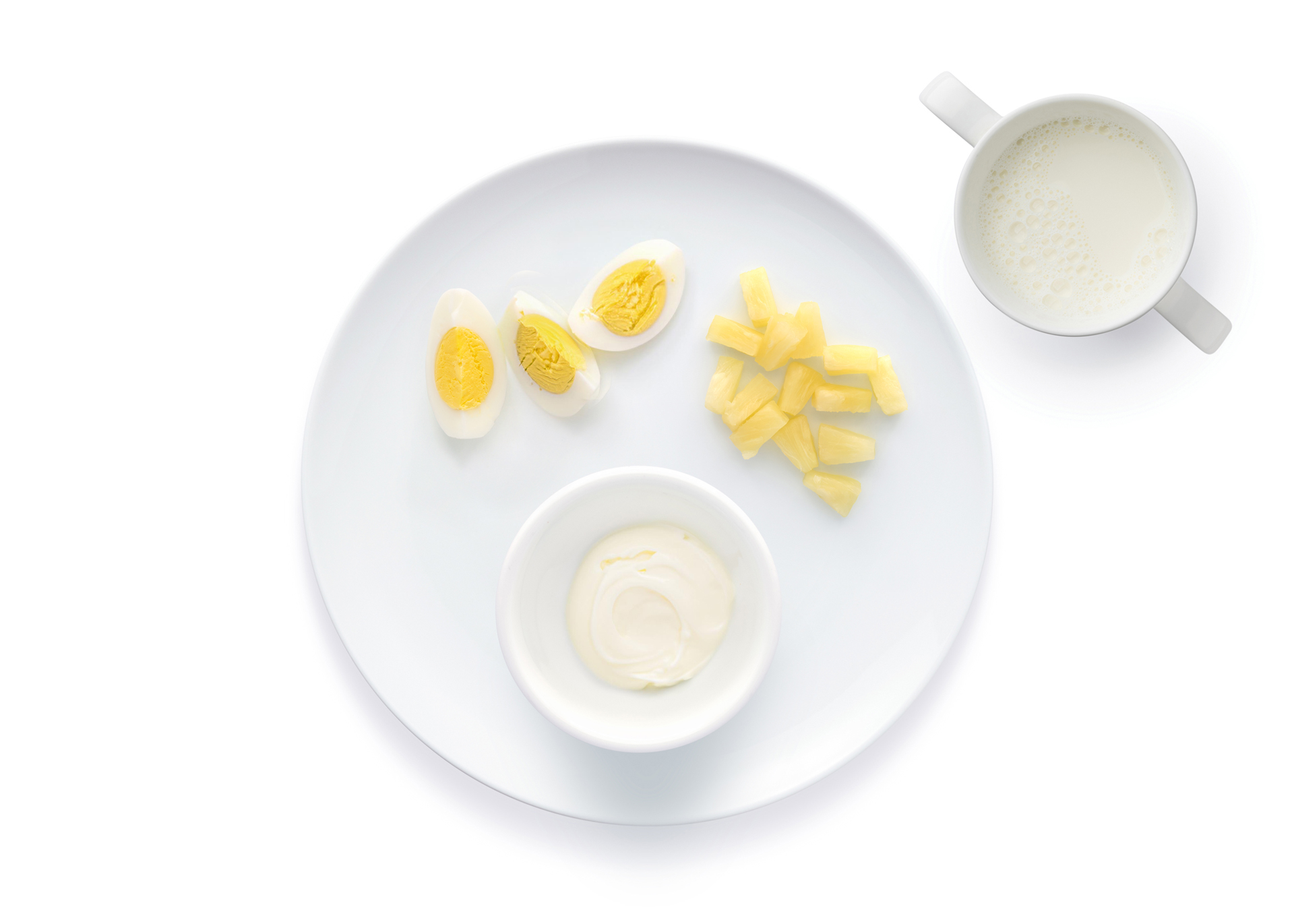
Breakfast

Hard boiled egg wedges
Yogurt
Boiled eggs, diced pineapple, and yogurt
Breast milk or formula in an open cup
Diced canned pineapple

– OR –

oatmeal with brown sugar
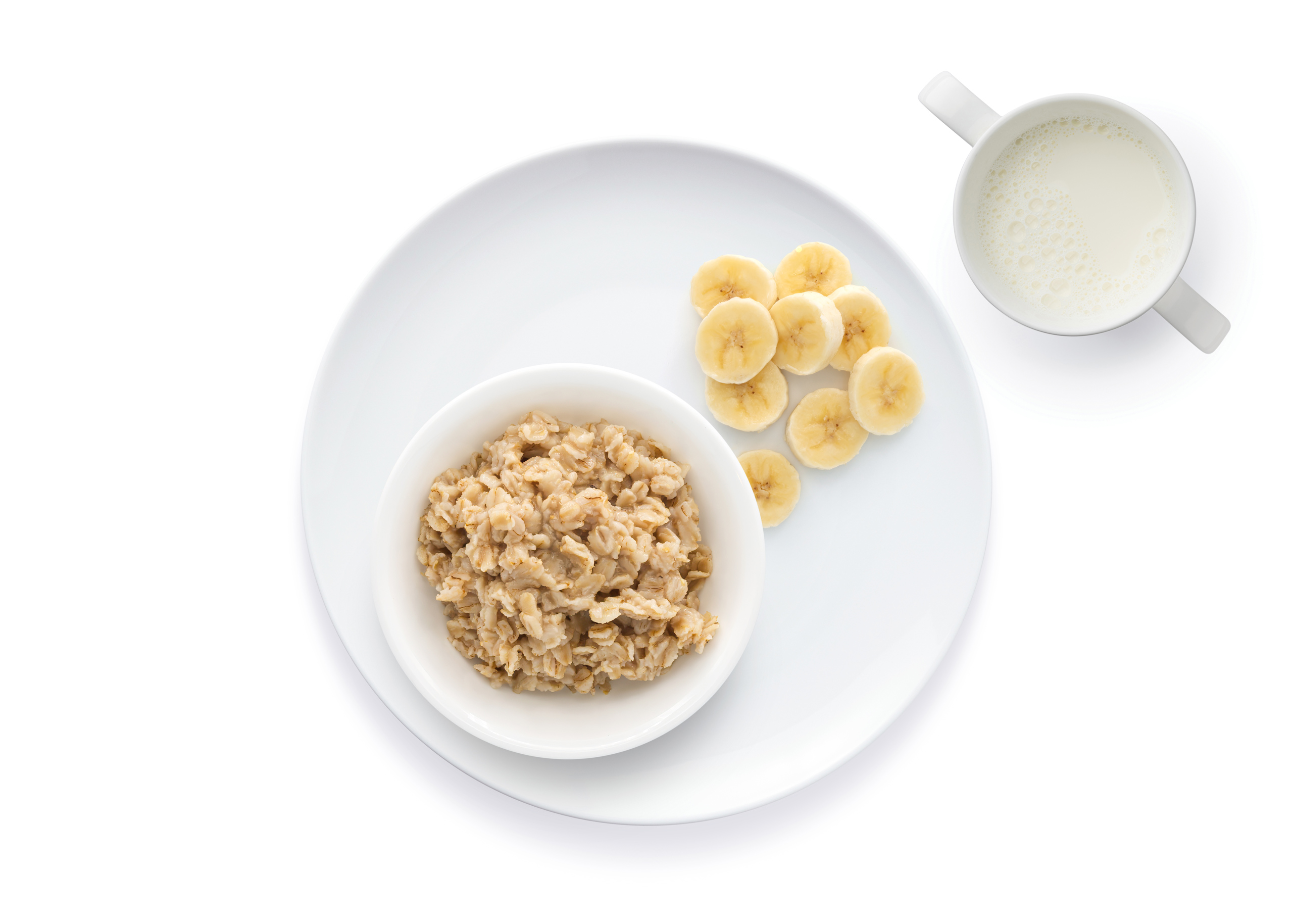
Bowl of oatmeal with banana slices
breast milk or formula in an open cup
sliced banana

Lunch

Tuna noodle casserole
Mashed avocado on cut up whole grain toast
plate with pasta, carrot sticks, avocado toast bites
Breast milk or formula in an open cup
Soft cooked carrot sticks

Dinner

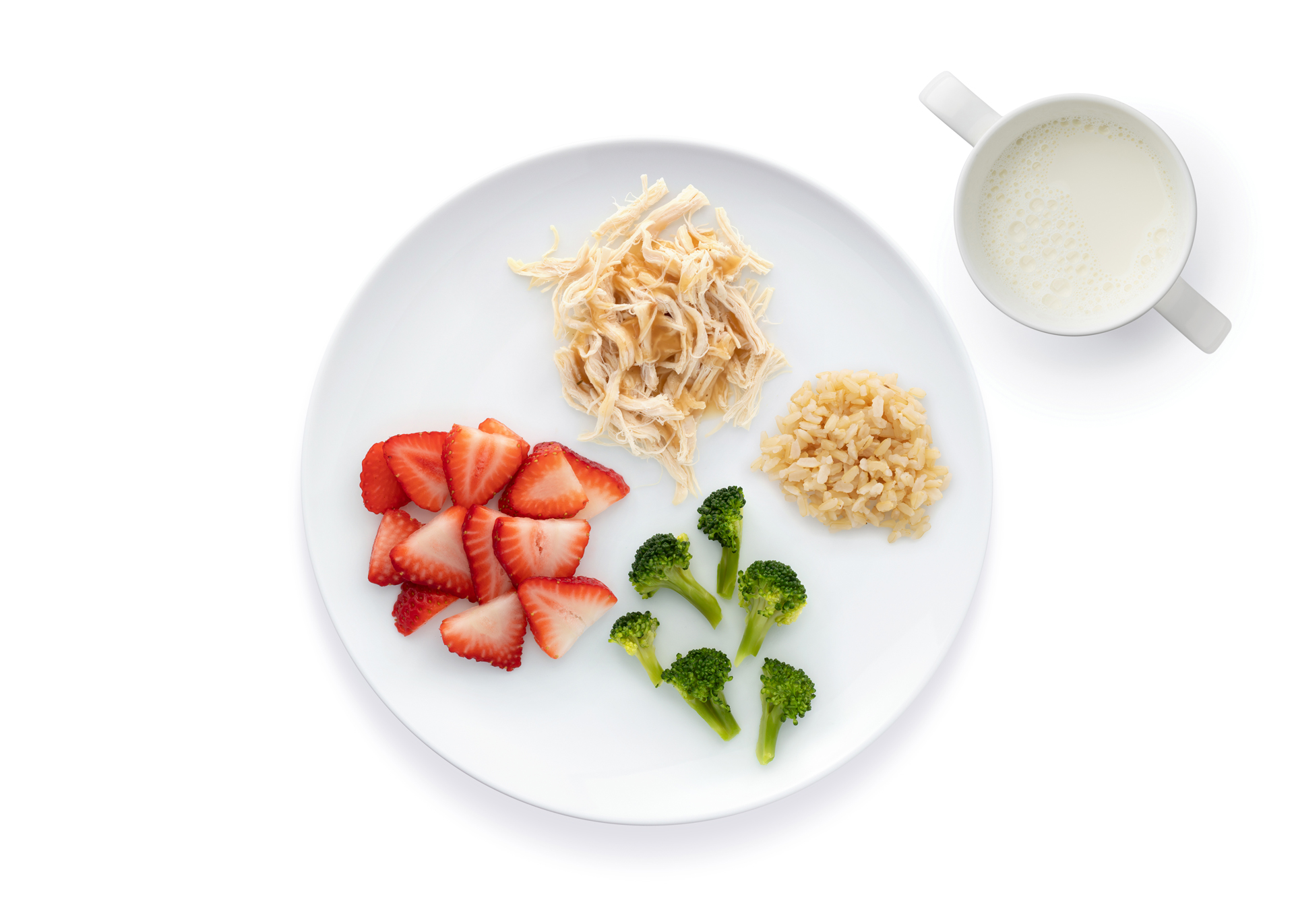
cooked broccoli
sliced strawberries
strawberries, shredded chicken, broccoli, and brown rice.
Breast milk or formula in an open cup
shredded chicken with gravy
Brown rice
A serving is approximately 1-3 tablespoons of a food; offer 3 to 4 food items at a meal and build from there.

Let me eat until I show signs I’m full. I might close my lips, turn or shake my head, or raise my arm. Let me stop eating and get down when I’m done.

Family Meals

It’s great for us to have family meals together, even from my first feedings. When we all eat together, it helps me feel included, and I learn from watching you. Studies show that eating dinner as a family regularly can help me grow and develop in a good way.

Please offer me a variety of foods. Talk with me while we eat. Watch for signs that I’ve had enough to eat. And, let me down when I am done.

Baby eating with father
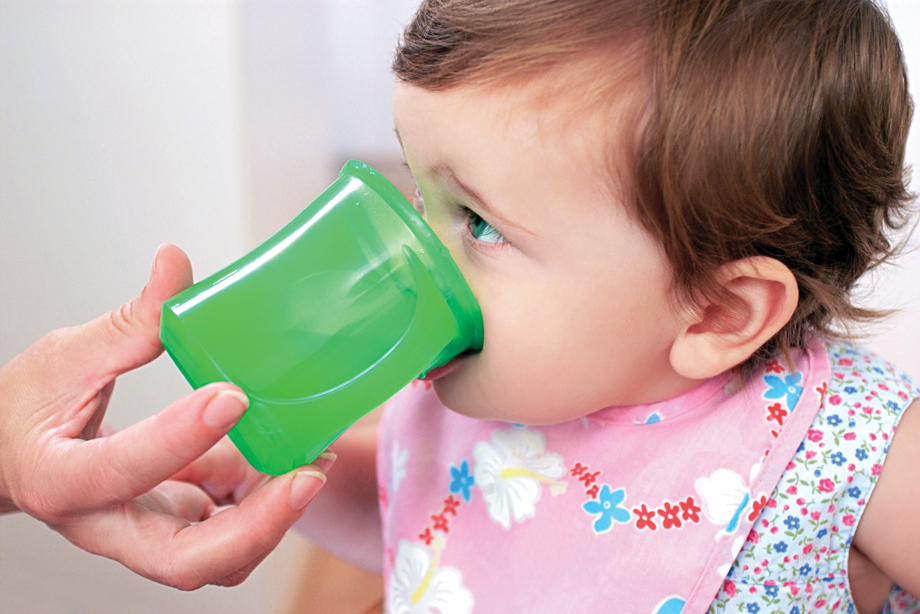
Baby drinking from cup

Teach Me To Drink From a Cup

Around 6 months old, you can help me to learn how to drink from a cup by giving me a small amount of water in an open cup. At mealtime, you can start helping me learn how to use an open cup with small amounts of breast milk or infant formula.

Food Safety

We need to wash our hands before making my food or feeding me.

Put my food in a small dish and feed it to me with a baby spoon.

Don’t heat my food in a microwave. It could burn my mouth.

Throw out any food, breast milk, or formula left in a bottle, cup, or dish after I eat.

FOODS TO AVOID​

I need food that is right for my age and will help me grow best.
I don’t need added sugars, salt, fat, or additives. Wait to offer juice until I am at least 12 months old.

Don’t give me foods I can choke on, like:

  • Raw vegetables
  • Bacon
  • Whole grapes
  • Fish with bones
  • Potato, corn, or tortilla chips
  • Raisins
  • Popcorn
  • Hard candy
  • Nuts
  • Hot dogs
  • Meatsticks

Also, please don’t give me foods that could make me sick, like:

  • Cow’s milk
  • Rare or raw meats
  • Bologna or lunch meats. Make sure you cook any meats and eggs so they are well done.
  • Honey or food made with it. Honey can contain bacteria (Clostridium Botulinum) that can make me sick. I can have honey AFTER I'm a year old.

INTRODUCING PEANUT BUTTER

I can safely try peanut butter somewhere between 4 and 6 months as long as I haven't had an allergic reaction to other foods or eczema or other skin sensitivities. Trying peanut butter while I'm young can help prevent allergies to it later when I'm older.

Here's how to introduce me to peanut butter.

  • Thin the peanut butter so I don't choke.
  • Mix 1 teaspoon of creamy peanut butter with 1-2 teaspoons of breast milk, applesauce, mashed bananas or baby cereal.
  • Offer it to me. Depending on my tastes, I may or may not like it the first few times. That's ok, try again another day.
  • Watch me for the next 2 hours to make sure I don't have a reaction. A reaction would look like: 1) the immediate development of rash, hives, or swelling. Swelling may appear around the eyes, lips, or tongue. 2) Respiratory symptoms, including coughing, persistent wheezing and/or breathing difficulties of any kind. or 3) Vomiting that is projectile and/or persistent. If I have a reaction like this, take me to the nearest urgent care or emergency room.
  • If I ate it without any difficulty, offer it again as part of my regular foods.

Play With Me!

I love to learn from you. Read and sing to me. Play peek-a-boo and pat-a-cake. Take me for a walk and talk about what we see.

LOOK WHAT I CAN DO!​

I love to learn from you. Read to me. Sing a song. Let’s play games like peek-a-boo. Take me for a walk and show me new things. I’m active — keep an eye on me!​

6 to 9 Months

  • I can sit up and roll over.
  • I’ll start to creep and crawl.
  • I like to shake things and drop them to see what happens.

9 to 12 Months
  • I like to use my hands.
  • I can hold my cup.
  • I like to point and wave bye-bye.
  • I say da-da and ma-ma.
  • I can pull myself up to stand.
  • I can walk if you hold both my hands.

Keep Me Safe and Healthy

  • I need check-ups and shots to stay healthy. I should visit my healthcare provider at 6 months, 9 months, and 1 year of age.
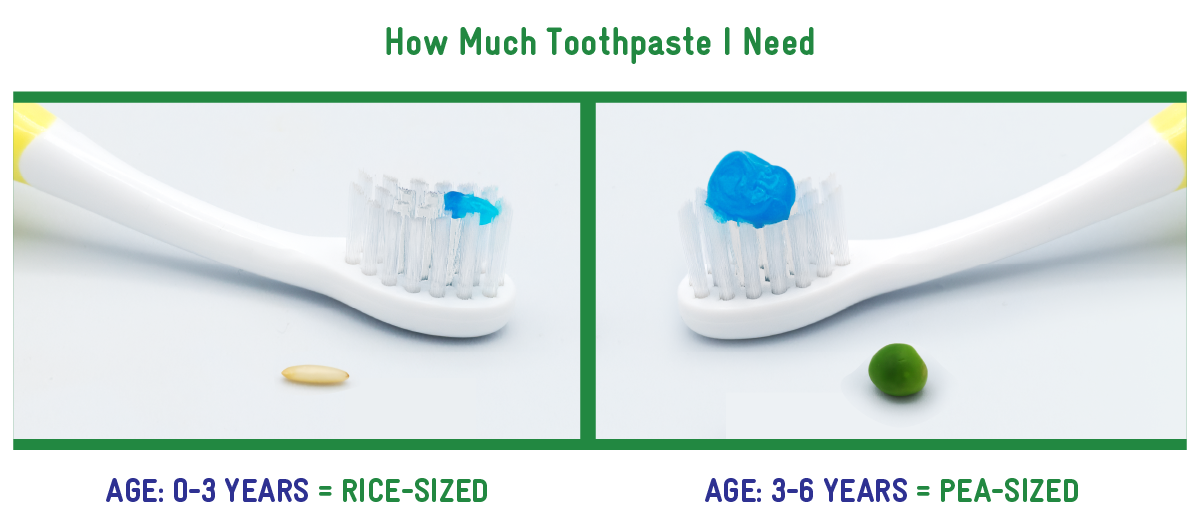
  • Wipe my gums and teeth with a clean, wet, soft cloth or a soft rubber or silicone finger brush after every feeding. Schedule my first dental visit as soon as my first teeth appear, or by my first birthday, and begin using a soft toothbrush with a rice-sized amount of fluoride toothpaste twice a day. Always watch me to make sure I don’t swallow the toothpaste.
    Recommended amount of toothpaste to use on a toothbrush
  • Never put me to bed with a bottle. I could choke, get an earache, or damage my teeth.
  • If other people feed me, be sure to ask what they fed me in case I'm sensitive to something I ate.
  • Let me explore and learn. See each room like I will, from the floor, and make it safe for me.
  • Keep me away from cigarette, tobacco, and all other smoke or vapor. Smoke hurts my lungs and can make me sick.
  • Buckle me into an infant car seat before we ride in a car. It’s the law! Install my seat in the car’s back seat, rear-facing.
For additional support, contact your local WIC Breastfeeding Peer Counselor or designated breastfeeding expert for breastfeeding questions.
Wyoming WIC WDH Public Health

CONTACT US

1-888-996-9378
health.wyo.gov/wic
  • How to apply for WIC

Resources

  • WIC Shopper
  • WIC Smart
  • WIC Breastfeeding Support
  • Wyoming Medicaid
  • Wyoming 211
  • Tell a friend about WIC!
  • Guide to Using Your WIC Benefits
  • Wyoming WIC Facebook
  • Wyoming WIC Instagram
  • Wyoming WIC

USDA is an equal opportunity provider, employer, and lender.

Cookie PolicyPrivacy Policy

© Brush Art Corporation
This website is operated by Brush Art Corporation on behalf of the Wyoming Department of Health.

Install this web app on your iPhone: tap and then Add to Home Screen.
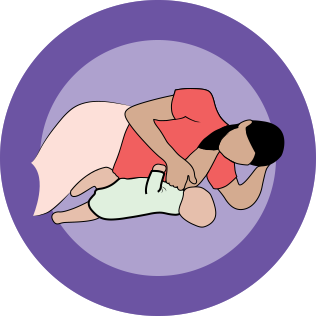
SIDE-LYING HOLD

Side-Lying Hold

  1. For the right breast, lie on your right side with your baby facing you.
  2. Pull your baby close. Your baby’s mouth should be level with your nipple.
  3. In this position, you can cradle your baby’s back with your left arm and support yourself with your right arm and/or pillows.
  4. Keep loose clothing and bedding away from your baby.
  5. Reverse for the left breast.

This hold is useful when:

  • You had a C-section
  • You want to rest while baby feeds
  • You are breastfeeding in the middle of the night
  • You and your baby are comfortable in this position
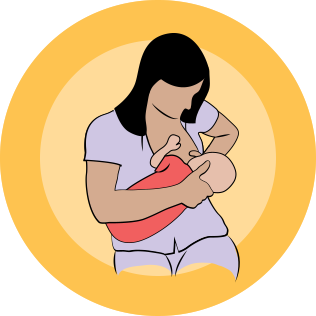
CROSS-CRADLE HOLD

Cross-Cradle Hold

  1. For the right breast, use your left arm to hold your baby’s head at your right breast and baby’s body toward your left side. A pillow across your lap can help support your left arm.
  2. Gently place your left hand behind your baby’s ears and neck, with your thumb and index finger behind each ear and your palm between baby’s shoulder blades. Turn your baby’s body toward yours so your tummies are touching.
  3. Hold your breast as if you are squeezing a sandwich. To protect your back, avoid leaning down to your baby. Instead, bring your baby to you.
  4. As your baby’s mouth opens, push gently with your left palm on baby’s head to help them latch on. Make sure you keep your fingers out of the way.
  5. Reverse for the left breast.

This hold is useful when:

  • Your baby is premature
  • Your baby has a weak suck
  • Your baby needs help to stay latched
  • Your baby needs extra head support
  • You and your baby are comfortable in this position
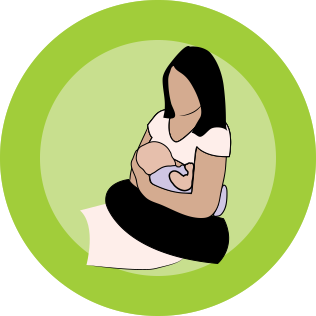
CLUTCH OR “FOOTBALL” HOLD

Clutch or “Football” Hold

  1. For the right breast, hold your baby level, facing up, at your right side.
  2. Put your baby’s head near your right nipple and support their back and legs under your right arm.
  3. Hold the base of your baby’s head with your right palm. A pillow underneath your right arm can help support your baby’s weight.
  4. To protect your back, avoid leaning down to your baby. Bring baby to you instead.
  5. Reverse for the left breast.

This hold is useful when:

  • You had a C-section
  • You have large breasts
  • You have flat or inverted nipples
  • You have a strong milk let-down
  • You are breastfeeding twins
  • Your baby likes to feed in an upright position
  • Your baby has reflux
  • You and your baby are comfortable in this position
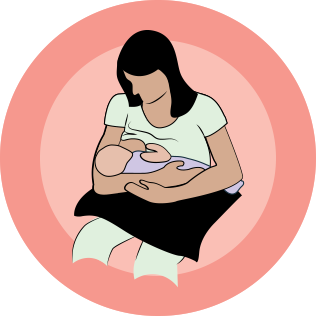
CRADLE HOLD

Cradle Hold

  1. For the right breast, cradle your baby with your right arm. Your baby will be on their left side across your lap, facing you at nipple level.
  2. Your baby’s head will rest on your right forearm with your baby’s back along your inner arm and palm.
  3. Turn your baby’s tummy toward your tummy. Your left hand is free to support your breast, if needed. Pillows can help support your arm and elbow.
  4. To protect your back, avoid leaning down to your baby. Instead, bring your baby to you.
  5. Reverse for the left breast.

This hold is useful when:

  • Your baby needs help latching on
  • You and your baby are comfortable in this position
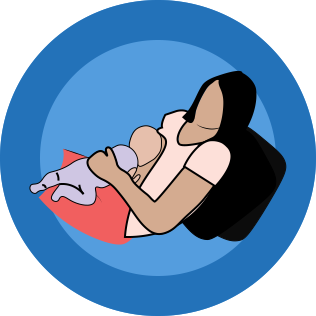
Laid-Back Hold

Laid-Back Hold

  1. Lean back on a pillow with your baby’s tummy touching yours and their head at breast level. Some moms find that sitting up nearly straight works well. Others prefer to lean back and lie almost flat.
  2. You can place your baby’s cheek near your breast, or you may want to use one hand to hold your breast near your baby. It’s up to you and what you think feels best.
  3. Your baby will naturally find your nipple, latch, and begin to suckle.

This hold is useful when:

  • Your baby is placed on your chest right after birth
  • You have a strong milk let-down
  • You have large breasts
  • You and your baby are comfortable in this position