

Skip to Content Skip to Footer
Wyoming WIC
Wyoming WIC
  • Home
  • Women
    • Women
      Breastfeeding
    • Women
      Healthy Tips for Moms
    • Women
      Postpartum
    • Women
      Pregnant
  • Infants
    • Infants
      Feeding & Nutrition
    • Infants
      Growth & Development
  • Children
    • Children
      Toddlers
    • Children
      2-5 Year Olds
  • Families
    • Families
      Activity and Play
    • Families
      Dads
    • Families
      Food & Family Meals
    • Families
      Immunizations
    • Families
      Safety
  • Live Well Blog
  • Food Shopping Guide
  • Español

Dad's Guide to Newborn Care

  • Home
  • Families
  • Dads
  • Dad’s Guide to Newborn Care 
Dear Dad
Breastfeeding Support
Spit Up, Burping, Dirty Diapers
Baby’s Time with Dad
Keeping Your Baby Safe
Fatherhood Resources
Dad’s-Guide-Newborn-Care_QR-English

Dear Dad,

An involved dad is important to a baby’s first months and years of life.

Even when the dad lives outside the home, babies with actively involved fathers grow into happier and more successful children and adults. Babies need to form a strong bond with their parents, and that means dad, too.

Bringing home a new baby is a big change for everyone. There are many ways dads can help support mom and baby once they arrive home from the hospital.

Mom’s body goes through a lot of changes during the pregnancy. It may take a little while for her to feel like herself. Be gracious, patient, and supportive.

LIMIT VISITORS NOTES

LIMIT VISITORS

Keep people who are sick away from your baby.
DAILY CHORES ITEMS

DAILY CHORES

Help with cooking, cleaning, and laundry.
CHECK UP ON MOM ICON

CHECK UP ON MOM

It’s common to get overwhelmed with taking care of a new baby. If mom seems depressed, anxious, or fearful of harming the baby, assist her in getting help.

You and your partner may feel exhausted. This will get better. It is normal for mom to go through emotional changes and to worry about how breastfeeding is going. Support her, listen to her concerns, and tell her it’s okay to call for help if she has questions. This is a new journey for all of you.

Help out with the little things by:

  • Bringing her a glass of water or a snack.
  • Sitting and talking with her while she is breastfeeding. Enjoy your new baby together!
  • Holding your baby when she is done with breastfeeding.
  • Make meals, manage grocery shopping, tidy up, and take over some household chore so she can rest. Her body needs extra rest and energy to make breast milk.
Graph multi color round
Depression affects up to 25% of dads during their partner’s pregnancy or in the first year after baby is born.

If you or your baby’s mom have anxiety, are feeling depressed, or have thoughts of harming yourself or your baby, get help right away. Talk with your healthcare provider. Untreated depression is hard on your baby, your family, and you.

Call 988, or text WYO to 741741, for free emotional support 24 hours a day, 7 days a week.

Spend quality time with your older kids by having them help with getting a diaper, smiling at, or reading to baby.

Breastfeeding Support

Breastfeeding is the best way to provide nourishment to your new baby. It might not be easy at first so give mom plenty of encouragement and support.

  • Newborns breastfeed throughout the day and night – at least 10+ times in 24 hours. They are not on a schedule and love to feed often. You can learn your baby's cues that tell you when they are hungry or full.
  • Most babies lose weight in the first week of life, this is normal. If your baby is feeding often and well, they will typically regain their birth weight by 14 days.
  • Provide mom with water and variety of tasty, satisfying foods. Keeps snacks like a peanut butter sandwich, granola bars, and nuts close on hand.
  • If mom is pumping breast milk, help out by washing and sanitizing pump parts and bottles.
  • Limit extra guests. New moms and babies need plenty of rest! Help keep the number of visitors that come to your home minimal.
  • Offer extra support. Pitch in with chores like cooking, cleaning, and doing laundry. Grab something for mom if she needs it while breastfeeding. If you have other children, offer to help with things mom usually handles (such as breakfast, bedtime, or brushing teeth) so she can focus on breastfeeding.

WIC is here to support you. Call for any questions or for additional breastfeeding support.

You are welcome to attend WIC appointments and breastfeeding classes available in your area. By supporting breastfeeding, you are supporting your child’s health – now and in the future. Mothers who have breastfeeding support from their partner are more likely to start breastfeeding and to breastfeed longer.

Why Breastfeed?

Star

Breastfed babies get sick less often.

dollar

It’s free!

clock

It’s convenient (no bottles, no mess, and always on hand).

Two Heart

Added Health Benefits for Mom.

If breastfeeding isn’t working out or your family has decided to go a different route, your support is just as important. Supporting mom during this time can make a big difference for her confidence and well-being. Plus, it’s a chance for you to bond with your baby in a special way—whether it’s giving a bottle, cuddling during feedings, or simply being there for those quiet moments together. Your involvement not only strengthens your connection with your baby but also shows your family that you’re all in this together.

Spit Up, Burping, Dirty Diapers

Having breast milk or formula in your baby’s tummy is new to them. Babies spit up less and require less burping as they get older. 

SPIT UP

  • Spit up can be common in babies.
  • Babies spit up less if they are calm when they eat.
  • Babies spit up less when they stop eating when they are full. Follow your baby’s hunger cues to help reduce spit up.
  • Follow each feeding with 30 minutes in an upright position.

Speak to your WIC Nutritionist or healthcare provider if you are concerned with the amount your baby is spitting up at each feeding.

BURPING

  • Babies swallow air when they eat. If they swallow too much air, they may need to be burped.
  • Wait until they stop eating to burp them.
  • Hold them with their tummy against your chest or lap and gently pat or rub their back.

DIRTY DIAPERS

Be a hero, change diapers!

For breastfed babies:

  • Your breastfed baby’s dirty diapers change from greenish-black to pale yellow, soft, and seedy looking over the first week. In the early days to the first month, diapers may look like this chart.

For formula and breastfed babies over a month:

  • Babies might grunt and turn red in the face when they poop.
  • Some babies might poop one or two times a day.
  • Sometimes they won’t poop for one or two days. As long as the poop isn't hard, this can be normal.

If you have concerns about your baby’s dirty diapers, call your healthcare provider or local WIC office.


Baby’s Age Wet Poops
Day 1
Day 2
Day 3
*Day 4+

*This amount lasts up to the first month or longer.

DIRTY DIAPERS

Be a hero, change diapers!

For breastfed babies:

  • Your breastfed baby’s dirty diapers change from greenish-black to pale yellow, soft, and seedy looking over the first week. In the early days to the first month, diapers may look like this chart.

For formula and breastfed babies over a month:

  • Babies might grunt and turn red in the face when they poop.
  • Some babies might poop one or two times a day.
  • Sometimes they won’t poop for one or two days. As long as the poop isn't hard, this can be normal.

If you have concerns about your baby’s dirty diapers, call your healthcare provider or local WIC office.

Baby’s Age Wet Poops
Day 1
Day 2
Day 3
*Day 4+

*This amount lasts up to the first month or longer.

Baby’s Time with Dad

Tummy time!

Laying on their tummy helps strengthen your baby’s neck and shoulder muscles. Think of it as their daily workout as they prepare for big moves like rolling over, sitting, and crawling.

  • Get down on the floor with your baby for a couple of minutes each day.
  • Reward them with smiles and goofy faces when they lift their heads.

Play peekaboo.

Talk to your baby and make funny faces while changing their diaper.

Go for walks.

Keeping active—getting out of the house is good for everyone!

Spend time reading and talking to your baby.

Their brain is learning new words every day, even from the day they are born.

Make time for hugs and cuddles.

Skin-to-skin contact is soothing for both you and your baby. Bond with your baby as they rest on your chest, lounging around at home. In between feedings, you can do skin-to-skin with your baby too – this can help you bond and connect with your baby.

Bath time and bed time!

Bathing your baby and putting your baby to bed can be a very soothing experience for everyone.

Keeping Your Baby Safe

Buckle them into a child safety seat before they ride in a car.

  • Know how to install the seat and strap your baby in right.
  • Remove your infant from their car seat once you arrive at your destination, especially if they are asleep.
  • The settings, position, and type of car seat will change as your baby grows.

It’s important to take your baby to all medical appointments and keep up-to-date on all shots.

Visit www.cdc.gov/vaccines/schedules for information on when your baby is due for shots.

Always stay with your child when they are in the bathtub or near water.

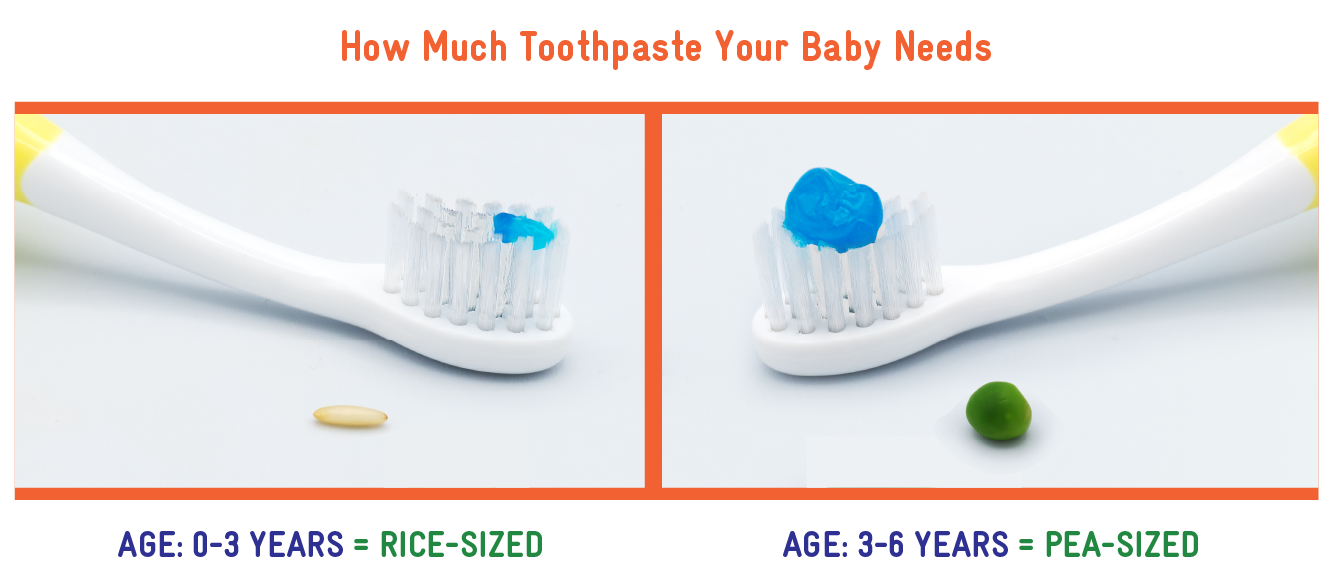
Wipe your baby’s gums and teeth with a clean, wet, soft cloth or a soft rubber or silicone finger brush after every feeding. Schedule your baby’s first dental visit as soon as their first teeth appear, or by their first birthday, and begin using a soft toothbrush with a rice-sized amount of fluoride toothpaste twice a day. Always watch your child to make sure they don’t swallow the toothpaste.
Always put your baby to sleep on their back on a firm mattress with no blankets or pillows.

The American Academy of Pediatrics recommends that babies sleep in the same room as their parents on a separate sleep surface until their first birthday.

YOUR CHILD IS DEPENDING ON YOU.

  • Do not use drugs, alcohol, or smoke in your home or around your child.
  • If you smoke outside, remove your outer layer of clothing or change clothing before holding your baby.
  • For support with quitting, including free coaching, a free quit plan, free educational materials, and referrals to local resources, call 1-800-QUIT-NOW (1-800-784-8669)

Fatherhood Resources

National Fatherhood Initiative

www.fatherhood.org

National Responsible Fatherhood Clearinghouse

www.fatherhood.gov

USDA Breastfeeding Support: Dads
Learn breastfeeding and how you can support mom and baby.
https://wicbreastfeeding.fns.usda.gov/dads

Check for fatherhood initiative programs at your local Head Start program or school system.

Wyoming WIC WDH Public Health

CONTACT US

1-888-996-9378
health.wyo.gov/wic
  • How to apply for WIC

Resources

  • WIC Shopper
  • WIC Smart
  • WIC Breastfeeding Support
  • Wyoming Medicaid
  • Wyoming 211
  • Tell a friend about WIC!
  • Guide to Using Your WIC Benefits
  • Wyoming WIC Facebook
  • Wyoming WIC Instagram
  • Wyoming WIC

USDA is an equal opportunity provider, employer, and lender.

Cookie PolicyPrivacy Policy

© Brush Art Corporation
This website is operated by Brush Art Corporation on behalf of the Wyoming Department of Health.

Install this web app on your iPhone: tap and then Add to Home Screen.
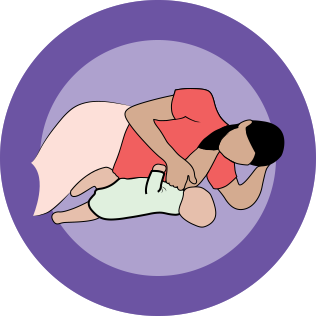
SIDE-LYING HOLD

Side-Lying Hold

  1. For the right breast, lie on your right side with your baby facing you.
  2. Pull your baby close. Your baby’s mouth should be level with your nipple.
  3. In this position, you can cradle your baby’s back with your left arm and support yourself with your right arm and/or pillows.
  4. Keep loose clothing and bedding away from your baby.
  5. Reverse for the left breast.

This hold is useful when:

  • You had a C-section
  • You want to rest while baby feeds
  • You are breastfeeding in the middle of the night
  • You and your baby are comfortable in this position
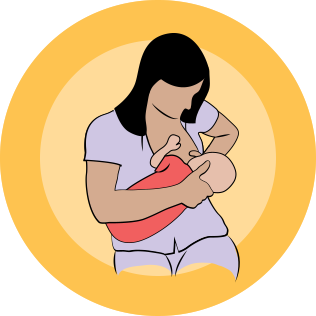
CROSS-CRADLE HOLD

Cross-Cradle Hold

  1. For the right breast, use your left arm to hold your baby’s head at your right breast and baby’s body toward your left side. A pillow across your lap can help support your left arm.
  2. Gently place your left hand behind your baby’s ears and neck, with your thumb and index finger behind each ear and your palm between baby’s shoulder blades. Turn your baby’s body toward yours so your tummies are touching.
  3. Hold your breast as if you are squeezing a sandwich. To protect your back, avoid leaning down to your baby. Instead, bring your baby to you.
  4. As your baby’s mouth opens, push gently with your left palm on baby’s head to help them latch on. Make sure you keep your fingers out of the way.
  5. Reverse for the left breast.

This hold is useful when:

  • Your baby is premature
  • Your baby has a weak suck
  • Your baby needs help to stay latched
  • Your baby needs extra head support
  • You and your baby are comfortable in this position
CLUTCH OR “FOOTBALL” HOLD

Clutch or “Football” Hold

  1. For the right breast, hold your baby level, facing up, at your right side.
  2. Put your baby’s head near your right nipple and support their back and legs under your right arm.
  3. Hold the base of your baby’s head with your right palm. A pillow underneath your right arm can help support your baby’s weight.
  4. To protect your back, avoid leaning down to your baby. Bring baby to you instead.
  5. Reverse for the left breast.

This hold is useful when:

  • You had a C-section
  • You have large breasts
  • You have flat or inverted nipples
  • You have a strong milk let-down
  • You are breastfeeding twins
  • Your baby likes to feed in an upright position
  • Your baby has reflux
  • You and your baby are comfortable in this position
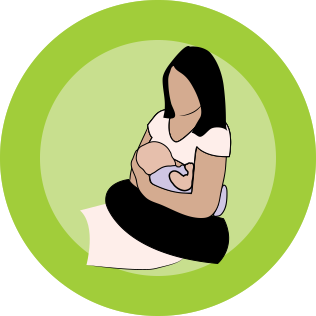
CRADLE HOLD

Cradle Hold

  1. For the right breast, cradle your baby with your right arm. Your baby will be on their left side across your lap, facing you at nipple level.
  2. Your baby’s head will rest on your right forearm with your baby’s back along your inner arm and palm.
  3. Turn your baby’s tummy toward your tummy. Your left hand is free to support your breast, if needed. Pillows can help support your arm and elbow.
  4. To protect your back, avoid leaning down to your baby. Instead, bring your baby to you.
  5. Reverse for the left breast.

This hold is useful when:

  • Your baby needs help latching on
  • You and your baby are comfortable in this position
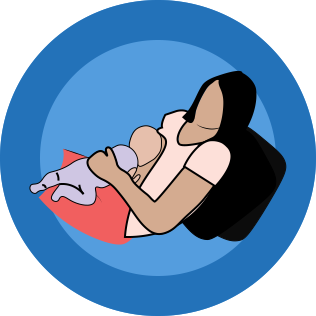
Laid-Back Hold

Laid-Back Hold

  1. Lean back on a pillow with your baby’s tummy touching yours and their head at breast level. Some moms find that sitting up nearly straight works well. Others prefer to lean back and lie almost flat.
  2. You can place your baby’s cheek near your breast, or you may want to use one hand to hold your breast near your baby. It’s up to you and what you think feels best.
  3. Your baby will naturally find your nipple, latch, and begin to suckle.

This hold is useful when:

  • Your baby is placed on your chest right after birth
  • You have a strong milk let-down
  • You have large breasts
  • You and your baby are comfortable in this position