Skip to Content Skip to Footer
Wyoming WIC
Wyoming WIC
  • Home
  • Women
    • Women
      Breastfeeding
    • Women
      Healthy Tips for Moms
    • Women
      Postpartum
    • Women
      Pregnant
  • Infants
    • Infants
      Feeding & Nutrition
    • Infants
      Growth & Development
  • Children
    • Children
      Toddlers
    • Children
      2-5 Year Olds
  • Families
    • Families
      Activity and Play
    • Families
      Dads
    • Families
      Food & Family Meals
    • Families
      Immunizations
    • Families
      Safety
  • Live Well Blog
  • Food Shopping Guide
  • Español

How do you stretch your food money?

  • Home
  • Families
  • Food & Family Meals
  • How do you stretch your food money?
How do you stretch your food money QR Code
Shopping

Sometimes no matter what you do, there just isn’t enough money.

How do you make your food money last as long as you can?

How do you save money and get everyone filled up?

Getting enough to eat is most important. Nutrition comes later. You can have both, but to enjoy life and do well, you must get enough to eat.
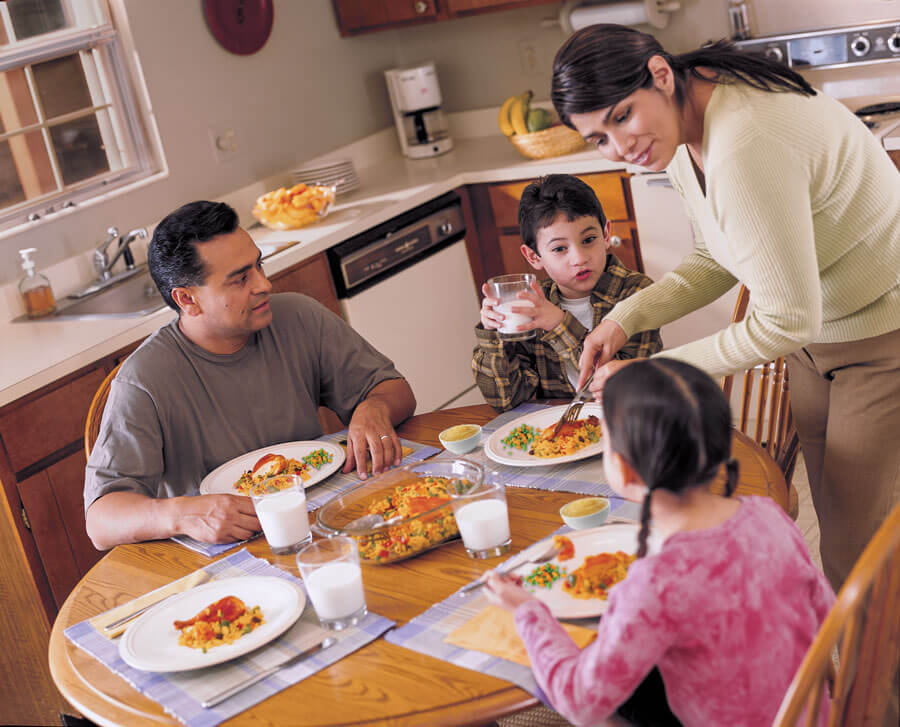
mealtime

Maintain the structure of sit-down meals and sit-down snacks.

  • Structure keeps you in charge of the menu, keeps down cravings for expensive snack foods, and helps you and your children eat the amount you need. When you have “snack” foods, have them at these times.

Choose higher-calorie forms of your usual foods.

  • Whole milk fills you more than skim. Canned peaches in heavy syrup are more filling than fresh fruit or frozen fruit with no sugar. Fry meat, put butter and sauces on vegetables, make fruit cobblers and pies.

Include high-fat foods: butter or margarine, gravy, and regular salad dressing.

  • Fatty foods fill you up and stay with you longer. Let everyone eat as much as they want.

Serve one each of expensive foods, all-you-want-to-eat of others.

  • Meat, poultry, and fish may cost too much to fill up on. Starchy foods are less-expensive fillers.

Stretch meat, poultry, and fish. Use cooked dried beans.

  • Put meat, poultry, or fish in a stew, soup, or casserole. Use a bit for flavoring bean dishes.

Introduce new foods in small amounts – just enough for each a taste.

  • It takes a while to learn to eat new food, and you will waste less.

Buy foods that don’t spoil.

  • Canned vegetables and fruit are just as nutritious as fresh (or maybe more). Frozen are good, too, if you have the freezer space.

Teach children to take many small helpings.

  • Give them strong permission to take more as many times as they want.

You may fear that choosing higher-calorie food will make you and your children eat too much and get fat. Not so. Being afraid of going hungry makes you overeat and gain weight.

Knowing you will have enough to eat lets you go to meals hungry, eat until you are satisfied, then stop. You will know that another snack or meal will be coming soon, and you can do it again.

checklist

© Ellyn Satter

Wyoming WIC WDH Public Health

CONTACT US

1-888-996-9378
health.wyo.gov/wic
  • How to apply for WIC

Resources

  • WIC Shopper
  • WIC Smart
  • WIC Breastfeeding Support
  • Wyoming Medicaid
  • Wyoming 211
  • Tell a friend about WIC!
  • Guide to Using Your WIC Benefits
  • Wyoming WIC Facebook
  • Wyoming WIC Instagram
  • Wyoming WIC

USDA is an equal opportunity provider, employer, and lender.

Cookie PolicyPrivacy Policy

© Brush Art Corporation
This website is operated by Brush Art Corporation on behalf of the Wyoming Department of Health.

Install this web app on your iPhone: tap and then Add to Home Screen.
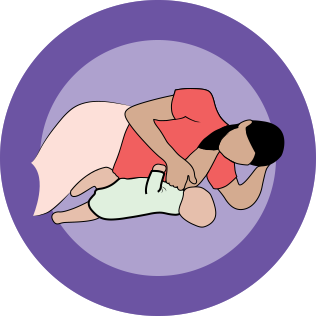
SIDE-LYING HOLD

Side-Lying Hold

  1. For the right breast, lie on your right side with your baby facing you.
  2. Pull your baby close. Your baby’s mouth should be level with your nipple.
  3. In this position, you can cradle your baby’s back with your left arm and support yourself with your right arm and/or pillows.
  4. Keep loose clothing and bedding away from your baby.
  5. Reverse for the left breast.

This hold is useful when:

  • You had a C-section
  • You want to rest while baby feeds
  • You are breastfeeding in the middle of the night
  • You and your baby are comfortable in this position
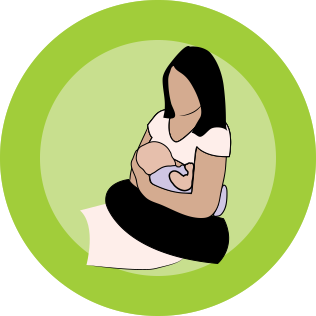
CROSS-CRADLE HOLD

Cross-Cradle Hold

  1. For the right breast, use your left arm to hold your baby’s head at your right breast and baby’s body toward your left side. A pillow across your lap can help support your left arm.
  2. Gently place your left hand behind your baby’s ears and neck, with your thumb and index finger behind each ear and your palm between baby’s shoulder blades. Turn your baby’s body toward yours so your tummies are touching.
  3. Hold your breast as if you are squeezing a sandwich. To protect your back, avoid leaning down to your baby. Instead, bring your baby to you.
  4. As your baby’s mouth opens, push gently with your left palm on baby’s head to help them latch on. Make sure you keep your fingers out of the way.
  5. Reverse for the left breast.

This hold is useful when:

  • Your baby is premature
  • Your baby has a weak suck
  • Your baby needs help to stay latched
  • Your baby needs extra head support
  • You and your baby are comfortable in this position
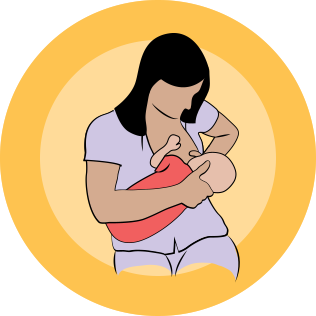
CLUTCH OR “FOOTBALL” HOLD

Clutch or “Football” Hold

  1. For the right breast, hold your baby level, facing up, at your right side.
  2. Put your baby’s head near your right nipple and support their back and legs under your right arm.
  3. Hold the base of your baby’s head with your right palm. A pillow underneath your right arm can help support your baby’s weight.
  4. To protect your back, avoid leaning down to your baby. Bring baby to you instead.
  5. Reverse for the left breast.

This hold is useful when:

  • You had a C-section
  • You have large breasts
  • You have flat or inverted nipples
  • You have a strong milk let-down
  • You are breastfeeding twins
  • Your baby likes to feed in an upright position
  • Your baby has reflux
  • You and your baby are comfortable in this position
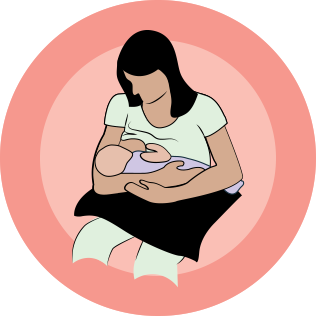
CRADLE HOLD

Cradle Hold

  1. For the right breast, cradle your baby with your right arm. Your baby will be on their left side across your lap, facing you at nipple level.
  2. Your baby’s head will rest on your right forearm with your baby’s back along your inner arm and palm.
  3. Turn your baby’s tummy toward your tummy. Your left hand is free to support your breast, if needed. Pillows can help support your arm and elbow.
  4. To protect your back, avoid leaning down to your baby. Instead, bring your baby to you.
  5. Reverse for the left breast.

This hold is useful when:

  • Your baby needs help latching on
  • You and your baby are comfortable in this position
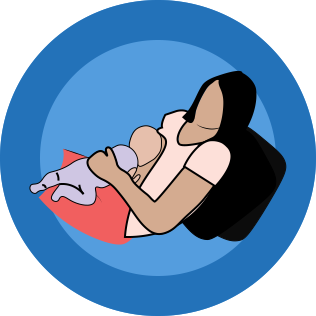
Laid-Back Hold

Laid-Back Hold

  1. Lean back on a pillow with your baby’s tummy touching yours and their head at breast level. Some moms find that sitting up nearly straight works well. Others prefer to lean back and lie almost flat.
  2. You can place your baby’s cheek near your breast, or you may want to use one hand to hold your breast near your baby. It’s up to you and what you think feels best.
  3. Your baby will naturally find your nipple, latch, and begin to suckle.

This hold is useful when:

  • Your baby is placed on your chest right after birth
  • You have a strong milk let-down
  • You have large breasts
  • You and your baby are comfortable in this position