Skip to Content Skip to Footer
Wyoming WIC
Wyoming WIC
  • Home
  • Women
    • Women
      Breastfeeding
    • Women
      Healthy Tips for Moms
    • Women
      Postpartum
    • Women
      Pregnant
  • Infants
    • Infants
      Feeding & Nutrition
    • Infants
      Growth & Development
  • Children
    • Children
      Toddlers
    • Children
      2-5 Year Olds
  • Families
    • Families
      Activity and Play
    • Families
      Dads
    • Families
      Food & Family Meals
    • Families
      Immunizations
    • Families
      Safety
  • Live Well Blog
  • Food Shopping Guide
  • Español

Tips For When you Start

  • Home
  • Women
  • Breastfeeding
  • Learning to Breastfeed
  • Tips for When you Start
tips for when you start QR code

Tips for When you Start

With a new baby on the way, you have a lot to think about. If breastfeeding is new for you, you may be wondering how to start. Here are a few tips to keep in mind as you begin this exciting breastfeeding journey with your baby.

TRUST YOUR BODY

Breastfeeding is natural. Your body is made to feed your baby. Your breasts start to change during pregnancy. They are preparing to make milk to feed your baby after delivery. After your baby grows, your milk will change to meet their needs. The amount of milk your body makes will also change. The more often your baby breastfeeds, the more milk your body will make.

Breastfeeding is natural but does take some work. You should plan to focus on breastfeeding in the early days and weeks after delivery. Your baby will be better at removing milk than a pump.


CREATE A SUPPORT SYSTEM

Having a good support system is important to your breastfeeding success.

  • Talk with family and friends about your breastfeeding goals.
  • Choose a doctor and hospital that provides support for breastfeeding moms.
  • Ask your WIC clinic about The Peer Counselor Program.

PLAN AHEAD

Making plans and writing them down will help you feel less stressed. Here are a few things to consider:

AT THE HOSPITAL

  • How many visitors you might want
  • Keeping your baby in your room

AT HOME

  • Where your baby will sleep
  • Finding a comfortable space you can use to breastfeed

AT WORK OR SCHOOL

  • When you will return
  • Where you can pump and store your milk

Learn Your Baby's Hunger Cues

It may be harder for your baby to latch if they are upset. Crying can be a late sign of hunger. Offer your breast when your baby shows clusters of hunger cues, like:

  • Becoming more active and alert.
  • Putting their hands or fists to their mouth.
  • Making sucking motions with their mouth.
  • Rooting or turning their head to look for the breast or towards anything that touches their cheek.
  • Moving from a deep sleep to a light sleep. Watch for more body and eye movement.

Some babies will feed from both breasts at each feeding. Other babies only take one. Let your baby finish the first breast if they are still sucking and swallowing. Your baby will let go of your breast when they are finished. Offer your baby the other breast if they continue to show signs of hunger.

Making plenty of milk

Feeding your baby often helps them grow. It also tells your body to keep making milk. The more often your baby breastfeeds, the more milk your breasts will make. Most breastfeeding mothers can make plenty of milk for their baby.

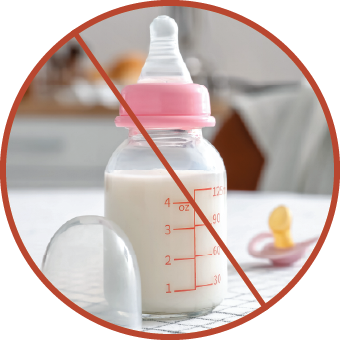
Avoid nipple confusion

Avoid using pacifiers and bottles for the first few weeks after birth.

Keep baby safe and close by

Have your baby sleep in a crib or bassinet in your bedroom so you can breastfeed more easily at night. Research has found when a baby shares a bedroom with their parents, the baby has a lower risk of SIDS.

Tips for When you Start

Learn Your Baby's Hunger Cues

It may be harder for your baby to latch if they are upset. Crying can be a late sign of hunger. Offer your breast when your baby shows clusters of hunger cues, like:

  • Becoming more active and alert.
  • Putting their hands or fists to their mouth.
  • Making sucking motions with their mouth.
  • Rooting or turning their head to look for the breast or towards anything that touches their cheek.
  • Moving from a deep sleep to a light sleep. Watch for more body and eye movement.

Some babies will feed from both breasts at each feeding. Other babies only take one. Let your baby finish the first breast if they are still sucking and swallowing. Your baby will let go of your breast when they are finished. Offer your baby the other breast if they continue to show signs of hunger.

Making plenty of milk

Feeding your baby often helps them grow. It also tells your body to keep making milk. The more often your baby breastfeeds, the more milk your breasts will make. Most breastfeeding mothers can make plenty of milk for their baby.

Avoid nipple confusion

Avoid using pacifiers and bottles for the first few weeks after birth.

Keep baby safe and close by

Have your baby sleep in a crib or bassinet in your bedroom so you can breastfeed more easily at night. Research has found when a baby shares a bedroom with their parents, the baby has a lower risk of SIDS.
Wyoming WIC WDH Public Health

CONTACT US

1-888-996-9378
health.wyo.gov/wic
  • How to apply for WIC

Resources

  • WIC Shopper
  • WIC Smart
  • WIC Breastfeeding Support
  • Wyoming Medicaid
  • Wyoming 211
  • Tell a friend about WIC!
  • Guide to Using Your WIC Benefits
  • Wyoming WIC Facebook
  • Wyoming WIC Instagram
  • Wyoming WIC

USDA is an equal opportunity provider, employer, and lender.

Cookie PolicyPrivacy Policy

© Brush Art Corporation
This website is operated by Brush Art Corporation on behalf of the Wyoming Department of Health.

Install this web app on your iPhone: tap and then Add to Home Screen.
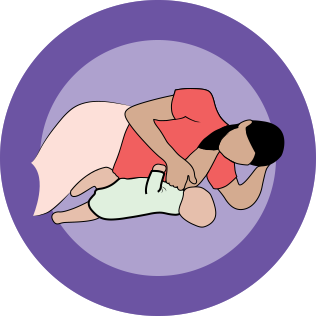
SIDE-LYING HOLD

Side-Lying Hold

  1. For the right breast, lie on your right side with your baby facing you.
  2. Pull your baby close. Your baby’s mouth should be level with your nipple.
  3. In this position, you can cradle your baby’s back with your left arm and support yourself with your right arm and/or pillows.
  4. Keep loose clothing and bedding away from your baby.
  5. Reverse for the left breast.

This hold is useful when:

  • You had a C-section
  • You want to rest while baby feeds
  • You are breastfeeding in the middle of the night
  • You and your baby are comfortable in this position
CROSS-CRADLE HOLD

Cross-Cradle Hold

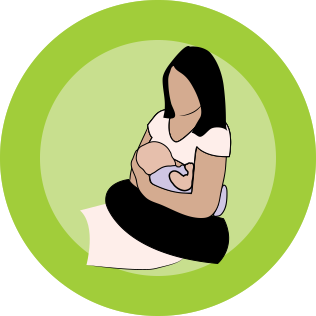
  1. For the right breast, use your left arm to hold your baby’s head at your right breast and baby’s body toward your left side. A pillow across your lap can help support your left arm.
  2. Gently place your left hand behind your baby’s ears and neck, with your thumb and index finger behind each ear and your palm between baby’s shoulder blades. Turn your baby’s body toward yours so your tummies are touching.
  3. Hold your breast as if you are squeezing a sandwich. To protect your back, avoid leaning down to your baby. Instead, bring your baby to you.
  4. As your baby’s mouth opens, push gently with your left palm on baby’s head to help them latch on. Make sure you keep your fingers out of the way.
  5. Reverse for the left breast.

This hold is useful when:

  • Your baby is premature
  • Your baby has a weak suck
  • Your baby needs help to stay latched
  • Your baby needs extra head support
  • You and your baby are comfortable in this position
CLUTCH OR “FOOTBALL” HOLD

Clutch or “Football” Hold

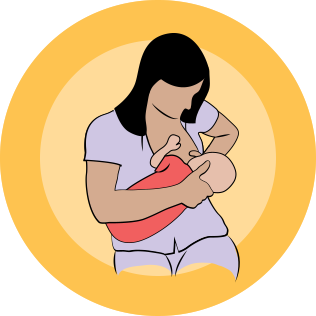
  1. For the right breast, hold your baby level, facing up, at your right side.
  2. Put your baby’s head near your right nipple and support their back and legs under your right arm.
  3. Hold the base of your baby’s head with your right palm. A pillow underneath your right arm can help support your baby’s weight.
  4. To protect your back, avoid leaning down to your baby. Bring baby to you instead.
  5. Reverse for the left breast.

This hold is useful when:

  • You had a C-section
  • You have large breasts
  • You have flat or inverted nipples
  • You have a strong milk let-down
  • You are breastfeeding twins
  • Your baby likes to feed in an upright position
  • Your baby has reflux
  • You and your baby are comfortable in this position
CRADLE HOLD

Cradle Hold

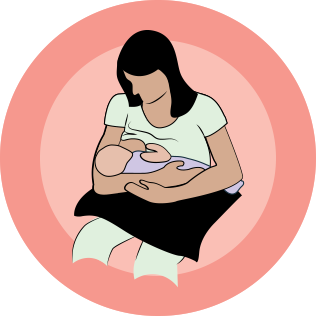
  1. For the right breast, cradle your baby with your right arm. Your baby will be on their left side across your lap, facing you at nipple level.
  2. Your baby’s head will rest on your right forearm with your baby’s back along your inner arm and palm.
  3. Turn your baby’s tummy toward your tummy. Your left hand is free to support your breast, if needed. Pillows can help support your arm and elbow.
  4. To protect your back, avoid leaning down to your baby. Instead, bring your baby to you.
  5. Reverse for the left breast.

This hold is useful when:

  • Your baby needs help latching on
  • You and your baby are comfortable in this position
Laid-Back Hold

Laid-Back Hold

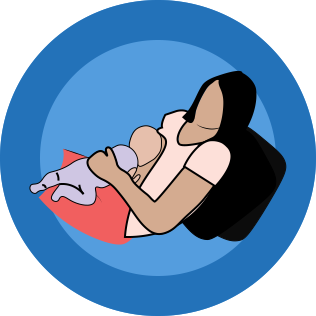
  1. Lean back on a pillow with your baby’s tummy touching yours and their head at breast level. Some moms find that sitting up nearly straight works well. Others prefer to lean back and lie almost flat.
  2. You can place your baby’s cheek near your breast, or you may want to use one hand to hold your breast near your baby. It’s up to you and what you think feels best.
  3. Your baby will naturally find your nipple, latch, and begin to suckle.

This hold is useful when:

  • Your baby is placed on your chest right after birth
  • You have a strong milk let-down
  • You have large breasts
  • You and your baby are comfortable in this position